Building in Public: Risks and Rewards
Building in public is not about oversharing for attention. It is a strategic way to turn execution, learning, and transparency into distribution, trust, accountability, and community momentum.
Strategy Framework: The Open Startup Manifesto

For most early-stage startups, obscurity is a bigger threat than theft. Founders often default to stealth because they fear someone will copy the idea, judge the unfinished product, or move faster once they see what is working. In practice, many startups fail because nobody notices them, nobody trusts them, or nobody cares enough to engage. Building in public is a response to that reality.
We use the Open Startup Manifesto to treat transparency as strategy rather than personality. The goal is not to reveal everything. The goal is to make the company visible enough that progress becomes distribution, learning becomes content, and honesty becomes a trust advantage.
The Pillars
Radical Transparency: Share selected parts of the real journey, including experiments, lessons, metrics, tradeoffs, mistakes, and process. This creates trust because people can see how the company actually thinks.
Public Accountability: Announce meaningful goals and milestones in a visible way. Public commitment creates execution pressure and gives the company a forcing function for follow-through.
Community Co-Creation: Invite users and supporters into the learning loop. Feedback, questions, and reactions become a signal engine that helps shape what gets built next.
What Building in Public Actually Creates
Done well, building in public creates several forms of leverage:
Why This Works
People do not only follow products. They follow visible conviction, momentum, learning, and honesty. A company that shares what it is learning becomes more legible than one that appears only at launch with polished messaging.
Building in Public as an Asset Validation Tool
Within asset validation, public building matters because it reveals whether the startup’s journey itself is generating signal. If nobody responds to the story, nobody reacts to the product updates, and no conversation emerges around the problem being solved, that is useful market feedback. The public channel becomes an early test of resonance.
It also changes the startup’s feedback timing. Instead of waiting for a major release to discover whether the market cares, founders can observe interest, objections, questions, and confusion continuously. That shortens the loop between building and learning.
The Compounding Benefits
Public building compounds in ways private execution often does not:
What It Is Not
Building in public is not performative posting with no product behind it. It is not reckless oversharing. It is not democratic product design where the loudest audience member controls the roadmap. And it is not a substitute for shipping. It works only when the public layer is downstream of real execution.
A Healthy Operating Principle
The best public builders share enough to create trust and learning without turning transparency into theater. They show progress, reveal honest tradeoffs, and let the audience watch the company become real.
The Strategy: Move from building for users in private to building with visible learning loops in public. Transparency becomes a filter: it attracts aligned supporters and exposes whether the company is actually learning fast enough to matter.
Strategy: The Transparency Paradox
The paradox of transparency is that selective vulnerability often creates more authority, not less. Founders assume that showing failed experiments, weak numbers, uncertainty, or changing strategy will reduce trust. In many cases, the opposite happens. Honest signal is often more credible than polished spin because it feels real.
Why the Paradox Exists
Most startup storytelling shows only wins: launches, growth graphs, funding, shiny screenshots, and confident positioning. That means honest updates are unusually memorable. When a founder explains what failed, what changed, what was learned, and what happens next, the company becomes easier to trust.
The Execution Rules
Why Honest Updates Attract Better Audiences
The audience that responds well to transparent building is often higher quality than the audience attracted only by polished hype. Honest updates filter for people who care about the problem, respect the process, and want to follow real execution rather than vanity metrics. That makes the audience smaller in some cases but more aligned.
What to Share vs. What to Protect
Share:
Protect:
Practical Cadence
A useful public rhythm might include weekly learnings, feature breakdowns, monthly milestone recaps, visible roadmap reflections, and occasional honest postmortems when something does not work. Over time, this creates a body of public evidence that the startup is thinking, learning, and shipping coherently.
The Founder Discipline Required
Transparency works best when the founder separates useful signal from impulsive sharing. Public updates should help the audience understand the journey better, not simply expose every feeling the founder has in real time.
Tactic: Use recurring public formats such as a build log, transparent dashboard, or milestone thread so the company stays consistent instead of appearing only when the story is flattering.
Execution: Handling the 'Copycat' Risk
The biggest fear in building in public is simple: what if someone copies us? That fear is real, but it often mistakes visible features for the whole business. A competitor can copy screenshots, pricing cues, positioning, or even some shipped features. What they struggle to copy is the system behind them.
What Copycats Can and Cannot Copy
They can copy:
They usually cannot easily copy:
The Real Defense System
Why Public Momentum Is Harder to Clone Than Product Surface
A public company-in-motion creates a moving target. Competitors may copy one feature or one marketing angle, but they struggle to copy the continuity of visible learning. The more the founder explains the why behind the journey, the more the audience becomes attached to the trajectory, not just the artifact. That attachment makes imitation less effective because the original company owns the narrative energy.
Narrative as Competitive Infrastructure
One of the least appreciated defenses in public building is narrative coherence. If the audience understands where the company started, why it is changing, what problem it is obsessed with, and how it responds to setbacks, the startup becomes more than a list of features. It becomes a story people can follow. Copycats often reproduce the surface but fail to reproduce the underlying emotional logic that makes people care.
Practical Ways to Reduce Risk
The Bigger Truth
Most startups are harmed more by lack of attention than by copycats. Public visibility creates distribution, trust, and feedback. Those advantages often outweigh the cost of being watched.
Tooling: Use public channels like X, Threads, Indie Hackers, newsletters, or community spaces to share updates consistently. Record short demos, publish progress notes, and keep the feedback loop alive enough that learning compounds faster than imitation.
Case Study and Pitfalls: Buffer vs. The 'Stealth' Failure
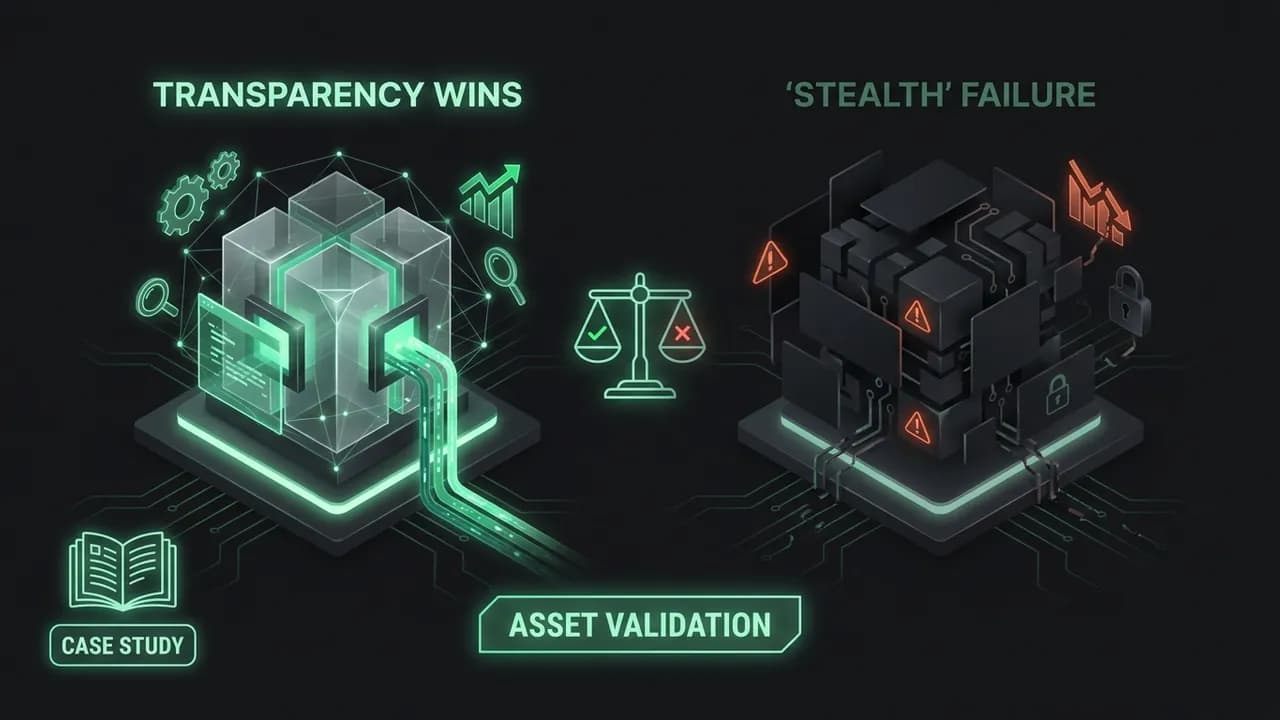
Case Study: Buffer and Structured Transparency
Buffer became one of the best-known examples of building in public because the company treated transparency as an operating strategy rather than a gimmick. They shared revenue, salaries, equity frameworks, team practices, and internal lessons in ways that made the company unusually legible. That visibility did not just create attention. It created trust, attracted aligned talent, and built a strong content moat around the product.
One of the deeper lessons from Buffer is that transparency worked because it was systematic. It was not a one-off marketing stunt. The company shared useful context repeatedly enough that the public came to trust the honesty itself.
What Founders Should Learn From This
Why Stealth Often Fails in Practice
Stealth can make sense in a few narrow circumstances, but many founders use it as emotional protection rather than strategy. It protects them from judgment, not from competition. And while it protects them from judgment, it also prevents trust, attention, feedback, and narrative momentum from forming. A startup that stays invisible too long often arrives at launch with too little market context and too little community energy.
The Public Pitfalls
The Performative Trap: Founders spend more time narrating the work than doing the work. Public sharing becomes procrastination with good branding. Fix: keep content downstream of real progress.
Seeking Consensus Instead of Insight: A public audience can surface useful signal, but it should not become your product steering committee. Fix: collect feedback broadly, decide narrowly.
Comparison Poison: Founders compare their early progress to mature public builders and feel behind. Fix: share the actual stage you are in and make the story about progress, not optics.
Inconsistent Transparency: Founders share when the story is exciting and disappear when things are hard. Fix: define a repeatable cadence so visibility does not depend only on emotion.
Oversharing Sensitive Context: Not everything that is interesting is safe or wise to publish. Fix: use judgment so openness strengthens trust without creating strategic damage.
Practical Founder Challenge
Write one honest build update this week that includes:
Then watch what kind of response it creates. Often the strongest reaction comes not from polished success stories but from clear, grounded learning. Repeated honesty is what turns audience attention into long-term trust instead of short-term engagement.
That consistency matters because the audience is not only evaluating the company’s product. It is evaluating whether the company’s story feels trustworthy enough to keep following.
Building in public works best when transparency is grounded in execution, bounded by judgment, and repeated long enough to become part of the company’s identity.
Key Takeaways
Building in public trades some secrecy for distribution, trust, and an audience that compounds, often a net win for indie founders.
Share failures and real metrics, not just wins; authenticity is what converts followers into customers.
Pick one or two channels (X plus a newsletter) and post on a consistent cadence to build a moat copycats can't copy.
Practise selective transparency: open about the journey, private about a few strategic secrets like key acquisition channels.
Don't let audience-building become procrastination, the product still has to ship.
Frequently Asked Questions
What is building in public?
How do you build in public effectively?
What are real building in public examples?
What is the 'transparency paradox' and how do you handle copycats?
What are the risks of building in public?
What are common building in public mistakes?
Your Turn: The Action Step
Building-in-Public Sharing Plan Worksheet
Build a deliberate 'share vs guard' line and a 4-week content cadence so building in public compounds an audience without handing rivals your playbook.
Draw your transparency line
Two columns: what you'll share openly vs what stays behind the curtain.
| SHARE openly | GUARD (unfair advantage) |
|---|---|
Pick channel and cadence
Where you'll post and how often. Pick a cadence you can sustain for 6 months, not a heroic month.
Plan a 4-week content calendar
Map each week's hero post around a real milestone, number, or lesson.
| Week | Hero post topic | Metric or story to share |
|---|---|---|
Pre-write your copycat response
Decide now how you'll out-run a clone (speed, community, brand) so the copycat risk doesn't scare you mid-journey.
Set your guardrails
List the 'never share' items — anything that, if copied, would actually hurt you.
Define your success metric
Decide how you'll know BIP is working (followers, inbound leads, waitlist signups) and the 6-week target.
| Metric | Today | 6-week target |
|---|---|---|
Before you close this
0/5 doneYour answers are saved in this browser only. Use “Download as PDF” to keep a copy.
Why Most Startups Don’t Need Patents
Ready to apply this?
Stop guessing. Use the Litmus platform to validate your specific segment with real data.
Launch in Public