Open Source Strategy: Giving Away Code to Win
If you open source the wrong layer, you create a hobby project. If you open source the right layer, you create a global distribution engine. This in-depth guide explains how to use open source as a trust moat, adoption funnel, and enterprise revenue strategy.
Strategy Framework: The Commercial Open Source (COSS) Playbook
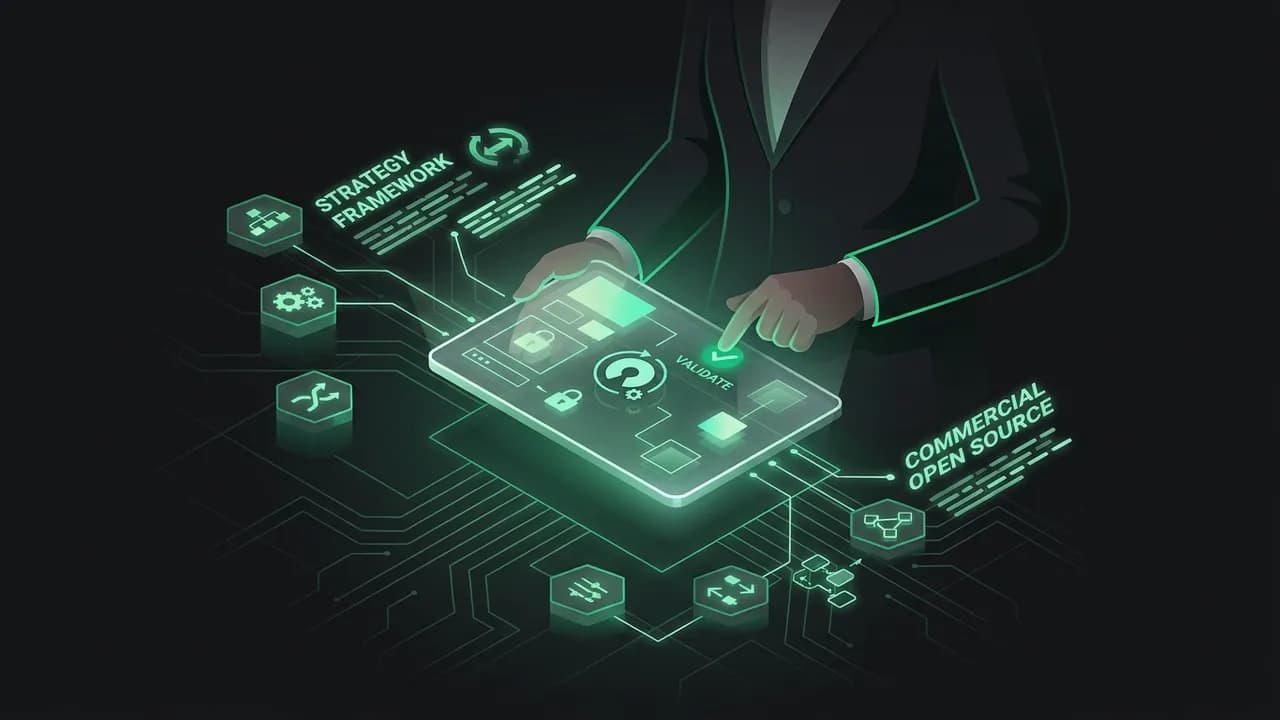
Open source is not a charity strategy. It is a distribution and trust strategy. In 2026, buyers do not only evaluate products through sales demos. They evaluate code quality through GitHub, community depth through Discord and issues, and execution quality through release velocity. That means your repository can become your most powerful acquisition channel if you structure it correctly. We use the Commercial Open Source (COSS) Playbook to decide what to open, what to monetize, and how to prevent the company from becoming popular but unprofitable.
The first principle is simple: open source adoption and business monetization are not the same thing. A product can become beloved by developers and still fail as a startup if it never converts organizations into paying accounts. Your job is to design the free layer to maximize adoption and the paid layer to monetize organizational pain.
The Monetization Models
Open Core: The product engine is open source, while team and enterprise controls remain paid. This model works best when the single-user experience can be generous, but collaboration, governance, compliance, and reliability at scale create real business value. Features like SSO, audit logs, advanced role permissions, usage analytics, workflow orchestration, and regulated deployment options belong in the paid tier because companies buy them to reduce risk, not because individual developers want them for fun.
Managed Hosting (Open SaaS): You let users self-host the software for free, but you sell the fastest and safest path to production. This works when installation, upgrades, reliability, backups, monitoring, incident response, and scaling create operational pain. Teams do not pay because they cannot run the software. They pay because they do not want to own the operational burden.
Support and Services: This model is common for infrastructure, data, security, and transformation products where enterprise customers want architecture guidance, migration help, SLAs, and training. It can work, but it becomes people-intensive. If this is your main revenue engine, you should be honest that you are building a services-led company with software leverage, not a classic software business.
Marketplace or Extension Ecosystem: You open the platform, enable third-party builders, and monetize the ecosystem through app sales, templates, integrations, or partner channels. This is powerful when your core platform becomes the default workflow hub for a specific type of user.
The COSS Design Questions
Before you publish anything, answer four questions.
What is the adoption object? This is the specific thing you want developers to install, fork, star, or embed. It might be an SDK, a local dev tool, a lightweight backend, a CLI, or a data pipeline starter. The adoption object should be easy to understand and easy to run.
What is the monetization object? This is what organizations eventually buy. It may be hosted scale, compliance features, governance tooling, premium datasets, managed workflows, support, or team collaboration. The monetization object must solve a budget-worthy problem.
What is the moat object? This is what gets stronger as more people use the open product. It might be documentation, integrations, community contributions, plugin ecosystem, brand trust, templates, or domain knowledge. If usage does not improve the moat, the growth may be noisy but fragile.
What is the risk object? This is the thing hyperscalers or competitors could copy or host. If your model can be crushed by a cloud provider offering your project as a commodity, you need a stronger community, data advantage, or operational layer.
How to Decide What Stays Free
The free version must be complete enough for a smart developer to build something meaningful. If it feels intentionally broken, the community will call it fake open source. Developers can tolerate limitations, but they hate manipulation.
A useful rule is: keep the builder experience free, monetize the organizational experience. A single developer should be able to learn, prototype, test, and advocate for your product without hitting a paywall too early. A team that now requires security review, identity controls, uptime commitments, advanced observability, or procurement support should be routed to the paid layer.
Real-World Examples
GitLab demonstrated the power of open core by allowing broad product adoption while monetizing enterprise coordination and governance. Supabase used open-source credibility to win developer trust in a market dominated by closed platforms. Elastic showed how powerful community-led distribution can become, but also how exposed you are if a giant cloud platform packages your work. These examples all point to the same lesson: open source works best when free creates advocacy and paid captures organizational complexity.
Founder Decision Filter
Open source is a strong strategy when at least three of the following are true:
If none of these are true, open source can still be a branding move, but it should not be your core growth strategy.
The strategic takeaway is this: do not ask whether you should give away code. Ask which layer should become free in order to create the strongest trust and distribution flywheel.
Strategy: Developers as the Distribution Channel
Traditional SaaS marketing tries to attract a buyer into a funnel. Open-source growth often works in reverse: a developer discovers the tool first, tests it in a side project, introduces it into a team workflow, and only then does an organization consider paying. This makes developers both users and distribution agents. If you understand this motion, your product can spread through engineering organizations without an enterprise rep touching the account for months.
The Developer Distribution Funnel
The real funnel looks like this:
Discovery: A developer finds your repository through GitHub search, Hacker News, Reddit, YouTube, X, a conference talk, or another developer's recommendation.
Activation: They can run your product locally in minutes, understand what it does, and achieve a visible win fast.
Adoption: They keep using it because it saves time, increases control, or removes frustration.
Internal Advocacy: They recommend it to teammates, mention it in planning, or use it in prototypes.
Team Standardization: The product becomes part of the team's workflow and now governance, reliability, and collaboration matter.
Commercial Conversion: The organization upgrades to paid hosting, enterprise controls, support, or a broader contract.
The Execution Rules
Stars Are a Signal, Not a Business
GitHub stars matter because they create credibility. VCs use them as one clue for developer love. Buyers use them as a shorthand for community health. Job candidates use them to judge momentum. But stars are not revenue. A project with massive stars and low implementation depth can still be a weak business. Focus on the metrics beneath the stars:
Land and Expand in Open Source
The best open-source businesses do not force a hard sell. They let internal champions emerge naturally. A developer starts alone. Then a team wants shared auth. Then security wants auditability. Then leadership wants uptime guarantees. Then procurement wants contracts and legal review. That progression creates the upgrade path.
Examples in Practice
PostHog used open source and an opinionated product voice to build developer trust, then monetized hosted convenience and team-level features. Grafana created enormous adoption because engineers could start with a real problem and solve it immediately, then organizations expanded usage into broader observability budgets. Docker became a category-defining developer brand because it dramatically improved a painful workflow before its commercial model matured.
Common Mistakes
The key idea is that open-source distribution is earned through speed, clarity, and usefulness. Developers become your best sellers only after the product makes them look smart inside their own teams.
Execution: Governance and the 'Bounty' System
A project becomes fragile when community growth outruns governance. If everyone can contribute but nobody understands the decision rules, your repository turns into noise. If the company controls everything too tightly, contributors stop caring. Strong open-source governance creates a middle path: enough openness to encourage contribution, enough structure to protect product direction.
Governance Principles
Clarity beats democracy. Most open-source communities do not need every roadmap decision to be voted on. They need clear expectations about how decisions are made, what gets prioritized, how maintainers review changes, and what level of quality is required.
The company must protect the commercial path without betraying the community. This means separating contribution openness from strategic ambiguity. The code can be open while the commercial packaging remains opinionated. But if you constantly move goalposts, contributors will assume they are working for a company that does not respect them.
The Scaling Playbook
Governance Artifacts Every Serious Project Needs
The Bounty System in Practice
Bounties can be powerful when your project has more demand than internal bandwidth. They let you activate the edge of the community and learn who your strongest external builders are. Over time, bounty contributors often become maintainers, advisors, contractors, or even employees.
A good bounty has:
A bad bounty is vague, strategic, or underpriced. That attracts low-quality work and creates frustration on both sides.
Community Governance Mistakes
The Founder Bottleneck: Every decision goes through one founder, so contributors wait weeks for feedback. Momentum dies.
The Open Roadmap Illusion: You invite suggestions but never communicate why something is rejected. Contributors stop trusting the process.
The Silent Repo: Pull requests sit untouched, issues accumulate, and new users assume the project is abandoned.
The Legal Blind Spot: You accept community code without contribution agreements, then later discover you cannot safely relicense or commercialize part of the project.
Metrics to Track
The goal of governance is not just to keep order. It is to convert enthusiasm into reliable product momentum. A healthy open-source project makes contributors feel respected, users feel safe, and the company feel in control of its strategic future.
Case Study and Pitfalls: HashiCorp vs. The 'Open Source' Backlash
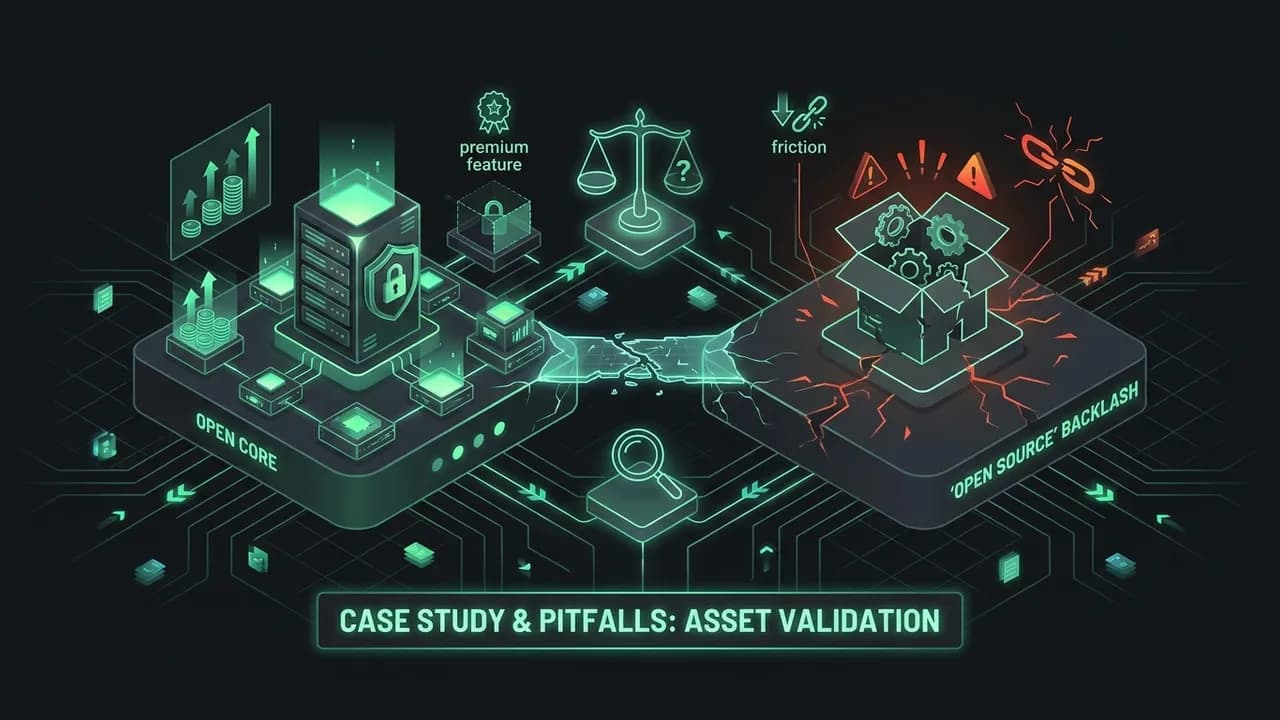
Case Study: HashiCorp, Elastic, and the Tension Between Community and Capture
HashiCorp and Elastic both became category leaders through open-source-driven adoption. Their products spread because developers trusted them, implemented them quickly, and championed them internally. But both also faced the same strategic problem: hyperscalers could take the community momentum, offer hosted versions, and capture commercial value without building the ecosystem from scratch. That pressure pushed them toward licensing changes designed to protect business viability.
The strategic lesson is not that open source is broken. The lesson is that distribution success attracts extraction risk. If your entire monetization layer can be repackaged by a larger platform with better distribution, your open-source win can become someone else's revenue stream.
But the second lesson is just as important: changing the social contract with your community has consequences. Open-source users do not only evaluate legal terms. They evaluate intent, trust, fairness, and consistency. When a project appears to benefit from community openness and then narrows that openness later, even for rational business reasons, backlash can be intense. Forks, public criticism, and ecosystem fragmentation become real threats.
Additional Examples
GitLab shows how strong execution can make open core work. Their transparency, documentation, and product breadth created a trusted platform that organizations were willing to standardize on.
Supabase used open-source credibility to compete in a category where developers deeply care about portability and control. Their hosted offering works because the free version is useful, the developer experience is polished, and the monetization path maps naturally to scale and team usage.
Redis Labs and other infrastructure companies have repeatedly highlighted the same truth: if your core value can be commoditized by hosting alone, you need either a stronger commercial layer or clearer licensing strategy earlier than most founders expect.
The Open Source Pitfalls
The Ghost Repo Trap: Founders publish a repository, celebrate launch day, and then disappear. Users encounter unanswered issues, stale docs, and silent maintainers. This destroys trust quickly. Open sourcing something means committing to stewardship, not just code release.
Monetizing the Wrong Layer: Charging individuals for basic privacy, security, or developer quality-of-life features creates resentment. Developers will tolerate paid enterprise governance. They will not tolerate feeling punished for caring about good engineering hygiene.
No Clear Upgrade Path: The project becomes popular, but users do not understand why or when they should pay. Without a commercial narrative, the startup confuses admiration with traction.
The Fork Risk: If the community believes the company is using open source purely as a lead magnet while withholding too much value or shifting licenses unpredictably, a fork becomes a moral and strategic response.
Underestimating Support Load: Once adoption grows, questions, bug reports, docs requests, and integration edge cases explode. If the team cannot absorb this, growth turns into community debt.
Practical Founder Playbook
If you want to use open source strategically, do the following before launch:
Metrics That Matter
Track more than stars. Measure:
The Founder Challenge
Look at your current product and ask three hard questions.
Write a one-page open-source strategy memo answering those questions before you publish a single repository. Open source works when the free layer creates momentum, the paid layer captures organizational value, and the community still believes the relationship is fair.
Key Takeaways
Give the core away to win distribution; monetise via open core, managed hosting, or enterprise support.
Reserve must-have enterprise features (SSO, audit logs, scale, compliance) for paid tiers while keeping the free core genuinely useful.
Treat developers as your distribution channel: invest in docs, easy setup, and community instead of heavy outbound sales.
Indian examples like Hasura and Appsmith show developer-led adoption can precede strong enterprise revenue.
Avoid abrupt license changes; community backlash and forks can destroy the moat you built.
Frequently Asked Questions
What is an open source business model?
How do you monetize free open source software?
What are real open source business model examples?
How do developers act as a distribution channel?
What are common open source monetization mistakes?
What is an open core model?
Your Turn: The Action Step
Commercial Open Source (COSS) Strategy Worksheet
Design an open-source-to-revenue model: what you give away free, what you charge for, and how developers become your distribution channel — without a future licensing backlash.
Draw the open-core line
Decide exactly what's free-and-open vs paid-and-closed. The free core must be genuinely useful alone.
| Capability | Open (free) | Paid (commercial) |
|---|---|---|
Pick your monetisation model
Choose: managed cloud, enterprise features, support/SLA, or a mix. Note the price.
Choose your license — and commit to it
Pick the license now and write down that you won't change it later (the #1 backlash trigger).
Plan developers-as-distribution
List how you'll turn the open core into a funnel: docs, tutorials, GitHub, Discord.
| Channel | Action | Leads to |
|---|---|---|
Set up governance
Define CLA, who merges, and a bounty rule for community contributions.
Model the conversion math
Estimate the funnel. Formula: paid customers = free users x conversion %; revenue = paid customers x price.
Before you close this
0/5 doneYour answers are saved in this browser only. Use “Download as PDF” to keep a copy.
Why Startups Lose Big Deals Without Security
Ready to apply this?
Stop guessing. Use the Litmus platform to validate your specific segment with real data.
Go Open Source