Security Compliance: SOC2 and Beyond for Startups in 2026
Ignoring security until an Enterprise deal demands it is the #1 way to kill a B2B startup. This 3,000-word guide masters the 'Security Maturity Curve' to help you build a 'Security-First' culture without hiring a CISO.
Why Security and Compliance Become Revenue Issues Earlier Than Startups Expect

Early-stage founders often think security compliance is a later-stage concern—something to handle after product-market fit, after growth, or after landing a few bigger customers. In reality, security and compliance often become revenue issues much earlier.
A startup may have a promising product, strong demos, and real customer interest, only to discover that enterprise buyers, regulated customers, or security-conscious teams will not move forward without evidence that the company can protect data, control access, document processes, and respond responsibly to risk. Suddenly, security is no longer a technical side topic. It is a sales blocker.
In 2025-2026, this is even more relevant. Buyers ask harder questions about data handling, AI usage, third-party risk, access controls, incident response, privacy, and vendor reliability. SOC 2 is still a common benchmark in SaaS and B2B software, but it is often only the starting point. Many customers now expect a broader security posture, not just a badge.
That is why the real question is not "do we need SOC 2 someday?" The better question is: what level of security maturity do we need now to win trust, unblock deals, and avoid operational risk without overbuilding process for a stage we have not reached yet?
The goal is not compliance theater. The goal is to build enough real security discipline that customers, partners, and your own team can rely on the company as it grows.
Core Framework: What SOC 2 and Early Security Maturity Actually Signal
SOC 2 is commonly used as a trust signal because it reflects whether a company has formalized controls around how systems and data are handled. But for startups, it should be understood as part of a broader maturity curve.
1. Foundational Security Hygiene
2. Process Discipline
3. Auditability and Evidence
4. External Trust Signaling
SOC 2 matters because it gives external buyers a recognizable shorthand. But the real value is not the report itself. The real value is building operational discipline around security-critical behavior.
When Early-Stage Startups Need SOC 2 or Equivalent Readiness
Not every startup needs a full audit immediately. But many need more readiness than they think.
Security maturity matters earlier when:
In these cases, waiting too long creates friction. Founders end up reacting to security pressure under deal urgency instead of building a calm, staged readiness plan.
The right move is often not "get every certification immediately." It is to build the minimum serious security posture that can credibly support current customer expectations and future audit paths.
Execution: How to Build Security Readiness Without Freezing the Company
Step 1: Identify the Trust Threshold of Your Current Buyers
What questions are actually blocking deals today?
Step 2: Build Core Controls First
Focus on practical foundations:
Step 3: Document What Exists
Many startups do useful things informally. Documentation turns scattered good behavior into something buyers and auditors can evaluate.
Step 4: Prepare for Security Questionnaires Early
Enterprise selling slows down dramatically when the company answers security reviews from scratch each time.
Step 5: Decide When Formal Audit Is Worth It
SOC 2 becomes worthwhile when the report will materially unblock revenue, shorten sales cycles, or increase buyer confidence enough to justify the cost and effort.
The goal is to build security like a growth enabler, not like bureaucracy for its own sake.
Real-World Examples: How Security Readiness Impacts Growth
Example 1: B2B SaaS selling into IT-conscious buyers
Even promising products can stall in procurement when security answers are incomplete.
Example 2: AI workflow tools
Buyers increasingly ask how prompts, outputs, stored data, and third-party model usage are governed.
Example 3: Fintech and health-related startups
Sensitive data categories raise the bar for controls early.
Example 4: Startups landing their first enterprise customer
A single larger customer can force the company to mature controls rapidly.
Example 5: Startups with strong internal discipline before audit
Companies that document controls early often reach formal compliance more smoothly later.
Common Pitfalls & How to Avoid Them
Pitfall 1: Treating security as a future problem
This often turns it into a sudden revenue blocker.
Pitfall 2: Chasing badges without real practice
Compliance theater fails under real scrutiny.
Pitfall 3: Overbuilding too early
Heavy process can slow a small team unnecessarily.
Pitfall 4: No ownership
Security decays when it belongs to nobody.
Pitfall 5: Ignoring vendor and AI risk
Third-party tools and models extend your security surface.
Pitfall 6: Answering security reviews ad hoc
This wastes huge time and increases inconsistency.
What to Measure in Early Security Readiness
Core Metrics
Diagnostic Questions
A strong early security posture should reduce risk and reduce commercial friction at the same time.
Actionable Conclusion: Build Security Maturity to Match the Deals You Want to Win
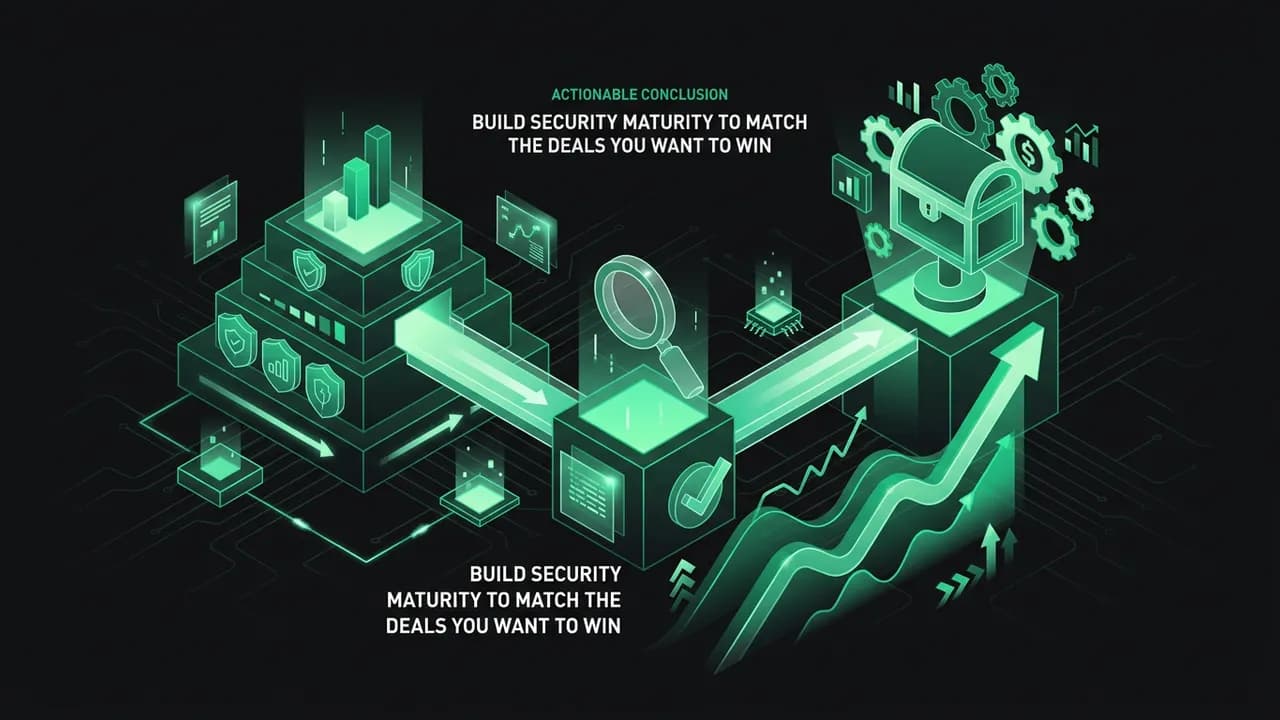
Security and compliance become urgent when the company starts selling into customers who expect operational trust, not just product promise. The smartest path is to build that trust progressively—enough for the stage you are in, but real enough to support the stage you want to reach.
Your Next 5 Steps
identify the security questions currently slowing or blocking deals
strengthen foundational controls before chasing formal audit optics
document real policies and workflows so buyers can evaluate them
prepare reusable answers for security and procurement reviews
pursue formal compliance when it materially shortens sales cycles or expands market access
SEO / Optimization Notes
This guide should naturally target keywords like SOC 2, startup security compliance, security readiness, enterprise security review, and startup compliance. The meta description should emphasize how early-stage startups should approach SOC 2 and broader security maturity. Internally, this guide should connect to enterprise sales, core operations, and systems maturity guides in later modules.
The best compliance milestone is not the one that looks impressive in isolation. It is the one that helps the business become trustworthy enough to win the next level of customer.
Economics: Security Readiness Pays for Itself When It Unblocks Revenue and Prevents Expensive Chaos
Security work can feel like a cost center when viewed only as audit fees, tooling spend, policy writing, or employee overhead. But for startups selling into more demanding buyers, security readiness often produces direct economic value.
That value shows up in several ways:
In that sense, early security maturity is often less about avoiding hypothetical catastrophe and more about making the business easier to trust and easier to operate. A startup that can answer buyer questions clearly, show repeatable controls, and manage internal access responsibly looks more mature and more credible.
This does not mean every startup should overspend on compliance. It means founders should compare the cost of basic readiness against the cost of lost deals, delayed contracts, and reactive scramble once bigger customers start asking harder questions.
Buyer Psychology: Enterprise and Mid-Market Customers Want Risk Reduction, Not Just Features
Security review exists because large buyers are not only evaluating product value. They are evaluating vendor risk. A strong product can still lose if the buyer believes adopting it introduces too much uncertainty.
That means security answers influence emotional and political safety inside the buying organization. Champions need to feel they can defend the vendor. Procurement needs to feel the company will not create avoidable exposure. Technical reviewers need to see enough operational seriousness to justify moving forward.
This is why early security readiness is so commercially important. It changes the conversation from "we are still figuring it out" to "we understand the responsibilities that come with your trust." That shift can be decisive when multiple vendors have similar functionality.
The startup is not only selling software. It is selling confidence that the software will not create hidden risk.
Advanced Examples: What Practical Security Maturity Looks Like at Early Stage
Example 6: Startups with strong access discipline
Teams that manage role-based access, offboarding, and credential hygiene well often look more enterprise-ready than larger but sloppier competitors.
Example 7: AI tools with documented model and data usage boundaries
Buyers respond better when the company can explain clearly where data goes, what is retained, and how outputs are governed.
Example 8: Vendor-heavy startups
Companies using many third-party tools often build trust faster when they can show vendor review discipline and system awareness.
Example 9: Startups that answer security reviews from prepared materials
These teams often move faster in enterprise cycles than equally capable peers improvising every answer.
Operating Model: How to Build Security as an Ongoing Capability
Security readiness should not live only in pre-audit scramble mode. It needs a lightweight operating rhythm.
Questions to Review Regularly
Practical Rhythm
This rhythm matters because security maturity compounds when it becomes habitual. It remains fragile when it exists only during high-pressure sales moments.
Staged Maturity: Not Every Startup Needs the Same Control Depth at the Same Time
One of the biggest mistakes founders make is assuming there are only two states: no security maturity or full formal compliance. In reality, strong companies usually move through stages.
An early-stage startup may need:
A later-stage enterprise-focused company may need:
Thinking in stages is important because it prevents both underbuilding and overbuilding. The company should always be moving toward stronger trust posture, but the exact level of process should match current buyer expectations and operational risk. Security maturity should be progressive, not performative.
Documentation Strategy: Buyers Need Confidence, Auditors Need Evidence, Teams Need Clarity
Documentation is often where early security work becomes real. Without documentation, strong practices are hard to prove, hard to repeat, and hard to onboard into new team members.
Useful documentation usually includes:
Good documentation does not need to be bloated to be useful. It needs to be current, understandable, and aligned with how the team actually operates. That alignment matters because mismatched documentation creates another kind of risk: a company that says one thing and does another.
The best documentation makes three things easier at once: internal consistency, external trust, and eventual audit readiness.
Final Playbook: How to Build Security Maturity Without Overbuilding It
Before pushing further into formal compliance, answer these questions:
what buyer questions are blocking deals right now?
which foundational controls are still informal or fragile?
what documentation would reduce repeated security-review effort?
which risks are created by vendors, AI usage, or internal access sprawl?
when will formal audit create meaningful revenue acceleration rather than just optics?
These questions matter because the right security investment is stage-aware. The company should build enough maturity to win trust now while laying the groundwork for stronger assurance later.
Final Decision Principle: Build the Security Posture Your Next Customer Will Expect
The cleanest principle for early-stage security is this: build the posture your next serious customer will expect, not the one your current comfort level would prefer. That mindset keeps the company commercially ready without turning security into empty ceremony.
Security becomes an asset when it helps the business move faster with better customers, not when it becomes paperwork disconnected from real trust.
Key Takeaways
Pursue SOC 2 when it starts blocking revenue (enterprise buyers demanding it), not on a fixed early timeline.
Use compliance-automation tools like Vanta, Drata, or Sprinto to monitor controls and generate audit evidence continuously.
Adopt security by design, encryption, least-privilege access, and logging as routine engineering, not a one-off scramble.
Pick the framework your market needs: SOC 2 for US enterprise, GDPR for EU users, HIPAA for health data.
Treat compliance as an ongoing capability so controls don't drift and the next audit stays a formality.
Frequently Asked Questions
What is SOC 2 compliance?
When does an early-stage startup actually need SOC 2?
How do you achieve SOC 2 without freezing the company?
What are SOC 2, GDPR, and HIPAA, and how do they differ?
What are common SOC 2 and compliance mistakes?
How does SOC 2 readiness impact startup growth?
Your Turn: The Action Step
SOC 2 Readiness Triage Worksheet
Decide if and when you actually need SOC 2, and build a right-sized security-readiness checklist that unblocks enterprise deals without freezing the company in audit paperwork.
Confirm the revenue trigger
Name the actual deal(s) gated on security. No real deal = not yet.
| Prospect | Deal value (₹/yr) | What they require |
|---|---|---|
Run the basics gap-check
Tick what you already have. The gaps are your work list.
| Control (MFA, encryption, logging, RBAC, backups) | Have it? (Y/N) | Owner |
|---|---|---|
Choose Type I vs Type II and timing
Type I = point-in-time (faster); Type II = over months. Match it to the deal's deadline.
List the policies you must write
Most early SOC 2 effort is documentation. List the core policies and who drafts each.
| Policy | Drafted? (Y/N) | Owner |
|---|---|---|
Cost it against the deal
Compare readiness cost to the revenue it unblocks. Formula: ROI = deals unblocked (₹) / readiness cost (₹).
Build the staged roadmap
Sequence the work so the company keeps shipping. Phase it, don't freeze.
| Phase | What ships | By when |
|---|---|---|
Before you close this
0/5 doneYour answers are saved in this browser only. Use “Download as PDF” to keep a copy.
The Hidden Risk That Can Destroy Any Business
Ready to apply this?
Stop guessing. Use the Litmus platform to validate your specific segment with real data.
Secure Your Asset