The CTO Dilemma: Founding Alone vs. Partnering Up
A technical co-founder can become your greatest leverage or your most expensive early mistake. This guide helps you decide when to stay solo, when to rent technical leadership, and when a real long-term technical partner is actually justified.
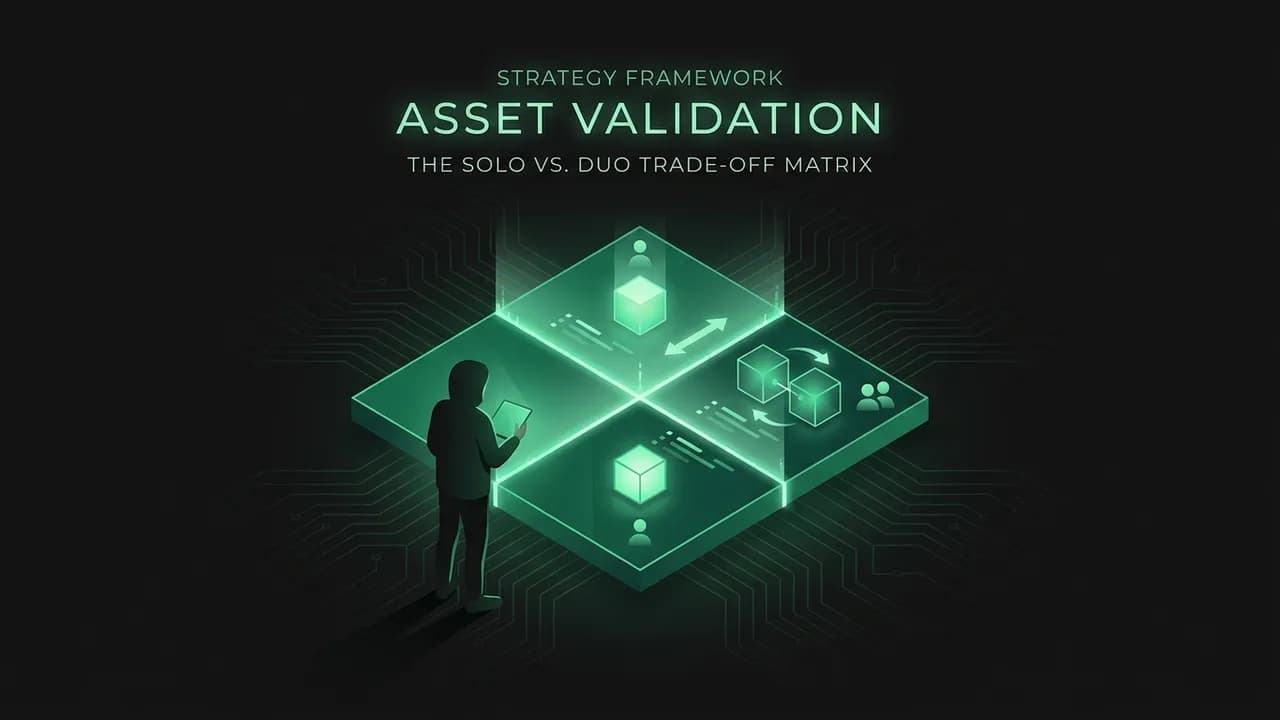
Strategy Framework: The Solo vs. Duo Trade-off Matrix
The search for a technical co-founder is often framed as an obvious startup milestone, especially for non-technical founders. But in practice, the decision is much more strategic than that. In 2026, the cost of building an initial prototype is lower than ever, while the cost of the wrong long-term partner is still enormous. That means the question is not simply whether you need technical talent. The real question is what kind of technical leadership the business actually requires at this stage.
We use the Solo vs. Duo Trade-off Matrix to separate technical need from emotional dependence. Many founders chase a CTO because they feel blocked, insecure, or afraid of not understanding the product deeply enough. Those are understandable feelings, but they are not sufficient reasons to give away major equity.
The Four Core Modes
High Complexity / High Capital (Duo Required): If the company is fundamentally deep-tech—new hardware, biotech, core AI model development, or genuinely difficult infrastructure—then technical leadership is not optional. The product itself is the moat, and a real technical partner is often required from the beginning.
Low Complexity / Low Capital (Solo-Pragmatic): If the startup is building a relatively standard SaaS workflow, marketplace layer, content platform, or no-code-first MVP, a technical co-founder may not be necessary yet. Agencies, freelancers, or fractional talent can often get the company through validation without permanent cap-table consequences.
The Fractional Path: In some cases, the founder should stay solo but rent high-quality technical judgment. A fractional CTO, senior engineer, or technical advisor can shape architecture, review vendors, and reduce risk while the founder retains flexibility.
The True Duo: This is not just someone who can code. It is someone who can co-own the mission, challenge assumptions, absorb ambiguity, and make long-term technical decisions with founder-level commitment.
What the Matrix Actually Tests
The matrix helps answer four questions:
When Founders Misdiagnose the Problem
A lot of founders do not actually need a co-founder. They need one of these instead:
The Equity Preservation Lens
Because founder equity is so expensive, the decision should be evaluated like any other irreversible allocation of a scarce asset. If the same problem can be solved for six months through a contractor, advisor, or fractional leader, that option may be strategically superior until the company proves deeper technical commitment is necessary.
The Central Strategic Rule
Do not search for a CTO because you are scared of tech. Search for a technical partner only if the company’s long-term survival and edge truly require deep technical leadership at the founder layer. If the business can reach meaningful validation without that equity trade, you should usually preserve optionality until reality proves otherwise.
Strategy: How to Pitch a CTO (When You Have No Money)
Strong technical talent has options. They are not waiting for vague ideas with shaky equity math. If you want to attract a real technical partner when you have no money, you must present more than enthusiasm. You must present seriousness, evidence, and a problem worth committing to.
What Great Candidates Actually Evaluate
A strong technical founder or founding engineer is not only asking, "Can this become valuable?" They are also asking:
The Execution Rules
The 30% Rule
A useful mental model is that you should approach great technical talent when you have done enough to prove you are not just an idea person. You do not need a finished business, but you should have enough momentum that the candidate is joining a moving company, not rescuing a dream.
What Makes a Pitch Credible
A compelling pitch usually includes:
What Undermines the Pitch Immediately
A strong candidate often walks away when they see:
The Real Recruiting Advantage
When founders cannot compete on cash, they must compete on seriousness. Clear thinking, demonstrated effort, honest scope, and real customer learning make the company more attractive than exaggerated ambition ever will.
The founder’s job is not to convince a candidate that coding is needed. The founder’s job is to prove that the mission is real enough, hard enough, and promising enough to deserve founder-level technical commitment.
Execution: The Three Personas - Visionary, Architect, or Manager?
Most founders say they need someone who can code. In reality, they need someone who can lead technical decisions at the right level for the stage of the company. In 2026, code generation is cheaper than ever. The scarce asset is not raw coding output. It is technical judgment.
The Three Personas
Why Founders Get This Wrong
They often search for a generic CTO title instead of asking which technical role the company actually needs. A company with 10 users does not need a 1,000-person systems architect mindset if the real need is product iteration. A company building a highly technical core engine may fail if it hires a pleasant operator who cannot reason deeply about architecture.
Matching Persona to Stage
Common Founder Mistake
Founders often choose based on résumé prestige rather than stage fit. A candidate from a giant company may look impressive but still be badly matched to startup ambiguity, ownership level, or pace. Startup fit is often more important than pedigree.
How to Interview for the Right Persona
Ask different questions depending on the gap you are trying to fill.
Signals to Watch in Real Conversations
A strong candidate often reveals their true operating mode through how they answer messy questions. Product-oriented leaders usually turn quickly toward users, workflows, and tradeoffs. Architects often ask where complexity concentrates and what future constraints matter. Managers ask how decisions get made, how delivery is tracked, and how teams stay aligned.
What Weak Answers Sound Like
Sourcing Implication
Do not only search for people with the CTO label. Look for senior builders with side projects, startup instincts, and a clear pattern of ownership. The best future technical partners often do not market themselves with grand titles yet.
A founder should hire or partner for the missing layer of judgment, not just for the missing hands on the keyboard.
Case Study and Pitfalls: Mark Zuckerberg vs. The 'Code Monkey' Trap
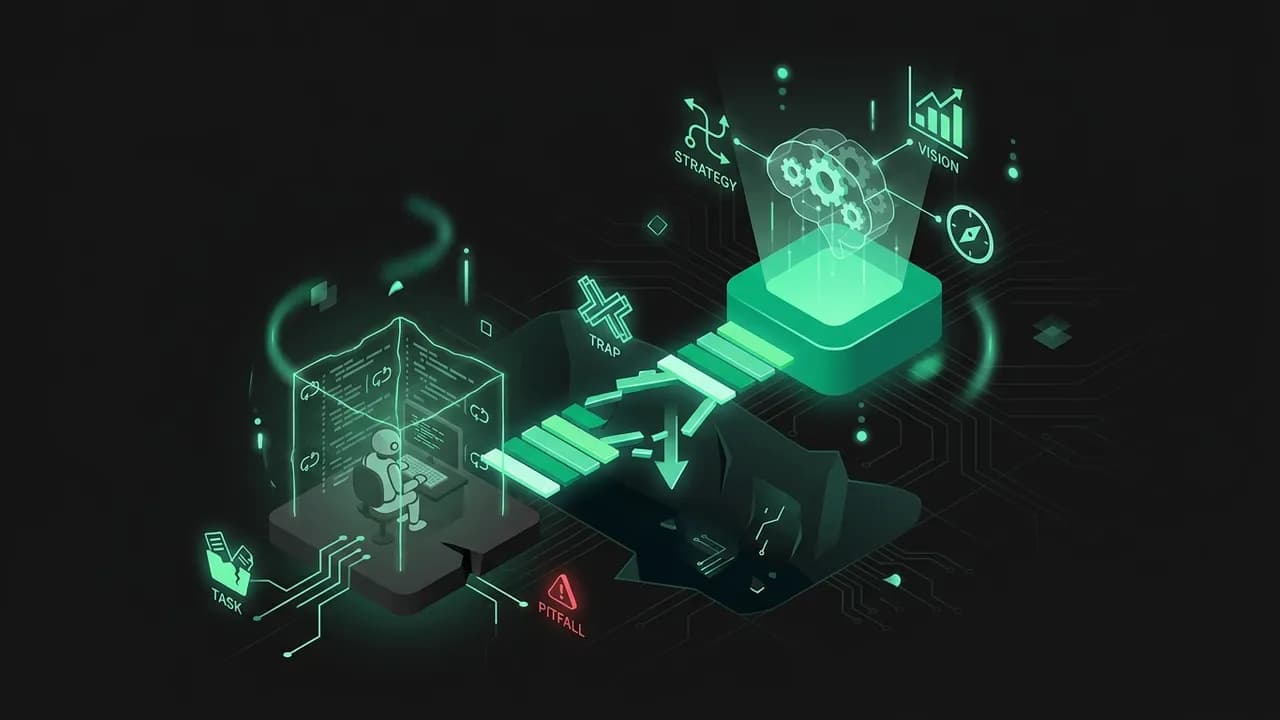
Case Study: Filling the Technical Gap Over Time
In the earliest days of many famous startups, the founder did not begin with the final technical leadership structure the company would later need. What mattered was not title perfection on day one. What mattered was matching technical capability to the current stage, then evolving the leadership layer as the company became more complex.
That is the core lesson here: a founder’s job is not to lock in the perfect technical org chart immediately. The founder’s job is to identify the most dangerous missing capability right now and close that gap without overcommitting too early.
The CTO Pitfalls
The Code Monkey Error: Hiring someone who waits for detailed instructions instead of improving the thinking itself. Fix: a true technical partner should challenge assumptions, not just implement requests.
The Red Tape Architect: Hiring a technically impressive person whose instincts are shaped for large-company complexity instead of startup speed. Fix: look for judgment under ambiguity, not just enterprise pedigree.
Equity Without Vesting: Giving away massive equity before trust and working chemistry are proven. Fix: founder-level vesting discipline is non-negotiable.
Confusing Dependence with Need: Feeling blocked by technical insecurity and solving that emotion with an irreversible co-founder decision. Fix: ask whether a fractional leader, advisor, or strong contractor could solve the immediate gap first.
Hiring for Comfort Instead of Tension: Choosing someone who feels easy to manage rather than someone capable of strong technical disagreement. Fix: you need productive tension, not passive obedience.
The Irreversibility Test
Before offering major founder equity, ask: if this relationship goes badly in six months, how painful will it be to unwind? If the answer is catastrophic, slow down and increase the amount of evidence before committing.
The Better Decision Standard
The best co-founder decisions usually feel less romantic than founders expect. They are built on observed working chemistry, aligned incentives, shared standards under pressure, and mutual respect in ambiguity. Strong co-founder relationships are earned through evidence, not declared through enthusiasm.
What Good Evidence Looks Like
Useful evidence includes:
Strong evidence is boring in the best way: it makes the relationship look dependable rather than dramatic. That is usually exactly what a company needs from a founding partnership. It also helps founders avoid confusing charisma with long-term fit. Reliability is usually a better predictor than chemistry alone. That kind of steadiness becomes more valuable as the company gets harder. It also makes the partnership more durable when the company enters stressful phases. Good partnerships age well under pressure. The right partner keeps getting stronger as reality gets messier.
The Founder Challenge
Evaluate your current technical dependency honestly. If you disappeared tomorrow, could the product continue? If the answer is no, is the real need a co-founder, a senior engineer, a fractional CTO, or simply better systems and documentation?
The right technical partner decision is usually less about status and more about fit, stage, and how irreversible the commitment will be if you get it wrong.
Key Takeaways
Decide solo vs duo with the Trade-off Matrix: a technical co-founder shares risk and owns the product, a hire just executes.
Attract a technical co-founder with vision and traction, not salary, and prove you've done the non-technical work first.
Match the CTO persona (Visionary, Architect, or Manager) to your stage, avoid a team-scaling manager too early.
Always run a paid trial project before committing equity, and put that equity on vesting with a cliff.
Don't mistake a 'code monkey' for a partner; a tech-centric startup needs a true co-owner of the product.
Frequently Asked Questions
What is the CTO dilemma for a non-technical founder?
How do you find and attract a technical co-founder without money?
What is the difference between a 'code monkey' and a technical partner?
What are real technical co-founder examples?
What are the three CTO personas to look for?
What are common mistakes when finding a CTO?
Your Turn: The Action Step
CTO / Tech-Partner Search Worksheet
Decide whether you need a co-founder CTO or just senior help, then define the exact persona you need and a pitch that lands a great technical partner when you have no money.
Decide co-founder vs hired help
Run the trade-off: do you need someone who OWNS the tech, or just builds it?
| Factor | Points to CO-FOUNDER | Points to HIRE/FRACTIONAL |
|---|---|---|
Pick the persona you need NOW
Circle Visionary, Architect, or Manager — and note the one you'll need later as you scale.
Inventory what YOU bring to the table
A great CTO co-founds with someone who brings something they can't. List your unfair contributions.
Draft the no-money pitch
Write the 3-line pitch: the vision, the proof it's real (pilots/traction), and the equity offer.
Set the offer terms
Equity %, vesting, and title. Be generous — they're betting their career, not just time.
| Term | Value |
|---|---|
List your screening red flags
Write the dealbreakers — e.g. won't co-own vision, no shipped product, no equity skin-in-game.
Before you close this
0/5 doneYour answers are saved in this browser only. Use “Download as PDF” to keep a copy.
Why Most Startups Don’t Need Patents
Ready to apply this?
Stop guessing. Use the Litmus platform to validate your specific segment with real data.
Find Your Partner