Support Ops: Scaling Happiness without Scaling Headcount
In 2026, 'Good Support' isn't just about answering emails fast; it's about solving problems before they reach a human. This 3,000-word guide masters the 'Support Funnel' and AI deflection.

Strategy Framework: The Support Funnel
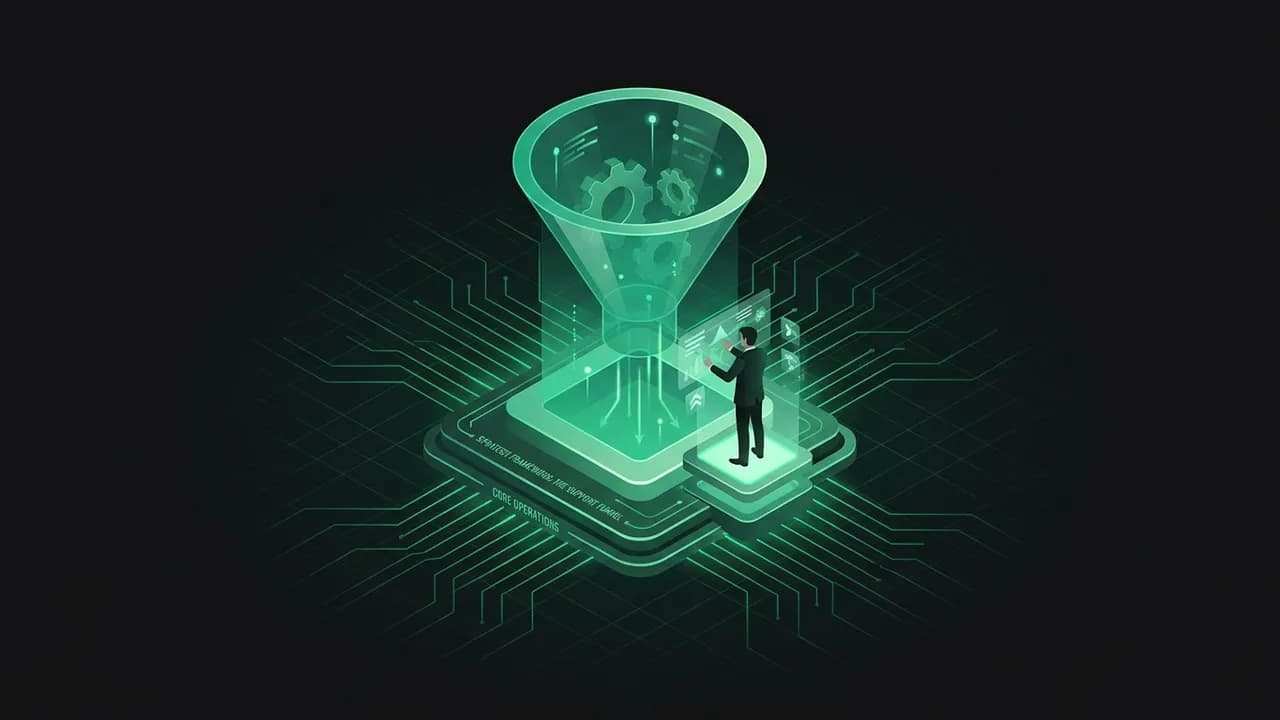
In a scaling startup, your support volume will grow faster than your revenue. We use the Support Funnel to prevent your team from drowning. Support is often treated as a cost center until the ticket queue starts affecting retention, reviews, renewals, and team morale. In reality, support is one of the clearest operational mirrors a company has. It shows where the product is confusing, where onboarding is weak, where billing creates friction, and where customer expectations are being missed.
The Layers of Defense
Layer 0: In-Product Design (Self-Correction): The best support is the one that doesn't need to exist. If a user is confused, fix the UI (Topic 87). Use tooltips and error messages to guide them.
Layer 1: AI Deflection (The Bot): Use an LLM-powered chatbot (e.g., Intercom Fin) trained on your documentation (Topic 90). The goal is to solve 50-70% of 'How-to' questions instantly.
Layer 2: Async Knowledge Base (KB): Well-written articles (Topic 90) that users can find via Google or an in-app help center.
Layer 3: Human Success (The Specialist): For complex bugs, billing disputes, or strategic advice. These humans should only see 10% of total inbound volume.
Why The Funnel Matters
Without a support funnel, every issue flows directly to a human queue. That makes support expensive, slow, and emotionally exhausting. More importantly, it prevents the company from distinguishing between issues that should be solved by product design, knowledge design, automation, or high-touch human intervention. The funnel is not just about cost. It is about routing work to the right resolution layer.
Layer 0 Is The Highest-Leverage Layer
The most valuable support improvement is usually a product improvement. If hundreds of users ask how to do the same thing, the best answer may not be a better help article. It may be a clearer interface, better onboarding, smarter validation, or more explicit error states. Great support teams do not just answer tickets. They create pressure to reduce ticket creation at the source.
Knowledge Is Infrastructure
A knowledge base should be treated as operational infrastructure, not a marketing side project. If support information is missing, outdated, hard to search, or written in vague language, users escalate to humans faster and AI agents become less useful. Strong KB operations usually include ownership, freshness review, search optimization, and direct linkage to the most common support intents.
AI Deflection Should Be Intentional
AI deflection is useful when it resolves questions cleanly and quickly. It becomes harmful when it creates loops, hides access to humans, or answers confidently with wrong information. The goal is not to maximize bot exposure. The goal is to maximize accurate resolution at the lowest reasonable level of effort for the customer. A badly tuned bot increases frustration because it adds one more obstacle before the user gets help.
Human Support Should Be Reserved For Complexity
Humans create the most value when empathy, judgment, negotiation, or nuanced troubleshooting are required. That means complex product edge cases, high-value account onboarding, emotionally charged billing disputes, or technical diagnosis that needs real interpretation. If human specialists spend most of their time answering repetitive FAQ questions, the support system is badly designed.
Metrics That Matter
A mature support funnel tracks more than ticket count. Useful metrics include:
These metrics help distinguish between noise, systemic product issues, and real service failures.
What Good Support Operations Protect
Good support systems protect:
The Strategy: Measure your Deflection Rate. If Layer 1 and 2 aren't catching 80% of basics, your KB is incomplete or your bot is poorly tuned. But never forget that the strongest funnel starts with reducing avoidable support demand in the product itself.
Strategy: The Tiered Support Architecture
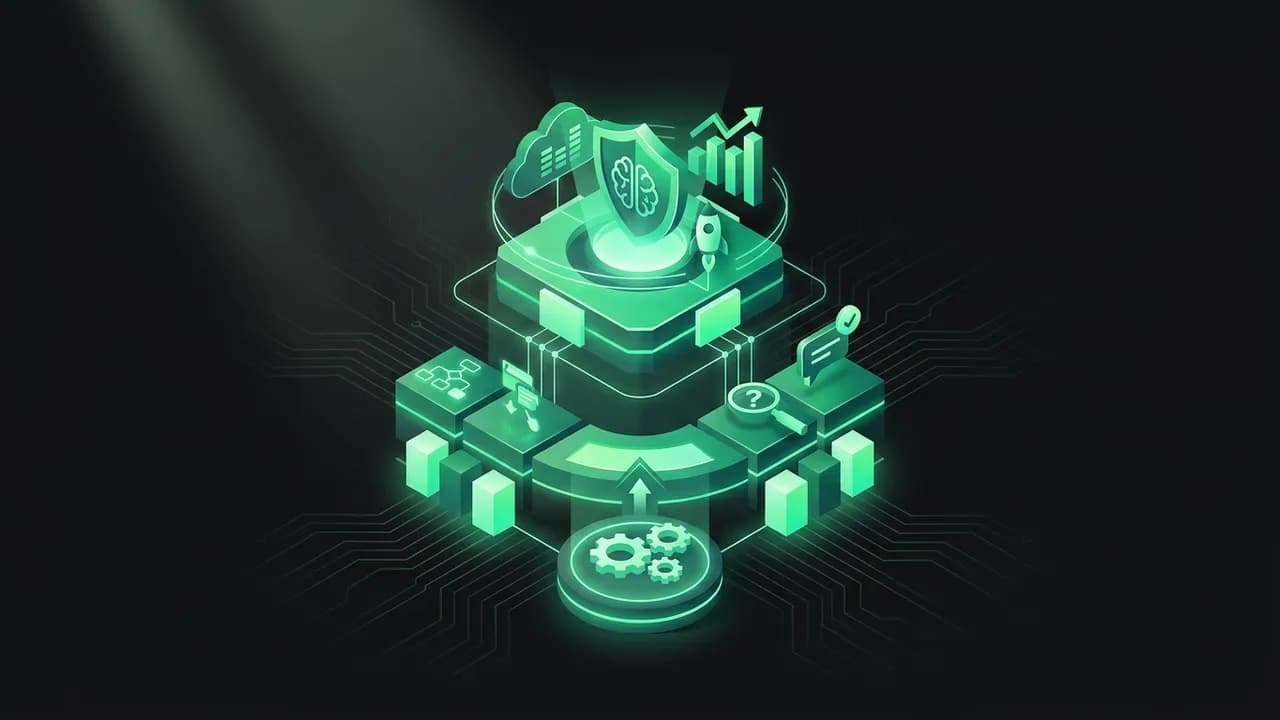
Not all support tickets are created equal. You must route them based on 'Value' and 'Technical Complexity.' One of the biggest mistakes growing startups make is handling every ticket through the same queue with the same response logic. That creates slow response for urgent issues and wastes expert time on routine problems. Tiering exists to match response quality to issue severity, customer importance, and resolution complexity.
The Execution Rules
Why Tiering Reduces Chaos
Tiering creates clarity on who owns what. It prevents the support queue from becoming a catch-all dumping ground and stops engineering from being flooded with issues that should have been resolved earlier in the funnel. It also helps customers get the right kind of help faster because they are not waiting behind tickets with completely different urgency profiles.
SLAs Are Expectation Management
Service level agreements are not just internal targets. They are a trust contract. A company that promises 2-hour response for critical failures and consistently misses it teaches customers not to believe its service claims. On the other hand, realistic SLAs help support teams prioritize well and help customers know what kind of response to expect. Good SLAs distinguish clearly between response time and resolution time.
High-Value Customers Need Intentional Paths
Enterprise or high-ACV customers often require a more curated support experience because the financial stakes and implementation complexity are higher. They may need dedicated onboarding help, custom escalation paths, or proactive communication when incidents occur. This does not mean small customers deserve poor service. It means the support design should recognize that impact is not uniform across accounts.
Engineering Should Enter Late, But Not Blind
Engineering should not be the first line of support, but it also should not be isolated from customer pain. Product and engineering teams need structured exposure to escalations, recurring issues, and top complaint categories. Otherwise they optimize for roadmap abstraction while support absorbs the real-world cost of product friction. Support-driven development works because it reconnects builders to friction they would otherwise miss.
Routing Logic Should Be Explicit
Strong support ops define routing rules clearly. Which tickets go to billing? Which go to success? Which become bugs? Which require security review? Which escalate immediately? If routing depends on individual judgment alone, inconsistency rises and response quality varies by who happens to see the ticket first.
Tier Quality Is More Important Than Tier Count
Some startups overcomplicate support design by adding too many tiers too early. The goal is not to create an enterprise org chart. The goal is to ensure that simple issues are solved quickly and complex issues reach qualified people without friction. A lean but clear tier structure beats a sophisticated but confusing one.
Support Should Inform Product Priority
A mature support team is not only a service function. It is a signal function. Ticket categories, escalation rates, and customer frustration trends should influence product priorities, onboarding improvements, and documentation work. The companies that scale support well are usually the ones that turn support pain into product decisions.
Tactic: Implement 'Support Driven Development.' Once a week, the Lead Engineer must spend 4 hours answering Tier 1 tickets. It's the fastest way to fix the bugs they usually ignore and one of the quickest ways to strengthen empathy between product builders and customers.
Execution: Tuning Your AI Agent for 2026
An AI bot that says 'I don't know' is worse than no bot at all. You must treat your support AI as an employee. That means onboarding it properly, measuring its output, supervising its failure modes, and continuously improving its knowledge base. An AI support agent is not a one-time installation. It is an operating system component that needs tuning.
The AI Training Playbook
Retrieval Quality Determines Bot Quality
Most support bots fail because their retrieval layer is weak, not because the model is weak. If the AI cannot access clean, current, well-structured knowledge, it will hallucinate, generalize badly, or answer with vague confidence. That is why KB architecture and retrieval quality are more important than flashy bot features.
Hand-Offs Must Feel Seamless
A bot should never trap a frustrated customer in an endless loop. Good hand-off behavior matters as much as good first-response behavior. When escalation is needed, the bot should transfer context, summarize what has already been tried, and preserve the customer’s time. Nothing destroys trust faster than forcing a user to repeat the same problem after a failed bot interaction.
Sentiment And Risk Signals Matter
Support AI should recognize not just intent, but emotional and business risk. Angry sentiment, repeated failed resolutions, payment issues, outage signals, or language suggesting churn should trigger earlier escalation. The bot’s job is not only to answer questions. It is also to recognize when automation is becoming dangerous.
Training Data Must Be Curated
Not every piece of internal content should feed the bot. Old docs, contradictory notes, experimental policies, and half-finished internal discussions can contaminate answers. Good support AI depends on curated sources, freshness checks, and clear rules for which documents are authoritative.
Measure Failure, Not Just Coverage
Teams love reporting bot resolution numbers, but failure analysis matters just as much. Which intents are most often escalated? Which answers create frustration? Which articles are frequently cited but still do not solve the issue? The AI program improves fastest when the company studies misses, not just wins.
AI Is A Force Multiplier, Not A Replacement For Judgment
Automation can absorb repetitive support load extremely well, but nuanced human judgment still matters for complex technical troubleshooting, commercial discussions, retention-risk conversations, and emotionally charged interactions. The right model is augmentation, not blind replacement.
The Ops Loop
A strong weekly AI review can examine:
That review turns the bot from a static tool into an improving system.
Tooling: Use Intercom or Zendesk for the platform. Use Help Scout for a simpler, email-first approach. Use FullStory to watch recordings of what the user was doing right before they opened a ticket. The bot gets smarter fastest when customer context, product behavior, and support knowledge are connected.
Case Study and Pitfalls: The 'Intercom' Success and the 'Cheap' Bot Failure
Case Study: The 1,000% Support Efficiency Gain
A B2B SaaS company was hired 5 support reps for 1,000 customers. They were drowning. They implemented a tiered KB and an AI bot that linked directly to their Stripe API (Topic 107) to handle refunds. Their human headcount stayed at 5 while their customer count grew to 10,000. They proved that Software scales; humans don't.
Why Cheap Automation Often Fails
Many companies install the cheapest bot possible, connect it to weak documentation, and assume automation is now handled. The result is scripted irrelevance, wrong answers, trapped customers, and more hostility toward support than before. Bad automation does not reduce load. It shifts frustration from queue time to interaction quality.
The 'Support' Pitfalls
The 'Hidden Contact' Error: Making it impossible for a user to find a human. This leads to churn and bad reviews. Fix: Always provide a 'Talk to Human' button if Layer 1 fails.
Ignoring the 'Root Cause' Analysis: Answering the same password-reset question 500 times instead of fixing the login flow. Fix: Tag every ticket and do a weekly 'Top 5 pain points' review.
Tone-Deaf Automation: Sending an automated 'We are happy to help' message when the server is down and 1,000 people are angry. Fix: Have a 'Crisis Mode' toggle for your bot (Topic 104).
Deflection Without Satisfaction: Celebrating fewer human tickets while CSAT collapses. Fix: measure support quality, not just automation volume.
No Closed-Loop Learning: Letting humans solve edge cases without feeding those learnings back into the KB and bot logic. Fix: make failed bot interactions a content-update trigger.
What Healthy Support Operations Feel Like
Healthy support operations feel faster, calmer, and more coherent. Customers can usually solve simple problems themselves, get immediate help when needed, and reach a competent human quickly when the issue is complex. Internally, support is not constantly drowning because recurring problems are being removed at the source.
Questions Every Support Leader Should Ask
The Final Principle
The best support organizations do not win by hiring the most people. They win by designing a system where product, knowledge, automation, and human judgment work together. Great support is not only a response function. It is part of how the company scales trust.
The 'Support' Challenge: Look at your last 100 tickets. How many could have been solved by a single article in a Knowledge Base? Pick the top 3 and write those articles today. Link them to your chatbot.
Key Takeaways
Use the Support Funnel: deflect repetitive questions with docs and bots, reserve humans for high-trust issues.
Build a tiered architecture so expensive expert time only touches the cases that need it.
Tune your AI agent on a current knowledge base with confidence-based escalation to humans.
A cheap, wrong-answering bot erodes trust faster than having no bot; quality of content comes first.
Track first-response time, resolution rate, and CSAT to know if your ops are actually working.
Frequently Asked Questions
What are customer support operations?
How do you decide between chatbots and human support?
What is a tiered support architecture?
What are good customer support examples?
How do you tune an AI support agent?
What are common support operations mistakes?
Your Turn: The Action Step
Support Funnel Worksheet
Design a tiered support funnel that deflects routine tickets with self-serve and AI, and routes only the hard cases to humans — with target metrics.
Tag your top ticket reasons
From last month, list the top 5-7 reasons people contact you and the % of volume each is.
| Reason | % of volume | Repetitive? Y/N |
|---|---|---|
Assign each reason to a tier
Push every repetitive reason to Tier 0 or Tier 1. Reserve humans for judgement and emotion.
| Tier | Handles | Owner / tool |
|---|---|---|
Write the bot's escalation rule
Define exactly when the AI must hand off to a human (refunds, anger, repeated failure).
Draft 3 self-serve articles
Name the 3 help-centre articles that will deflect the most tickets, with a one-line answer each.
| Article title | One-line answer |
|---|---|
Set your target metrics
Pick a deflection rate, first-response time, and CSAT floor to track weekly.
Before you close this
0/5 doneYour answers are saved in this browser only. Use “Download as PDF” to keep a copy.
Your Business Will Break Without SOPs
Ready to apply this?
Stop guessing. Use the Litmus platform to validate your specific segment with real data.
Scale Your Success