Pitching: The 10-Slide Deck That Gets Funded
A pitch deck is not a document that explains everything. It is a decision tool that creates conviction fast enough to earn the next conversation. This guide shows how to structure, narrate, and deliver a deck that investors can actually believe.
Strategy Framework: The 10-Slide Master Deck
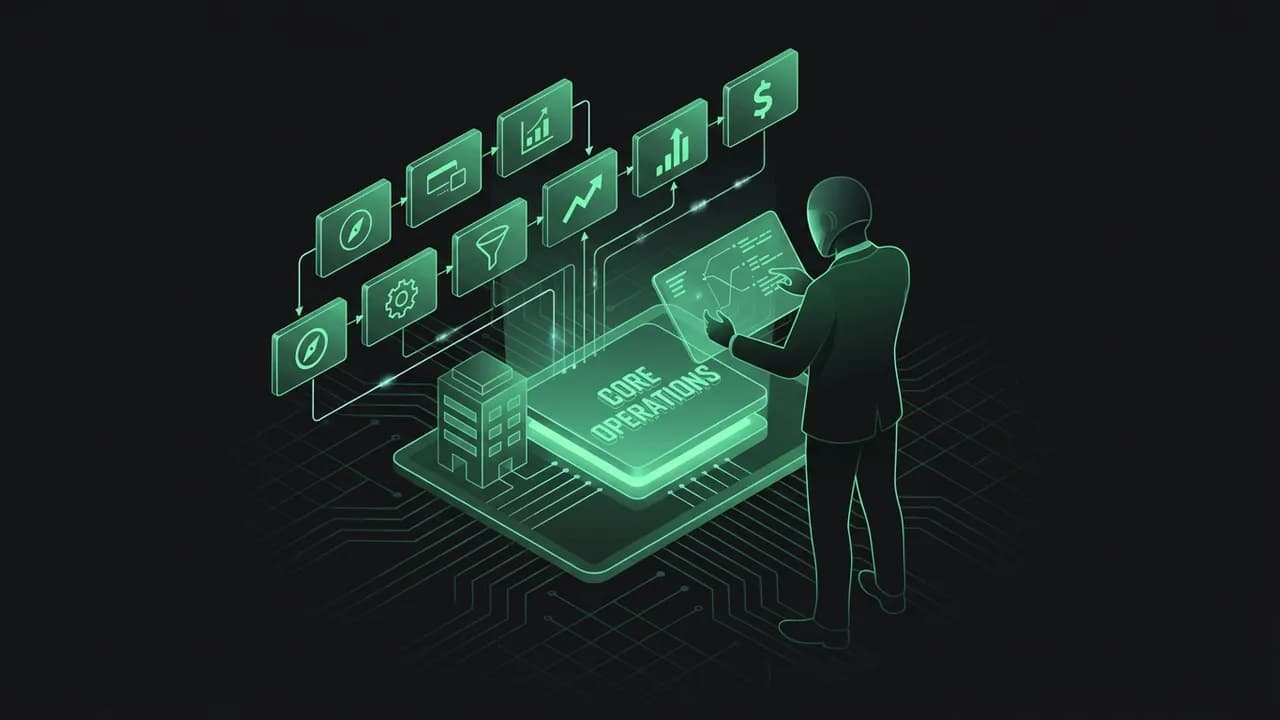
A pitch deck is not a business plan, a data room, or a company biography. It is a compressed argument. Its job is to create enough clarity and conviction that the investor wants to keep going. That is why we use the 10-Slide Master Deck structure. It keeps the narrative tight enough to hold attention while still covering the questions that matter most.
The Structure
Purpose: A clear one-line explanation of what the company does and for whom.
Problem: A sharp articulation of the pain, inefficiency, or unmet need.
Solution: The product or service as the answer to that pain.
Why Now: The timing reason this company can work now when it might not have worked earlier.
Market Size: A believable market view grounded in real bottoms-up logic.
Competition: The alternatives users have today and why your approach matters.
Product: Enough substance to show how it works without turning the deck into documentation.
Business Model: How the company makes money and why the economics can improve.
Team: Why this group is particularly credible for this problem.
The Ask: How much you are raising, what it funds, and what milestone it should buy.
Why Structure Matters So Much
Investors are not merely reading information. They are testing whether the story holds together. A messy deck often signals messy thinking. When the slides flow logically, investors can spend more mental energy evaluating the business and less mental energy decoding the founder.
The Real Job Of Each Slide
Each slide should answer one decision-relevant question. If a slide exists only because founders feel they are supposed to include it, it usually weakens the deck. Strong decks are selective. They respect the investor’s limited attention and keep the argument cumulative.
What Founders Often Get Wrong
They confuse comprehensiveness with quality. They try to answer every possible question inside the main deck, which creates density without persuasion. The result is a document that feels informative but leaves no strong impression. The better approach is to keep the core deck sharp and move supporting depth into the appendix.
The Venture-Scale Filter
Every slide should help answer some version of this question: is this a business that can become meaningfully large and can this team credibly get it there? If a slide does not help answer that, it may be decorative rather than useful.
The Most Important Reframe
A pitch deck is not trying to close the entire round in one file. It is trying to earn the next step: a meeting, a partner discussion, diligence, or deeper engagement. That means clarity beats volume. Precision beats cleverness.
Another Useful Deck Standard
After reading the deck once, an investor should be able to explain the company in a few sentences without inventing missing logic. If the story falls apart when retold, the structure is probably still too fuzzy. That is a powerful editing test because it measures memory, not just completeness.
Why Editing Is More Valuable Than Adding
Most decks improve when text is removed, charts are simplified, and claims are made more concrete. Founders often think the deck gets stronger by becoming more detailed. In practice, it often gets stronger by becoming more legible.
The Strategy: Treat the deck like an argument with rhythm. Each slide should make the next slide feel more necessary. If a slide is boring, confusing, or overloaded, it is interrupting conviction instead of building it.
Strategy: Heart vs. Brain
Investors often describe themselves as rational, and in many ways they are. But pitch decisions are still shaped by intuition, pattern recognition, and emotional response. The founder’s job is not to manipulate this. It is to understand it. Strong pitches create both emotional momentum and analytical confidence.
The Execution Rules
Why Story Matters
A good deck helps the investor remember the company after the meeting ends. If the story is forgettable, even strong data can fade. Story is what gives the numbers shape. It turns a collection of facts into a coherent investment thesis.
Why Numbers Still Matter
Story without evidence feels like performance. The brain needs proof points: usage, retention, growth, market logic, business model credibility, and team-specific edge. The strongest decks make the emotional case first and then let the evidence make belief feel justified.
The Secret Ingredient
Many strong pitches contain a useful tension: the opportunity feels surprising at first, then obvious in retrospect. That transition is powerful because it helps investors feel like they are seeing something early rather than being sold something shallow.
Teaser Versus Full Deck
A teaser deck can work well for intros because it reduces cognitive load and increases curiosity. The full deck should exist for real meetings and diligence follow-up. What matters is not simply slide count. It is whether the material matches the moment.
What Founders Should Sound Like
The best pitch tone is usually confident, specific, and calm. Overhyped language often reduces trust. Investors do not need founders to sound theatrical. They need them to sound like people who understand the problem, know the numbers, and can execute under pressure.
How To Balance Ambition And Credibility
A good pitch should make the company feel ambitious without making the founder sound detached from reality. That balance matters because investors are not only funding upside. They are funding judgment. The most persuasive founders can describe a huge opportunity while staying concrete about the current wedge, present traction, and next milestone.
The Investor Retell Test
After a partner meeting, someone in the room has to summarize your company to others who were not present. The clearer your emotional and analytical framing, the more accurate that retell will be. Weak decks often fail not in the room, but in the retell.
Tactic: Build the narrative so an investor can repeat it to a partner after one meeting. If they cannot explain your story clearly from memory, the deck is probably too crowded or too abstract.
Execution: Commanding the Room (or Zoom)
The deck does not raise the round by itself. The founder does. The slides are support material for conviction, but the live interaction is where investors test clarity, composure, and judgment. That means a good meeting is not a scripted monologue. It is a controlled conversation.
The Presentation Playbook
What Investors Are Really Testing Live
In the room, investors are often evaluating:
The Most Common Meeting Error
Many founders either over-control the meeting or surrender it completely. Over-control makes the conversation stiff. Surrendering it makes the pitch feel scattered. Strong founders do something harder: they stay flexible without losing narrative control.
Handling Hard Questions
Hard questions are not interruptions to the pitch. They are part of the pitch. A thoughtful answer that shows self-awareness, realism, and command of the business often builds more trust than a perfect scripted run-through.
Why The Appendix Is Powerful
A strong appendix changes how investors perceive preparation. It shows that the founder knows the deeper layers of the business and chose not to overwhelm the main story. That distinction matters. It signals judgment, not just effort.
The Follow-Up Matters Too
A strong meeting can still be weakened by vague follow-up. Founders should send clean materials, answer open questions quickly, and keep momentum moving. Investor interest cools when follow-up becomes slow, inconsistent, or confusing. The deck starts the process, but disciplined follow-through helps sustain conviction.
Tooling: Use controlled deck-sharing tools, maintain a strong appendix, and review where conversations slow down or derail. If the same question keeps appearing, the deck or narrative probably needs refinement.
Case Study and Pitfalls: The 'Wikipedia' Pitch
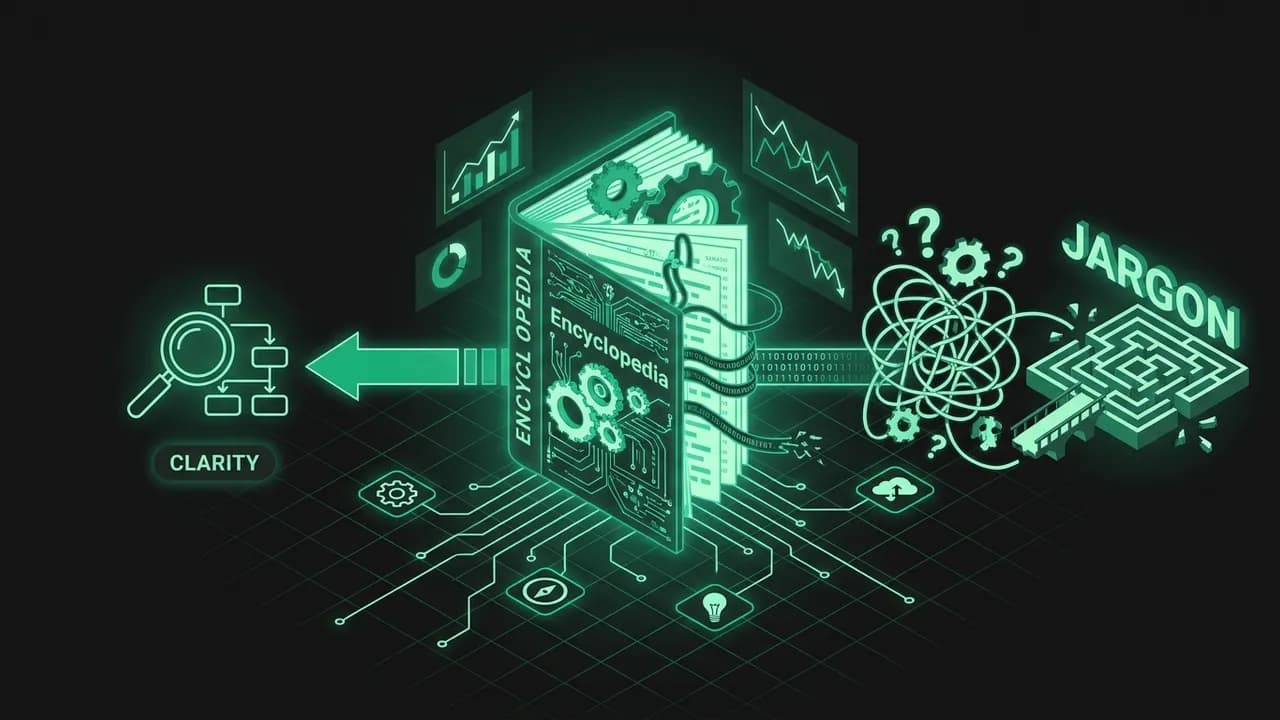
Case Study: The 50-Slide Failure
A technical founder once built a deck that explained every subsystem, architecture layer, and algorithmic detail in the product. The presentation was intellectually impressive but strategically weak. Investors left without a clear picture of the customer, the urgency of the problem, or the scale of the opportunity. The founder later rebuilt the deck around user pain, timing, workflow change, and economic value. The technical depth moved to the appendix. The fundraising process improved dramatically.
The lesson is not that technical substance should be hidden. The lesson is that it must be sequenced correctly. Investors first need to understand why the company matters. Only then do they care about the deeper implementation logic.
The Pitch Pitfalls
The Market Size Lie: Quoting a huge top-down market without showing a believable path into it. Fix: make the market story specific and bottom-up.
The No Competition Lie: Pretending no alternatives exist. Fix: acknowledge both direct competitors and status-quo substitutes honestly.
The Survival Ask: Presenting the raise as money needed to stay alive rather than to reach a meaningful milestone. Fix: tie the ask to a concrete next value-creation step.
Too Much Product Detail Too Early: Explaining the engine before proving why the destination matters. Fix: sequence for persuasion, not for technical pride.
A Vague Ask: Asking for capital without explaining how much, for what, and what it should achieve. Fix: make the ask precise and milestone-linked.
What Strong Pitches Actually Do
Strong pitches leave investors with a sentence they can repeat, a market they can believe, a team they can trust, and a next step that feels justified. They do not try to answer everything. They try to make the right questions inevitable.
Another Useful Editing Test
Ask a smart outsider to read the deck in silence for three minutes. Then ask what they remember. Their memory is often a more honest measure of narrative quality than the founder’s own opinion, because founders already know what they meant to say.
Why Great Decks Feel Simple
Great decks often feel deceptively simple because the complexity has been organized rather than displayed. That simplicity is earned through editing, prioritization, and repeated rewriting. Founders should see simplicity as evidence of rigor, not as evidence that the deck lacks sophistication.
One Last Deck Rule
If a claim is important, make it easy to understand. If it is complex, support it cleanly. Confusion rarely helps conviction.
Practical Founder Questions
Before sending your deck, ask:
The Final Principle
Investors do not fund decks because they are long, smart-sounding, or visually busy. They fund companies that feel coherent, timely, and credible. The deck’s real job is to make that belief easier to form. Clear decks travel further in partnerships. Precision compounds trust in fundraising. Memorable decks improve internal championing too. Brevity with clarity wins more rooms.
Key Takeaways
Use the proven ~10-slide structure: problem, solution, market, product, model, GTM, traction, competition, team, ask.
Lead with a sharp problem and surface traction early; investors scan for momentum.
Balance heart (story and vision) with brain (market, traction, unit economics).
Tailor to your audience: Indian VCs (Peak XV, Accel, Lightspeed) want market size and unit economics.
Avoid the Wikipedia pitch: one idea per slide, a specific ask, and a confident story-led delivery.
Frequently Asked Questions
What is a pitch deck?
What goes in a 10-slide pitch deck?
How do you make a pitch deck that gets funded?
What are good pitch deck examples?
How do you deliver a pitch in the room or on Zoom?
What are common pitch deck mistakes?
Your Turn: The Action Step
10-Slide Pitch Deck Worksheet
Draft the one-line core message for each of the 10 essential pitch slides, so your deck tells a tight story that gets a second meeting.
Nail the problem and hook
Write the problem as a sentence that makes an investor feel the pain, plus your 30-second verbal hook.
State solution and product
One sentence each: what you do, and what the product actually is.
Fill the deck-line table
Write the single key line for each remaining slide. One point per slide, no walls of text.
| Slide | The one line it must land |
|---|---|
Lead with your strongest proof
Pick the one metric or fact that makes an investor lean in (traction, a marquee logo, growth rate).
Make the ask concrete
Amount, what it buys (the milestone), and the runway it funds. No vague 'we're raising a round'.
Pre-empt the killer question
Write the one objection that could sink the pitch and your crisp answer.
Before you close this
0/5 doneYour answers are saved in this browser only. Use “Download as PDF” to keep a copy.
The Founder Hack That Saves Time, Money & Mistakes
Ready to apply this?
Stop guessing. Use the Litmus platform to validate your specific segment with real data.
Tell Your Story