Pivot or Persevere: The Art of the Post-Mortem
Perseverance is essential in startups, but stubbornness can quietly destroy years of effort. This guide shows how to read market signals honestly, run post-mortems without ego, and decide when to pivot, persevere, or shut something down.
Strategy Framework: The Pivot Signal Matrix
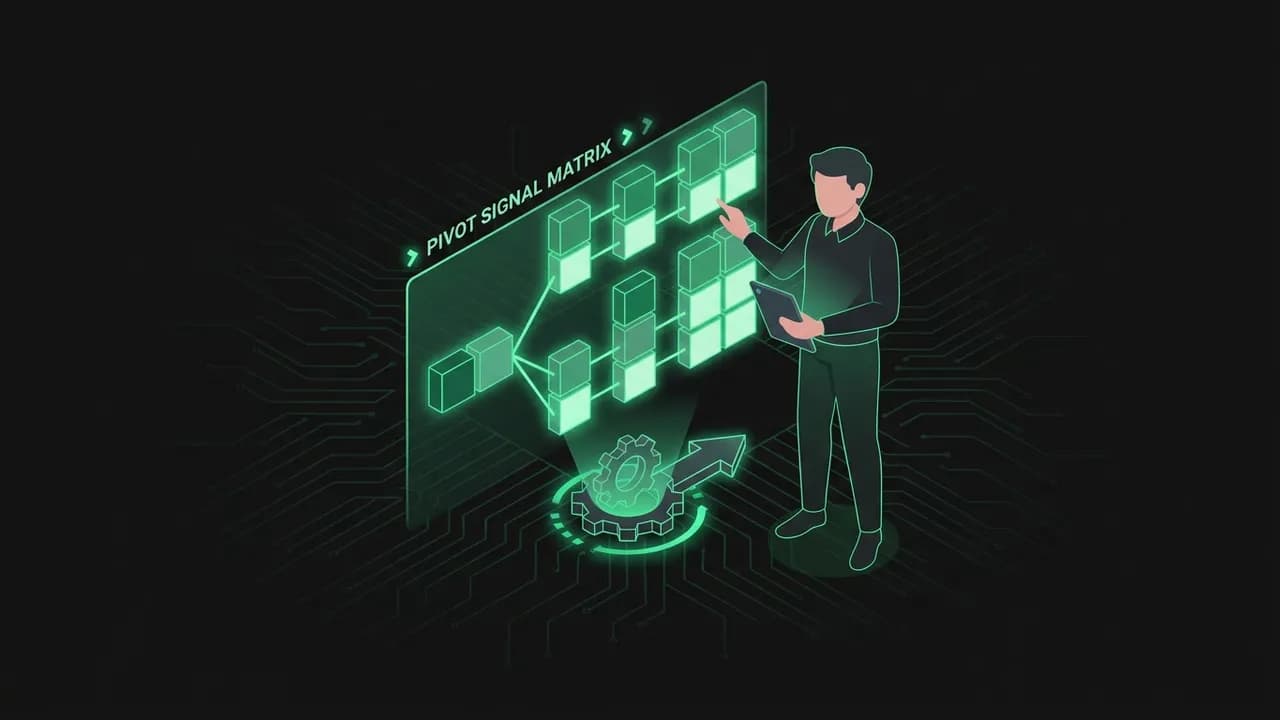
In startups, perseverance is praised so aggressively that founders often lose the ability to tell the difference between conviction and denial. That is dangerous. A startup does not die only when money runs out. It also dies when the team keeps investing in a direction that reality has already rejected.
We use the Pivot Signal Matrix because strategic change should not be driven by mood, panic, or founder ego. It should be driven by evidence. The goal is not to pivot at the first sign of pain. The goal is to separate normal startup difficulty from signs that the core thesis is wrong.
The Signals
The Flatline (Pivot): You have shipped major improvements, improved onboarding, adjusted pricing, and increased reach, yet the key metric that should prove value creation still does not move. The market may not care enough about the problem or your solution.
The Pull (Persevere): The product is still rough, but users keep coming back, complain when it breaks, and find ways to use it despite friction. This usually means the problem is real even if the implementation still needs work.
The Unit Economics Gap (Structural Pivot): Growth exists, but every customer makes the business weaker. If acquisition, delivery, or retention economics cannot plausibly improve into a viable model, something structural has to change.
The Founder Burnout Signal (Kill or Reset): The team no longer believes in the problem, and the work has turned into exhausted maintenance rather than purposeful learning. In some cases that calls for a shutdown, a reset, or leadership change.
What Founders Often Misread
Many teams misread noise as signal. A bad launch week is not proof that the business is dead. A few happy users are not proof of product-market fit. One enterprise customer is not proof of repeatability. The matrix matters because it forces the company to interpret data in context rather than as emotional ammunition.
The Metrics That Matter Most
The right pivot decision usually depends on a small set of directional truths:
The Most Important Reframe
A pivot is not a confession of failure. It is a hypothesis update. Founders begin with a theory about customer pain, product fit, go-to-market motion, and business model. A pivot happens when the evidence says part of that theory is wrong enough that continued execution would be less rational than strategic change.
Different Types Of Pivots
Not every pivot is a total reinvention. There are at least four common forms:
Why Teams Stay Too Long
Teams stay too long because of sunk cost, identity, public positioning, team fatigue, investor pressure, and the hope that one more feature will save the story. But time does not improve a weak thesis by itself. If the core learning loop has stopped producing positive evidence, persistence can become expensive avoidance.
The Cost Of Waiting Too Long
A delayed pivot often costs more than founders realize. It burns team morale, degrades hiring credibility, confuses customers, and consumes runway that could have funded the next better hypothesis. The team does not merely lose time. It loses optionality.
The Best Evidence Standard
Before deciding to stay the course, ask whether the current evidence would be convincing if this were not your company. That outsider lens is useful because founders naturally overweight intention and underweight results.
The Strategy: Use evidence to decide whether you are facing friction worth pushing through or invalidation that requires a strategic change. The only true failure is burning scarce time and capital on a problem reality has already answered.
Strategy: The Art of the Post-Mortem
When a product initiative fails, a launch flops, or a strategic bet underperforms, the company has paid tuition. The question is whether it learns anything expensive enough to justify that tuition. That is what post-mortems are for.
The Execution Rules
What A Good Post-Mortem Includes
A serious post-mortem should document:
Why Teams Avoid Honest Review
Teams avoid post-mortems because they fear blame, embarrassment, political fallout, or the implication that prior work was wasted. But skipping the review does not preserve value. It simply guarantees the company will be more likely to repeat the mistake.
The Difference Between Learning And Rationalization
A weak post-mortem explains away the result. A strong one narrows uncertainty. It changes future decision quality. If the team exits the meeting with the same vague story it entered with, the process was probably performative.
When To Go Public
Public post-mortems can create trust, but they should not be used as branding theater. Share publicly when the lesson is real, the details are responsible, and the write-up will help users, peers, or future teammates understand what changed.
The Post-Mortem Question Most Teams Skip
What did we continue to believe for too long? This question matters because startup mistakes are often less about one bad decision and more about one outdated belief that survived too many meetings. When teams identify that stale belief, they improve their ability to detect future drift earlier.
Tactic: Capture every major failed initiative in a repeatable template. If the company cannot describe the original hypothesis and the observed outcome side by side, it is not doing real strategic learning yet.
Execution: How to Turn the Ship
A pivot is not only a strategic event. It is also an emotional event. People joined the company to build one story, one product, one future. When that changes, leadership has to manage confusion, grief, doubt, and energy loss in addition to the operational shift.
The Pivot Playbook
What Teams Need During A Pivot
Teams need three things during a pivot:
The Leadership Risk
If leadership tries to spin the pivot as though nothing meaningful changed, trust usually drops. Teams can handle bad news better than evasive language. Clear truth is stabilizing. Vagueness is destabilizing.
The Operational Checklist
A real pivot usually requires:
Why Quick Kills Matter
The company should not keep every old feature alive just because work went into it. Half-dead products create cognitive drag, engineering drag, support drag, and emotional drag. Focus gets restored when the organization has the courage to stop maintaining what no longer fits the new thesis.
The First 30 Days Matter Most
The first month after a pivot determines whether the new direction becomes real or remains a slide-deck idea. Leadership should tighten priorities, reduce side work, talk to customers aggressively, and watch the new bridge metrics closely. Early discipline matters because teams are most vulnerable to drift right after a reset.
What To Preserve During The Turn
Not everything from the old company story is waste. Teams should preserve useful customer insight, strong relationships, reusable infrastructure, and any internal operating habits that still serve the new direction. A smart pivot is not amnesia. It is selective continuation.
Tooling: Use product analytics to identify real behavioral signals, and use structured documentation to archive old assumptions cleanly. The operational goal is not chaos with a new label. It is disciplined reallocation of effort.
Case Study and Pitfalls: The 'Slack' Pivot
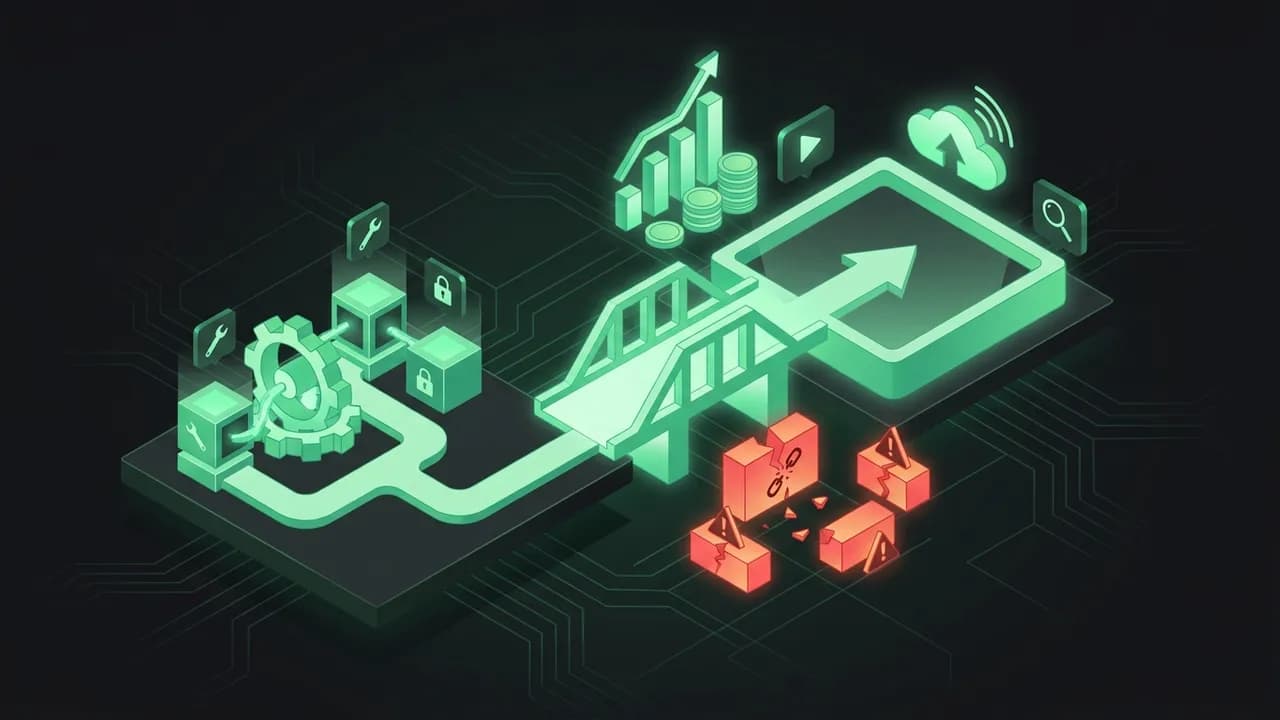
Case Study: From Games to Tools
Slack is a classic example because the team did not simply keep polishing a failing product forever. The original game effort did not break through, but the team noticed something else with real value: the internal communication tool they had built to support their own work. They paid attention to what was genuinely useful, let go of the weaker path, and reallocated conviction around the stronger one.
The deeper lesson is not that every company has a hidden Slack inside it. The lesson is that valuable pivots usually emerge from evidence already present in the company’s behavior, users, workflows, or traction patterns. Good pivots are discovered through honest observation, not through random reinvention.
The Pivot Pitfalls
The Zoom Pivot Error: The company changes direction too frequently and never gives any thesis enough time to produce real evidence. Fix: commit to meaningful experiment windows instead of reacting to every bad week.
Ignoring The Human Cost: A pivot changes priorities, confidence, and sometimes team structure. Fix: communicate early, honestly, and with respect for the people affected.
Zombie Mode: The company survives, but without conviction, growth, or strategic clarity. Fix: force a real decision instead of drifting in low-energy ambiguity.
Cosmetic Pivots: The company changes messaging but not the underlying product truth. Fix: ensure the pivot changes the actual thesis, not just the pitch deck.
Pivoting Without Metrics: Teams announce a new direction but never define what would prove it is working. Fix: define the next proof points before the reset begins.
What Mature Decision-Making Looks Like
Mature teams do not worship persistence or novelty. They respect reality. They keep going when the evidence says the problem is real and the product is improving. They pivot when the evidence says the thesis is wrong but the team still has a better angle. They shut down when neither the economics nor the belief structure justify more resource burn.
The Hidden Cost Of Zombie Mode
Zombie mode feels safer than a hard decision, but it often causes the most long-term damage. It drains the strongest people first, trains the company to tolerate mediocrity, and normalizes strategic avoidance. Teams in zombie mode are busy, but not meaningfully alive.
Practical Founder Questions
Ask these before your next major decision:
The Final Principle
A good pivot is not an act of panic. It is a disciplined response to learning. A good perseverance decision is not blind grit. It is evidence-backed commitment. Strong founders know that the real skill is not always pushing harder. It is knowing what reality is telling them before the runway disappears. Durable teams revisit this discipline often.
Key Takeaways
A pivot is an evidence-based course correction that keeps your learnings, not a random restart.
Use a signal matrix: persevere if core metrics improve, pivot if good execution still can't win customers.
Run a blameless post-mortem before pivoting so you fix the real root cause, not a symptom.
Keep what still works (tech, audience, insight) and change only the vehicle, like Slack and Instagram did.
Commit fully and set fast validation milestones; a hedged, half-pivot usually fails.
Frequently Asked Questions
What does it mean to pivot a startup?
How do you know when to pivot vs persevere?
What is a startup post-mortem?
What are famous startup pivot examples?
How do you actually execute a pivot?
What are common pivot mistakes?
Your Turn: The Action Step
Pivot Decision Worksheet
Run an honest post-mortem on your current trajectory and reach a clear, evidence-based decision: pivot, persevere, or kill — with the next experiment defined.
State the original bet
Write what you set out to prove and how long you've been at it.
Score the pivot signals
Rate each signal honestly on a 'persevere <-> pivot' scale. Use real numbers, not hope.
| Signal | The data | Persevere / Pivot |
|---|---|---|
Separate facts from hope
Two columns: what the evidence actually says vs what you're wishing were true.
| What the data says | What we're hoping |
|---|---|
Find the one thing that works
Even failing startups have one true signal. Name the insight worth keeping into a pivot.
Make the call
Pivot, persevere, or kill — and the single biggest reason. No fence-sitting.
Define the next experiment and kill criteria
The one test that proves the new direction in 60-90 days, and the result that means 'stop'.
Before you close this
0/5 doneYour answers are saved in this browser only. Use “Download as PDF” to keep a copy.
Why Startup Funding Is Not Always Good
Ready to apply this?
Stop guessing. Use the Litmus platform to validate your specific segment with real data.
Validate Your Direction