Vendor Management: Stop Overpaying for Your SaaS Stack
SaaS bloat can eat 10-20% of your revenue if not managed. This 3,000-word guide masters the 'Procurement ROI' Matrix to help you negotiate like a pro and cut your software spend by 30%.
Strategy Framework: The Procurement ROI Matrix

In 2026, every dollar spent on a vendor is a dollar not spent on growth. We use the Procurement ROI Matrix to decide which tools to keep and which to kill. Vendor management looks boring until SaaS sprawl quietly starts consuming margin, increasing security risk, and fragmenting workflows. Most companies do not overspend because they consciously choose waste. They overspend because subscriptions accumulate faster than review discipline. Procurement becomes reactive, ownership gets fuzzy, and renewal dates arrive after leverage has already disappeared.
The Quadrants
Core Utilities (High Impact, Low Cost): Tools like Slack or Google Workspace. They are essential but easy to manage. Tactic: Lock in 2-3 year deals for maximum discount.
Strategic Partners (High Impact, High Cost): Tools like AWS, Salesforce, or Hubspot. They are the 'Engines' of your business. Tactic: Build deep relationships and negotiate on API credits and support tiers, not just seat price.
Nice-to-Haves (Low Impact, Low Cost): Small productivity apps or niche design tools. Tactic: Use individual 'Pro' plans instead of company-wide 'Enterprise' plans.
The Bloat (Low Impact, High Cost): Legacy tools or overlapping subscriptions (Topic 95). Tactic: Kill them immediately.
Why The Matrix Matters
Without a clear framework, vendor decisions get made ad hoc. One team buys a tool for speed, another renews because nobody wants disruption, and a third adds overlapping functionality without realizing it already exists elsewhere. The procurement ROI matrix forces the company to evaluate tools by both business value and cost intensity rather than by familiarity or inertia.
Core Utilities Need Cost Discipline, Not Drama
Core utilities are rarely where strategy is won, but they still deserve active management. They often have broad adoption, predictable use cases, and multiple discount opportunities. The goal is not to constantly churn them. The goal is to secure reliable service at the best practical price while avoiding unnecessary plan creep.
Strategic Partners Deserve Executive Attention
High-cost, high-impact tools shape the company’s operating model. These contracts often affect data portability, integration depth, customer workflows, compliance posture, and long-term switching costs. That means they should not be delegated entirely to whichever function uses them most. Strategic vendors deserve explicit ownership, annual review, and negotiation preparation.
Nice-To-Haves Should Stay Honest
Low-cost tools become dangerous when they proliferate invisibly. A single niche subscription may seem harmless, but dozens of them create fragmentation, security exposure, and hidden spend. The right response is not zero experimentation. It is lightweight discipline: clear owners, trial periods, and willingness to consolidate when overlap appears.
Bloat Is Usually A Process Failure
Tool bloat is often a symptom of weak process, not weak intent. It appears when no one owns the stack centrally, renewals are not tracked, teams optimize locally, and canceling tools feels more annoying than paying for them. That is why vendor optimization is ultimately an operational governance problem.
What Good Procurement Protects
Good vendor management protects:
Evaluate Tools By Problem Solved
Every tool should be tied to a specific operational problem, measurable benefit, or risk reduction. If a company cannot explain what a tool meaningfully changes, it is probably paying for hope or habit instead of value.
The Strategy: Every tool in Quadrant 4 must be eliminated. Every tool in Quadrant 2 must have an annual 'Negotiation Window' where you leverage competitor quotes (Topic 103). Procurement gets stronger when the company treats software spend like portfolio allocation instead of background noise.
Strategy: The 'End-of-Quarter' Leverage
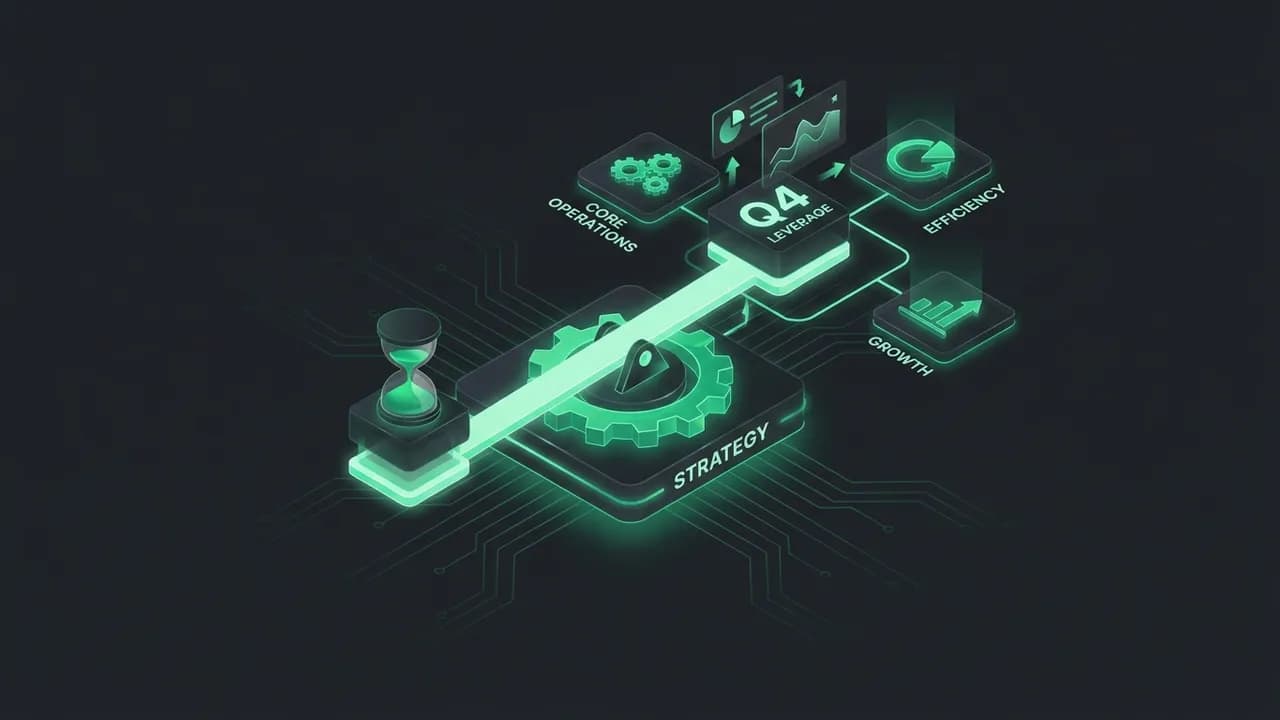
SaaS sales reps have quotas. You must use their internal deadlines to your advantage. Pricing is rarely as fixed as it first appears. Founders often accept first-pass quotes because procurement feels secondary to shipping product, but contract structure, term length, seat commitments, support tiers, and onboarding fees are often far more negotiable than vendors imply.
The Execution Rules
Why Timing Creates Leverage
Quarter-end pressure matters because vendor reps optimize for closed deals inside internal reporting windows. That does not guarantee a discount, but it often improves flexibility on pricing and terms. The buyer with preparation and timing usually negotiates better than the buyer who waits until renewal week with no alternatives ready.
Price Is Only One Variable
Good negotiation looks beyond seat cost. Companies should negotiate on:
A slightly lower annual fee can still be a bad deal if the contract locks the company into operational pain elsewhere.
Competitor Quotes Change The Conversation
A written alternative quote is powerful because it replaces vague bluffing with a credible outside option. Even if you do not want to switch, comparison pressure gives the vendor a reason to improve terms. Many reps would rather preserve account expansion potential at a lower margin than lose the logo entirely.
Auto-Renewal Is A Silent Margin Leak
Auto-renewal clauses are dangerous because they convert inactivity into vendor leverage. If the company misses the cancellation window, the negotiation starts from a weaker position because switching now carries disruption cost and time pressure. Good procurement teams track those windows well in advance and create forced review cycles before renewal decisions lock in.
Procurement Prep Improves Outcomes
Before entering negotiation, the company should know current usage, projected usage, adoption quality, required features, likely alternatives, and the true switching cost. Negotiating without usage clarity is weak because the vendor often knows more about your account than you do.
The Best Deal Is Often Simpler, Not Just Cheaper
Contract complexity can hide future costs. Clean terms, predictable pricing, clear data rights, and transparent support commitments often matter more than squeezing the last few percentage points from the annual fee. The goal is a commercially efficient contract the company can live with, not just a flashy discount headline.
Tactic: Opt-out of 'Auto-Renewal' in writing as soon as you sign the contract. This forces them to come back to the table for a negotiation every year rather than quietly raising your price by 7% (Topic 103). The strongest buyers create negotiation leverage months before the contract actually expires.
Execution: Conducting a 90-Day SaaS Audit
Tool bloat happens slowly. One day you have 5 tools; a year later you have 50. You must audit your stack every 90 days. SaaS creep is dangerous because each individual purchase feels rational in isolation. The company only sees the real problem later: duplicate functionality, fragmented data, low adoption, rising spend, unclear ownership, and avoidable security exposure.
The Audit Playbook
What A Good SaaS Audit Reviews
A strong audit usually checks:
This turns the audit into an operating decision, not just a spreadsheet exercise.
Low Adoption Is A Signal, Not Just A Cost Problem
If a tool has weak adoption, there are usually only a few explanations: the problem was not real, the implementation was poor, the product is hard to use, or another tool already does the job well enough. Each explanation implies a different action, but all of them argue against passive renewal.
Consolidation Reduces More Than Spend
Consolidation improves more than budget. It also simplifies onboarding, reduces context switching, lowers security risk, and makes documentation easier. Teams work better when the tool landscape is coherent. The value of fewer systems often compounds in invisible but meaningful ways.
Shadow IT Is Both A Cost And Security Risk
When employees buy tools on personal cards and expense them later, the company loses visibility into data flows, access control, and contract obligations. Shadow IT often emerges because official procurement feels slow. That means the real fix is not only enforcement. It is faster, clearer purchasing pathways combined with central visibility.
Assign Owners Or Expect Drift
Every vendor should have an owner responsible for usage quality, renewal review, and business value. Shared ownership often means no ownership. If nobody is clearly accountable, renewals happen by default and bad-fit tools stay alive long after their usefulness expires.
The Audit Should End In Decisions
An effective 90-day review should produce explicit outputs: keep, consolidate, renegotiate, downgrade, trial replacement, or cancel. If the audit ends only with awareness but no decisions, the stack will keep expanding and the same problems will reappear next quarter.
Tooling: Use Cledara, Vertice, or Zylo to centralize all your SaaS subscriptions, track renewals, and identify savings opportunities automatically. The best tools make the stack visible, but leadership still has to decide what deserves to stay.
Case Study and Pitfalls: The $50k 'Hidden Seat' Mistake
Case Study: The Uncapped Seat Growth
A growth-stage startup signed a contract with a CRM vendor that had 'Auto-Scaling' billing. As their team grew from 20 to 50 people, the CRM didn't alert anyone. They received a 'True-Up' bill for $50k at the end of the year. They proved that Uncapped billing is a 'Blank Check' for the vendor. They renegotiated a 'Fixed Tier' contract that gave them 100 seats for a flat fee.
Why Vendor Waste Hides So Easily
Vendor waste hides because it does not always look like failure. The tool may still work. A few people may still use it. The invoice may still feel small relative to payroll. But over time, underused subscriptions, seat creep, and weak contracts create a quiet tax on the business. Unlike a bad hire or failed campaign, software waste often lacks drama, which is exactly why it survives.
The 'Vendor' Pitfalls
The 'Annual Billing' Trap: Paying for a year upfront for a tool you haven't validated yet. Fix: Start with monthly billing for 90 days, then flip to annual for the discount.
Ignoring the 'Data Portability' Clause: Realizing too late that it's impossible to export your data from a vendor. Fix: Always check the export options (Topic 88) before signing.
Not Centrally Managing Owners: Having a tool owned by an employee who quits. Fix: Every tool must be registered with a generic 'ops@[company].com' email and managed through a shared vault (Topic 97).
Negotiating Only On Price: Accepting bad support, poor renewal terms, or capped usage because the discount looked attractive. Fix: negotiate for long-term operating fit, not just initial savings.
Letting Renewal Happen By Default: Discovering too late that a multi-year commitment just rolled forward. Fix: review every material contract before the notice window closes.
What Healthy Vendor Management Looks Like
Healthy vendor management feels centralized without becoming bureaucratic. The company knows what it pays for, why it pays for it, who owns each vendor, and when leverage exists. Teams can still move fast, but tool purchases do not disappear into a fog of local decisions and forgotten cards.
Questions Founders Should Ask
The Final Principle
Great procurement is not about being cheap. It is about making sure every recurring software dollar buys real operational value. Companies that treat vendor management as a core operating discipline protect both their margin and their speed.
The 'Vendor' Challenge: Look at your bank statement for last month. How many 'SaaS' charges do you see? Can you explain the 'Problem' each one solves? If not, pause the subscription today and see who complains. If no one complains in 7 days, cancel it.
Key Takeaways
Treat SaaS like a managed cost center: every subscription needs an owner and a renewal date.
Negotiate at the vendor's end of quarter or year when reps are chasing quota.
Run a 90-day SaaS audit to cancel unused tools, consolidate overlaps, and right-size seats.
Read renewal and cancellation terms; disable auto-renew so you decide every renewal deliberately.
Claim startup credits and discounts (AWS, Azure, Zoho); the listed price is rarely the real price.
Frequently Asked Questions
What is vendor management?
How do you negotiate a SaaS contract?
What is end-of-quarter leverage?
How do you run a SaaS audit?
What are common vendor management mistakes?
What are good vendor management examples?
Your Turn: The Action Step
SaaS Audit & Negotiation Worksheet
Audit your full SaaS stack, kill or downgrade waste, and walk into renewals with a negotiation plan that cuts your annual software bill.
Inventory every tool
From card statements, list every SaaS subscription, its annual cost, and renewal date.
| Tool | Annual cost (₹) | Renewal date |
|---|---|---|
Hunt zombie seats
For each tool, compare seats paid for vs active users in the last 30 days. The gap is pure waste.
| Tool | Seats paid | Active users | Waste (₹) |
|---|---|---|---|
Flag overlaps to consolidate
Where do two tools do the same job? Pick one to keep and cut the other.
Build the renewal ask
For each upcoming renewal, write your target (seat cut, discount %, multi-year) and your walk-away.
| Tool | Your ask | Walk-away / alternative |
|---|---|---|
Total the savings
Sum the waste cut plus negotiated discounts. Formula: total saving = zombie-seat cut + overlap cut + discount.
Before you close this
0/5 doneYour answers are saved in this browser only. Use “Download as PDF” to keep a copy.
How Smart Founders Get Free Capital
Ready to apply this?
Stop guessing. Use the Litmus platform to validate your specific segment with real data.
Optimize Your Spend