B2B vs B2C: Which Business Model Fits Your Personality?
Aligning Founder-Market Fit is just as critical as Product-Market Fit. Choose the model that plays to your natural strengths.
The Problem - The Mismatched Founder and the Myth of Universal Competence
The Introvert's Nightmare:
Imagine a brilliant software engineer. This founder loves writing elegant code, building scalable architectures, and spending 10 hours a day in deep, uninterrupted focus. They despise small talk, networking events, and the superficialities of corporate politics. However, because they noticed a massive inefficiency in how large enterprises handle human resources, they decide to build an Enterprise HR Platform.
Fast forward six months. Their daily life no longer consists of writing code. Instead, it consists of cold calling Chief Human Resources Officers (CHROs), flying to conferences in secondary cities, and negotiating for months with corporate procurement teams who demand endless security compliance documents and custom feature requests. The founder is exhausted, miserable, and fundamentally burned out. The business eventually fails—not because the product was poorly engineered or because the market didn't exist, but because the underlying B2B enterprise model was a fundamental mismatch for the founder's innate personality.
The Extrovert's Trap:
Now imagine the exact opposite. A charismatic, highly social storyteller who thrives on human connection, public speaking, and relationship building. They decide to build a $5/month B2C productivity app aimed at college students and young professionals.
Because the price point is so low, they need tens of thousands of users to make the economics work. They cannot hop on a Zoom call to close a $5 deal. Their charisma is useless here. Instead, they must spend their days staring at massive spreadsheets, running A/B tests on Facebook ads, analyzing cohort retention charts, and obsessively tweaking SEO meta tags. They feel isolated in their home office, disconnected from the human element they love, and deeply bored by the quantitative rigor required. They, too, eventually quit.
The Reality of Founder-Model Fit in 2026:
The startup ecosystem talks endlessly about Product-Market Fit (PMF). But long before you ever reach PMF, you must achieve Founder-Model Fit. This is the unwritten rule of early-stage success. You must choose a game that you are naturally built to play.
If you build a business model that acts as a prison for your personality, you will eventually sabotage your own success. You will procrastinate on the tasks that matter most because you hate doing them. Your startup should amplify your natural superpowers, not force you to violently overcome your deepest weaknesses every single day. The model you choose dictates the life you will live for the next 5 to 10 years.
The Physics of the Models: Hunting Whales vs. Catching Flies
B2B (Business-to-Business) and B2C (Business-to-Consumer) are not just different customer types; they operate on fundamentally different physics. They require different team structures, different funding environments, and entirely different founder psychologies.
1. B2B - "Hunting Whales"
2. B2C - "Catching Flies"
3. B2B2C (The Hybrid) - "The Death Valley"
This is a model where you sell to a business so they can offer it to their consumers (e.g., selling a telemedicine platform to a hospital network so their patients can use it).
This is exponentially harder because you must please two entirely distinct audiences with completely different motivations. The hospital wants cheap, compliant, and secure. The patient wants beautiful, fast, and friendly. Avoid this path as a first-time founder unless you have a massive venture capital war chest and deep, systemic industry connections.
The Founder-Model Fit Matrix: Auditing Your Natural State
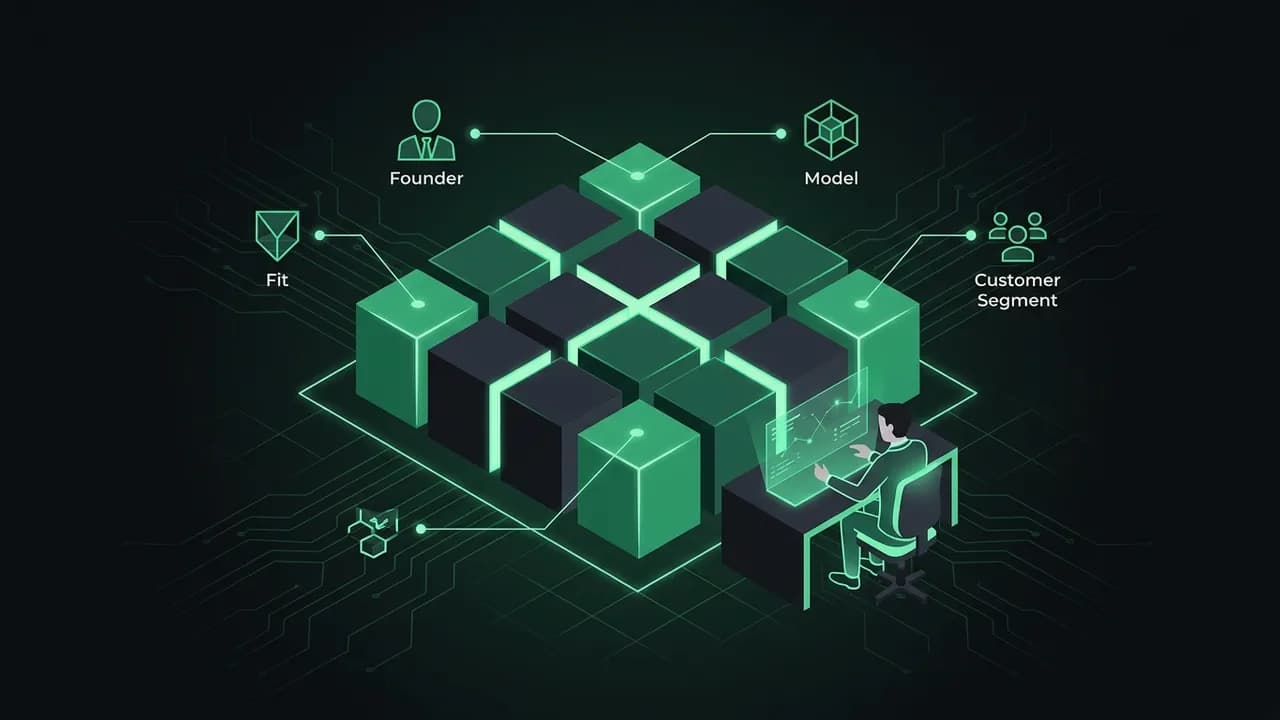
To figure out your ideal business model, you cannot look outward at the market; you must look inward at your own psychological makeup. You must audit yourself against these five critical dimensions:
1. Patience & The Feedback Loop
2. Tolerance for "Ugly" but Functional
3. The Day-to-Day Role
4. Capital Requirements and Acquisition Cost (CAC)
The SMB "Deer Hunter" Sweet Spot:
There is a middle ground that is often the best path for solo founders and bootstrappers in 2026. Selling to Small and Medium Businesses (SMBs) for $50-$500/month (e.g., a scheduling software for local gym owners, or a specialized CRM for boutique marketing agencies).
This model offers a faster 1-to-3 week sales cycle, a decent revenue-per-user ratio, and requires a healthy mix of a highly functional product and light, automated sales touches. It bridges the gap between the exhausting slog of enterprise and the unpredictable chaos of pure consumer.
Execution - Aligning Your Daily Roadmap with Your Reality
Once you acknowledge which model fits your personality, your daily execution roadmap—and the way you spend your time—must change instantly and violently. Most startups fail because they run a B2B strategy with a B2C mindset, or vice versa.
If you realize you are a B2B Founder (The Whale Hunter):
If you realize you are a B2C Founder (The Fly Catcher):
The Ultimate Pivot Test for 2026:
Open your calendar application right now. Look at your schedule for the next two weeks.
If you hate 80% of the tasks on it—if the thought of doing those tasks makes you feel physically drained—you are in the wrong model.
A natural builder who is forced to do outbound enterprise sales should immediately pivot to a Product-Led Growth (PLG) model or find a sales-heavy co-founder. A natural salesperson who is forced to sit in Jira debugging code should immediately hire a fractional CTO and focus entirely on high-ticket outbound sales.
Do not fight your nature. Lean into it. Build the business model that lets your personality win.
Advanced Dynamics: Pricing Psychology and Market Positioning
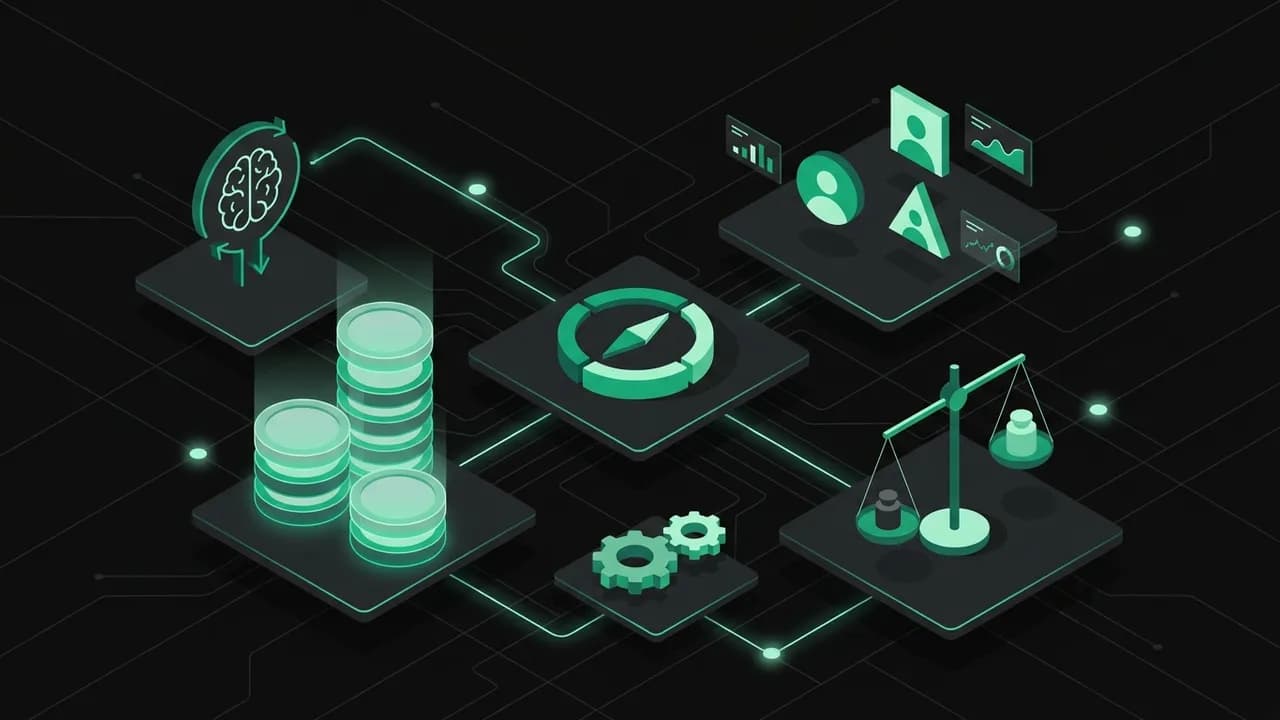
Understanding Founder-Model fit is just the beginning. Once you commit to your model, you must deeply understand the pricing psychology that governs your chosen battlefield. The way money changes hands is fundamentally different, and pricing is never just a number—it is a signal of value, trust, and market positioning.
B2B Pricing Psychology: The "Too Cheap" Red Flag
In the enterprise B2B space, pricing too low is actually more dangerous than pricing too high. If you approach a Chief Information Officer (CISO) at a major bank and offer a cybersecurity solution for $50 a month, they will immediately laugh you out of the room.
Why? Because enterprise buyers associate extreme low cost with extreme high risk. If it's only $50, they assume it lacks SOC2 compliance, has terrible customer support, and will likely break, putting their job on the line. In B2B, nobody gets fired for buying IBM or Salesforce. But they do get fired for buying a cheap, unproven startup tool that causes a data breach.
Actionable Insight for B2B: Price your product based on the value it creates, not the cost it takes to build. If you save a company $100,000, charging them $20,000 is a massive bargain. Add an extra zero to your current pricing and see what happens.
B2C Pricing Psychology: The Frictionless Micro-Transaction
Consumers in 2026 are suffering from intense subscription fatigue. They have 15 different $10/month subscriptions, from Netflix to Spotify to ChatGPT. If you ask a consumer to add another recurring charge to their credit card, the friction is immense.
In B2C, pricing must be entirely frictionless.
Actionable Insight for B2C: Lower the barrier to entry to zero. Your goal is to get the app on their phone or the software in their browser. Monetization happens later, once the product has become an undeniable, integrated habit in their daily routine.
The Hybrid Evolution: Product-Led Growth (PLG)
In recent years, the lines have blurred through a model called Product-Led Growth. Companies like Slack, Notion, and Zoom mastered this. They operate like a B2C company at the bottom of the funnel: they offer a beautiful, free, self-serve product to individual employees.
Once enough individual employees inside a specific company (like Microsoft) are using the free tool, the startup flips to a B2B strategy. They approach the IT department and say, "Hey, 400 of your employees are already using our free tool. You should upgrade to the Enterprise Tier so you can manage their security permissions."
PLG is the holy grail because it combines the low-friction viral acquisition of B2C with the massive, lucrative contract values of B2B. However, it requires a world-class product team and exceptional timing.
Conclusion: Designing Your Startup Lifecycle
The ultimate takeaway is that you are not just designing a product; you are designing your daily life.
When you choose between B2B and B2C, you are choosing your stress profile.
There is no "easier" path. Both are phenomenally difficult. The only question that matters is: Which type of difficulty are you naturally equipped to handle?
Audit your personality today. Look at your past jobs, your hobbies, and your natural inclinations. Do you prefer deep, complex relationships with a few people, or broad, algorithmic reach to millions? Decide, commit, and build your entire infrastructure—from your pricing page to your hiring strategy—around that singular truth.
Key Takeaways
B2B = few large deals, long cycles, high LTV; B2C = many small deals, short cycles, volume-driven.
Choose the model that fits your temperament, not just the bigger market — mismatch causes burnout.
Compare on the real levers: sales cycle, deal size, CAC, and LTV, not gut feel.
Consider B2B2C (like Razorpay/BharatPe) to combine B2B distribution with consumer-scale reach.
Frequently Asked Questions
What is the difference between B2B and B2C?
Which is more profitable, B2B or B2C?
How do B2B and B2C compare on sales cycle, deal size, CAC and LTV?
What is the B2B2C model?
What are common mistakes when choosing B2B vs B2C?
How do I find founder-model fit?
Your Turn: The Action Step
Founder–Model Fit Matrix & Audit
Score your own temperament against the daily reality of B2B vs B2C so you pick the model you can actually sustain for 5 years — not the one that sounds cooler.
Score the 8 temperament rows
Rate 1-5 how much each statement fits the B2B life vs the B2C life. Be honest about your real habits.
| Trait / daily reality | B2B score (1-5) | B2C score (1-5) |
|---|---|---|
Total the columns
Add each column. Formula: sum of B2B scores vs sum of B2C scores.
Sketch one day in each model
Write what your actual Tuesday looks like under each model. Which one do you dread less?
| Model | Your typical Tuesday |
|---|---|
Sanity-check the unit economics
Roughly: how many customers x price to hit ₹1 Cr ARR in each model?
| Model | Price/customer | # customers for ₹1 Cr |
|---|---|---|
Commit and state why
Write your choice and the single biggest reason it fits YOU.
Before you close this
0/5 doneYour answers are saved in this browser only. Use “Download as PDF” to keep a copy.
Stop Building. Validate First. The ₹0 Startup Validation Method
Ready to apply this?
Stop guessing. Use the Litmus platform to validate your specific segment with real data.
Align Your Strategy in Litmus