Building for Enterprise? How to Identify the Decision Maker
B2B startups sell to the 'User' but fail to win the 'Buyer.' Learn how to map the buying committee and identify the economic gatekeepers.
The Problem: The 'Champion' Without a Checkbook and the Dead Deal
There is a highly specific, universally agonizing moment in every early-stage B2B founder's life that completely shatters their soul and brutally forces them to critically rethink their entire go-to-market strategy.
You have been relentlessly doing highly personalized, exhausting cold outreach on LinkedIn for six straight months. You finally land an amazing demo with a massive, highly recognizable Fortune 500 company. The person sitting on the other end of the Zoom call—let's confidently call them the "Champion"—absolutely, unequivocally loves your new SaaS product. Their eyes literally light up when you show them the interactive demo. They emphatically tell you it perfectly solves all their daily frustrations and entirely eliminates 10 hours of their weekly busywork. They excitedly ask when they can actively start using it and exactly how fast you can onboard their 50-person team. You happily send over the master contract, mentally calculating exactly how this massive $50,000 Annual Contract Value (ACV) deal will completely extend your fragile startup's runway by six crucial months, allowing you to hire your first real engineer.
And then, absolute, terrifying, deafening silence.
Two incredibly stressful weeks later, your highly enthusiastic Champion finally replies to your fourth desperate, apologetic follow-up email: "Hey, so incredibly sorry for the massive delay. I pitched this to my VP of Operations yesterday afternoon, and the Legal and IT teams had some major, deal-breaking issues with the specific data privacy terms and the lack of native SSO integrations, so we're unfortunately going to have to hold off for now until Q4. Let's touch base next quarter."
The massive deal is instantly, permanently dead. Your precious runway is rapidly vanishing.
What exactly went wrong here in the sales process?
You blindly fell into the most classic, extraordinarily expensive B2B founder trap. You confidently sold your product entirely to the "User" (the mid-level, frustrated employee who deeply experiences the pain daily), but you completely, foolishly ignored the "Buyer" (the highly rational manager/C-suite who fiercely controls the budget) and the "Gatekeeper" (the deeply paranoid Legal/IT team who strictly controls compliance and risk).
The Brutal, Unforgiving Reality of Enterprise Sales in 2026:
In modern Enterprise B2B, absolutely nobody buys anything alone. You are never, ever selling your beautiful software to a single, autonomous human being; you are selling to a highly complex, deeply political, profoundly risk-averse, highly bureaucratic Committee. The average B2B purchasing decision in 2026 now involves an astonishing 6 to 10 entirely different stakeholders spread across multiple disconnected departments, each with fiercely competing, highly personal priorities. If you don't confidently know exactly who is physically sitting on that invisible committee from day one, you aren't actually doing professional enterprise sales—you are just blindly hoping for a miracle. You must quickly, systematically learn to confidently navigate the sprawling corporate maze.
Key Concepts: The Anatomy of the Corporate Buying Committee
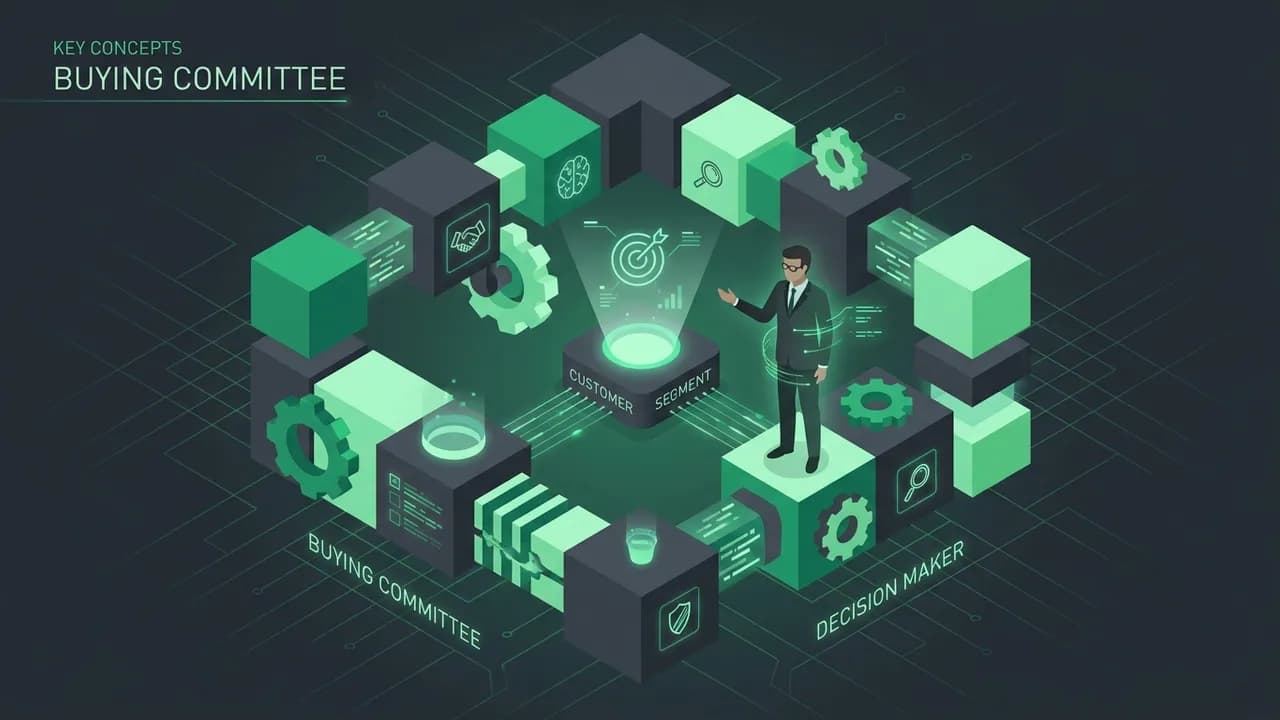
To consistently, predictably win highly lucrative enterprise deals and scale your ACV, you must immediately stop treating the target company as a single, rational, unified entity ("We are selling our product to Microsoft") and start treating it precisely as a complex, highly chaotic political ecosystem filled entirely with individual, highly selfish agendas.
Every major, high-value enterprise deal fundamentally involves four distinct, highly predictable, and entirely separate internal roles. You must aggressively identify them incredibly early in your sales motion.
1. The Champion (The Passionate Internal Salesperson)
This is the stressed person who feels the actual operational pain directly every single day. They desperately want your specific tool because it will immediately make their daily life significantly easier and make them look incredibly smart. They have incredibly high, contagious enthusiasm but usually possess absolutely zero final budget authority. Your actual job is not to sell your software to them; your job is to perfectly equip and brilliantly arm them with the precise financial weapons, irrefutable data, and gorgeous slides they desperately need to confidently sell the software to their boss on your behalf.
2. The Economic Buyer (The Ruthless Checkbook)
This is the highly skeptical VP, Director, or CFO. They absolutely do not care if your app's UI is pretty, if the onboarding tool is "fun" to use, or if it has an incredibly sleek dark mode toggle. They care deeply and exclusively about exactly two things: Financial ROI (Return on Investment) and Massive Risk Mitigation. If your early-stage software costs $50k, they mathematically need irrefutable, guaranteed proof that it will confidently generate $200k in net new trackable revenue or definitively save $200k in otherwise wasted payroll hours. They speak entirely in spreadsheets, numbers, and rigid efficiency metrics.
3. The Gatekeeper (The Corporate Assassins: IT, Security, Legal)
These are by far the most dangerous, highly suspicious people in the entire complex deal. Their entire job description, and exactly how they earn their massive annual bonus, is to aggressively protect the enterprise from legal risk, class-action lawsuits, and devastating data breaches. They fundamentally cannot say "Yes" to successfully buying your product, but they possess the absolute, unquestioned, god-like power to firmly say "No" and kill the lucrative deal instantly. They care incredibly deeply about strict SOC2 Type II compliance, rigid data residency laws, complex GDPR rules, and binding liability clauses. They inherently view you, the scrappy startup, as a massive, unacceptable threat to their personal job security.
4. The Influencer (The Silent Collateral Damage)
These are other highly opinionated department heads who might be tangentially, accidentally affected if your disruptive tool drastically changes the company's current entrenched workflow. If you are successfully selling a modern marketing software that inevitably requires a new, complex data pipeline to function properly, the highly stressed Head of Engineering is a massive Influencer. If they strongly think your new tool will simply create more annoying, uncredited work for their already wildly over-worked engineering team, they will quietly, highly effectively sabotage the entire deal behind the scenes before it ever reaches the CFO.
The Strategy: Executing The 'Enterprise Sales Map' Framework
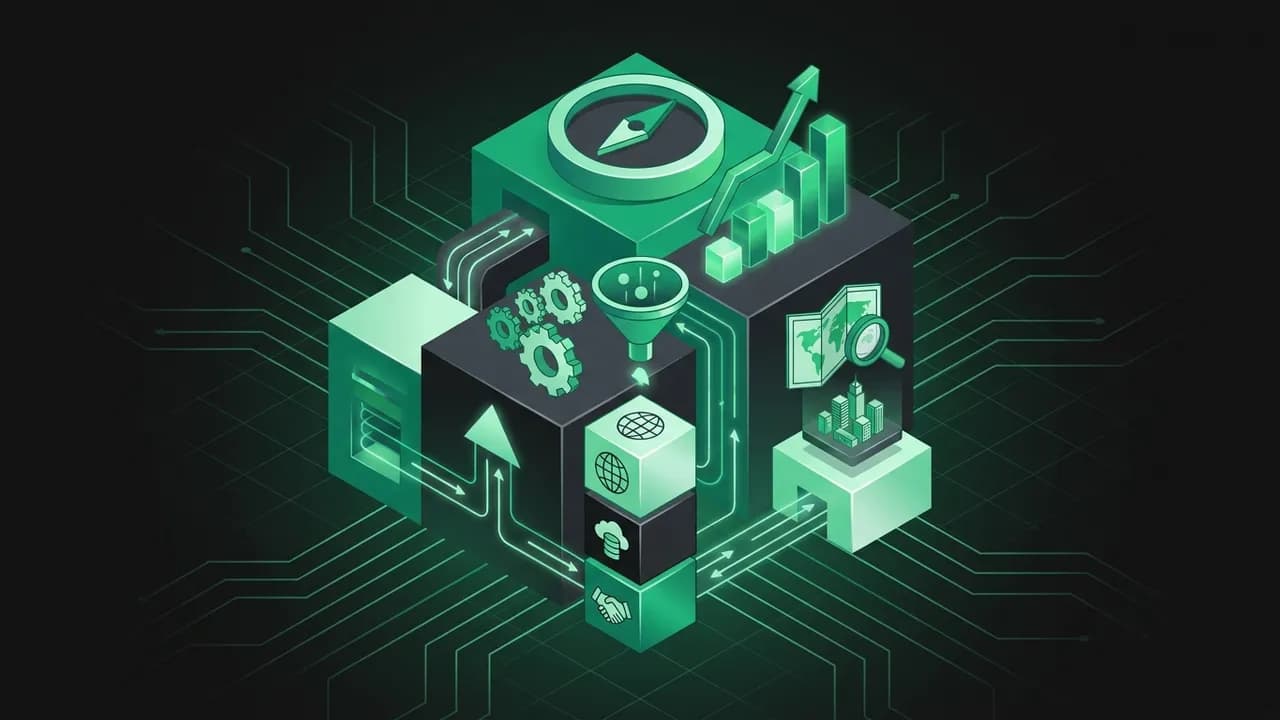
Selling an app to an average consumer is a relatively simple, highly emotional, one-on-one conversation. Selling complex SaaS to a massive enterprise is a highly coordinated, multi-front, incredibly strategic military campaign. You desperately need an incredibly detailed map before you foolishly invade.
The 'Multi-Threading' Approach to Account Management:
Amateur, failing founders consistently practice "single-threading"—they mistakenly only ever talk to their one, incredibly enthusiastic Champion. If that single Champion suddenly leaves the company for a new job, goes on extended maternity leave, or simply gets incredibly busy with a massive new internal project, the entire $50k deal instantly, permanently dies because you have absolutely no other reliable contacts inside the building.
Professional, highly successful B2B founders strictly practice "multi-threading." They intentionally, systematically, and highly carefully build incredibly deep, independent relationships with the Champion, the Economic Buyer, and the IT Gatekeeper simultaneously.
How to Confidently Map the Organization on Day One:
In your very first, highly critical 30-minute discovery call with your enthusiastic Champion, you must gently, politely, but incredibly firmly uncover the exact political structure of their massive company. Do absolutely not wait until the very end of the second lengthy demo to finally ask about the budget or the strict legal process.
You must seamlessly integrate these exact, highly strategic mapping questions into your early discovery script:
Translating the Specific Value Prop for Different Conflicting Personas:
You absolutely, fundamentally cannot use the exact same pitch or generic slide deck for all three completely different personas. You will fail instantly.
Execution Part 1: Powerfully Arming the Champion and Securing Executive Alignment
Here is the exact, incredibly rigorous, step-by-step operational playbook you must flawlessly execute to consistently close highly complex committee deals in 2026.
Step 1: The Powerful 'Business Case' One-Pager
Your incredibly enthusiastic Champion is likely a truly great marketer, brilliant designer, or excellent engineer, but they are absolutely, shockingly terrible at successfully pitching complex B2B software ROI to their ruthless, numbers-driven CFO. Do not ever, under any circumstances, casually make them build the internal pitch deck themselves. They will inevitably mess it up, the busy CFO will be highly confused by the presentation, and the CFO will firmly say no.
You must actively, meticulously build a highly customized, incredibly persuasive "Business Case" one-pager for them. It should clearly, concisely include:
Step 2: The Critical 'Executive Alignment' Play
If you are aggressively trying to sell a massive $100k enterprise deal to a highly busy VP of Sales, you absolutely cannot just have your 24-year-old junior Account Executive blindly handle the entire closing process. You must get your Founder/CEO (you) to talk directly and confidently to their VP.
Have your Champion eagerly set up a highly focused 15-minute high-level alignment call. Say directly to the Champion: "I'd really love to have our CEO jump on a very brief 15-minute call with your VP just to absolutely ensure our long-term product roadmap actively, perfectly aligns with your massive company's highly strategic goals for the upcoming year."
Executives strongly, instinctively like talking to other executives. This brilliant move instantly, permanently elevates you from a lowly, easily dismissed "software vendor" trying desperately to extract a budget into a highly respected, deeply valued "strategic partner" actively helping them successfully grow their massive business.
Execution Part 2: Safely Pre-empting the Gatekeepers and Building the MAP
Step 3: The Highly Effective 'Security First' Pre-Emptive Strike
Do absolutely not quietly wait for the paranoid IT department to inevitably, aggressively send you a massive, truly terrifying 150-question Excel security questionnaire at the very end of the deal. That terrible process slows down critical deals by numerous weeks, totally kills your forward momentum, and gives the skeptical Economic Buyer entirely too much time to reconsider the massive budget.
Proactively, confidently create a highly robust, incredibly detailed "Trust & Security" collateral package on your company website. This essential package should explicitly include your official SOC2 report, your highly recent penetration testing summaries, incredibly detailed technical architecture diagrams, and a comprehensive, legally sound privacy policy.
Tell your Champion confidently on call number two: "I know your IT team is incredibly, intensely busy. Can you please generously forward this comprehensive Security Package to your CISO today so we can successfully get completely ahead of their standard compliance checks?"
This incredible move builds massive, absolute instant credibility with the terrifying Gatekeepers. They will immediately view you as a highly mature, incredibly safe vendor, not a highly risky, disorganized, chaotic startup that might leak their sensitive data and get them instantly fired.
Step 4: The Incredibly Vital Mutual Action Plan (MAP)
Massive enterprise deals naturally, inevitably drift into absolute nothingness. A relatively straightforward deal that should take exactly 30 days easily takes 90 excruciating days simply because absolutely nobody is actively, aggressively driving the complex timeline. To successfully prevent this fatal, incredibly common drift, you must carefully create a Mutual Action Plan (MAP). This is a highly visible, actively shared Google Doc or Notion page between you and the buyer that explicitly, clearly outlines exactly who needs to do what specific task by when to successfully go live by a specific, agreed-upon target date.
When you confidently hold a massive, highly complex enterprise strictly accountable to a shared, incredibly visible timeline, your deals will close twice as fast and your startup revenue finally becomes entirely predictable.
Conclusion: Cultivating Deep Empathy for the Corporate Bureaucracy
Startup founders universally, passionately hate corporate bureaucracy. They naturally view it as incredibly slow, profoundly stupid, highly outdated, and deeply frustrating to navigate. But if you truly want to successfully sell to the massive enterprise and unlock massive, truly life-changing ACVs that fund your dreams, you must force yourself to successfully develop a deep, radical, highly authentic empathy for that exact, painful bureaucracy.
The highly stressed people sitting on the complex Buying Committee are absolutely not trying to be difficult just to annoy you; they are desperately, constantly trying to firmly protect their highly paid jobs and their carefully built reputations. The deeply rational Economic Buyer simply doesn't want to look foolish to the demanding CEO for carelessly wasting massive budget on a failed, buggy tool. The highly paranoid IT Gatekeeper simply doesn't want to get permanently fired and potentially sued for allowing a catastrophic, headline-making data breach.
If you can proactively, confidently, and systematically remove absolutely all perceived risk from the massive table, you successfully make it incredibly psychologically and professionally safe for them to happily say "Yes." Completely master the incredibly complex political map, perfectly arm your enthusiastic champions with irrefutable data, totally neutralize the corporate assassins with bulletproof compliance, and the massive enterprise will happily open its highly lucrative doors to you.
Key Takeaways
Enterprise deals are won across a committee: economic buyer, champion, users, and gatekeepers.
Identify the economic buyer (budget + outcome) and pitch ROI and risk, not features.
Equip your champion with a business case and security docs to sell internally for you.
Engage security and procurement gatekeepers early — they can quietly kill a deal.
Frequently Asked Questions
Who is the decision maker in a B2B sale?
How do you identify the economic buyer?
What is a champion in enterprise sales and how do you arm them?
What are examples of navigating a buying committee?
What are common enterprise selling mistakes?
Your Turn: The Action Step
Enterprise Buying Committee Map
Map every human in a corporate buying committee — champion, economic buyer, gatekeepers, blockers — so you stop pitching to people who can't sign the cheque.
Name a real person per role
Fill an actual name/title for each committee role in your target account.
| Role | Real name + title | What they care about |
|---|---|---|
Find the economic buyer
Who literally signs a cheque this size? If you don't know, that's your #1 gap.
Arm your champion
What does your champion personally WIN if this closes? Give them the internal pitch.
Pre-empt the gatekeepers & blocker
For each blocker, list their objection and your answer in advance.
| Gatekeeper / blocker | Their objection | Your pre-emptive answer |
|---|---|---|
Draft the Mutual Action Plan
List the dated steps to signature, owned by their side and yours.
| Step | Owner (us/them) | Target date |
|---|---|---|
Before you close this
0/5 doneYour answers are saved in this browser only. Use “Download as PDF” to keep a copy.
Stop Building. Validate First. The ₹0 Startup Validation Method
Ready to apply this?
Stop guessing. Use the Litmus platform to validate your specific segment with real data.
Map Your Corporate Buyers in Litmus