Segmentation 101: Demographic vs. Psychographic Targeting
Reliance on surface-level demographics misses the true drivers of purchasing behavior. Learn how to target the 'Why' behind the buy.

The Problem: The 'Ozzy vs. Charles' Paradox
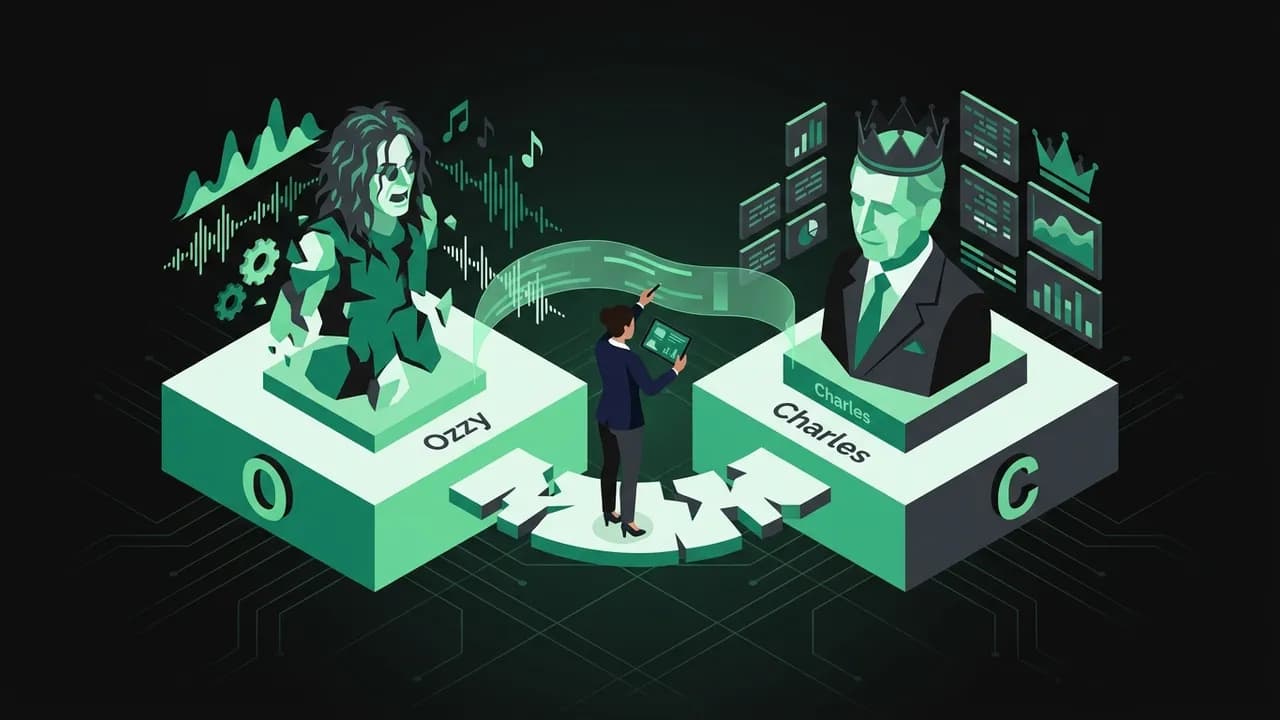
Reliance on surface-level demographics (age, gender, income) is the absolute fastest way to burn your marketing budget in 2026.
To fundamentally understand why traditional demographic targeting is entirely broken, consider the most famous, hilarious paradox in modern marketing theory.
Imagine you are a startup founder targeting a customer with this exact demographic profile:
By standard Facebook, Google, or LinkedIn ad targeting parameters, this is a single, perfectly cohesive demographic cohort. You would confidently put them in the exact same ad campaign, and you would show them the exact same advertisements for the exact same products.
But who are these two men in reality?
One of them is King Charles III of the United Kingdom.
The other is Ozzy Osbourne, the "Prince of Darkness," reality TV star, and former frontman of the heavy metal band Black Sabbath.
If you blindly sell to their demographics, you send them the exact same marketing materials. But their psychographics—their deeply held personal values, their aesthetic preferences, their daily lifestyles, their fears, and their core motivations—exist in entirely different, utterly irreconcilable universes. King Charles is absolutely not buying spiked leather jackets, heavy metal memorabilia, or bat-themed merchandise. Ozzy Osbourne is absolutely not looking for bespoke royal palace gardening tools, classical polo equipment, or conservative tweed suits.
The Harsh Reality for Startups in 2026:
Key Concepts: Values, Interests, and Lifestyle (VIL Framework)

Psychographics quantify the messy, irrational, deeply human element of your market. While demographics are easily measurable via a simple government census or a tax bracket (age, zip code, income level), psychographics require deep empathy, highly active listening, and intense behavioral observation over time.
We systematically break psychographics down into four highly actionable pillars. This is the VIL (Values, Interests, Lifestyle) Framework:
1. Values & Core Beliefs
What does this specific person fundamentally stand for? What hill are they actually willing to die on?
2. Interests & Hobbies (The Digital Watering Holes)
What do they actually do when no one is paying them? Where do they spend their dopamine and their free time?
3. Lifestyle Constraints
Are they "Digital Nomads living out of a backpack in Bali" or are they "Suburban Parents with three kids under five in Ohio"?
4. Opinions & Industry Resentments
What do they actively, passionately dislike about the current status quo in your industry?
The Strategy: The 'Psychographic Iceberg' Framework
Think of your Ideal Customer Profile (ICP) as a massive, dangerous iceberg floating in the ocean. You must intimately understand all three levels of the iceberg to build a highly converting, capital-efficient go-to-market strategy.
Level 1: The Tip (Demographics - 10% of the value)
This is the tiny, obvious part of the iceberg clearly visible above the water. It includes Age, Gender, Income, Location, Company Size, and Job Title.
Level 2: The Core (Psychographics - 80% of the value)
This is the massive, dangerous, highly influential chunk of ice hidden deep below the waterline. It contains Fears, Desires, Values, Beliefs, Ambitions, and Personality Traits.
Level 3: The Base (Behaviors/Intent - 10% of the value)
This is the deepest, most actionable part of the iceberg. It tracks recent physical actions, Google search history, software stack usage, and active community participation.
Why the Iceberg Wins Decisively in B2B and B2C:
Imagine you are a founder selling a brutal, stripped-down, command-line productivity app designed purely for raw speed.
A 55-year-old veteran Chief Financial Officer and a 21-year-old Junior Software Engineer might both desperately want to buy it. Their demographics are complete, undeniable opposites. If you only target "C-Suite Executives," you instantly, permanently lose half your potential market.
But their psychographics—"A pathological hatred for slow, bloated user interfaces and a deep desire for raw keyboard-driven speed"—are completely identical. If you target the psychographic trait of speed obsession instead of the job title, you successfully capture both highly lucrative buyers simultaneously, dropping your Customer Acquisition Cost (CAC) drastically.
Execution Part 1: How to Hunt Psychographics in the Wild in 2026
You absolutely cannot find psychographics in a stale Gartner report, a government census, or a generic marketing textbook. You have to hunt for them in the digital wild. Here is the modern, highly effective playbook for mapping psychographics accurately.
Step 1: The "Interview the Subreddit" Method
Do not ever send out boring, multiple-choice surveys asking users what they value; they will give you polite, logical, totally useless lies. Instead, go to exactly where they are already emotionally vulnerable and venting anonymously.
Step 2: Create Explicit "Anti-Personas"
The absolute strongest brands don't just know who they are for; they are fiercely, publicly, and loudly proud of who they are not for.
Execution Part 2: Advanced Interest Stacking and Wallet Audits
Step 3: Intent-Based and Stack-Based Ad Targeting
Stop running incredibly expensive LinkedIn or Facebook ads targeting generic job titles like "VP of Sales." They are incredibly expensive, highly competitive, and far too broad to convert profitably.
Instead, use advanced ad platforms to target a combined, highly specific interest stack.
Step 4: The "Wallet Audit" Strategy
Look very closely at the other software, physical tools, or premium brands your customer gladly pays a premium for. This tells you exactly what they actually value when push comes to shove and they have to spend their own money.
Conclusion: Selling to the Human, Not the Resume
The era of lazy, blanket demographic marketing is completely over. In 2026, consumers and businesses are constantly bombarded by thousands of highly targeted ads every single day. If your marketing simply says, "Great Software for Accountants," it will be completely ignored as white noise.
You must rapidly transition from selling to a sterile resume (demographics) to selling to a complex, emotional, highly flawed human being (psychographics).
When you truly understand a person's deepest fears, their most annoying daily frustrations, and the specific things they violently hate about their industry, you can write ad copy that makes them feel deeply understood. And in the modern digital age, feeling understood is the single most powerful, undeniable sales mechanism on earth. Map your iceberg carefully, define your anti-persona publicly, and stop trying to sell bat-themed merchandise to King Charles.
Key Takeaways
Demographics tell you who; psychographics tell you why — and 'why' predicts buying far better.
Use the VIL lens (Values, Interests, Lifestyle) to build psychographic profiles.
Mine real signals — communities, follows, and past spending — instead of guessing.
Matching message to motivation raises conversion and cuts CAC.
Frequently Asked Questions
What is customer segmentation?
What is the difference between demographic and psychographic segmentation?
What are examples of customer segmentation?
How do you do psychographic segmentation?
What are common segmentation mistakes?
Why does psychographic targeting lower CAC?
Your Turn: The Action Step
Psychographic Profiler & Iceberg Map
Go beyond age/income to map the Values, Interests and Lifestyle (VIL) that actually drive your customer's purchases — and find where to reach them.
Log the above-water demographics
Age, income, city, job — the obvious stuff. Keep it to 4 lines.
Map the VIL below the waterline
Fill all three. This is where the real targeting power is.
| Layer | Your customer's truth |
|---|---|
Contrast against a look-alike
Name a customer with the SAME demographics but who would NOT buy you — what's psychographically different?
| Trait | Your buyer | The look-alike who won't buy |
|---|---|---|
Translate psychographics into channels
For each interest/value, name the exact place/creator that reaches it.
| Value or interest | Where it shows up (channel/creator) |
|---|---|
Write the targeting one-liner
Combine into: 'We target people who value ___, are into ___, and live like ___.'
Before you close this
0/4 doneYour answers are saved in this browser only. Use “Download as PDF” to keep a copy.
Airbnb Did This Before Becoming a Billion-Dollar Brand
Ready to apply this?
Stop guessing. Use the Litmus platform to validate your specific segment with real data.
Refine Your ICP in Litmus