The Persona Trap: Why Your Ideal Customer Profile (ICP) is Wrong
Demographics don't buy products; situations do. Learn how to build a 3-Dimensional ICP that captures real buying intent instead of fictional character sheets.
The Problem - The Fictional Character Sheet and the Illusion of Empathy
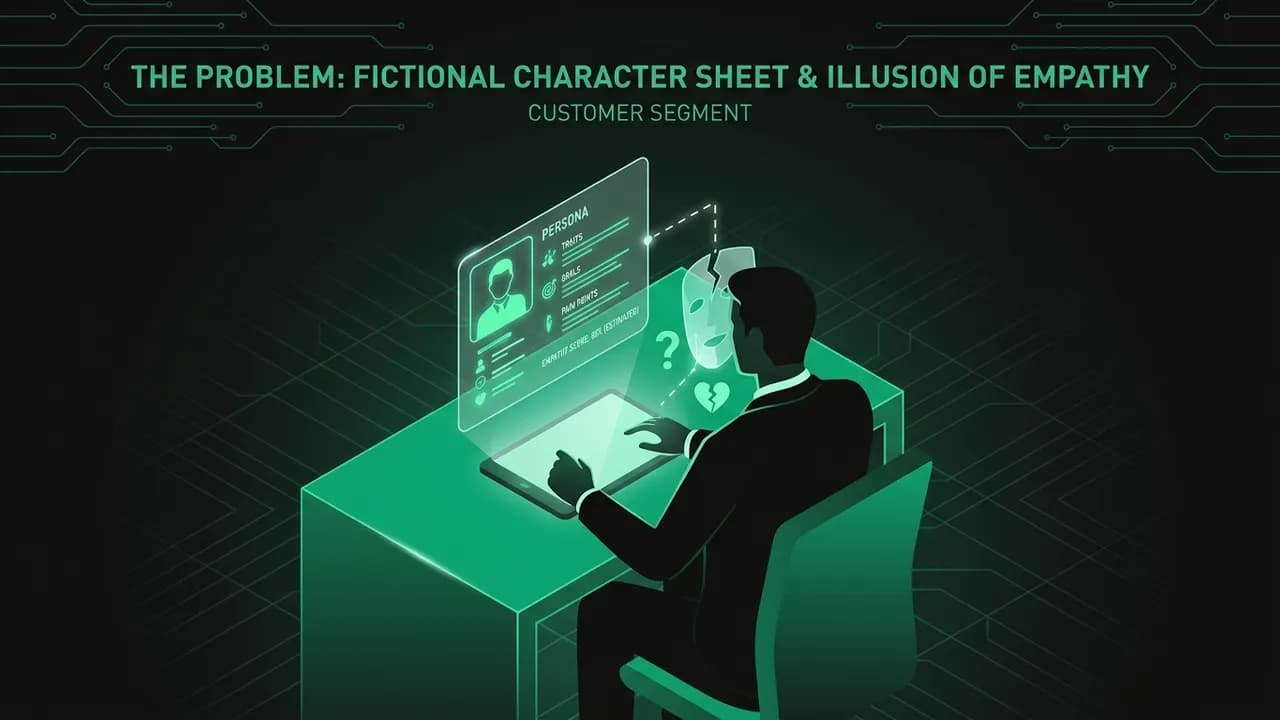
If your Ideal Customer Profile (ICP) features a fake alliterative name, a stock photo face, and a completely irrelevant list of weekend hobbies, you have fallen headfirst into the fatal Persona Trap.
Walk into the marketing department of almost any struggling, pre-revenue startup, and you will inevitably find a highly polished, beautifully designed slide deck introducing you to their target market: "Marketing Mark" or "Startup Steve."
The presentation slide will confidently, almost proudly declare:
"Startup Steve is exactly 32 years old. He lives in a trendy, expensive neighborhood in a major metropolitan tech hub. He exclusively drinks artisanal cold brew coffee, religiously listens to bio-hacking optimization podcasts on his morning commute, and owns an energetic golden retriever. He makes exactly $90,000 a year, shops organic at Whole Foods, and reads TechCrunch every single morning while eating avocado toast."
Founders, product managers, and expensive marketing agencies will spend weeks agonizing over these deeply fictional character sheets. They will literally sit in a boardroom and debate whether Steve is 32 or 35. They will debate whether he prefers scrolling Instagram Reels or posting thought leadership on LinkedIn. They will spend thousands of dollars on design agencies to make these personas look beautiful and corporate-ready. And then, tragically, they will base their entire product roadmap, their massive pricing strategy, and their expensive ad copy on this complete, fabricated hallucination.
Why Fictional Personas Fail Spectacularly in the Real World:
They rely entirely on lazy demographics over actual behavior: Demographics describe who someone is on a sterile government census form. They absolutely, fundamentally do not explain why that specific person decides to pull out their corporate credit card at 2:00 AM on a Tuesday to buy your software. A 32-year-old with a dog does not buy complex B2B accounting software because of their age or their pet; they buy it because they are currently being audited by the IRS and are terrified of going to jail.
They dangerously assume causation from loose correlation: Just because your current best, highest-paying customer happens to drink cold brew coffee and read TechCrunch does not mean cold brew coffee magically makes someone want to buy your project management tool. You are targeting noise instead of focusing on the underlying signal.
They create massive, revenue-destroying blind spots: If you obsess over selling exclusively to "Startup Steve" and tailor your entire website to him, your ad targeting will completely ignore the 55-year-old CFO named Barbara who lives in the quiet suburbs, doesn't drink coffee, hates podcasts, but desperately needs your software to save her department from a massive data leak. You lose the $50,000 enterprise deal simply because Barbara doesn't fit your cute, narrow, fictional demographic profile.
Products are absolutely not hired by demographics. Products are hired by human beings trying desperately to escape a specific, painful, intolerable situation. If you focus your marketing entirely on the person's aesthetic rather than their painful situation, your messaging will always miss the mark.
Key Concepts - The Data Hierarchy: Demographics, Psychographics, and Situations
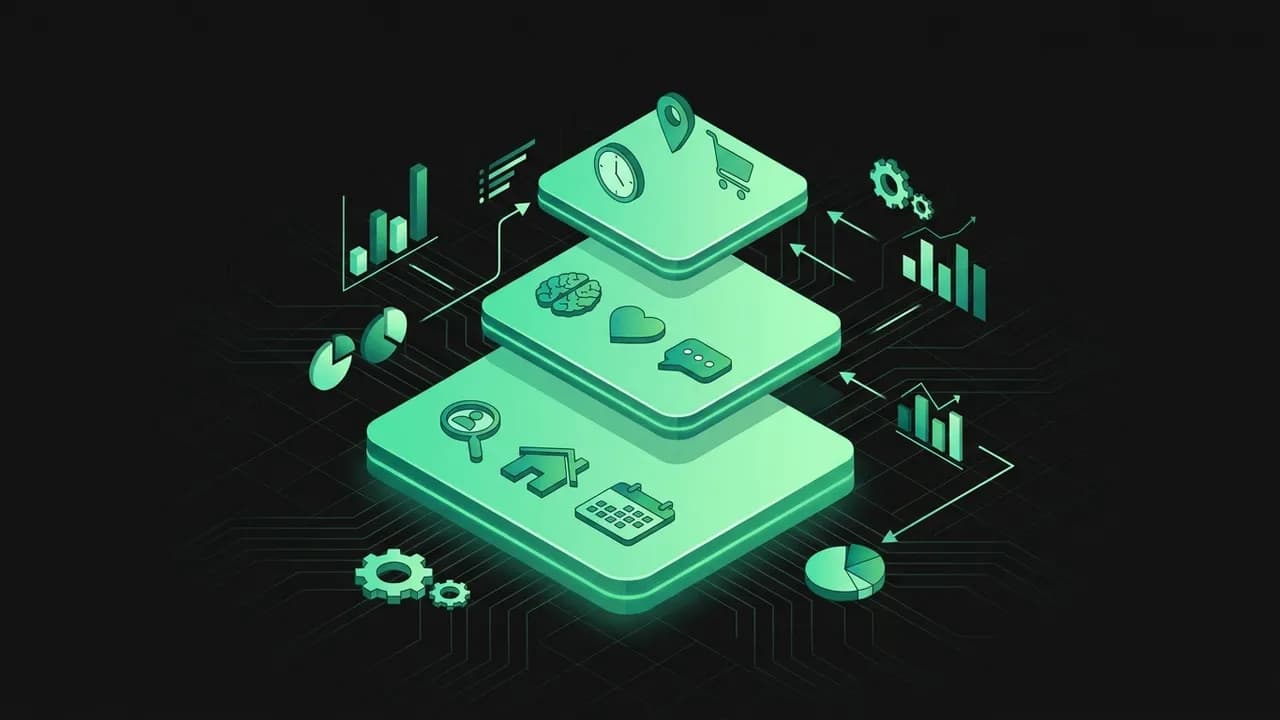
To successfully build an ICP that actually generates predictable revenue and sustainable growth in 2026, you must completely understand the hierarchy of customer data. Not all data is created equal. You must aggressively move your marketing from weak signals to absolute signals.
1. Demographics (The Weakest Signal - The 'Who')
Age, Gender, Location, Income Bracket, Marital Status, Job Title.
Demographics are only useful as a blunt, negative filter. If you sell a highly complex, $50,000/year enterprise cyber-security software suite, demographics tell you to actively filter out college students and local retail bakeries from your ad spend. But demographics absolutely cannot be used for writing your ad copy or designing your core features.
Consider the famous marketing paradox: King Charles III and rockstar Ozzy Osbourne have the exact same demographic profile (British males, born in 1948, extremely wealthy, married twice, highly successful in their respective fields). But if you try to sell them both the exact same product using the exact same marketing message based solely on those demographics, you will be laughed out of the room.
2. Psychographics (The Moderate Signal - The 'Why')
Core Values, Deep Beliefs, Irrational Fears, Aspirations, Political Worldview.
Psychographics are a much stronger signal than demographics. They dictate how you talk to the customer and the overall emotional tone of your brand. If your target customer heavily values "raw speed and aggressive market disruption" over "safety, tradition, and regulatory compliance," your website should use dark mode, sharp edges, bold typography, and aggressive, confident copy. Psychographics dictate whether a user feels intense brand affinity. It explains exactly why someone buys a flashy Tesla instead of a reliable, safe Volvo, even if they have the same income.
3. The Situation / The Trigger (The Ultimate Signal - The 'When')
The specific, undeniable, usually painful event that forces an immediate behavioral change.
This is the absolute holy grail of startup marketing. People do not wake up and buy B2B software because they are 32 years old. They do not even buy it just because they value speed. They buy expensive software because a specific, acute event occurred that made their current daily reality completely unbearable.
The Situation creates the raw intent to buy. If your marketing can accurately, empathetically target the Situation, the Demographics do not matter at all. The 22-year-old junior intern and the 50-year-old Senior VP will both frantically click the exact same ad if it promises to definitively solve the Black Friday crash nightmare.
The Strategy - Building the 3D ICP Framework
Instead of wasting precious time inventing "Startup Steve," you need to build a 3-Dimensional Ideal Customer Profile (3D ICP). This framework completely strips away the useless marketing fluff and focuses exclusively on the mechanical, operational, and financial drivers of the purchase decision.
Dimension 1: The 'Jobs-to-be-Done' (JTBD)
Developed by Harvard Business School professor Clayton Christensen, the legendary JTBD framework correctly argues that customers do not buy products; they "hire" products to do a specific, highly important job in their lives.
The Classic Example: Nobody walks into a hardware store wanting to buy a 1/4-inch drill bit. They want to buy a 1/4-inch hole in their living room wall so they can hang a beautiful picture of their family.
What is the actual, fundamental, unglamorous job your customer is hiring your SaaS to do? Are they hiring your AI tool to "generate better text"? No, absolutely not. They are hiring your tool to "save them 5 hours of tedious typing on Friday afternoon so they can go home early and see their kids," or to "make them look highly competent and incredibly articulate in front of the demanding board of directors." Target the underlying, emotional job, not the technical feature.
Dimension 2: The Trigger Event
When exactly does the customer realize they need to hire your product? There is always a catalyst.
If you sell automated HR onboarding software, the trigger event is not "waking up on a Tuesday morning." The trigger event is "hiring the 15th employee and the CEO suddenly realizing they can no longer manually manage messy payroll spreadsheets without breaking federal tax laws and risking a massive lawsuit."
Your limited startup marketing budget must be deployed entirely around intercepting the prospect exactly at the Trigger Event, not broadly blanketing the entire industry with generic ads.
Dimension 3: The 'Status Quo' Enemy
Every single B2B or B2C purchase requires the customer to actively fire their current solution. You must know exactly what you are asking them to fire, so you know how to position your weapon.
Are you replacing a $100,000 legacy competitor like Oracle or Salesforce? Or are you replacing a messy, color-coded, totally free Google Sheet managed by a highly stressed-out, overworked intern?
If you are trying to replace Salesforce, your messaging must violently emphasize "Extreme Simplicity, Modern UI, and 5-Minute Setup." If you are replacing a Google Sheet, your messaging must emphasize "Rock-Solid Reliability, Infinite Scalability, and Unbreakable Audit Trails." You cannot write an effective, converting ICP without clearly defining the exact enemy you are destroying.
Execution Part 1 - Drafting the 3D ICP Document
Throw away your beautifully designed persona slide deck today. Open a blank Notion page or Google document. You will only write down four strictly defined, highly actionable elements. This single page will become the absolute source of truth for your entire company.
1. The Firmographic Filter (Who can actually pay us?)
(This is your objective, totally emotionless criteria for immediately disqualifying bad leads. If an inbound lead does not meet this exact criteria, the sales team does not take the discovery call. You save your team hundreds of hours of wasted pitching).
2. The Pain Metric (What is actively bleeding?)
3. The Trigger Event (When do they desperately search for us?)
4. The Buying Committee (Who holds the knife, and who holds the checkbook?)
This one-page document is infinitely more useful to a sales rep writing a cold email, and a marketer writing a Facebook ad, than knowing that "Startup Steve likes artisanal coffee."
Execution Part 2 - Validating the ICP with Brutal Reality
An ICP is merely a hypothesis. Until it survives violent contact with the open market, it is just an educated guess written on a whiteboard by a founder. You must ruthlessly and continuously validate it using actual sales data and customer interviews.
The 'Recent Buyer' Autopsy
If you already have a few paying customers, do not ask them generic, useless questions like why they like your product. Ask them about the exact sequence of historical, chronological events that led up to them buying it.
Get on a call and ask them:
The 'Lost Deal' Autopsy
Your lost deals contain significantly more valuable, actionable data than your won deals. When a prospect goes through a full 45-minute product demo, tells you they absolutely love the product, and then completely ghosts your follow-up emails—you must find out exactly why the deal died.
You must systematically update your 3D ICP document every single quarter based entirely on the brutal realities of your sales calls. Your ICP is a living organism; it should constantly evolve as you move upmarket, discover new use cases, or shift niches.
Conclusion: Radical Empathy Over Lazy Demographics
The Persona Trap is incredibly comfortable for founders because it allows them to play pretend. It is genuinely fun to make up a character, find a nice stock photo, design a beautiful slide, and imagine this fictional person happily navigating your flawless UI.
But billion-dollar startups are not built by playing pretend in a boardroom. They are built by deploying deep, radical empathy toward actual, messy, undeniable human suffering in the marketplace.
When you shift your entire worldview from asking, "Who exactly is my target demographic?" to asking, "What desperate, agonizing situation is my customer trying to escape right now?", your entire business transforms overnight. Your ad copy becomes visceral and undeniable. Your product roadmap becomes entirely obvious, easily stripping away useless, bloated features. Your sales calls convert at double the rate because you are speaking to the pain.
Stop marketing to a fictional Steve. Start marketing to the bleeding neck. Find the pain, accurately identify the trigger, and offer the absolute best cure.
Key Takeaways
Build your ICP from real won/lost accounts, not an invented persona with a name and hobbies.
Define it in 3D: firmographics, the triggering situation, and the job-to-be-done.
Validate the profile against churn and lost-deal data, not just intuition.
Tighten the ICP every quarter as new wins and losses reveal who truly fits.
Frequently Asked Questions
What is an ideal customer profile (ICP)?
How do I create an ICP for B2B?
What is the difference between an ICP and a buyer persona?
What are examples of a strong ICP?
What are common ICP mistakes?
How often should I update my ICP?
Your Turn: The Action Step
3D ICP Generator & Reality-Check Canvas
Replace a fictional 'Marketing Mary' persona with a 3D ICP built on demographics, psychographics AND the real-life situation that triggers a purchase.
Draft the 3 dimensions
Fill all three. If 'Situation' is blank, you have a persona, not an ICP.
| Dimension | Your draft |
|---|---|
Name the trigger event
What specific event makes them go from 'someday' to 'I need this now'?
Capture a real quote
Paste one actual sentence a real customer/prospect said. No paraphrasing.
Run the reality-check (Autopsy)
For each claim, mark whether you have evidence or just assumed it.
| ICP claim | Evidence (quote/data) or 'assumed' | Keep / Cut |
|---|---|---|
Rewrite the one-line ICP
Combine the surviving claims into one sentence anchored on the trigger.
Before you close this
0/5 doneYour answers are saved in this browser only. Use “Download as PDF” to keep a copy.
Airbnb Did This Before Becoming a Billion-Dollar Brand
Ready to apply this?
Stop guessing. Use the Litmus platform to validate your specific segment with real data.
Refine Your True ICP in Litmus