Building a Community Moat
Most communities are just glorified support forums. This 3,000-word guide masters the 'Community Identity' Circle to build a defensible moat where users stay for the product but live for the community.
Why Most Brand Communities Die Quietly
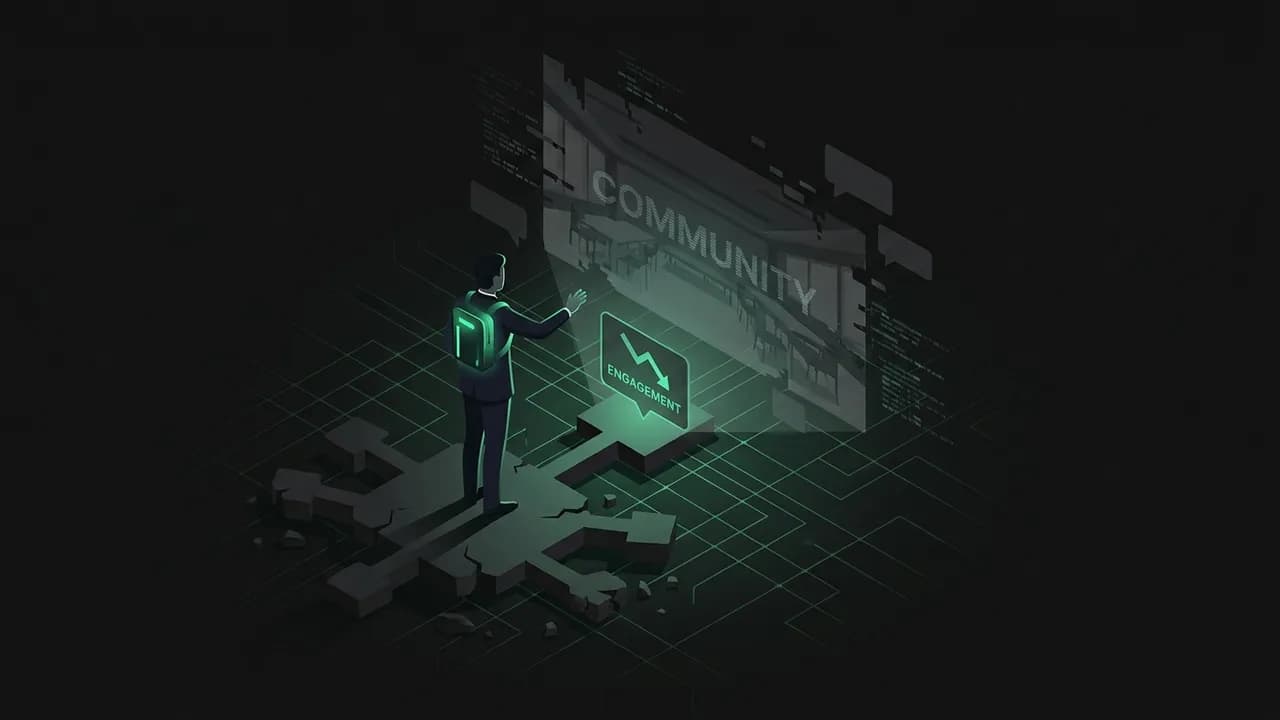
Community is one of the most overused and under-executed growth ideas in startups. Founders launch a Slack group, a Discord server, or a private forum and assume people will magically connect, help each other, and become loyal advocates. Then the reality sets in: empty channels, awkward introductions, low participation, and a graveyard of unanswered posts.
The hard truth is that a community is not a container. It is a system of repeated value exchange. A Slack group without purpose is just a chat room. A Discord server without ritual is just a notification source. And a forum without social density is just another abandoned surface on the internet.
In 2025-2026, community is still powerful—but the standard is much higher. People already belong to too many groups, newsletters, feeds, and private channels. To earn time and contribution, your community must solve a real job:
A successful community reduces churn, increases product insight, improves referrals, and creates a moat competitors struggle to copy. But only if it becomes useful enough that members feel loss when absent. Community is not a side project. It is a product with users, onboarding, engagement loops, moderation needs, and retention risks of its own.
Core Framework: What Makes a Community a Moat

A strong community moat has five layers.
1. Shared Identity
Members need a reason to feel, "this space is for people like me."
That identity can come from:
2. Clear Value Exchange
Why should someone join and stay?
Examples:
3. Social Density
Communities fail when too few members care at the same time.
Density matters more than raw size. A 300-person highly active group beats a 20,000-person silent group every time.
4. Rituals and Cadence
Strong communities are shaped by repeatable behaviors:
5. Moderation and Culture
A community moat is not built only by member volume. It is protected by culture design.
Without these five layers, community becomes noise instead of defensibility.
Why Slack Groups Fail So Often
Slack is not the problem. Weak design is the problem.
Failure Pattern 1: No Narrow Use Case
Groups built around broad labels like "startup founders" or "marketers" often fail because the needs are too diffuse.
Failure Pattern 2: No Initial Density
Founders invite too many passive people and not enough contributors. Without an early core of active members, the space feels empty.
Failure Pattern 3: No Rituals
If there is no recurring reason to show up, the group decays into sporadic self-promotion.
Failure Pattern 4: No Community Operator
Communities rarely self-govern at the start. Someone must seed conversation, welcome members, connect people, and reinforce norms.
Failure Pattern 5: No Reward for Contribution
If contributing effort feels invisible, members lurk or leave. Recognition, access, and social proof matter.
Failure Pattern 6: Bad Information Architecture
Too many channels, vague naming, and weak onboarding confuse new members immediately.
Most failed communities do not fail because people hate community. They fail because the founder launched a tool without designing the experience that makes the tool matter.
Execution: How to Build a Community People Return To
1. Start Smaller Than Feels Comfortable
A strong community often begins with 20-100 highly aligned people, not 1,000 random signups.
2. Define the One-Sentence Promise
Your community should be easy to explain:
3. Design Onboarding
New members should know within minutes:
4. Seed Rituals Early
Create repeatable formats:
5. Reward Useful Participation
Recognize the members who make the space better.
This can include:
6. Connect Community to Product Carefully
The community should reinforce the product, not become a nonstop promo channel. If every discussion becomes a sales funnel, trust collapses.
Good communities feel like they are for the members first, while still strengthening the business underneath.
Real-World Examples: Communities That Became Strategic Assets
Example 1: Notion communities and template creators
Notion benefited from a large ecosystem of users, template builders, and educators who helped others learn the product and imagine use cases.
Example 2: Figma community
Figma's community and file-sharing ecosystem lowered learning friction and amplified collaboration.
Example 3: Indie Hackers
The platform worked because it gave builders status, transparency, and tactical learning from peers at similar stages.
Example 4: Product-led SaaS operator groups
Private Slack groups for RevOps, growth, or support leaders often work best when tightly curated and highly specific.
Example 5: Creator communities
Communities built around accountability, critique, and deal flow often outperform communities built around vague inspiration.
Common Pitfalls & How to Avoid Them
Pitfall 1: Treating community as a marketing channel only
Members can sense when they are just lead inventory.
Pitfall 2: Growing too fast
Large low-fit membership destroys signal quality.
Pitfall 3: No operator or moderator
Communities need active stewardship.
Pitfall 4: Too many channels
Complex structure increases confusion and kills participation.
Pitfall 5: No recurring rituals
Without rituals, participation becomes random and fades.
Pitfall 6: Rewarding self-promotion instead of contribution
This quickly erodes trust.
What to Measure in Community Health
Community should be measured like a living product.
Core Metrics
Diagnostic Questions
The goal is not vanity membership count. The goal is meaningful recurring participation.
Actionable Conclusion: Build Social Infrastructure, Not Just a Chat Room
A community moat is real when members get value from each other that would be hard to replace elsewhere. That requires design, moderation, ritual, and patience.
Your Next 5 Steps
Narrow the community promise to one clear member outcome.
Recruit the first 25-50 highly aligned members manually.
Create 2-3 recurring rituals that make participation obvious.
Assign a real operator to seed conversation and manage culture.
Measure active participation and retention impact—not just member count.
SEO / Optimization Notes
This guide should naturally target keywords like community building, community moat, slack community, brand community, and community engagement. The meta description should emphasize why most Slack groups fail and how to build a defensible community instead. Internally, this guide should connect to churn, habit formation, user-generated content, support, and loyalty guides in Module 4.
The strongest communities are not built by opening a channel. They are built by creating repeated reasons for the right people to keep showing up for each other.
Member Onboarding and Early Density: The First 30 Days Decide Everything
Most communities do not fail at month six. They fail in the first 30 days because members never learn how to participate or never see enough useful activity to justify coming back.
A strong member onboarding flow should do four things quickly:
Early Density Tactics
Density matters because nobody wants to speak into silence. The more likely a new member is to get a useful reply in their first interaction, the higher the chance they become active later.
Rituals and Programming: What Keeps a Community Alive
A community becomes sticky when participation is not random. Rituals create rhythm and expectation.
High-Value Ritual Formats
Why Rituals Work
Rituals reduce the effort required to participate. Members do not need to wonder what to post because the format already exists. They also create memory and identity. Over time, people return because the community becomes part of their weekly operating rhythm.
The best rituals are small enough to repeat, useful enough to matter, and specific enough that members know exactly how to engage.
How Community Creates Business Value Without Feeling Exploitative
A strong community can drive real business outcomes, but only when value for the business is downstream of value for members.
Community can improve:
The wrong move is treating every conversation as a sales opportunity. The right move is making the space so useful that product interest emerges naturally. Members should feel that the company supports the community, not that the community exists only to serve the company.
Advanced Examples: What Mature Community Moats Look Like
Example 6: Webflow and creator ecosystems
Communities become stronger when members can showcase work, learn from each other, and gain reputation through contribution.
Example 7: Operator communities
Private communities for SaaS operators often outperform public communities because curation raises trust and signal quality.
Example 8: Open-source communities
Many open-source ecosystems become moats because support, contribution history, and identity all compound around the project.
Example 9: Paid communities with accountability
Some paid communities succeed not because the content is unique, but because the accountability and peer access are hard to replace.
Moderation and Culture Design: Protect the Signal
Every healthy community has an invisible architecture of norms. Without it, quality drifts, self-promotion spreads, and good members disengage.
A simple culture design system should define:
Moderation is not censorship. It is quality control. Communities become valuable when members trust that their time will not be wasted by noise, spam, or repeated low-effort asks.
Final Playbook: What to Build This Month
If you want to build a real community moat, start with simple, high-leverage moves:
define the member identity clearly
recruit the first active core manually
create 2-3 recurring rituals
welcome every new member intentionally
measure participation quality, not just membership growth
Communities become moats when members repeatedly receive useful connection, learning, and status in a space that feels increasingly hard to replace.
Key Takeaways
A community moat is durable because rivals can copy features but not your members and culture.
Most groups die from no clear purpose, no critical mass, and no return rituals, so start narrow.
Empower top members with status and roles so they co-own and facilitate the space.
Grow deliberately to preserve culture, and tie community participation to real product value.
Measure active participation and member retention, not vanity headcount.
Frequently Asked Questions
What is a community moat?
Why do most Slack/community groups fail?
How do you build a community moat?
What are community moat examples?
What are common community-building mistakes?
How do you measure community health?
Your Turn: The Action Step
Community Moat Blueprint
Design the first-30-day density plan, the recurring rituals, and the health metrics that keep a community alive instead of dead.
Define the member and their reason to return
The return reason must come from other members, not from you.
Engineer first-30-day density
How you'll get enough active people early so it never feels empty.
Design the rituals
Recurring, predictable events that give people a reason to show up.
| Cadence | Ritual | Who runs it |
|---|---|---|
Assign member roles
Distribute ownership so it's not all on you — leads, welcomers, moderators.
| Role | What they do | Perk for doing it |
|---|---|---|
Pick the health metric & kill signal
One number that tells you it's alive, and the threshold that means intervene.
Before you close this
0/5 doneYour answers are saved in this browser only. Use “Download as PDF” to keep a copy.
The Community Building Framework Every Founder Needs
Ready to apply this?
Stop guessing. Use the Litmus platform to validate your specific segment with real data.
Build Your Moat