Email Drip Campaigns: Nurturing Leads Automatically
A single 'Welcome' email is not a strategy. This 3,000-word guide masters the 'Soap Opera Sequence' to keep your brand top-of-mind and nurture leads from 'Curious' to 'Customer' while you sleep.
Why Email Drip Campaigns Matters More Than Most Teams Think
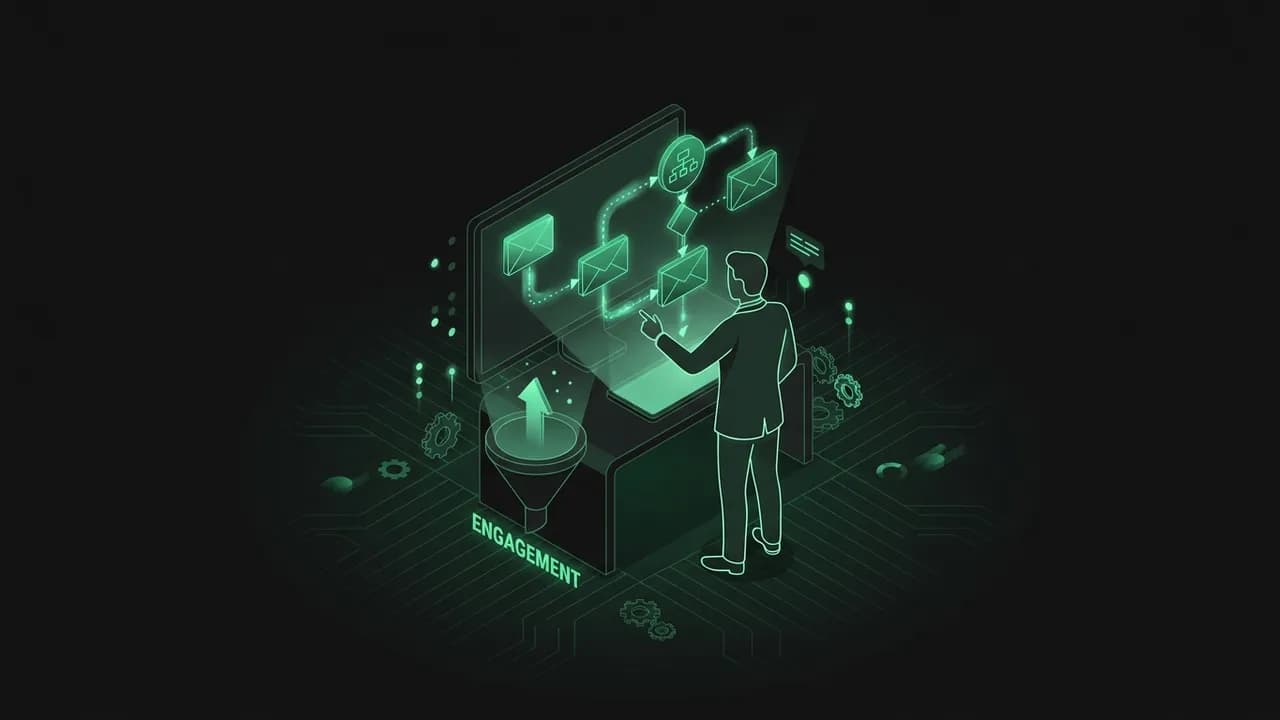
Email Drip Campaigns is often treated as a tactical add-on when it should be treated as a strategic engagement system. In 2025-2026, users have more options, shorter attention spans, and lower tolerance for generic experiences. That means products need better mechanisms to sustain relevance, reinforce value, and reduce drop-off across the lifecycle.
The main failure pattern is not lack of effort. It is misapplied effort. Teams launch programs, campaigns, or features without a clear behavior model, without audience segmentation, and without a strong link to retention or user value. The result is activity without compounding outcomes.
A better approach starts with one question: what repeated user behavior or customer outcome are we trying to improve? Once that is clear, email drip campaigns can be designed as a system rather than a one-off tactic.
This guide focuses on practical execution, current benchmarks, real examples, common pitfalls, and a concrete operating model so the tactic becomes durable rather than decorative.
Core Framework: How to Structure Email Drip Campaigns
A reliable email drip campaigns strategy usually has four layers:
1. Objective
Define whether the goal is activation, retention, re-engagement, expansion, advocacy, or insight collection.
2. Audience
Different cohorts need different prompts, incentives, or experiences. Segment by lifecycle stage, product usage, role, or value profile.
3. Trigger or Cadence
Clarify when the tactic should happen. Some systems work best when event-triggered, others on a recurring cadence.
4. Feedback and Measurement
Track not only interaction with the tactic itself, but whether the underlying user behavior improves.
The reason this structure matters is simple: without objective, audience, trigger, and measurement, the tactic becomes noise instead of leverage.
Execution: Building a High-Performance Email Drip Campaigns System
Execution should start small, but it should not start vaguely.
Step 1: Identify the target behavior
Choose the behavior most closely tied to retention or revenue quality.
Step 2: Design the journey
Map what the user sees, when they see it, what action they are expected to take, and what the reward or outcome is.
Step 3: Segment the rollout
Do not launch to everyone at once. Start with one meaningful cohort.
Step 4: Instrument the funnel
Track exposure, action, completion, and downstream impact.
Step 5: Iterate weekly
The best engagement systems improve through small cycles of testing, not one large launch.
This operating discipline is what separates a tactic that looks clever in a meeting from a tactic that actually improves retention, activation, or expansion.
Advanced Strategy: How to Make Email Drip Campaigns Compound
The highest-performing teams make email drip campaigns compound in three ways:
Compounding matters because a standalone tactic can lift a metric temporarily, but connected systems create durable behavior change. When users repeatedly experience relevance, progress, and clarity, the tactic stops feeling like a campaign and starts feeling like part of the product relationship.
Drip Campaign Logic: Automation Should Feel Timely, Not Robotic
Email drips work when they move a user from one stage of understanding or readiness to the next. The most effective drip campaigns are event-aware, segment-aware, and tied to a clear next action.
Good drips usually cover:
The mistake is setting a 10-email sequence once and never revisiting it. Drips should evolve as product, audience, and behavior patterns change.
Examples of Drips That Improve Conversion and Retention
Strong SaaS drip campaigns often combine product education, customer stories, and one focused CTA. Ecommerce drips typically blend browse recovery, replenishment, and post-purchase education. Media and creator drips work best when they build habit and anticipation.
Automation wins when it reduces decision friction rather than flooding the inbox.
Real-World Examples & Benchmarks
Example 1: Category-leading products usually succeed here by making the experience timely, useful, and easy to act on rather than overly clever.
Example 2: B2B teams often win by segmenting operators, admins, and champions separately rather than pushing one message to all accounts.
Example 3: Consumer apps often pair this tactic with visible progress, habit reinforcement, or social proof to make return behavior more likely.
Benchmarks should be interpreted directionally rather than dogmatically. Strong programs usually outperform weak ones not because they send more, but because they are more relevant, more contextual, and better connected to user goals.
Common Pitfalls & How to Avoid Them
Pitfall 1: No clear objective
Pitfall 2: Treating all users the same
Pitfall 3: Measuring only surface metrics
Pitfall 4: Overbuilding before validation
Pitfall 5: Weak follow-through
Pitfall 6: Poor connection to the rest of the product journey
What to Measure in Email Drip Campaigns
Useful measurement should answer whether email drip campaigns changed behavior, not just whether users saw it.
Core Metrics
Diagnostic Questions
Measurement matters because many engagement tactics look active while failing to improve the actual customer journey.
Actionable Conclusion and SEO Guidance
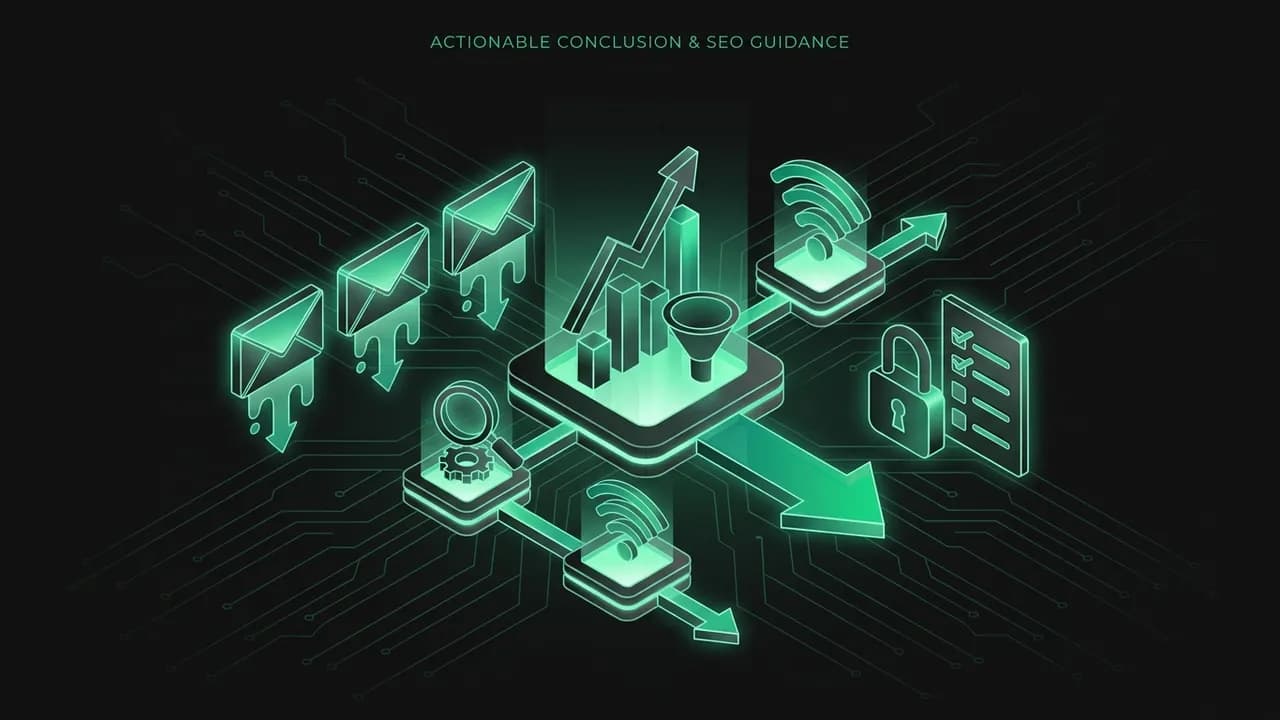
A strong email drip campaigns system is built on clarity, segmentation, timing, and disciplined iteration. The teams that get results are usually not the loudest. They are the ones that make each touchpoint easier to understand, easier to act on, and more obviously valuable.
Your Next 5 Steps
choose one high-value user behavior to influence
segment the right audience
design the smallest useful version of the system
instrument the full journey
review results weekly and iterate
SEO / Optimization Notes
This guide should naturally include keywords related to email drip campaigns nurturing leads automatically, plus adjacent terms and semantic variants. The meta description should align with the updated article scope. Internal linking should connect this guide to onboarding, churn, retention, lifecycle messaging, support, and engagement topics where relevant. Avoid filler and keep keyword usage natural, distributed, and human-readable.
The best engagement systems do not rely on volume. They rely on relevance and repeatable value.
Sequence Design: Map Each Email to a Specific Job
Every email in a drip should have a job:
If multiple emails do the same job, the sequence bloats. Strong drip design is usually tighter, shorter, and more purposeful than teams expect.
Optimization: What to Improve in Mature Drip Campaigns
Mature drip programs are improved by testing:
The biggest upgrade usually comes from better branching. When users behave differently, the sequence should adapt instead of forcing everyone through the same narrative.
Final Drip Takeaways
Automation should reduce friction, not create inbox clutter. The best drip campaigns feel like guided progress: clear, useful, and aligned to the user’s current stage.
Behavioral Branching: The Upgrade That Makes Drips Smarter
A drip campaign becomes much more effective when it branches based on user behavior. Someone who clicked a case study may need a different next email than someone who ignored the previous two sends. Someone who started a trial needs different messaging than someone still learning the category.
Branching helps because it makes automation feel more responsive and less generic. Even simple branching rules can improve relevance significantly.
Drip Metrics Beyond Open Rate
The right drip metrics depend on the sequence goal, but usually include:
The best drip campaign is not the one with the cleverest copy. It is the one that moves users forward with minimal friction.
Drip Playbook: Build One Sequence That Actually Helps
If you want a better drip program this month, pick one use case only—onboarding, nurture, expansion, or reactivation. Define the sequence goal, write 4-6 purposeful emails, add one branching rule, and review step-by-step drop-off. Focus improves automation quality faster than adding more sequences.
Final Depth: Great Drips Feel Like Guided Progress
A useful drip sequence helps a user go from confusion to clarity, from hesitation to readiness, or from low usage to meaningful value. That is why the best drips feel less like broadcasts and more like progressive guidance.
Automation should create forward motion, not repetitive noise.
Content Mix: Education, Proof, Objection Handling, and CTA Balance
Drip campaigns improve when the content mix is deliberate. Too much education can feel slow. Too much CTA pressure can feel salesy. Too much proof without context can feel generic.
A balanced drip often combines:
The right ratio depends on sequence stage, but the principle is constant: each email should reduce uncertainty or increase confidence in a way the user can act on.
Last-Mile Optimization: Keep Drips Tight and Adaptable
The best drip sequences are rarely the longest ones. They are the ones where every message earns its place. If an email does not reduce confusion, build trust, or advance the next step, it probably should not exist.
This editing mindset keeps drip programs efficient and makes the automation feel more human, not less.
Completion Pass: Checklist for an Effective Drip Campaign
A healthy drip campaign usually has:
This checklist keeps automation aligned with progress instead of inbox noise.
Advanced Drip Examples Across Use Cases
Onboarding drips work best when they remove setup confusion. Nurture drips work best when they educate and de-risk the next step. Expansion drips work best when they show adjacent value at the right moment. Reactivation drips work best when they make return behavior easy and relevant.
Across these use cases, the underlying principle is the same: every automated email should move the user one step closer to useful action.
Final Drip Wrap-Up
A good drip campaign helps users progress with less hesitation and less confusion. The sequence should feel like useful guidance, not a trapped automation path. That is what keeps nurture effective.
Extra Examples and Drip Edge Cases
Some sequences should stay linear because the user journey is simple. Others need branching because user intent splits quickly. The best teams choose the minimum complexity needed to keep the sequence relevant without creating maintenance chaos.
Why Sequence Maintenance Matters
A drip that worked six months ago may underperform today because objections changed, product positioning shifted, or user expectations evolved. Sequence maintenance is therefore part of performance, not an optional cleanup task.
Drips and Sales/Success Alignment
In many businesses, drip campaigns perform better when sales, support, or customer-success teams understand what the sequence is saying. Alignment prevents conflicting messages and makes handoffs smoother.
For example, if a sequence is handling a pricing objection or implementation concern, the human team should know that context before they reach out. That turns automation from isolated messaging into coordinated progression.
Sequence Review: Where Good Drips Usually Break
Drip sequences often weaken in three places: the opening email lacks a clear promise, the middle emails repeat without adding new value, or the later emails push for action before trust is built.
A sequence review should inspect each step for:
This editing discipline keeps the automation useful rather than bloated.
Drip Systems Work Best When They Are Maintained Like Products
The best teams treat drip campaigns as living product assets. They review performance, prune weak steps, refresh proof points, and update messaging as positioning evolves.
That maintenance mindset is what keeps automation from becoming stale. A drip should age like a product, not like a forgotten template.
Why Drips Need Fresh Proof and Current Context
As products, markets, and buyer objections change, drip sequences need updated examples, proof points, and wording. Old social proof or stale positioning weakens the sequence even if the structure is still sound.
Keeping the proof current helps users trust that the guidance is relevant now, not merely recycled from an earlier phase of the business.
Final Automation Principle
Automation should make the customer journey feel clearer and easier, not colder. When that principle is honored, drip campaigns become one of the most scalable ways to support conversion and retention.
Key Takeaways
A drip is sequenced, behaviour-triggered emails, one focused message and one CTA per step.
Always set exit conditions so converted users stop getting nurtured for what they already did.
Pick tools by need: Mailchimp to start, Brevo for budget, ActiveCampaign for advanced automation.
Judge campaigns on end conversion and revenue per recipient, not just open rates.
Watch unsubscribe and spam-complaint rates as guardrails so you don't burn the list.
Frequently Asked Questions
What is an email drip campaign?
How do you set up a drip campaign?
What are good drip campaign examples?
What tools are good for drip campaigns in India?
What are common drip campaign mistakes?
How do you measure drip campaign success?
Your Turn: The Action Step
Drip Sequence Mapper
Map a complete email drip sequence where every email has one job, one CTA, and a clear send trigger.
State the sequence's single goal
One outcome this whole drip drives toward.
Map each email to one job
Each row = one email. Job is educate / prove / objection / action. One CTA only.
| # | Day | Job | Subject line | Single CTA |
|---|---|---|---|---|
Add one behavioural branch
Pick a user action that should change the next email they get.
Define the exit condition
What removes someone from this drip (conversion, unsubscribe, or hand-off)?
Set the success metric
The sequence's job, as a number — not open rate.
| Metric (e.g. trial→paid %) | Baseline | Target |
|---|---|---|
Before you close this
0/5 doneYour answers are saved in this browser only. Use “Download as PDF” to keep a copy.
You Don’t Have a Churn Problem, You Have a Customer Success Problem
Ready to apply this?
Stop guessing. Use the Litmus platform to validate your specific segment with real data.
Automate Your Nurture