Gamification Done Right: Badges, Streaks, and Rewards
Adding 'points' to a boring product won't save it. This 3,000-word guide uses the Octalysis Framework to build meaningful engagement that turns users into lifelong fans through psychological 'Flow'.
Why Most Gamification Fails in Modern Products
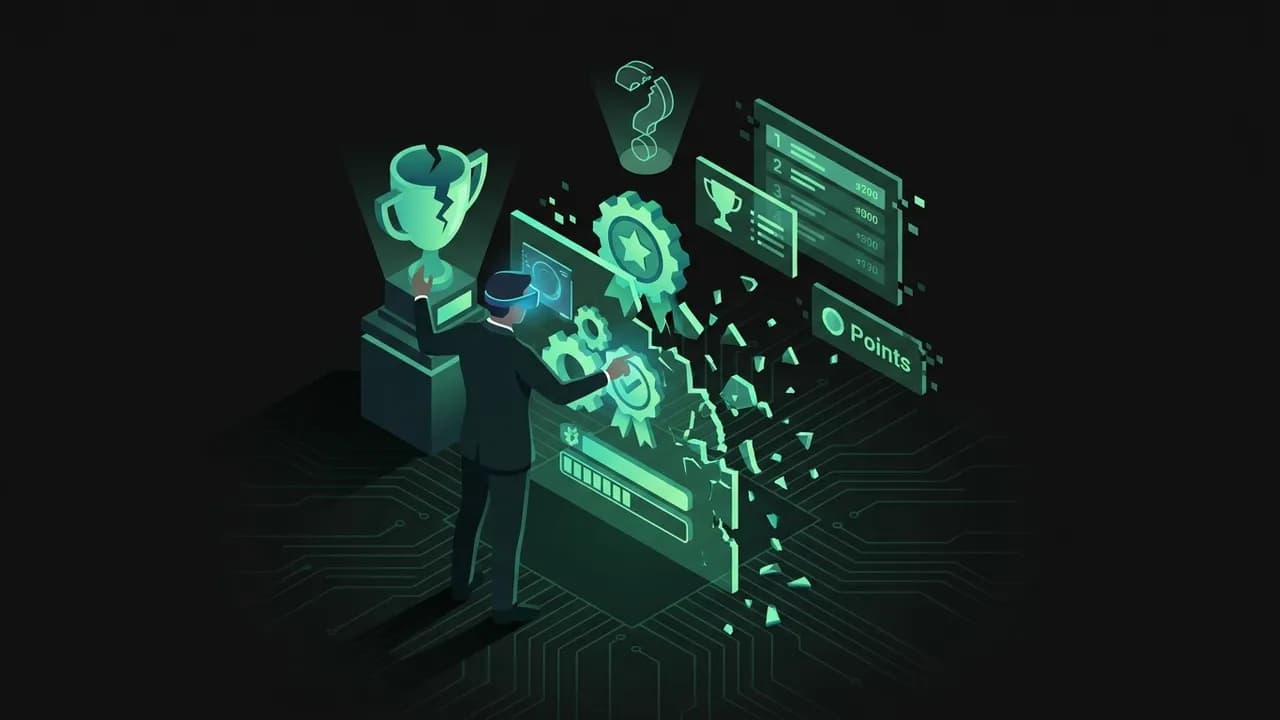
Gamification is one of the most misunderstood ideas in product design. Founders hear "badges" and "streaks" and imagine instant engagement. Then they add points, colorful icons, and progress bars—only to discover users ignore them. The problem is not that gamification stopped working. The problem is that most products use it as decoration instead of motivation design.
In 2025-2026, users are more sophisticated and more skeptical. They have seen empty streak systems, manipulative notifications, and reward mechanics that feel childish or disconnected from real value. If your gamification feels like a trick, it backfires. If it helps users make visible progress toward something they already care about, it can meaningfully improve engagement and retention.
Good gamification does not create desire from nothing. It amplifies existing motivation. That is the core rule.
The wrong implementation creates shallow engagement:
The right implementation improves behavior quality:
So the real question is not "Should we add gamification?" It is: what user behavior deserves reinforcement, and how do we make progress feel visible without feeling manipulative?
Core Framework: Motivation, Progress, and Meaning
A durable gamification system rests on three layers:
1. Motivation
What does the user already want?
Gamification should reinforce this desire, not replace it.
2. Progress
How do users know they are advancing?
Visible progress matters because it turns invisible effort into something emotionally tangible.
3. Meaning
Why does the reward matter?
If rewards lack meaning, users stop caring.
The 4-Part Gamification Model
A practical startup model:
Trigger — a reason to return or act
Action — the core behavior you want repeated
Reward — feedback, recognition, or unlock
Progression — a visible sense that effort compounds
Without progression, rewards feel random. Without reward, action feels dry. Without meaning, the whole system feels fake.
The Most Useful Gamification Mechanics for Startups
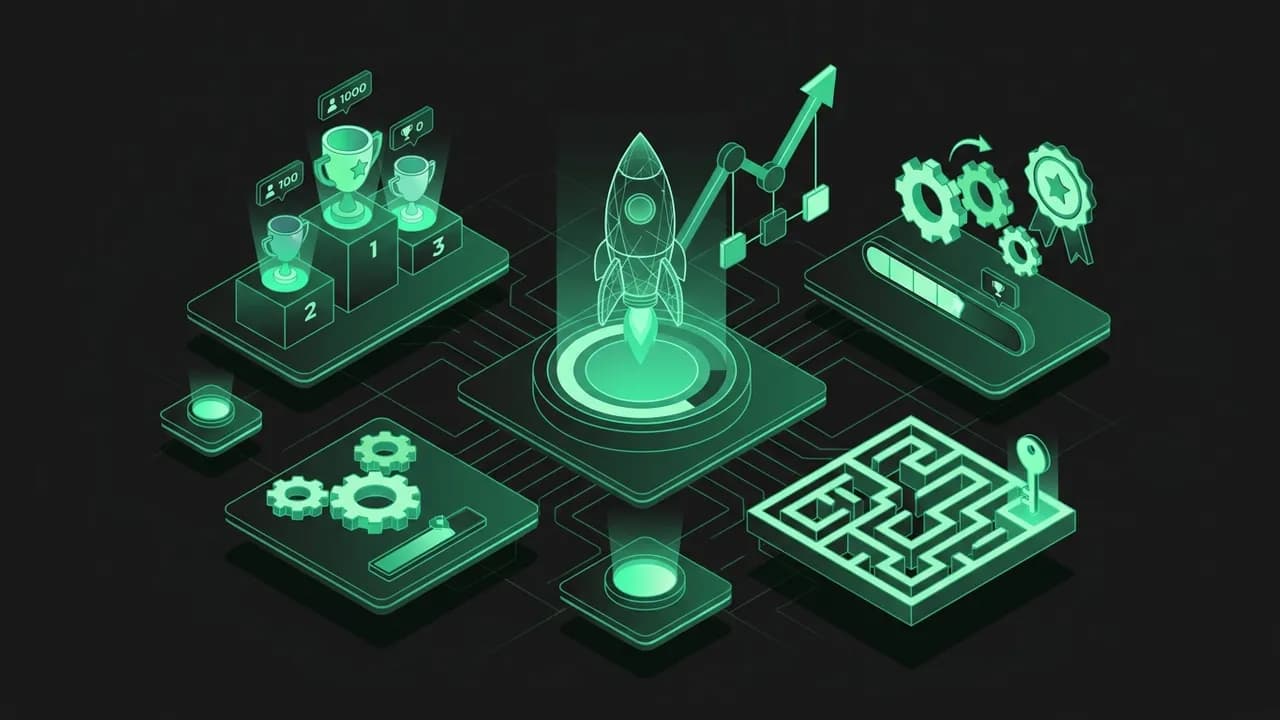
Not every product needs every mechanic. Use the ones that fit your product and user psychology.
Streaks
Best when consistency itself matters.
Progress Bars
Best when setup or onboarding completion matters.
Milestone Badges
Best when achievements should be recognized.
Levels and Unlocks
Best when product depth expands over time.
Leaderboards
Best when competition adds real motivation.
Quests and Challenges
Best when you want to guide users through a journey.
Execution: How to Add Gamification Without Cheapening the Product
Step 1: Identify the Core Repeat Behavior
Do not gamify everything. Choose one behavior tied to retention.
Examples:
Step 2: Match the Mechanic to the Behavior
Step 3: Reward Real Progress
The best rewards usually do one of three things:
Step 4: Avoid Manipulation
If your system pressures users into meaningless repetition, you may boost shallow engagement while harming long-term trust.
Ask:
Step 5: Measure Behavior Quality
Watch not only whether users engage with the gamification system, but whether the underlying product behavior improves.
If badge clicks go up but retention stays flat, the system is theater—not value.
Real-World Examples: Gamification That Actually Improved Retention
Example 1: Duolingo
Duolingo is the default reference for gamification because its streaks, XP, leagues, and rewards reinforce the real goal: repeated language practice.
Example 2: GitHub contribution graphs
GitHub does not feel like a game, but its contribution heatmap is a gamified progress system.
Example 3: LinkedIn profile completion
The profile-strength progress bar nudges users toward completion because a stronger profile has immediate practical value.
Example 4: Fitbit / health apps
Daily targets, step streaks, and milestone celebrations work because they tie directly to user identity and goals.
Example 5: Habit trackers and writing apps
Many habit and writing tools use streaks and milestones to reduce the friction of showing up repeatedly.
Common Pitfalls & How to Avoid Them
Pitfall 1: Rewarding the wrong behavior
If users can game the system without receiving real value, you have built noise.
Pitfall 2: Overcomplicating the system
Too many mechanics create confusion.
Pitfall 3: Creating shame loops
Aggressive streak systems can punish users for one missed day.
Pitfall 4: Using competitive mechanics for everyone
Leaderboards motivate some users and discourage others.
Pitfall 5: Cosmetic rewards with no meaning
If a badge means nothing, the user stops noticing it.
Pitfall 6: No measurement discipline
Teams celebrate feature launches but never verify impact.
What to Measure When You Add Gamification
Gamification is only useful if it improves business-relevant behavior.
Core Metrics
Diagnostic Questions
If the system increases activity but not outcomes, redesign it.
Actionable Conclusion: Reinforce Value, Don’t Manufacture Addiction
Good gamification is not about turning software into a slot machine. It is about making useful progress visible, rewarding consistency, and helping users feel momentum.
Your Next 5 Steps
Choose one user behavior that strongly predicts retention.
Match one gamification mechanic to that behavior.
Make the reward meaningful and tied to real progress.
Add a recovery path so missed activity does not create shame.
Measure retention and behavior quality after launch.
SEO / Optimization Notes
This guide should naturally target keywords like gamification, badges, streaks, product engagement, and gamification examples. The meta description should emphasize using rewards and progress systems to improve engagement without annoying users. Internally, this guide should link to onboarding, habit formation, push notifications, and loyalty or community-style guides as Module 4 expands.
The best gamification systems do not distract from product value. They help users feel it faster, more often, and with more satisfaction.
The Psychology Behind Why Gamification Works
The reason gamification works is not because people love points. It works because people respond to visible progress, feedback loops, identity reinforcement, and completion tension.
Key Psychological Drivers
These principles explain why a progress bar can outperform a discount and why a streak can matter more than a badge. Good product teams do not copy mechanics blindly—they design around the psychology underneath.
Gamification in B2B and Team Products
Founders often assume gamification is only for consumer apps. That is a mistake. B2B products can benefit too, if the mechanics support real workflow progress.
Examples:
B2B gamification works when it reinforces competence, adoption, and team momentum—not when it feels childish. The language and design can be serious while still using game-like principles.
How to Test Gamification Without Overbuilding
Do not spend months engineering a complex rewards engine before validating the behavior shift.
Lightweight Testing Approach
choose one behavior to improve
add one simple mechanic
expose it to one user segment
compare usage and retention against a control or prior cohort
review both quantitative and qualitative feedback
Questions to Ask After Launch
Testing small protects the team from building an engagement gimmick that users never truly value.
Advanced Examples: Subtle Gamification in Serious Products
Example 6: Notion checklists and templates
Notion often motivates completion through templates, setup progress, and visible structure instead of overt game mechanics.
Example 7: Sales software scoreboards
Revenue teams respond to rankings, deal stages, and visible goal progress when tied to meaningful outcomes.
Example 8: Learning and certification platforms
Courses, checkpoints, and earned credentials create progression that feels real because it maps to skill development.
Implementation Patterns: Simple Systems That Scale
A practical gamification system should be lightweight enough to ship and flexible enough to evolve.
Pattern 1: Setup Progress
Use a checklist plus percentage completion to get users through the first setup journey.
Pattern 2: Consistency Reward
Use streaks or weekly completion markers when repeat use is important.
Pattern 3: Mastery Milestones
Use levels, badges, or unlocks when users benefit from gradually increasing capability.
Pattern 4: Social Recognition
Use public wins, community shoutouts, or team summaries when identity and recognition matter.
Most products do not need more than one or two of these at the start. The most common mistake is stacking every mechanic at once and creating noise instead of motivation.
How Gamification Connects to Retention and Expansion
The most valuable gamification systems do more than increase clicks. They increase retention quality.
When users return more consistently, complete more setup, adopt deeper features, and feel more invested in their own progress, expansion becomes easier. Teams invite others, upgrade sooner, and integrate the product more deeply.
This is why product engagement mechanics should always be linked back to business outcomes:
If your system cannot be connected to one of these outcomes, it probably should not exist.
Final Examples: What Small Wins Look Like in Practice
A writing app may reward 3 days of consecutive drafts to reinforce habit. A CRM may celebrate the first imported contacts and first team invite. A learning product may use milestone certificates after real comprehension checks. A community product may recognize meaningful contributions instead of generic activity.
These examples show the same principle: the mechanic works because it reinforces a useful behavior the user already values.
Key Takeaways
Gamification amplifies an existing value loop; it cannot rescue a product with no real value.
Tie every mechanic (streaks, points, levels) to a behaviour the user genuinely cares about.
Study Duolingo streaks, Swiggy/Zomato rewards, and CRED gems for mechanics that reinforce habit.
Avoid dark patterns and punishing mechanics that guilt users instead of rewarding progress.
A/B test gamification against real retention and core actions, not vanity engagement.
Frequently Asked Questions
What is gamification?
What are the main gamification mechanics?
What are good gamification examples?
How do you add gamification without cheapening the product?
What are common gamification mistakes?
Does gamification actually improve retention?
Your Turn: The Action Step
Gamification Mechanic Designer
Design 1-2 gamification mechanics that reinforce a real user win, with a guardrail so you don't manufacture hollow addiction.
Pick the behaviour to reinforce
Name one repeatable action that is genuinely good for the user.
Choose the smallest mechanic
Pick ONE primary mechanic and say why it fits this behaviour.
| Mechanic (streak/badge/level/points) | Why it fits | Where it appears in product |
|---|---|---|
Define the reward and milestone
What does the user earn, and at what threshold? Keep it tied to real value.
| Milestone | Reward | Cost to you |
|---|---|---|
Add an anti-gaming guardrail
Write the rule that stops users from earning the reward without real value.
Set the success metric and kill condition
The metric must be the real outcome, never the mechanic itself.
Before you close this
0/5 doneYour answers are saved in this browser only. Use “Download as PDF” to keep a copy.
The Real Reason Users Stop Coming Back
Ready to apply this?
Stop guessing. Use the Litmus platform to validate your specific segment with real data.
Gamify Your Product