Personalization at Scale
Generic 'Dear User' marketing is dead. This 3,000-word guide masters the 'Dynamic Content Matrix' to deliver hyper-personalized experiences that drive 3x higher engagement than static content.

Why Personalization at Scale Matters More Than Most Teams Think

Personalization at Scale is often treated as a tactical add-on when it should be treated as a strategic engagement system. In 2025-2026, users have more options, shorter attention spans, and lower tolerance for generic experiences. That means products need better mechanisms to sustain relevance, reinforce value, and reduce drop-off across the lifecycle.
The main failure pattern is not lack of effort. It is misapplied effort. Teams launch programs, campaigns, or features without a clear behavior model, without audience segmentation, and without a strong link to retention or user value. The result is activity without compounding outcomes.
A better approach starts with one question: what repeated user behavior or customer outcome are we trying to improve? Once that is clear, personalization at scale can be designed as a system rather than a one-off tactic.
This guide focuses on practical execution, current benchmarks, real examples, common pitfalls, and a concrete operating model so the tactic becomes durable rather than decorative.
Core Framework: How to Structure Personalization at Scale
A reliable personalization at scale strategy usually has four layers:
1. Objective
Define whether the goal is activation, retention, re-engagement, expansion, advocacy, or insight collection.
2. Audience
Different cohorts need different prompts, incentives, or experiences. Segment by lifecycle stage, product usage, role, or value profile.
3. Trigger or Cadence
Clarify when the tactic should happen. Some systems work best when event-triggered, others on a recurring cadence.
4. Feedback and Measurement
Track not only interaction with the tactic itself, but whether the underlying user behavior improves.
The reason this structure matters is simple: without objective, audience, trigger, and measurement, the tactic becomes noise instead of leverage.
Execution: Building a High-Performance Personalization at Scale System
Execution should start small, but it should not start vaguely.
Step 1: Identify the target behavior
Choose the behavior most closely tied to retention or revenue quality.
Step 2: Design the journey
Map what the user sees, when they see it, what action they are expected to take, and what the reward or outcome is.
Step 3: Segment the rollout
Do not launch to everyone at once. Start with one meaningful cohort.
Step 4: Instrument the funnel
Track exposure, action, completion, and downstream impact.
Step 5: Iterate weekly
The best engagement systems improve through small cycles of testing, not one large launch.
This operating discipline is what separates a tactic that looks clever in a meeting from a tactic that actually improves retention, activation, or expansion.
Advanced Strategy: How to Make Personalization at Scale Compound
The highest-performing teams make personalization at scale compound in three ways:
Compounding matters because a standalone tactic can lift a metric temporarily, but connected systems create durable behavior change. When users repeatedly experience relevance, progress, and clarity, the tactic stops feeling like a campaign and starts feeling like part of the product relationship.
Personalization at Scale Without Creeping Users Out
Personalization works when it improves relevance, reduces cognitive load, or helps the user act faster. It fails when it feels invasive, inaccurate, or overly clever.
A good personalization model starts with useful signals:
The goal is not maximal customization. It is the smallest amount of useful adaptation that improves the journey.
Examples of Effective Personalization
Streaming recommendations, ecommerce reorder suggestions, SaaS admin workflows, and personalized onboarding tracks all work when the system reflects real user behavior and clear intent.
Personalization becomes dangerous only when data quality is weak or when teams personalize the surface but not the substance.
Real-World Examples & Benchmarks
Example 1: Category-leading products usually succeed here by making the experience timely, useful, and easy to act on rather than overly clever.
Example 2: B2B teams often win by segmenting operators, admins, and champions separately rather than pushing one message to all accounts.
Example 3: Consumer apps often pair this tactic with visible progress, habit reinforcement, or social proof to make return behavior more likely.
Benchmarks should be interpreted directionally rather than dogmatically. Strong programs usually outperform weak ones not because they send more, but because they are more relevant, more contextual, and better connected to user goals.
Common Pitfalls & How to Avoid Them
Pitfall 1: No clear objective
Pitfall 2: Treating all users the same
Pitfall 3: Measuring only surface metrics
Pitfall 4: Overbuilding before validation
Pitfall 5: Weak follow-through
Pitfall 6: Poor connection to the rest of the product journey
What to Measure in Personalization at Scale
Useful measurement should answer whether personalization at scale changed behavior, not just whether users saw it.
Core Metrics
Diagnostic Questions
Measurement matters because many engagement tactics look active while failing to improve the actual customer journey.
Actionable Conclusion and SEO Guidance
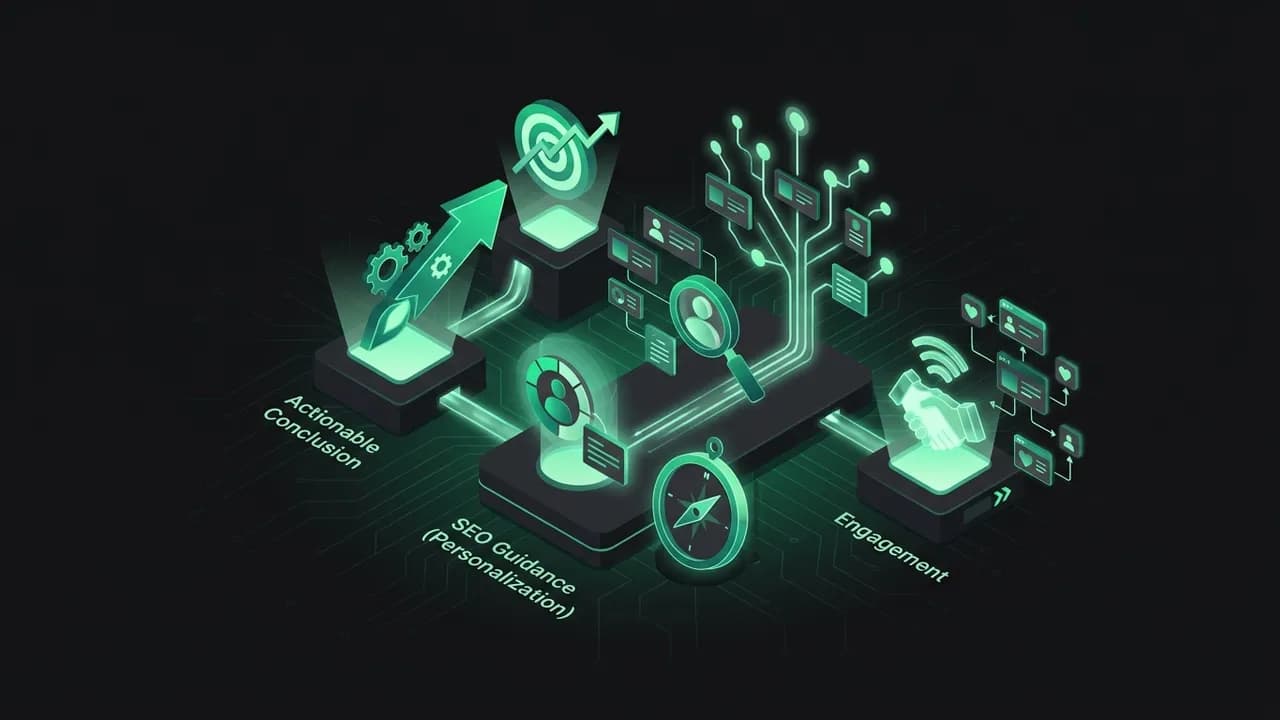
A strong personalization at scale system is built on clarity, segmentation, timing, and disciplined iteration. The teams that get results are usually not the loudest. They are the ones that make each touchpoint easier to understand, easier to act on, and more obviously valuable.
Your Next 5 Steps
choose one high-value user behavior to influence
segment the right audience
design the smallest useful version of the system
instrument the full journey
review results weekly and iterate
SEO / Optimization Notes
This guide should naturally include keywords related to personalization at scale using data to engage users, plus adjacent terms and semantic variants. The meta description should align with the updated article scope. Internal linking should connect this guide to onboarding, churn, retention, lifecycle messaging, support, and engagement topics where relevant. Avoid filler and keep keyword usage natural, distributed, and human-readable.
The best engagement systems do not rely on volume. They rely on relevance and repeatable value.
Signal Quality: Good Personalization Starts With Good Data
Personalization fails when the signal is stale, overly broad, or inferred too aggressively. Teams should prioritize reliable signals over clever but fragile models.
Best-practice signals include:
The cleaner the signal, the more useful the personalization. Bad personalization feels uncanny because it is wrong, not because it is personal.
Operations, Privacy, and Trust
Scaling personalization requires governance. Teams need rules for what data can be used, how often experiences should change, and where personalization should stop.
A good rule: personalize to reduce friction, not to show off data collection. The user should experience greater relevance, not surveillance.
Final Personalization Takeaways
The most effective personalization is often subtle. It helps the user get to value faster, see the right next step, and avoid irrelevant noise. That is enough to improve engagement meaningfully.
A Practical Personalization Stack for Startups
Personalization does not require a huge machine-learning system. Many teams get strong results from a simpler stack:
The point is not sophistication for its own sake. The point is relevance that is operationally maintainable.
Common Failure Modes in Personalization Programs
Personalization often fails in four ways:
Teams avoid these problems by reviewing which signals actually improve outcomes and deleting personalization rules that create noise instead of clarity.
Personalization Measurement and Governance
The right test for personalization is not whether the experience looks smarter. It is whether the user reaches value faster or with less confusion.
Governance questions include:
This keeps the system effective instead of bloated.
Final Depth: Relevance Beats Complexity
The best personalization often feels simple: the right onboarding path, the right prompt, the right recommendation, the right next step. Complexity is only valuable if it creates clearer relevance.
A smaller, cleaner personalization system can outperform a sprawling one if the rules are more accurate and easier to maintain.
Journey Personalization: Adapt the Path, Not Just the Copy
Many teams personalize headlines or email subject lines but leave the overall user journey untouched. Higher-impact personalization usually changes the path itself: which onboarding route appears, which recommendations are shown first, which help content surfaces next, or which lifecycle message is triggered.
That matters because the user experiences personalization most strongly when it reduces decision load and shortens the path to value. Copy-level personalization can help, but path-level personalization often creates larger behavioral gains.
Last-Mile Optimization: Keep the Personalization System Useful
As personalization systems grow, teams should remove rules that no longer improve outcomes. Relevance is often improved by deleting weak logic as much as by adding new logic.
A leaner system is easier to test, easier to trust, and easier for the user to understand. That makes personalization more durable over time.
Completion Pass: Checklist for Useful Personalization at Scale
A practical personalization system is usually healthy when:
This checklist keeps personalization grounded in usefulness instead of novelty.
Advanced Personalization Examples Across the Lifecycle
Personalization can improve onboarding by showing the right starting path, improve engagement by surfacing relevant next actions, improve retention by sending smarter reminders, and improve monetization by presenting the right offer at the right stage.
These examples show that personalization is strongest when it is woven into the user journey, not bolted on as a cosmetic layer. The company should aim for relevance users can feel, not personalization users merely notice.
Final Personalization Wrap-Up
Useful personalization makes the journey clearer, faster, and more relevant. The winning strategy is not maximum customization. It is reliable relevance at the moments where clarity matters most.
Extra Examples and Personalization Edge Cases
Not every part of the user journey should be personalized. Some surfaces benefit more from consistency and simplicity than adaptation. The best teams personalize the moments that genuinely reduce friction and leave the rest clear and stable.
Why Personalization Needs Ongoing Review
Signals shift as products evolve, audiences broaden, and features change. That means personalization cannot be "set and forget." A good quarterly review removes stale rules, strengthens the best-performing ones, and ensures personalization still matches real user journeys rather than old assumptions.
Personalization and Team Operations
Personalization at scale requires coordination between product, lifecycle, data, and sometimes support teams. Someone must own signal quality, experiment review, and the decision about which personalized experiences deserve continued investment.
Without that operating model, personalization rules accumulate, confidence drops, and the user experience becomes inconsistent. A weekly or biweekly review can keep the system focused on what genuinely improves outcomes.
Experimentation: Test Personalization Like Any Other Product Change
Personalization rules should be tested like product changes, not treated as automatically beneficial. Compare exposed cohorts against clear controls and review whether personalization improved the intended behavior.
Useful experiments include:
This helps teams avoid over-attributing value to personalization simply because it feels sophisticated.
Personalization and User Trust Over Time
Trust is a cumulative outcome in personalization. When recommendations are accurate and helpful, users welcome more relevance. When they are off-base or feel invasive, users disengage.
That means long-term success depends on being reliably useful. Good personalization should feel like assistance, not surveillance, and should steadily reduce friction without making the experience unpredictable.
Key Takeaways
Personalization at scale uses data and automation to adapt the experience per user without manual effort.
Start with simple rules-based segments (new vs returning, by use case) before investing in ML.
Prove engagement lift on one high-traffic surface, then expand and add data infrastructure.
Study Netflix, Amazon, and India's Swiggy/Zomato for behaviour-driven recommendations.
Treat privacy and consent as a feature: collect only what you need and honour opt-outs.
Frequently Asked Questions
What is personalization at scale?
How do you personalize using user data?
What are personalization examples?
What are common personalization mistakes?
How do you start personalizing as an early-stage startup?
How do you balance personalization and privacy?
Your Turn: The Action Step
Personalization Stack Planner
Pick the highest-leverage personalization moments, map the signal each needs, and ship them without creeping users out.
List signals you ALREADY have
Don't plan around data you wish you had. What's in your system today?
Pick the highest-leverage moment
One touchpoint where relevance changes the user's outcome the most.
| Candidate moment | Signal it needs | Expected impact |
|---|---|---|
Define the personalised change
Exactly what's different for user A vs user B at that moment.
Set the fallback and the creepy-line
What new/no-data users see, and the data use you will NOT do.
| Fallback (no data) | Creepy line we won't cross | Data sources allowed |
|---|---|---|
Define the lift test
How you'll prove it worked — A/B against a non-personalised control.
Before you close this
0/5 doneYour answers are saved in this browser only. Use “Download as PDF” to keep a copy.
The Real Reason Users Stop Coming Back
Ready to apply this?
Stop guessing. Use the Litmus platform to validate your specific segment with real data.
Personalize Growth