Crowdfunding: Kickstarter/Indiegogo Economics
Learn how to survive success on Kickstarter. Transition from 'Raised' vanity to 'Fulfillment' reality with our Campaign P&L Model.

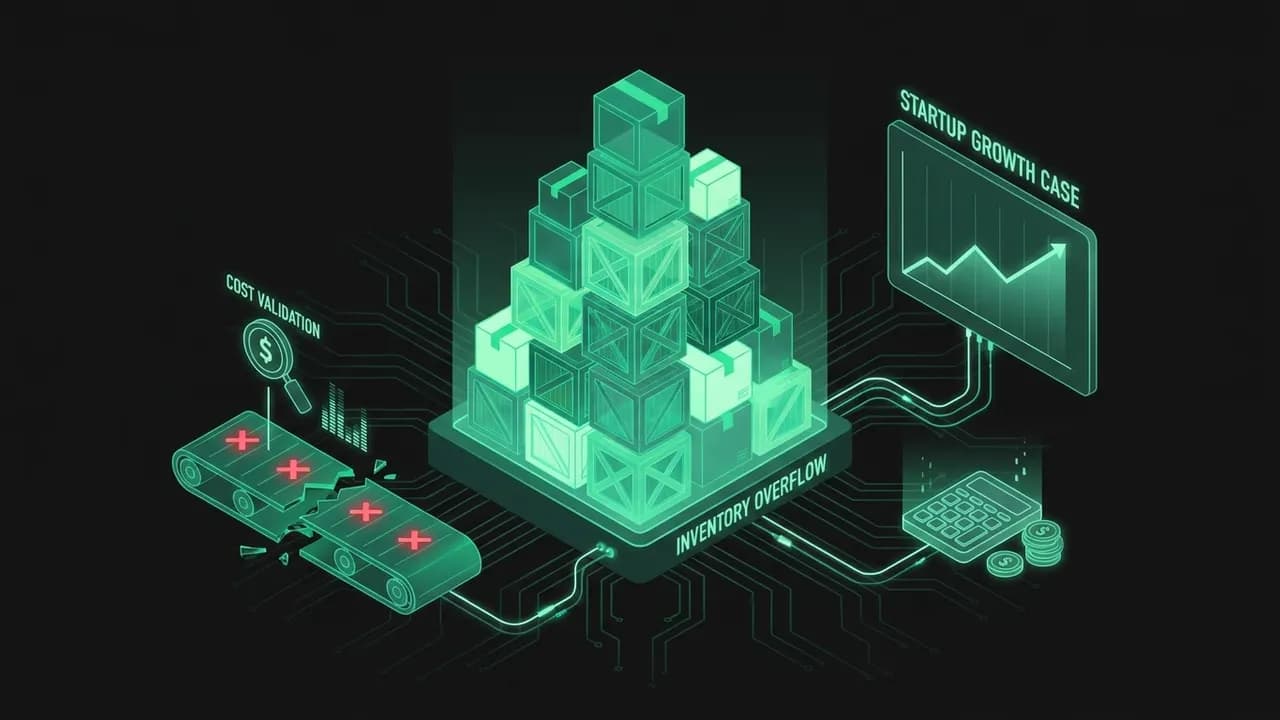
The Problem: The 'Warehouse of Success' Trap

The $1M Bankruptcy
“We raised $1M on Kickstarter for our new smart kitchen gadget. We celebrated, hired a team, and starting spending. Then we realized that after platform fees, credit card processing, and the massive amount we spent on Facebook ads to drive the 'Crowd,' we only had $600k left. Then manufacturing costs came in at $250k. And then the shipping crisis hit, and it cost us $35/unit to ship globally when we budgeted $10. Suddenly, our $1M 'Success' turned into a $150k deficit. We've raised more money than we ever dreamed, and yet we're going bankrupt fulfilling the orders.”
In crowdfunding, 'Raised' is vanity, 'Shipped' is sanity, and 'Net Profit' is reality. Most founders treat pre-sales as 100% profit, forgetting that every dollar raised is a Liability until the product is in the customer's hands.
To survive, you must move from 'Campaign Hype' to 'Fulfillment Math'—where you plan for the 'Net-to-Bank' amount, not the gross headline.
Why Crowdfunding Headlines Are Dangerous
A successful campaign page creates the illusion that the business has become rich overnight. In reality, the campaign has only created obligations: products to build, packages to ship, support requests to answer, taxes to handle, and delays to communicate. Gross raise is not free cash.
Pre-Sales Are Operational Debt
Backers are not passive donors. They are customers with expectations, timelines, and public voices. Once money is collected, the startup is on the hook to execute manufacturing, quality control, logistics, customs handling, and community communication at a level many first-time founders have never managed before.
Success Magnifies Complexity
A campaign that exceeds expectations does not simply give the company more margin. It often creates more manufacturing coordination, larger cash outlays, more SKUs, more support burden, and higher shipping exposure. Success can break a weak model faster than failure.
Shipping Is The Silent Killer
Founders routinely underestimate the volatility of freight, last-mile delivery, taxes, returns, and regional complexity. A campaign can look profitable at launch and become financially toxic months later when real fulfillment quotes replace optimistic assumptions.
Campaign Momentum Can Hide Bad Unit Economics
When a page is converting well, teams become emotionally attached to growth and stop questioning the profitability of reward tiers. But every extra backer acquired through an underpriced offer may deepen the eventual fulfillment hole.
The Real Skill Is Not Launching, But Delivering
Crowdfunding rewards storytelling and hype on the front end, but the long-term outcome is determined by operational discipline. The winners are not always the teams with the biggest launch. They are the ones that survive manufacturing, fulfillment, and customer trust management without destroying the business.
Key Concepts: The 'Net-to-Bank' Principle
The 'headline' number you see on Kickstarter is never the amount you actually get to keep.
1. The Platform Leak (10%)
Kickstarter and Indiegogo take 5% flat. Stripe and payment processors take another 3-5%. Before you build a single unit, 10% of your money is gone.
2. Ad Attributed Spend (The ROAS Tax)
Most successful 'viral' campaigns aren't viral at all. They are driven by massive Meta/Google ad spend. If you spend $0.30 to raise $1.00, your effective margin is already down to 60%.
3. BOM (Bill of Materials) vs. Sells Price
Your manufacturing cost must be low enough to absorb the 'Campaign Tax.' If your product costs $100 to make and you sell it for $150, you are likely losing money after fees and marketing.
4. DDP (Delivered Duty Paid) & Shipping Spikes
Shipping is the #1 killer of crowdfunding startups. Between the time you launch and the time you ship (often 12 months later), global freight prices can triple.
5. The 'Early Bird' Cannibalization
Giving away too much inventory at 'Cost' just to build momentum makes your total campaign less profitable.
Why Net-To-Bank Is The Only Number That Matters
Campaign success should be evaluated by the cash left after fees, ads, manufacturing deposits, tooling, shipping, packaging, taxes, and contingency. Founders who plan around gross raise almost always overestimate how much room they actually have.
Marketing Spend Can Turn Momentum Into Margin Erosion
Paid acquisition can help a campaign hit escape velocity, but it also changes the economics of each backer. If the team does not separate organic backers from paid backers and understand blended profitability, it may accidentally scale an offer that loses money.
BOM Discipline Starts Before Launch
Crowdfunding teams often finalize pricing before manufacturing assumptions are stable. That is backwards. Founders need realistic landed-cost estimates, defect buffers, packaging cost, and production variability before promising reward tiers to the public.
Shipping Needs Scenario Planning
Freight inflation, customs shifts, rural surcharges, VAT rules, and fulfillment-partner pricing can all change between launch and delivery. Good teams stress-test shipping assumptions rather than trusting a single quote.
Early Bird Pricing Should Buy Signal, Not Destroy Margin
Discounted early tiers can help generate traction and social proof, but they should be capped and intentional. Their job is to create launch momentum, not to turn the majority of orders into underpriced liabilities.
Net-To-Bank Thinking Changes Everything
Once founders start planning around net retained cash instead of gross campaign total, reward design, paid media, manufacturing strategy, and fulfillment timing all become more disciplined.
The Framework: The 'Campaign P&L' Model
Run this calculation for every reward tier before you go live.
Step 1: Raw Unit Margin. (Sale Price) - (Manufacturing Cost + Packaging).
Step 2: Apply the Platform Tax. Subtract 10% of the Sale Price.
Step 3: Factor in CAC (Customer Acquisition Cost). Subtract your projected ad spend per backer.
Step 4: The 'Final Mile' Buffer. Add a 20% 'Safety Buffer' to your current shipping quotes.
The Result: If your 'Net-to-Bank' profit per unit is less than 15%, you are in the danger zone. One manufacturing error or one shipping delay will wipe you out.
Why This Model Works
The Campaign P&L model forces teams to stop thinking like marketers and start thinking like operators. Each reward tier becomes a mini business case with visible economics instead of a hopeful pricing decision.
Reward Tiers Should Stand On Their Own
A campaign often contains multiple tiers with very different economics: early bird, bundle, premium edition, international shipping, and accessories. Founders should understand which tiers create profit, which tiers mainly create momentum, and which tiers are secretly dangerous.
Buffers Are A Strategic Requirement
Crowdfunding is exposed to manufacturing surprises, defects, returns, and freight volatility. A thin margin is not an efficient campaign. It is an accident waiting to happen. Healthy campaigns leave room for bad luck.
Tier-Level Analysis Improves Decision Quality
When founders see the full P&L by tier, they are more likely to cap loss-making tiers, raise underpriced offers, delay risky bundles, or simplify the campaign before launch. That clarity is often the difference between a campaign that ships and one that collapses.
Use Scenario Modeling, Not Single-Point Forecasting
Run conservative, base, and optimistic cases for CAC, shipping, and manufacturing. If the campaign only works in the optimistic scenario, it does not really work.
A Strong Campaign Model Includes
Execution: Fulfillment Mastery
Step 1: The 'Shipping is Extra' Strategy
Never include shipping in your Kickstarter reward price.
Step 2: The 'Add-On' Profit Engine
Your project's profit lives in the 'Upsell.'
Step 3: The 'Early Bird' Limit
Don't offer unlimited 'Early Bird' slots.
Step 4: The 'Customs/Vat' Firewall
International backers can be your biggest headache.
Why Shipping Separation Protects Margin
Charging shipping later allows the company to use more accurate rates, collect region-specific pricing, and avoid locking in an assumption that may be obsolete by the time the product is ready.
Add-Ons Improve Economics Without Resetting CAC
A well-designed add-on strategy can increase contribution profit dramatically because the marketing cost has already been paid. Accessories, upgrades, and bundles often provide the margin cushion the core campaign lacks.
Early Bird Scarcity Should Be Used Deliberately
Founders should use discounted tiers to create urgency and algorithmic traction, but only in limited quantities. Unlimited discounting is often a disguised margin giveaway that becomes painful at fulfillment time.
International Fulfillment Requires Explicit Policy
VAT, duties, customs paperwork, local carriers, and return handling can all turn international orders into financial traps. Clear policy, region-aware pricing, and realistic communication reduce backer disappointment and operational chaos.
A Good Fulfillment Operating Rhythm
Strong teams prepare:
Fulfillment Is A Trust Event
The real brand is built after the campaign ends. Backers will forgive some delay if communication is honest and execution is competent. They rarely forgive silence, broken promises, or surprise charges.
Case Study: The 'Coolest' Disaster
The Success & Failure: The 'Coolest Cooler'
An all-in-one cooler raised over $13M on Kickstarter, becoming one of the most successful projects ever.
The Pitfall: They didn't account for the complexity of manufacturing a product with so many moving parts. As delays piled up, manufacturing costs soared and shipping rates changed. They eventually ran out of 'Backer Money' to fulfill the original orders and had to try and sell the units on Amazon to new customers just to raise cash to ship to the original backers. It turned into a PR and legal nightmare.
Lessons Learned:
Complexity Kills: The more 'features' your product has, the higher the chance of a 50% increase in production costs.
Don't Over-Promise: It is better to have a simple, profitable product that ships on time than a 'Revolutionary' one that never leaves the factory.
Community Management Costs: Budget for 1 full-time person just to answer the thousands of 'Where is my stuff?' emails you will get every month.
Why This Story Matters
Crowdfunding failure is often not caused by lack of demand. It is caused by a mismatch between the story sold to backers and the operational reality required to deliver. The campaign can be brilliant while the fulfillment engine is fatally underbuilt.
The Pitfalls: Crowdfunding Economics Errors
Gross Raise Illusion: Treating the campaign total like available working capital.
Underpriced Shipping: Locking in global shipping assumptions that cannot survive real freight volatility.
Over-Complex Product Design: Launching a hardware promise with too many dependencies, variants, or quality-control risks.
Unlimited Early Birds: Giving away too much volume at thin or negative margin. Fix: cap discounted tiers aggressively.
No Post-Campaign Cash Plan: Spending campaign cash before mapping manufacturing, support, and delay scenarios. Fix: reserve funds by obligation, not optimism.
What Healthy Crowdfunding Looks Like
Healthy crowdfunding is conservative under the hood. The page may feel exciting, but the economics are sober. Pricing includes buffers, the product is feasible, shipping is treated as a major line item, communication is planned, and the team knows exactly how it will turn backer money into delivered units without gambling on perfect execution.
Questions Founders Should Ask
The Final Principle
Crowdfunding is not proof that a business works. It is proof that demand exists. The business only works if the team can convert enthusiasm into units delivered, trust preserved, and economics that remain intact after the last package ships.
Key Takeaways
Budget around net-to-bank, not the headline raise — platform and payment fees alone take ~10% before you build anything.
Most 'viral' campaigns are paid: if you spend $0.30 to raise $1.00, your effective margin is already down to 60%.
Your bill of materials must be low enough to absorb the campaign tax — selling a $100-to-make product at $150 likely loses money after fees, ads and shipping.
Shipping is the #1 killer: freight prices can triple between launch and fulfillment 12 months later.
Don't over-discount early-bird tiers — giving away inventory at cost to build momentum erodes total campaign profit.
Frequently Asked Questions
What is crowdfunding for startups?
How much does crowdfunding actually cost?
What is net-to-bank and why does it matter?
What are examples of crowdfunding outcomes?
What are common crowdfunding mistakes?
Are there crowdfunding rules in India?
Your Turn: The Action Step
Campaign P&L Worksheet
Walk out with the true net-to-bank from a crowdfunding campaign — after platform fees, fulfillment, and shipping — so you don't fund yourself into a loss.
Set the reward price
The headline pledge amount for your main reward tier.
Subtract platform + payment fees
Typically ~5% platform + ~3% payment. Compute the ₹ they take per reward.
Build the fulfillment cost stack
Per-unit COGS, packaging, and shipping — the real cost to put the product in a backer's hands.
| Cost item | ₹ per unit |
|---|---|
Compute net per reward and scale it
Reward price minus all costs = net per unit. Multiply by your backer goal.
Stress-test fulfillment
Budget for the things that go wrong: defect replacements, shipping overruns, delays. Set a reserve.
Before you close this
0/4 doneYour answers are saved in this browser only. Use “Download as PDF” to keep a copy.
Why Buying in Bulk Can Kill Your Business
Ready to apply this?
Stop guessing. Use the Litmus platform to validate your specific segment with real data.
Deliver on Your Promise