Customer Success at Scale: The Tiered Success Architecture
Retention is the new growth. Learn how to build a scalable Customer Success engine that identifies churn before it happens and scales with your revenue.
The Problem: The 'Linear CS' Trap
The $1M Churn Nightmare
“We finally hit 500 customers, and suddenly, our support ticket volume exploded. I hired two Customer Success Managers (CSMs), but they’re buried in basic 'How-to' questions. They haven't had a strategic conversation with an account in weeks. Meanwhile, our churn rate is creeping up because our biggest clients feel neglected. I realized that if I keep hiring one CSM for every 50 customers, my margins will vanish. I’m stuck between a 'Reactive' support team and an 'Unscalable' success team. I'm losing customers faster than I can hire people to save them.”
The mistake founders make is treating Customer Success as 'High-Touch Support.' Scaling success requires moving away from 'Hand-holding' to 'Systemic Enablement.'
To scale, you must move from 'Reactive Firefighting' to 'Tiered Success Architecture'—where you use data to automate the success of small accounts (Tech-Touch) while focusing your human experts on the high-value relationships that drive 80% of your revenue (High-Touch).”
Why Success Breaks When Customer Count Rises
A model that works for 20 customers often breaks at 200 and collapses at 2,000. Without segmentation, automation, and prioritization, every new customer adds cost faster than it adds retained revenue.
Support And Success Are Not The Same Job
Support resolves immediate issues. Success ensures customers reach meaningful outcomes. When those responsibilities get blended, the urgent always crowds out the important.
Churn Usually Starts Before Cancellation
Customers rarely disappear overnight. Warning signs appear earlier in falling usage, stalled onboarding, low feature adoption, and declining stakeholder engagement.
High-Touch For Everyone Is A Margin Trap
Founders often feel noble giving everyone white-glove support, but the unit economics usually fail. The business needs a model where touch level matches account value and complexity.
Retention Is A Systems Outcome
Strong retention is not produced by heroic CSMs alone. It comes from product onboarding, education assets, health scoring, handoff quality, and disciplined follow-up working together.
Customer Success Protects Revenue Quality
Acquiring customers is only half the job. If customers fail to activate, expand, or renew, growth becomes expensive and fragile. Success systems turn revenue from one-time wins into compounding value.
Key Concepts: The Success Spectrum
Scalable success is built on the principle of 'Resource Allocation based on Lifetime Value.'
1. The 'Tech-Touch' vs. 'High-Touch' Split
Segment your customers. Your bottom 80% of customers (by revenue) should receive 'Tech-Touch' Success—automated onboarding, AI-driven help centers, and automated 'Success Milestones.' Your top 20% get a human CSM.
2. The 'Health Score' Algorithm
Stop guessing if a customer is happy. Build a score (1-100) based on: (1) Product usage frequency, (2) Feature adoption, (3) Support ticket volume, and (4) Survey responses (NPS). A score dropping from 80 to 40 is a 'Churn Signal' that should trigger an immediate alert.
3. Expansion-as-Success
A successful customer should grow their spend. Scalable CS isn't just about 'Not Churning'; it's about 'Net Revenue Retention' (NRR). If your customers aren't buying more over time, you aren't providing enough value.
4. The 'Time-to-Value' (TTV) Metric
The most dangerous period for a customer is the first 48 hours. Your system must be designed to get them to their first 'Aha! moment' as fast as possible. If TTV is > 7 days, your churn risk increases by 300%.
5. Self-Healing Support
Every support ticket is a product failure. Use your CS team to identify 'Root Causes' and work with Product (Topic 144) to build the fix so that the ticket never happens again. The goal of CS is to eliminate the need for Support.
Tech-Touch Scales Education Efficiently
Most customers do not need a dedicated human for every question. They need clear onboarding, timely nudges, searchable help, and milestone-based communication.
Health Scores Turn Feelings Into Signals
Without a score, teams rely on intuition and anecdotes. A health model converts behavior into a practical operating signal that can trigger proactive intervention.
Expansion Indicates Real Value Delivery
Customers who expand usually do so because they are achieving outcomes. Expansion is often one of the strongest proofs that your success model is working.
Time-to-Value Shapes Long-Term Retention
If the first success moment comes too late, customers begin to doubt the purchase before the product earns trust. Fast wins create momentum and commitment.
Self-Healing Support Reduces Future Load
The best CS teams do not celebrate endless ticket handling. They help eliminate recurring causes so the company becomes easier to use over time.
Resource Allocation Is A Strategic Choice
Not every account deserves identical attention. The right model gives premium human effort where it meaningfully changes retention or expansion outcomes.
The Framework: The Tiered Success Architecture
Organize your success engine into these 3 distinct layers.
Layer 1: The Automation Layer (Tier 3 Customers). 100% Digital. Automated email sequences triggered by product behavior. 'I see you haven't invited your team yet; here is how to do it.'
Layer 2: The Fractional Layer (Tier 2 Customers). 80% Digital, 20% Human. These customers get access to 'Office Hours' and 1:1 'Growth Audits' only when their data hits a specific milestone or a 'Health Alert' triggers.
Layer 3: The Strategic Layer (Tier 1 Customers). 100% Human. Dedicated CSMs who act as 'Business Partners.' They don't do support; they do 'Strategic Business Reviews' (SBRs) to show ROI.
The Cross-Tier Feedback Loop. Tier 1 human insights must be turned into Tier 3 automations. If a human solves a problem for a VIP, that solution should be baked into the product for everyone.
Why The Automation Layer Matters
The majority of customer interactions are predictable. By handling common education and activation moments automatically, the team can support more accounts without degrading experience.
The Fractional Layer Creates Leverage
Some customers need occasional human judgment but not a full-time relationship manager. This middle layer preserves efficiency while still providing strategic help when it matters.
Strategic Accounts Need Business Context
Top-tier accounts do not just want product tips. They want proof of value, adoption strategy, stakeholder alignment, and confidence that your team understands their goals.
Cross-Tier Learning Prevents Linear Scaling
If insights stay trapped in Tier 1 conversations, the company keeps solving the same problem repeatedly. Strong CS organizations convert human insight into reusable assets and automation.
Tiers Should Reflect Reality, Not Ego
Customers should be tiered by revenue, complexity, growth potential, and risk, not by who complains the loudest or who happens to know the founder.
Architecture Makes Success Predictable
A tiered model ensures customers receive the right level of intervention at the right time, making retention less dependent on luck or individual heroics.
Execution: Scaling the Value

Step 1: The 'Aha!' Onboarding Flow
Automate the first win.
Step 2: The 'Churn-Prevention' Slack Bot
Empower the team with real-time alerts.
Step 3: The 'Success-to-Sales' Handover
Turn happiness into revenue.
Step 4: The 'Scalable Office Hours'
Manage 1,000 customers with 1 hour of time.
Why Onboarding Flow Is The Highest-Leverage Fix
A customer who reaches value quickly becomes easier to retain, easier to expand, and less likely to flood support. Early experience shapes the economics of the entire relationship.
Proactive Alerts Change The Success Posture
Waiting for a complaint means the problem has already matured. Real-time health alerts allow the team to intervene while recovery is still easy.
Expansion Handoffs Need Clean Rules
Sales should not chase every healthy customer blindly. Strong handoffs define clear triggers, account eligibility, and timing so expansion outreach feels relevant rather than opportunistic.
Office Hours Create Shared Leverage
One well-run group session can solve the same issue for dozens of customers at once. It also reveals recurring friction that should be addressed in product or documentation.
Execution Should Create Reusable Assets
Every effective rescue email, onboarding checklist, QBR deck, and objection response should become part of the system so the next CSM starts stronger.
Documentation Reduces Success Variability
When proven playbooks live in templates and systems, customers receive more consistent outcomes regardless of which CSM handles the account.
Scaling Value Means Standardizing The Best Moves
The goal is not to make customer relationships impersonal. It is to ensure that proven success actions happen consistently instead of depending on who is on shift.
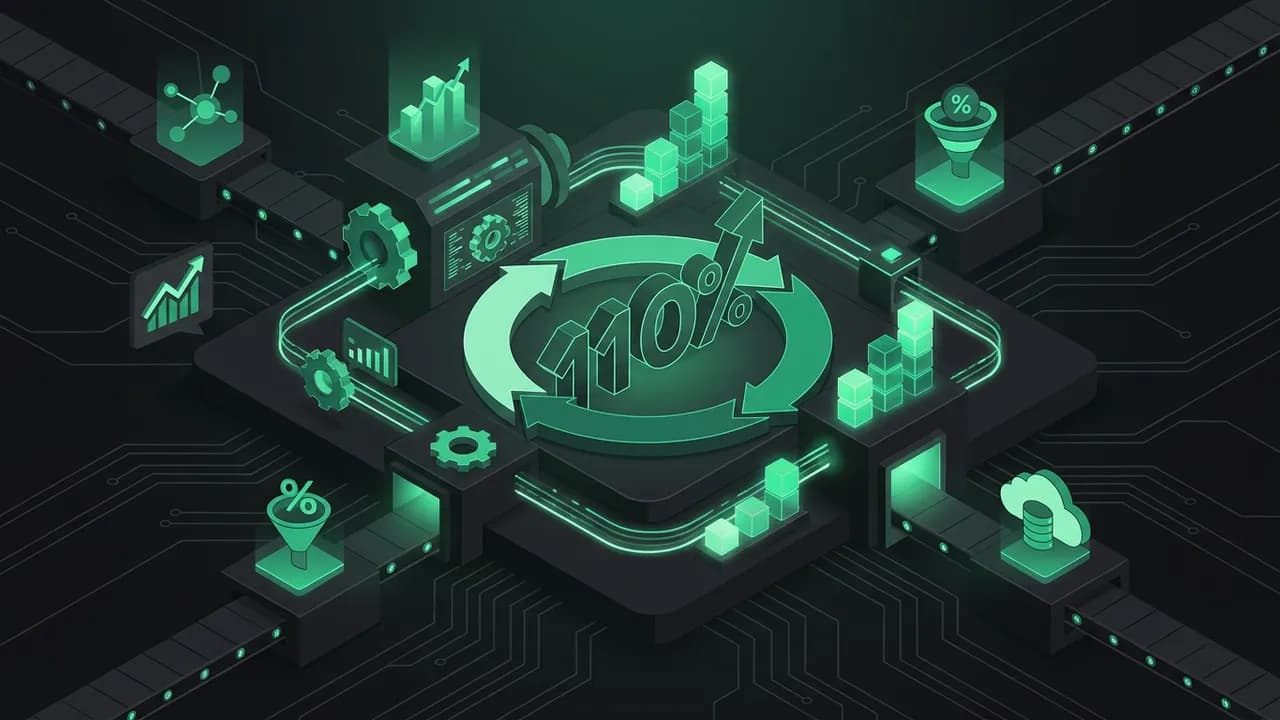
Case Study: The 110% Net Retention Machine
The Success: The 'Zero-Churn' SaaS
A B2B productivity startup was losing 5% of its revenue every month. They were growing fast but 'Leaking' just as fast.
The Strategy: They implemented the Tiered Success Architecture. They automated Tier 3 onboarding and built a 'Health Score' that alerted the founder whenever a Tier 1 client's engagement dipped. They shifted their CSMs' focus from 'answering tickets' to 'running quarterly ROI workshops.'
The Result: Within 12 months, their churn dropped to <1%. More importantly, their existing customers started spending more, leading to a Net Revenue Retention of 110%. They proved that Customer Success isn't a 'Cost Center'—it's the most efficient 'Growth Engine' in the company. By scaling value instead of volume, they built a sustainable, compounding business.
Why This Worked
The startup stopped treating retention as a support problem and started treating it as a designed system. It aligned onboarding, product usage data, customer education, and human intervention into a repeatable model.
Lessons Founders Commonly Miss
Customer Success does not become strategic only when the company is large. The operating model must be designed early, because poor activation and silent churn are expensive to unwind later.
Common Failure Modes
Uniform Service Levels: Giving every account the same motion regardless of value.
No Health Model: Relying on gut feel instead of customer behavior signals.
Reactive Outreach: Waiting until renewal risk becomes obvious.
Weak Product Feedback Loops: Letting the same customer pain repeat endlessly.
Expansion Confusion: Failing to define when success should hand off to sales.
What A Healthy CS System Looks Like
A healthy success organization is predictive, segmented, measurable, and outcome-oriented. It does not just answer questions; it increases adoption, reduces churn risk, and creates expansion opportunities.
Questions Founders Should Ask
Strong Success Teams Make Product Smarter
The best CS teams do not just defend renewals. They feed recurring friction, adoption blockers, and expansion signals back into product, sales, and onboarding so the whole company gets better over time. Every team learns continuously together across functions daily and adapts faster collectively now.
The Final Principle
The best Customer Success systems make value visible and repeatable. When customers achieve outcomes predictably, retention improves, expansion grows, and the business stops leaking growth through preventable churn.
Key Takeaways
Treat customer success as a revenue function — retention and expansion (NRR) are the new growth.
Use a tiered architecture: high-touch CSMs for top accounts, pooled for mid-market, tech-touch automation for the long tail.
Build a customer health score from usage, adoption, and sentiment to flag churn weeks before renewal.
Avoid 'linear CS' — giving every customer identical high-touch attention doesn't scale and burns out the team.
Measure revenue retention (NRR/GRR), not just logo retention, plus NPS/CSAT as satisfaction signals.
Frequently Asked Questions
What is customer success management?
What is a tiered customer success architecture?
How do you measure customer success?
What are examples of customer success at scale?
What are common customer success mistakes?
How do you predict and prevent churn?
Your Turn: The Action Step
Tiered Customer Success Architecture
Segment your customers into 3 success tiers by value, define the touch model for each, and build a health-score that triggers action before churn.
Segment customers into 3 tiers
Split by revenue/LTV. Define the cutoff for each tier and roughly how many customers sit in it.
| Tier | Revenue/LTV cutoff | # of customers |
|---|---|---|
Define the touch model per tier
Tier 1 human, Tier 2 hybrid, Tier 3 automated. Spell out what each actually gets.
| Tier | % human / % digital | What they get |
|---|---|---|
Build the health score
Allocate 100 points across usage, adoption, support volume, and NPS.
| Signal | How measured | Points |
|---|---|---|
Set the churn-alert trigger
What score drop fires an alert, and what action does it trigger per tier?
Design expansion (NRR)
How does each tier grow its spend? Set your Net Revenue Retention target.
Wire the cross-tier feedback loop
Pick one problem a CSM solved for a Tier 1 VIP that should become a Tier 3 automation.
Before you close this
0/5 doneYour answers are saved in this browser only. Use “Download as PDF” to keep a copy.
The Dark Side of 10X Startup Growth
Ready to apply this?
Stop guessing. Use the Litmus platform to validate your specific segment with real data.
Scale Your Retention