Preparing for Hypergrowth: The Exponential Engine Framework
Growth is a choice; hypergrowth is a transformation. Learn how to prepare your systems, your team, and your mind for the 10x explosion.
The Problem: The 'Success-to-Failure' Paradox
The $50M 'Crash' from Success
“We went from $1M to $50M in 12 months. On paper, we were the hottest startup in the valley. But internally, we were burning to the ground. Our customer support wait times went from 5 minutes to 5 days. Our database crashed every Friday. I was hiring 10 people a week, but the quality was plummeting (Topic 144). I realized that we were 'Succeeding' our way into bankruptcy. Our systems weren't built for a 10x load; they were barely holding together at 1x. Hypergrowth didn't make us better; it just exposed every crack in our foundation and made them fatal. We weren't riding a rocket ship; we were riding a bomb.”
The mistake founders make is thinking that 'More of the same' will work at scale. Hypergrowth is a 'Phase Shift'—it requires a fundamental redesign of your architecture, your leadership, and your mindset.
To scale, you must move from 'Organic Growth' to the 'Exponential Engine' Framework—where you proactively 'Break' your systems in a controlled environment so they can handle the uncontrollable explosion of the market.”
Growth Magnifies Weakness Faster Than Strength
At moderate scale, weak systems are annoying. During hypergrowth, they become existential threats. Delayed support, slow onboarding, founder approval bottlenecks, fragile infrastructure, weak analytics, and poor hiring discipline all compound under volume.
Why Hypergrowth Feels Like Operational Betrayal
Founders expect success to feel validating. Instead, it often feels destabilizing because the company that earned product-market fit is rarely the company that can safely handle sudden demand. The very moment everyone celebrates externally is often the moment internal fragility becomes visible.
Speed Without Architecture Is Chaos
Hypergrowth punishes improvisation. If processes live in people’s heads, if approval paths are unclear, or if systems only work because heroes rescue them nightly, explosive demand will overwhelm the organization. Preparation is not pessimism; it is respect for scale.
The Core Shift
The goal is no longer to make today's system slightly better. The goal is to design an organization that bends under pressure without breaking. That requires elasticity in technology, clarity in leadership, discipline in capital allocation, and rigor in talent systems.
Key Concepts: The Exponential Pillars

Hypergrowth is the ultimate test of an organization. It relies on these five pillars.
1. The '10x Infrastructure' Rule
Don't build for the customers you have; build for 10x the customers you expect. If you think you'll have 1,000 users, design your database to handle 10,000 without a flicker. Over-provisioning is the 'Price of Sanity' during a spike.
2. Radical Delegation (The 'Replace the CEO' Goal)
In hypergrowth, the founder's job is to 'Fire themselves' from every operational task every 90 days. If you are still approving invoices or interviewing junior devs at $50M, you are the bottleneck. You must delegate 'Outcomes,' not 'Tasks' (Topic 145).
3. The 'Scale-or-Fail' Stress Test
Every month, ask: 'If we 10x'd our sales tomorrow, what is the first thing to break?' Is it the server? The support team? The supply chain? (Topic 143). Identify that 'Breaking Point' and fix it before the growth hits.
4. Cultural 'Auto-Immunity'
Hypergrowth brings in a flood of new people. If your culture (Topic 147) isn't strong, the new hires will dilute it until it's gone. Use 'Cultural Onboarding' and 'Peer Policing' to ensure the 'Immune System' of the company rejects 'Toxic Stars' and 'Averageness.'
5. Cash-Flow 'Airbags'
Growth consumes cash (Topic 121). Even a profitable company can go bankrupt during hypergrowth because of 'Working Capital Gaps.' You buy inventory today, but you get paid in 60 days. Secure a 'Line of Credit' or a 'Venture Debt' facility while the sun is shining, so you have the fuel for the explosion.
6. Leadership Layering
A startup can operate informally at small scale because information travels by proximity. Hypergrowth destroys that convenience. You need a management layer that can translate strategy into execution without depending on the founder for every decision.
7. Capacity Buffers
Teams that run at 100% utilization before growth arrives are already in danger. Hypergrowth requires spare capacity in systems, people, and vendors. Buffers may look inefficient in spreadsheets, but they are often what prevents service collapse during sudden demand spikes.
8. Process Compression
The best hypergrowth systems shorten cycle time. Approval chains, onboarding steps, deployment workflows, and exception handling all need simplification. When volume explodes, any unnecessary step becomes a scaling tax.
9. Decision Rights Clarity
Growth accelerates confusion when people do not know who can decide what. Hypergrowth companies define authority boundaries aggressively: who owns pricing changes, incident response, vendor escalation, hiring approvals, and customer refunds. Speed requires decision clarity.
10. Communication Redundancy
In fast growth, a message said once effectively was not said at all. Teams need repeated reinforcement through dashboards, rituals, written updates, manager syncs, and onboarding. Redundancy is not waste; it is protection against organizational drift.
The Framework: The Exponential Engine
Follow this 4-stage protocol to prepare for the 1,000% annual growth curve.
Stage 1: The 'Bottleneck' Identification. Map your entire business flow. Use data (Topic 148) to find the 'Throttling Factor.' Is it 'Lead Gen'? 'Fulfillment'? 'Engineering'?
Stage 2: The 'Elasticity' Upgrade. Replace every 'Stiff' system with an 'Elastic' one. Move from 'Fixed Servers' to 'Auto-scaling Cloud.' Move from 'Fixed Salaries' to 'Performance-Based Commissions.'
Stage 3: The 'Middle Management' Layer. This is where most startups fail. You must hire or promote 'Directors' who can manage 'Managers.' This is the 'Architecture of Scale.'
Stage 4: The 'Mission Reinforcement' Loop. During the chaos of 10x growth, the team can lose sight of 'Why.' The founder must spend 80% of their time 'Communicating the North Star' to keep the army aligned.
Stage 1 Expanded: Map the Full Failure Chain
Do not look only at revenue generation. Map the full operating system: acquisition, onboarding, delivery, support, finance, hiring, and reporting. Hypergrowth usually breaks a downstream function first, not the glamorous front-end one leaders obsess over.
Stage 2 Expanded: Build Elasticity Before You Need It
Elasticity means capacity can expand without proportional pain. That might mean scalable cloud infrastructure, overflow staffing partners, flexible warehousing, automated billing systems, and documented SOPs. The goal is to absorb spikes without forcing heroics.
Stage 3 Expanded: Install the Management Spine
The founder cannot personally hold together a company tripling every quarter. You need leaders who can coach teams, maintain standards, resolve conflict, and translate goals into rhythms. Hypergrowth succeeds when leadership scales before headcount does.
Stage 4 Expanded: Reinforce Meaning During Chaos
When everything speeds up, people experience confusion, fatigue, and local optimization. Mission reinforcement prevents departments from pulling in different directions. Repeating the north star gives teams a decision filter when instructions lag reality.
The Hypergrowth Review Rhythm
Run weekly red-flag reviews, monthly stress tests, quarterly org redesign reviews, and live incident retrospectives after every major failure. This turns growth management from reactive firefighting into a repeatable operating discipline.
Signals That the Framework Is Working
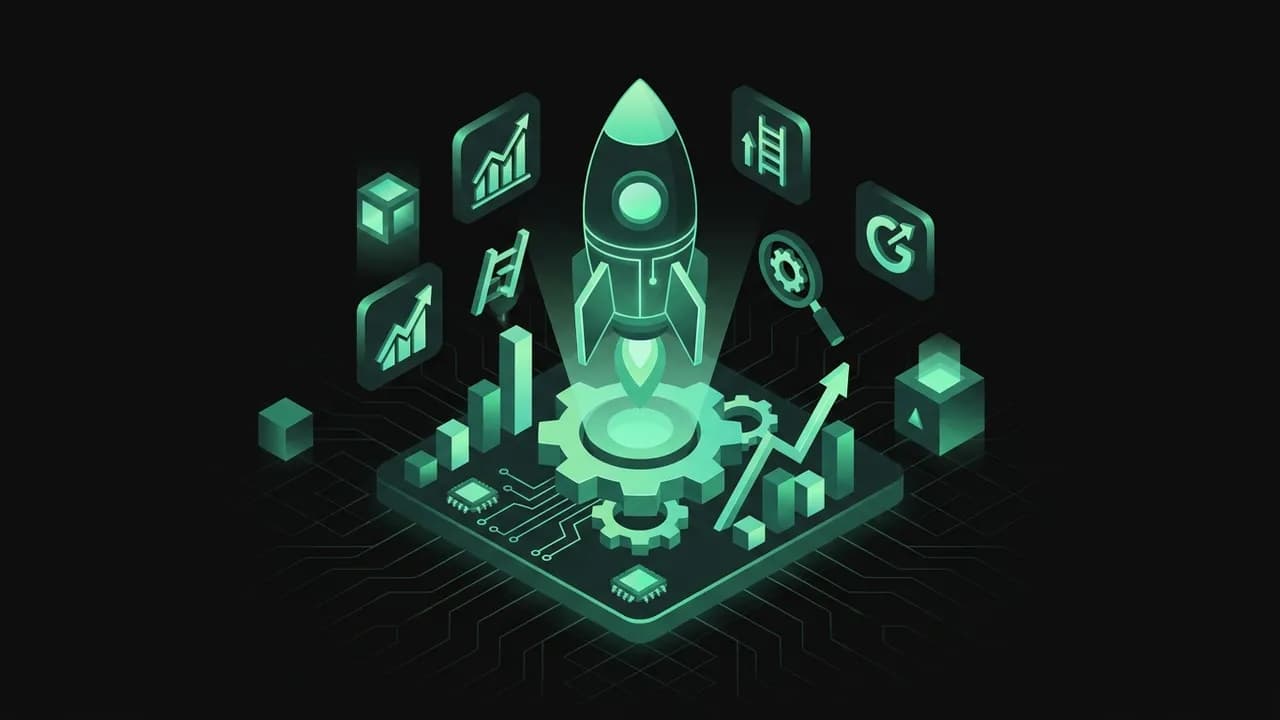
Execution: Riding the Rocket
Step 1: The 'Elastic' Support Stack
Scale help without scaling heads.
Step 2: The 'War Room' Dashboard
Manage the chaos in real-time.
Step 3: The 'Recruiting' Machine
Build a pipeline for talent.
Step 4: The 'CEO Transition' Plan
Shift from 'Doing' to 'Architecting.'
Execution Layer 1: Build Playbooks for Failure Modes
Do not wait for crisis to decide what to do. Write response playbooks for outages, stockouts, refund surges, shipping delay spikes, payment failures, and hiring overload. Teams perform better under stress when decisions are pre-structured.
Execution Layer 2: Protect the Core Customer Experience
During hypergrowth, many companies chase volume and accidentally destroy trust. Define the service levels you refuse to break: response time, delivery window, uptime, product quality, and refund fairness. If growth threatens those thresholds, slow down selectively rather than damage the brand permanently.
Execution Layer 3: Instrument Every Critical Queue
You cannot manage what you cannot see under pressure. Instrument support backlog, deployment queue, inventory coverage, fulfillment delay, invoice aging, and candidate pipeline conversion. Hypergrowth rewards teams that detect strain early.
Execution Layer 4: Audit Manager Load
A common silent failure is management span expanding too fast. If one leader suddenly has fourteen direct reports, coaching quality collapses, decisions slow down, and weak hires slip through. Monitor manager capacity as carefully as infrastructure capacity.
Execution Layer 5: Keep Weekly Simplification Alive
As the company grows, complexity grows by default. Counter it aggressively. Every week, remove a step, automate a handoff, merge a dashboard, clarify an owner, or eliminate a recurring meeting. Hypergrowth is easier when the operating system keeps getting simpler.
Case Study: The 1,000% Growth Miracle
The Success: The 'Auto-Scaling' Unicorn
A D2C brand went viral on TikTok. Their sales went from $10k a day to $1M a day overnight.
The Strategy: Because they had implemented the Exponential Engine, their website didn't crash (Auto-scaling Cloud). Their 3PL warehouse (Topic 143) was already set up for 'Infinite Throughput.' Their AI-chatbot handled 90% of the 'Where is my order?' questions.
The Result: They captured $50M in revenue in 30 days without their systems breaking. Their NPS actually increased during the spike because they were the only brand in their niche that could ship on time. They proved that 'Luck' is what happens when 'Hypergrowth Preparation' meets 'Viral Opportunity.' They didn't just survive the wave; they owned it.
Why This Worked
The company had already accepted a difficult truth: viral growth is not a marketing event; it is an operational exam. Because they designed for strain in advance, growth created leverage instead of panic.
What Preparation Changed
Their advantage was not a single hero system. It was a coordinated stack: elastic infrastructure, vendor readiness, support automation, operational dashboards, and leaders empowered to decide quickly. Each layer reduced the chance that success would turn into public failure.
The Deeper Founder Lesson
Most companies pray for hypergrowth without preparing for its consequences. The winners do the opposite. They assume good news can break weak organizations, so they invest early in resilience. Hypergrowth is not something you 'handle' after it arrives. It is something you architect for in advance.
Common Hypergrowth Failure Patterns
Teams often underestimate inventory stress, payment reconciliation delays, refund pressure, and management overload. They also forget that quality problems become more public when volume rises. Hypergrowth punishes hidden fragility fast.
Founder Questions for Readiness
Final Principle
You do not earn the right to enjoy hypergrowth by wanting it. You earn it by building systems, leadership, and capital structure strong enough to survive it.
Key Takeaways
Hypergrowth is a transformation, not just faster growth — it amplifies whatever systems and culture you already have.
Build infrastructure ahead of the curve: automation, SOPs, hiring machine, and data stack before the spike, not after.
Communication, onboarding, and manual processes break first — harden them during the calm.
Don't scale spend ahead of unit economics or lower the hiring bar to fill seats fast.
Stop being the bottleneck: delegate via codified values, clear ownership, and a leadership layer that can decide without you.
Frequently Asked Questions
What is hypergrowth?
How do you prepare a startup for hypergrowth?
What breaks first during hypergrowth?
What are examples of startups that handled hypergrowth?
What are common hypergrowth mistakes?
How do you avoid becoming the bottleneck during hypergrowth?
Your Turn: The Action Step
Hypergrowth Readiness Stress Test
Find the one thing that breaks first if you 10x tomorrow, make your stiff systems elastic, and plan the founder-delegation + middle-management layer that growth demands.
Map the full operating flow
List your business flow end-to-end: acquisition → fulfilment → support → ops. Don't stop at revenue.
Run the Scale-or-Fail test
If sales 10x'd tonight, what is the single first thing to break? Name the throttling factor.
Convert stiff systems to elastic
List your rigid systems (fixed servers, fixed salaries, manual ops) and their elastic replacement.
| Stiff system today | Elastic replacement |
|---|---|
Plan the middle-management layer
Where do you need Directors who manage Managers? Name the gap and the role to add.
| Function | Current span | Director/role to add |
|---|---|---|
Plan the founder's 90-day delegation
Which operational task will you fire yourself from this quarter, delegating the outcome (not the task)?
Set the Mission-reinforcement ritual
How will the founder keep the North Star loud through the chaos of 10x growth?
Before you close this
0/5 doneYour answers are saved in this browser only. Use “Download as PDF” to keep a copy.
This Startup Mistake Kills Growth
Ready to apply this?
Stop guessing. Use the Litmus platform to validate your specific segment with real data.
Prepare for Hypergrowth