Project Management Tools: The Objective-to-Task (O2T) System
Tools are just fancy lists until you have a methodology. Learn how to bridge the gap between high-level strategy and daily execution with the O2T system.
The Problem: The 'Busywork' Mirage
The $50k 'Todo List' Failure
“We use Monday.com, Trello, and Jira. We have 500 tasks in our backlog, but we’re still missing our launch dates. My team spends 2 hours a day 'Updating Status' but only 3 hours on 'Real Work.' I realized that our project management tool had become a 'Busywork Mirage'—it made us feel productive because the bars were moving, but we weren't actually shipping anything that moved the needle. We were managing tasks, but we weren't managing 'Outcomes.' We had a tool problem, but more importantly, we had a 'Visibility' problem. I couldn't tell you which task was the single biggest bottleneck preventing us from hitting our $1M revenue goal.”
The mistake founders make is assuming that the 'Tool' provides the structure. In a scaling startup, the 'Methodology' must come first.
To scale, you must move from 'Fragmented Task Lists' to the 'Objective-to-Task' (O2T) System—where every 15-minute task is explicitly linked to a quarterly objective, and the tool is used to monitor 'Velocity' rather than just 'Presence.'”
Activity Is Not Progress
Many teams confuse visible motion with meaningful output. A board full of moving cards can create emotional comfort, but it does not guarantee that the company is reducing risk, closing revenue, or finishing the priorities that matter most.
Why Founders Lose Trust in PM Tools
Founders usually do not hate project management tools because software is bad. They hate them because the tools become mirrors of organizational confusion. When goals are unclear, ownership is fuzzy, and priorities change daily, the tool simply displays the chaos in a prettier format.
The Hidden Cost of Status Maintenance
Every manual update has a cost. If ten people spend ninety minutes a day cleaning boards, writing summaries, and attending sync meetings, the company is paying a meaningful salary tax just to keep the illusion of coordination alive. Good project management should reduce communication overhead, not multiply it.
The Real Problem Is Broken Translation
Strategy often dies in translation. Leadership knows the quarterly objective, team leads know the sprint plan, and individual contributors know the task in front of them, but the connection between those layers is invisible. The O2T system exists to restore that connection so that nobody is working hard on the wrong thing.
Key Concepts: The O2T Pillars

A high-velocity organization is built on the principle of 'Strategic Alignment at Every Layer.'
1. The 'North Star' Hierarchy
Every task in your PM tool must have a 'Parent.' The hierarchy is: Mission -> Annual Goal -> Quarterly OKR -> Monthly Milestone -> Weekly Sprint -> Daily Task. If a task doesn't have a clear path to the Mission, delete it.
2. The 'Status-Free' Reporting Culture
Stop having 'Status Update Meetings.' Your PM tool should be the 'Source of Truth.' If a task is in 'In Progress,' it means work is happening. If it's 'Stuck,' it must have a comment explaining why. Founders should be able to 'Read the Room' by looking at the Kanban board, not by asking for reports.
3. The 'Single Tool' Mandate
Fragmentation is the enemy of efficiency. If Marketing uses Asana and Engineering uses Jira, you have a 'Cross-Functional Blind Spot.' Choose one tool for the whole company, or ensure they are 2-way synced with 100% data fidelity. Every 'Silo' is a place where information goes to die.
4. Work-in-Progress (WIP) Limits
The secret to speed is doing fewer things at once. Implement WIP limits. A single person should never have more than 3 tasks 'In Progress.' Focus is a force multiplier. Finishing 2 tasks is better than starting 10.
5. Asynchronous-First Updates
Encourage the team to record a 1-minute Loom video (Topic 140) and link it to the task instead of writing a long status update. It provides 10x the context with 1/10th of the effort.
6. Definition of Ready and Definition of Done
A large share of project slippage comes from starting work before it is actually ready. A task is not ready if the owner, dependency, success criteria, and deadline are unclear. A task is not done if it still requires hidden follow-up, undocumented knowledge, or leader review that nobody planned for.
7. Ownership Beats Collaboration Theater
Many startups over-label work as 'collaborative' when it actually needs one accountable owner. Collaboration matters, but accountability matters more. The O2T system makes one person responsible for moving each task forward, even when multiple people contribute.
8. Bottleneck Awareness
The slowest stage in the workflow determines the real throughput of the system. If design approves too slowly, engineering waits. If QA piles up, launches slip. PM tools should make queues visible so the company can reallocate capacity before delay becomes failure.
9. Planning Based on Capacity, Not Hope
Healthy teams plan around real capacity, not best-case ambition. That means accounting for meetings, reviews, support interruptions, hiring interviews, and unexpected bugs. When planning ignores reality, the board becomes fiction by Wednesday.
10. Tool Discipline Creates Strategic Discipline
The way a team uses its PM tool shapes how it thinks. If cards are vague, priorities stale, and owners missing, the company starts operating with the same vagueness. Clean tooling is not cosmetic; it is a reflection of decision quality.
The Framework: The Objective-to-Task System
Follow this 4-step system to turn your strategy into a shipping machine.
Step 1: The 'Epic' Definition. Create 'Epics' in your tool that correspond to your Quarterly OKRs (e.g., 'Launch V2 Mobile App').
Step 2: The 'Backlog Grooming' Filter. Every Monday, move only the 'Must-Have' tasks into the active Sprint. Use the ICE Score (Impact, Confidence, Ease) to decide what earns the right to be worked on.
Step 3: The 'Daily Standup' Bot. Use a Slack integration to pull 'Blockers' from the tool automatically. Focus the meeting only on the 'Blockers,' not the 'Successes.'
Step 4: The 'Retrospective' Loop. Every Friday, look at your 'Velocity Chart.' If you planned 10 tasks and did 5, ask 'Why?' (Topic 144). Adjust your planning for next week based on 'Actual Capacity' rather than 'Optimism.'”
Step 1 Expanded: Translate Objectives into Executable Units
An objective without decomposition is motivational language, not operating language. Each objective should be broken into measurable projects, then milestones, then tasks with explicit owners. The quality of this translation determines whether the team executes strategically or just stays busy.
Step 2 Expanded: Ruthless Backlog Selection
Your backlog is not a sacred archive. It is a decision surface. If everything remains equally available for selection, the team will default to urgency, familiarity, or loud stakeholder pressure. Grooming should answer one question clearly: what deserves attention now, and what absolutely does not?
Step 3 Expanded: Manage Exceptions, Not Motion
Daily check-ins become wasteful when they celebrate normal progress. Healthy work should move without ceremony. Meetings are most useful when they rapidly unblock stalled work, clarify ownership, or resolve cross-functional dependencies that cannot be handled asynchronously.
Step 4 Expanded: Learn From Throughput Data
Retrospectives should not become therapy sessions or blame rituals. The point is to inspect the system. Was the sprint overloaded? Were tasks too large? Did review latency kill flow? Did priorities shift midweek? Every answer should produce a change in planning rules or process design.
A Practical O2T Review Cadence
Run quarterly objective planning, monthly milestone review, weekly sprint commitment, and daily blocker management. This cadence keeps strategic alignment alive without dragging the team into constant planning theater.
Questions to Ask During Framework Adoption
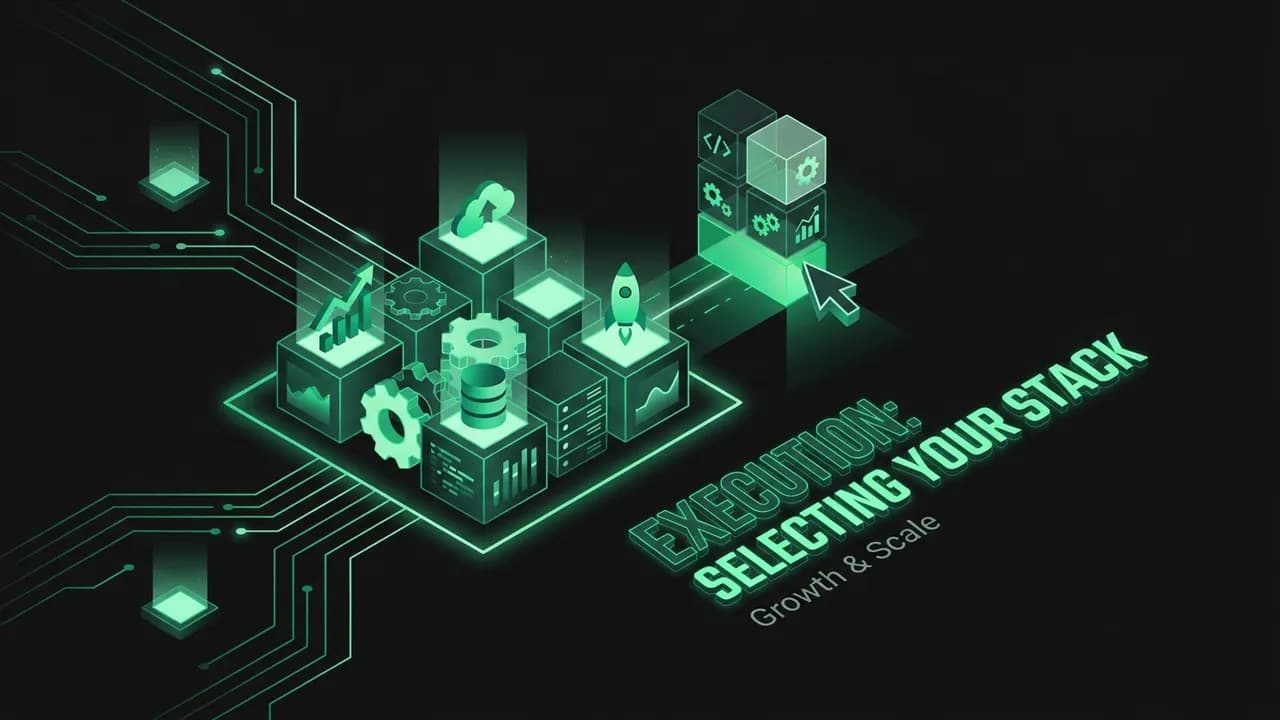
Execution: Selecting Your Stack
Step 1: The 'Friction' Choice
Choose a tool based on your team's DNA.
Step 2: The 'Automated Tasker'
Let the machines do the busywork.
Step 3: The 'Bottleneck' Visualization
Spot the failure before it happens.
Step 4: The 'Task Expiration' Rule
Clean your graveyard.
Execution Layer 1: Standardize Naming and Statuses
Do not let every team invent its own card language. Define what labels mean, what priority levels mean, and what each workflow state represents. When status vocabulary is inconsistent, dashboards lie and cross-team coordination slows down.
Execution Layer 2: Keep Tasks Small Enough to Finish
If most tasks cannot be completed within a few focused work blocks, they are probably projects pretending to be tasks. Large tickets hide risk, create false certainty, and make velocity impossible to interpret. Break work into units that can be reviewed, reassigned, and completed cleanly.
Execution Layer 3: Separate Planning From Intake
New requests should not go directly into active sprint boards. Use an intake queue, triage it on a fixed rhythm, and only promote validated work into execution. This protects the team from constant priority whiplash.
Execution Layer 4: Make Dependencies Explicit
The most dangerous dependencies are the invisible ones. If legal review, design approval, data migration, or founder sign-off is required, represent it directly in the system. Hidden dependencies create avoidable delay and resentment.
Execution Layer 5: Review Tool Health Weekly
A PM tool decays quickly without maintenance. Once a week, check for stale cards, missing owners, blocked items without explanation, and goals with no active movement. Tool hygiene is operational hygiene.
Case Study: The 40% Shipping Velocity Increase
The Success: The Linear Adoption
A fintech startup was struggling with 'Meeting Fatigue.' They spent 15 hours a week in sync calls. They switched to Linear and implemented a 'No Status Meetings' policy.
The Strategy: They used the O2T system. Every single task was linked to a project, and every project had a clear 'Success Metric.' They used the 'Comments' section for all discussion and banned Slack for project updates.
The Result: Their developer velocity increased by 40% in one quarter. They shipped their main mobile product 3 weeks ahead of schedule. More importantly, their employee engagement scores hit an all-time high because the team felt they were 'Building' rather than 'Managing.' They proved that the right system + the right tool = Exponential Output.
Why This Worked
The company did not merely adopt a better interface. It changed the behavioral contract around work. People no longer had to guess where truth lived, which reduced confusion, duplicate conversations, and managerial follow-up.
What Most Startups Miss
They try to fix scheduling problems with more meetings or fix prioritization problems with more tasks. But execution quality usually improves when companies reduce ambiguity, shorten feedback loops, and force every task to justify its existence against a real objective.
Secondary Benefits of Better PM Systems
Good project management improves more than shipping speed. It helps onboarding, reduces stress, reveals weak managers, exposes recurring blockers, and makes hiring easier because candidates can feel the operational maturity of the team.
The Founder Lesson
If you want your company to move faster, stop asking whether your team is 'working hard' and start asking whether your system makes the right work obvious. Great project management is not administrative overhead; it is strategic leverage.
Key Takeaways
A tool is just a list — the O2T methodology (objective → key result → project → task) gives it direction.
Every task should trace up to a company objective; if it doesn't, question why it's being done.
Pick the tool to fit your workflow: Linear/Jira for engineering, Asana/ClickUp/Notion for cross-functional teams.
Keep OKRs few and measurable — too many objectives or vague key results kill focus.
Review the cascade weekly so misaligned or stalled work surfaces before it wastes a sprint.
Frequently Asked Questions
What is the Objective-to-Task (O2T) system?
What is the difference between OKRs and tasks?
How do you choose a project management tool for a startup?
What are examples of OKRs and project management in practice?
What are common project management mistakes?
How do you bridge strategy and daily execution?
Your Turn: The Action Step
Objective-to-Task (O2T) Planner
Connect a quarterly OKR down to this week's tasks, prioritise the backlog with ICE scoring, and set the velocity check that makes planning honest.
Trace the North Star hierarchy
Fill the chain from Mission down to this week's sprint so every level has a parent.
| Level | This quarter's entry |
|---|---|
Define this quarter's Epics
Write the 1–3 Epics that map directly to your quarterly OKRs.
Score the backlog with ICE
ICE = Impact × Confidence × Ease (each 1–10). Only the top scores earn the active sprint.
| Task | Impact | Confidence | Ease | Score |
|---|---|---|---|---|
Load the sprint
Pull only the highest-ICE 'must-haves' into this week. List what made the cut.
Set the standup focus
Define what your daily standup (or Slack bot) surfaces — blockers, not status theatre.
Run the Friday velocity retro
Planned vs. shipped this week — and what next week's plan becomes based on actual capacity.
| Planned | Shipped | Next week's realistic plan |
|---|---|---|
Before you close this
0/5 doneYour answers are saved in this browser only. Use “Download as PDF” to keep a copy.
This Startup Mistake Kills Growth
Ready to apply this?
Stop guessing. Use the Litmus platform to validate your specific segment with real data.
Optimize Your Shipping