Quality Control Systems: The Total Quality Architecture (TQA)
Quality isn't an act; it's a habit. Learn how to build a closed-loop quality system that identifies defects before they reach the customer.
The Problem: The 'Quality Erosion' Slide
The Brand-Killing Bug
“When we had 10 customers, I checked every order and every line of code myself. Quality was 100%. Now that we have 1,000 customers and a team of 20, things are slipping. We’re shipping bugs. We're sending incorrect invoices. Our Net Promoter Score (NPS) has dropped from 80 to 45. I feel like I'm playing a game of Whac-A-Mole; I fix one quality issue, and two more pop up elsewhere. We’re losing the 'Elite' reputation we worked so hard to build. I realized that 'Hope' is not a quality strategy. We’re scaling our volume, but we’re also scaling our mistakes.”
The mistake founders make is assuming that quality is 'The Responsibility of the Quality Department.' In a scaling startup, quality must be 'Baked Into the Process.'
To scale, you must move from 'End-of-Line Inspection' to 'Total Quality Architecture' (TQA)—where the system itself prevents errors from occurring, and every team member has the power to stop 'Production' if they spot a defect.”
Why Quality Slips During Growth
When founders stop touching every workflow personally, hidden inconsistency appears. More people, more handoffs, and more volume expose the absence of reliable standards.
Inspection Alone Does Not Scale
Catching defects at the end may work for tiny teams, but it becomes expensive and incomplete as complexity grows. Prevention is far more scalable than late correction.
Reputation Erodes Faster Than It Builds
Customers often forgive a startup for being young, but they stop forgiving once mistakes become repeatable. Brand trust declines quickly when errors feel systemic rather than accidental.
Quality Problems Usually Spread Across Functions
A customer-facing failure may begin in product design, data entry, unclear SOPs, or weak training. Treating defects as isolated incidents often hides the real cause.
Scaling Mistakes Creates Compounded Cost
Each recurring defect wastes time in support, refunds, debugging, and internal coordination. Poor quality is not just a customer issue; it is an operating cost multiplier.
Great Quality Systems Protect Speed
The best quality systems do not slow the company down. They make fast execution safer by reducing rework, uncertainty, and preventable failure.
Key Concepts: The TQA Pillars
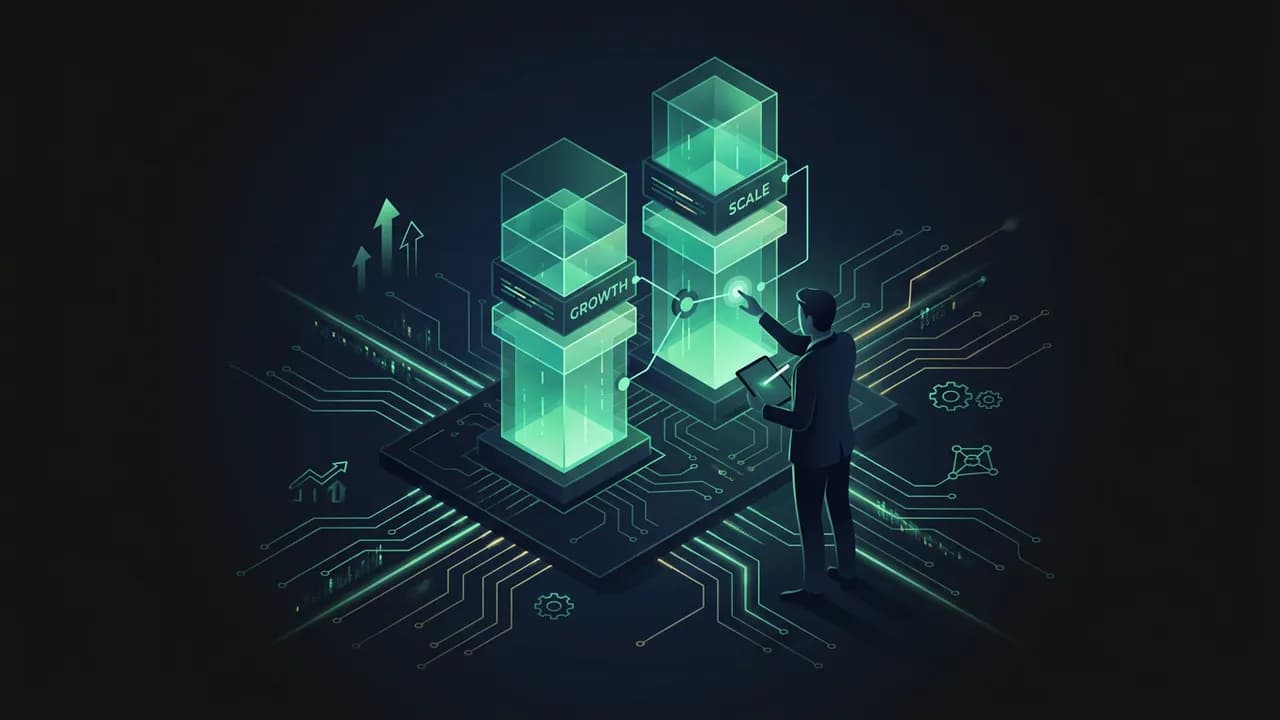
A high-quality organization is built on the principle of 'Continuous Defect Elimination.'
1. Poka-Yoke (Mistake-Proofing)
Design your systems so that it is physically or logically impossible to make a mistake. Example: If a salesperson must enter a 'Lead Source,' the CRM shouldn't let them save the record until that field is filled. 'Structure prevents Error.'
2. The 'Andon Cord' Culture
In Toyota factories, any worker can pull a cord to stop the entire assembly line if they see a defect. You must empower your team to do the same. If a developer sees a security flaw, they should be able to 'Stop the Deployment' without fear of retribution. Quality is everyone's job.
3. Statistical Process Control (SPC) for Startups
Stop reacting to individual errors. Track the 'Mean Time Between Failures' (MTBF). If you have 3 bugs in a week, that’s a data point. If the MTBF is shrinking, you have a systemic issue in your development pipeline (Topic 145).
4. The 'Five Whys' Root Cause Analysis
When a mistake happens, don't ask 'Who?'. Ask 'Why?' five times.
Now you fix the system, not the person.
5. Quality-at-the-Source
The person doing the work is the first and most important quality inspector. If the 'Source' (the person writing the code or shipping the box) doesn't care about quality, no amount of 'Downstream Inspection' will save you.
Mistake-Proofing Beats Blame
When systems are designed to prevent common failure modes, teams spend less energy apologizing and more energy executing well. Better design reduces the need for policing.
Andon Culture Requires Psychological Safety
People only stop the line when they trust they will not be punished for raising a concern. Quality culture depends as much on leadership behavior as on process design.
SPC Helps Separate Noise From Patterns
Random one-off issues happen in every business. Statistical thinking helps teams identify when variability is normal and when a process is genuinely drifting toward failure.
Root Cause Analysis Prevents Recurrence
Superficial fixes may close a ticket, but they do not strengthen the system. The Five Whys push teams toward structural correction instead of symbolic response.
Source Quality Is The Highest Leverage
The closer quality responsibility sits to the work itself, the cheaper and faster correction becomes. Downstream correction is usually slower, costlier, and less complete.
TQA Is A Learning System
A quality system should get smarter with every failure. Each defect should improve standards, tooling, training, and design rather than simply consume support time.
The Framework: The Total Quality Architecture
Implement this 4-step 'Closed-Loop' system across every department.
Step 1: The Standard Setting Layer. Define 'Perfect' for every task. Use SOPs (Topic 138) to define the 'Definition of Done' and the exact quality metrics (e.g., 'Page load time < 200ms').
Step 2: The In-Process Monitoring Layer. Use automated monitoring tools. If you're a SaaS, use Sentry or Datadog. If you're e-commerce, use 'Random Sample Audits' of outgoing packages.
Step 3: The Rapid Feedback Layer. When a defect is found, the data must reach the 'Source' within 60 minutes. Delaying feedback makes it impossible for the worker to learn from the mistake.
Step 4: The Systemic Fix Layer. Every month, identify the 'Top 3 Defect Categories.' Spend that month re-tooling or re-training to eliminate those categories permanently.
Standards Create Shared Expectations
Without clear standards, teams improvise quality based on personal preference. Written definitions of done convert quality from opinion into an operational contract.
Monitoring Makes Defects Visible Early
Many quality failures become expensive because nobody noticed them quickly enough. In-process monitoring reduces the time between deviation and detection.
Fast Feedback Improves Learning
If the person responsible hears about a defect days later, the learning signal weakens. Immediate feedback makes correction more memorable, specific, and useful.
Systemic Fixes Raise The Quality Floor
The real goal is not resolving today's defect manually. It is increasing the baseline so the same category of defect becomes less likely in the future.
Closed Loops Beat Heroics
Teams often rely on highly conscientious individuals to catch issues through effort alone. Closed-loop systems reduce dependence on heroic vigilance.
Architecture Must Cover Every Department
Quality is not just a product or warehouse issue. Billing, onboarding, hiring, support, and communication all create customer-visible quality outcomes.
Execution: Zero-Defect Operations
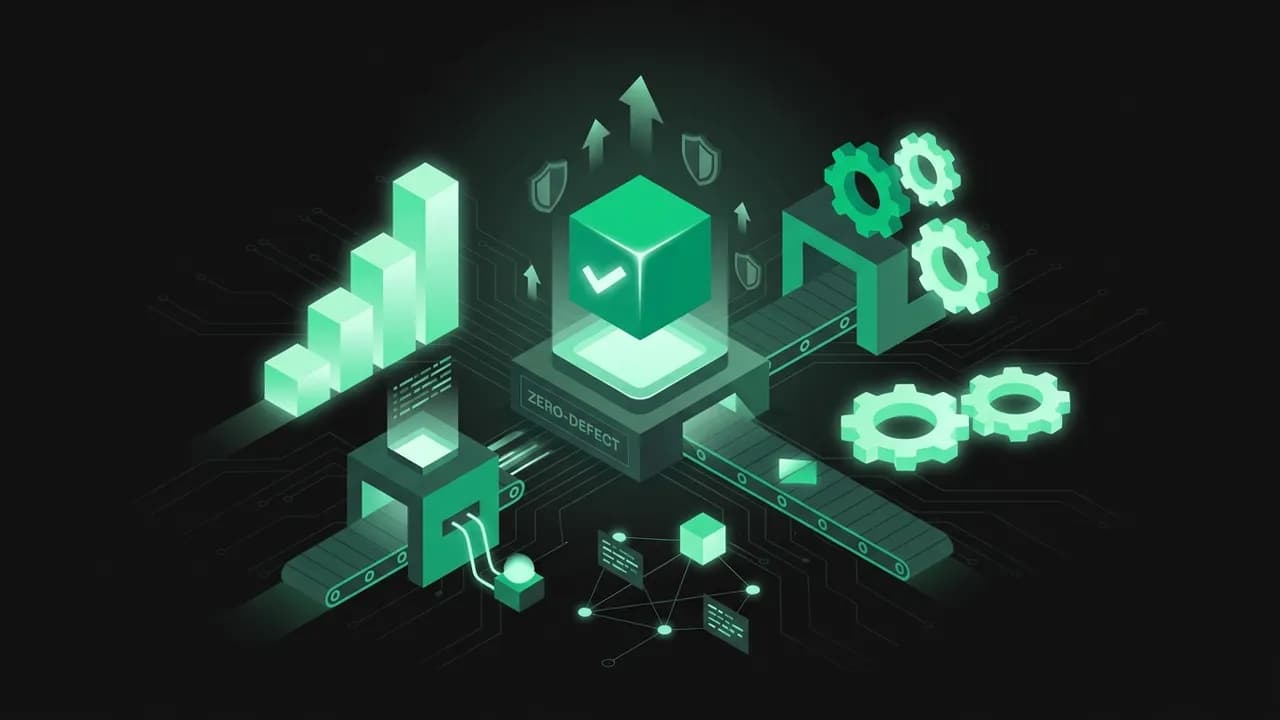
Step 1: The 'QA-in-a-Box' Bot
Manual testing is the enemy of scale.
Step 2: The 'Customer-facing' Error Log
Be transparent with your failures.
Step 3: The 'Secret Shopper' Audit
Verify the customer experience yourself.
Step 4: The 'Quality Bonus' Formula
Align incentives with excellence.
Why Automated Testing Scales Quality
Automation protects existing functionality while the team moves quickly. It reduces the hidden tax of repeated manual checking and makes releases more reliable.
Transparency Can Increase Trust
Customers often react better to honest, structured communication than to silence or vague excuses. A clear post-mortem signals maturity and accountability.
Secret Shopper Reviews Reveal Blind Spots
Internal teams understand the happy path too well. Independent audits surface confusion, friction, and quality issues that employees no longer notice.
Incentives Shape Attention
If the company rewards only volume, it should not be surprised when quality falls. Compensation systems teach the team what leadership truly values.
Execution Needs Ongoing Calibration
Metrics, thresholds, and checklists should be revised as products and processes evolve. Static quality rules can become stale just as quickly as no rules at all.
Cross-Functional Reviews Strengthen Quality
Many defects only become obvious when product, operations, support, and finance compare their perspectives. Cross-functional reviews reveal where handoffs or assumptions are degrading quality.
Escalation Paths Must Be Clear
Teams respond faster to quality issues when they know exactly who owns investigation, who approves fixes, and how urgent risks are communicated. Ambiguity delays recovery.
Zero-Defect Thinking Means Fewer Repeats
Perfection may be unrealistic, but repeatable preventable defects are not acceptable. The goal is continuous reduction in avoidable failures.
Case Study: The 95% Refund Reduction
The Success: The 'Zero-Error' Logistics Co.
A high-end furniture brand was seeing a 15% return rate due to shipping damage. Each return cost them $400 in shipping and $1,000 in damaged goods.
The Strategy: They implemented TQA. They mistake-proofed their packing (Step 1), added 'Impact Sensors' to boxes (Step 2), and held weekly 'Five Whys' sessions with the warehouse team (Step 4).
The Result: Their return rate dropped to 0.5% in 6 months. By investing $10,000 in better packing and sensors, they saved $1.2M in annual return costs. They proved that quality isn't an 'Expense'—it's the highest-ROI investment you can make in your bottom line.
Why This Worked
The company stopped treating returns as isolated warehouse mistakes and started treating them as signals of process design failure. That changed the level at which it intervened.
The Lesson Founders Miss
Quality work often looks more expensive at the beginning because it requires better systems, tooling, and review discipline. But low quality usually costs far more over time.
Common Failure Modes
Inspection Dependence: Relying on final checks instead of prevention.
Blame Culture: Punishing individuals without fixing the system.
Weak Metrics: Tracking errors loosely instead of by category and frequency.
Slow Feedback: Letting the source of the defect hear about it too late.
No Root Cause Habit: Solving symptoms while the underlying process remains broken.
What Healthy Quality Culture Looks Like
A healthy quality culture is specific, measurable, transparent, and system-oriented. It encourages fast reporting, root-cause thinking, and continuous refinement.
Great Quality Improves Margin Visibility
As defects fall, financial performance becomes easier to predict because refunds, rework, warranty claims, and support load stop distorting the economics. Better quality produces cleaner operations and cleaner numbers. Teams plan better and forecast better every quarter with confidence and control. Leadership allocates capital better too, with fewer surprises and cleaner decisions overall across teams. This strengthens planning discipline across the company. It improves execution quality too globally.
Questions Founders Should Ask
The Final Principle
Quality is not what happens after work is finished. Quality is how the work is designed. Companies that engineer quality into the process protect speed, trust, and margin at the same time.
Key Takeaways
Quality is a habit built into the process, not a final inspection bolted on at the end.
Run a closed loop: set standards, detect defects, find root cause, correct, and prevent recurrence.
Use both QA (prevent defects in the process) and QC (catch them as a safety net).
Log root causes — a defect that recurs means the loop never closed.
Measure defect rate, return rate, and first-pass yield to catch quality drift before customers do.
Frequently Asked Questions
What is a quality management system?
How do you build a closed-loop quality system?
What is the difference between quality control and quality assurance?
What are examples of quality management systems?
What are common quality control mistakes?
How do you measure quality in a startup?
Your Turn: The Action Step
Total Quality Closed-Loop Builder
Define 'perfect' for one critical process, install Poka-Yoke and monitoring to catch defects, route feedback to the source within 60 minutes, and pick the top defect category to eliminate this month.
Define the Standard ('Done')
Write what 'perfect' means for this process and the one metric that measures it.
Install Poka-Yoke
Design one mistake-proofing control that makes the common error physically/logically impossible.
Set up In-Process Monitoring
What tool or sample-audit catches defects while work is happening, not after?
Wire Rapid Feedback (<60 min)
How does a found defect reach the person who caused it within 60 minutes?
Rank defects and pick one to kill
List your top defect categories by frequency; circle the #1 to eliminate this month.
| Defect category | % of total defects | Likely root cause |
|---|---|---|
Commit the systemic fix
Write the re-tool or re-train that permanently removes the #1 defect category.
Before you close this
0/5 doneYour answers are saved in this browser only. Use “Download as PDF” to keep a copy.
Stop Launching Your Startup Globally
Ready to apply this?
Stop guessing. Use the Litmus platform to validate your specific segment with real data.
Engineer Excellence