Standard Operating Procedures (SOPs): The 'Video-to-Wiki' Pipeline
Tribal knowledge is the enemy of scale. Learn how to turn every task you perform into a version-controlled, executable SOP using the Video-to-Wiki pipeline.
The Problem: The 'Tribal Knowledge' Trap
The $10,000 Key-Person Failure
“Our lead operations manager just quit. Suddenly, we realized that nobody else knows how to run the payroll, how to update the product catalog, or how to handle a specific type of refund request. All that knowledge was in their head. Now, the business is paralyzed. We’re spending 8 hours a day trying to reverse-engineer our own processes. We’ve become a collection of individuals rather than a scalable system. If one of us disappears, a piece of the company dies with them.”
The greatest threat to a scaling startup isn't a competitor; it's 'Knowledge Silos.' When processes exist only in people's heads, you can't hire, you can't automate, and you can't exit.
To scale, you must move from 'Implicit Tasks' to 'Standard Operating Procedures' (SOPs)—where every core function of the business is documented in a way that a qualified stranger could execute it with 95% accuracy on their first try.
Why Knowledge Silos Form Naturally
In fast-moving startups, documenting work feels slower than doing the work. Teams optimize for immediate speed, and the result is that critical know-how accumulates inside a handful of people's memories instead of inside the company’s systems.
Documentation Is An Asset, Not Overhead
Founders often treat SOPs as administrative work. In reality, they are durable operating assets. They reduce training time, protect execution quality, improve resilience, and make every future hire more productive.
Undocumented Work Scales Fear
When only one person knows how a process works, everyone else becomes hesitant to touch it. That creates bottlenecks, delays, and dependence on key individuals who become overloaded because the company has no safe way to distribute responsibility.
SOPs Make Improvement Possible
A process that is not written down is hard to inspect, critique, automate, or improve. Once the work is visible, the team can challenge unnecessary steps, remove ambiguity, and design better execution paths.
Documentation Reduces Rework And Drift
When teams rely on memory, the same task gets performed differently by different people over time. SOPs create consistency, which is often the difference between scalable operations and recurring operational mess.
A Company Without SOPs Is Hard To Transfer
Whether you are hiring, delegating, franchising, partnering, or preparing for diligence, the same rule applies: if the system only lives in people’s heads, the business is harder to grow and harder to trust.
Key Concepts: The SOP Hierarchy
Not all documentation is created equal. To build a 'Wiki' that people actually use, you must follow these tiered principles.
1. Tier 1: The 'Why' (The Vision)
Every SOP must start with a one-sentence purpose. 'Why are we doing this?' If the executor doesn't understand the goal (e.g., 'To ensure the customer feels heard'), they will follow the steps but fail the mission.
2. Tier 2: The 'How' (The Steps)
This is the checklist. It must be granular. 'Click the blue button' is better than 'Submit the form.' Use screenshots for every step. If a step takes more than 10 seconds, it needs a screenshot.
3. Tier 3: The 'Exception' (The Branching Logic)
This is where 90% of SOPs fail. You must document what to do when things go wrong. 'If the login fails, check the password vault. If it still fails, Slack the CTO.' High-quality SOPs reduce 'Decision Fatigue' by pre-deciding for the executor.
4. Continuous Versioning
An SOP is a living document. If a process changes in the software, the SOP must change within 24 hours. An outdated SOP is more dangerous than no SOP at all.
5. The 'Test for Clarity'
Before publishing an SOP, give it to someone who has never done the task. If they ask a question, the SOP is broken. Fix it until the questions stop.
Why Purpose Comes First
People follow instructions better when they understand the outcome being protected. Without purpose, executors may complete the checklist but miss the business intent behind the work.
Granularity Prevents Interpretation Drift
Many SOPs fail because they are written at too high a level. Specificity reduces guesswork, especially for new hires, contractors, or cross-functional teammates who lack context.
Exceptions Are Where Real Operations Live
The happy path is rarely the hardest part. The operational value of a strong SOP lies in how it handles missing data, unusual customer cases, tool outages, or approval dependencies.
Versioning Protects Trust In The Wiki
The fastest way to kill documentation culture is to let the wiki become unreliable. Once people believe SOPs are outdated, they stop checking them, and knowledge returns to Slack threads and hallway memory.
Clarity Testing Is Non-Negotiable
The true test of a document is not whether the author thinks it is clear. It is whether a new executor can use it successfully without improvising.
Great SOPs Reduce Cognitive Load
Good documentation removes tiny decisions from the executor’s day. That improves speed, reduces stress, and produces more consistent outcomes across the team.
The Framework: The 'Video-to-Wiki' Pipeline
Use this pipeline to eliminate the 'Writing' bottleneck of SOP creation.
Step 1: The 'Record-as-you-Go' Layer. Use Loom to record yourself performing the task. Don't prepare; just talk through your decisions. 'I'm clicking this because...'
Step 2: The 'AI Transcription' Layer. Feed the Loom transcript into an AI tool (like ChatGPT) with a specific prompt: 'Turn this transcript into a structured SOP with a Purpose, Prerequisites, Steps, and Exceptions.'
Step 3: The 'Human Verification' Layer. Give the draft and the video to a VA or an intern. Their job is to follow the draft while watching the video and add the missing screenshots.
Step 4: The 'Wiki Injection'. Publish the final SOP to your central hub (Notion, Guru, or Trainual). Link it to the relevant task in your Project Management tool (Topic 145).
Why This Pipeline Works
The pipeline converts tacit knowledge into reusable company knowledge without forcing the founder or operator to become a technical writer first. It captures execution in the natural flow of work and then structures it afterward.
Recording Preserves Real Context
When people document after the fact, they often omit important micro-decisions because those choices feel obvious in hindsight. Recording in real time preserves the actual reasoning and the hidden steps.
AI Accelerates Structure, Not Truth
AI is useful for turning rough transcripts into organized drafts quickly. But the draft is only a starting point. It still needs human verification to ensure the instructions reflect reality and edge cases accurately.
Verification Is Where Reliability Emerges
A second person following the draft reveals ambiguity, missing screenshots, skipped assumptions, access gaps, and unclear definitions of done. This is the step that turns a transcript into a genuinely executable SOP.
Publishing Must Connect To Workflows
Documentation hidden in a forgotten folder will not change operations. SOPs become valuable when linked to recurring tasks, onboarding flows, project templates, and review checkpoints.
The Pipeline Scales Documentation Output
Instead of making SOP creation a side project, the pipeline turns ordinary execution into raw documentation material. That makes it easier to grow the wiki continuously rather than in sporadic documentation pushes.
Execution: Hardening the Wiki
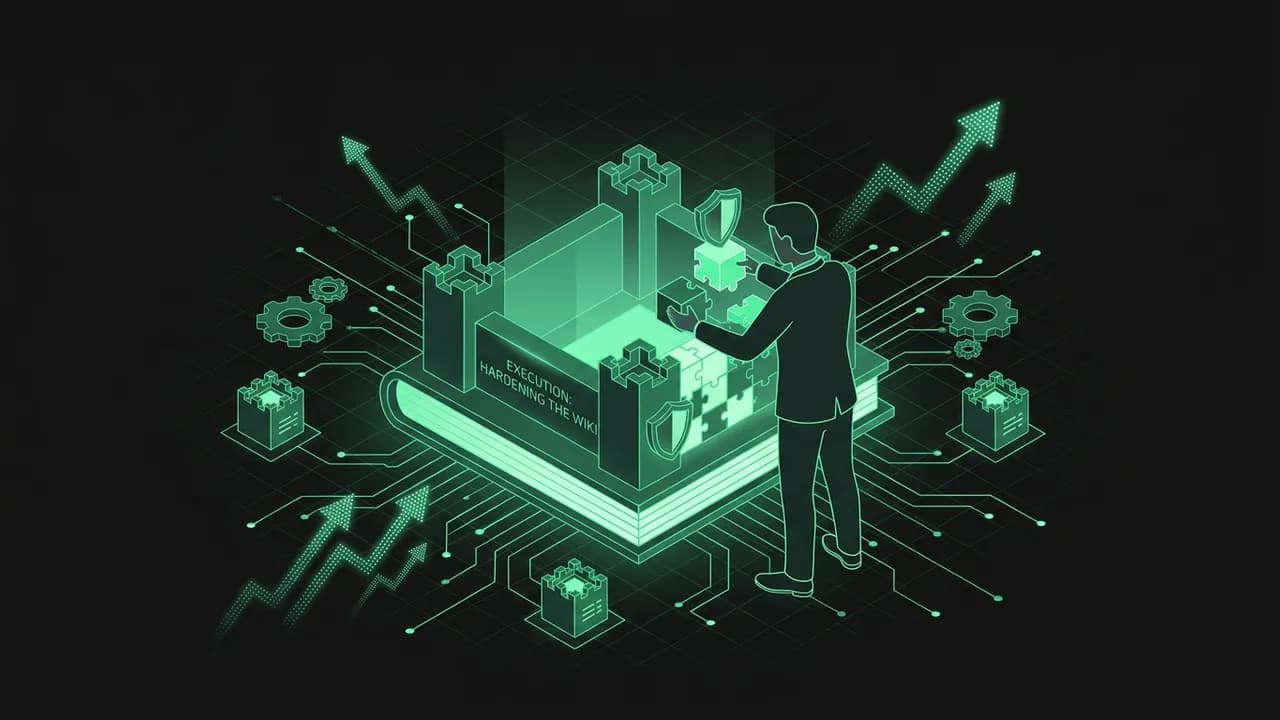
Step 1: The 'Zero-Question' Policy
Stop answering the same questions via Slack.
Step 2: The 'SOP of the Week' Audit
Documentation rots. You must prevent the rot.
Step 3: The 'Prerequisite' Checklist
Eliminate errors before the task even starts.
Step 4: The 'Definition of Done' (DoD)
Ensure the output matches your quality standards.
Why Repeated Questions Are Documentation Signals
The team’s recurring questions show exactly where the wiki is weak or missing. Instead of treating those questions as interruptions, strong operators treat them as prompts for asset creation.
Audits Keep The Wiki Alive
A documentation system is only valuable if people trust it. Regular audits preserve that trust by ensuring instructions stay aligned with the current tools, workflows, and organizational structure.
Prerequisites Prevent Invisible Delays
Many execution failures are not skill failures. They are access failures, missing credentials, incomplete approvals, or absent templates. Prerequisite sections reduce these non-obvious blockers dramatically.
Definition Of Done Protects Output Quality
Without clear finish criteria, executors stop at different points. One person closes the ticket, another forgets the CRM update, another misses the customer confirmation. DoD creates finish-line consistency.
Strong Wikis Need Ownership
Every important SOP should have an owner responsible for updates. Otherwise everyone assumes someone else is maintaining it and the quality decays quietly.
Documentation Culture Must Be Reinforced Socially
The wiki wins only when the team sees documenting as real work, not optional extra work. Leaders have to redirect questions, reward updates, and model the behavior themselves.
Case Study: The 48-Hour Replacement
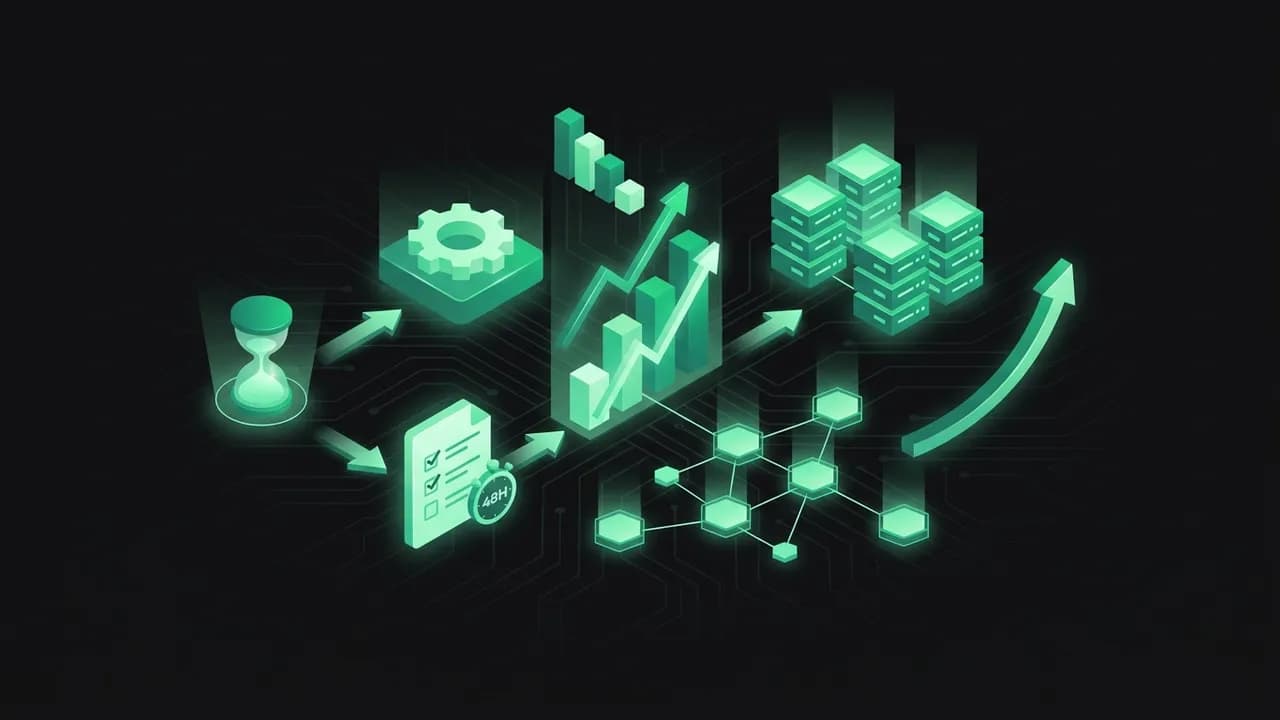
The Success: The 'Plug-and-Play' Customer Support
A growing SaaS startup lost their entire 3-person support team to a larger competitor in one week. Normally, this would have destroyed the business for a month.
The Strategy: The founder had spent the previous 6 months rigorously applying the Video-to-Wiki pipeline. He had a library of 150 SOPs covering every possible support ticket.
The Result: He hired 3 new contractors on Monday. By Wednesday, they were processing tickets with a 92% customer satisfaction rating. Because the 'Brain' of the company was in the Wiki, not in the people, the business was 'Resilient to Personnel Risk.' They didn't lose a single customer during the transition.
Why This Worked
The company had already converted operational memory into institutional memory. That meant training no longer depended on shadowing veterans for weeks or reconstructing decisions from Slack history.
The Pitfalls: SOP Failure Modes
Beautiful But Useless Docs: Writing polished documentation nobody uses because it is disconnected from real workflows.
No Exception Handling: Documenting only the happy path and leaving real-world complications unresolved.
Wiki Graveyards: Creating dozens of pages that are never updated and slowly become harmful.
No Owners: Assuming documentation will maintain itself. Fix: assign clear ownership by function or process.
Documentation Without Testing: Publishing SOPs without having a new person execute them. Fix: validate with a fresh operator before treating them as production-ready.
What Healthy SOP Systems Look Like
Healthy SOP systems are practical, searchable, current, and embedded into daily work. They reduce onboarding time, make delegation safer, and protect the business from disruption when people leave or responsibilities change.
Questions Founders Should Ask
Institutional Memory Becomes A Competitive Advantage
Once a company can train consistently, replace roles quickly, and improve processes from a shared source of truth, it becomes faster and more resilient than competitors still relying on tribal knowledge.
The Final Principle
The goal of SOPs is not bureaucracy. It is operational memory. A company starts to scale cleanly when knowledge becomes a shared asset rather than a private advantage held by whoever happens to be around.
Key Takeaways
Use the Video-to-Wiki pipeline: record the task once with Loom, then turn the transcript into a structured written checklist.
Every SOP needs a trigger, owner, exact tools, numbered steps, and a clear definition of 'done'.
Test each SOP by having a second person follow it cold — that's how you find the hidden assumptions.
Start with the highest-frequency, highest-risk tasks; don't try to document the entire company at once.
Store SOPs in a searchable, version-controlled wiki (e.g. Notion) with a last-reviewed date so they don't go stale.
Frequently Asked Questions
What is a standard operating procedure (SOP)?
How do you write an SOP?
What should an SOP template include?
What are examples of SOPs in a startup?
What are common SOP mistakes?
Why is tribal knowledge dangerous for a scaling startup?
Your Turn: The Action Step
Video-to-Wiki SOP Builder
Turn one piece of tribal knowledge into a published, exception-proof SOP using the record → transcribe → verify → publish pipeline.
Name the task and record it
Pick the task only one person knows. Record a Loom doing it live, narrating every decision — don't prepare a script.
Write Tier 1 — the one-line Purpose
Why does this task exist? What outcome does a good execution produce? One sentence.
List Tier 2 — the granular steps
One row per click/action. Mark which need a screenshot (any step >10 seconds does).
| # | Exact action ('click the blue Save') | Screenshot needed? Y/N |
|---|---|---|
Write Tier 3 — the Exceptions
Pre-decide the edge cases. Use 'If [X] happens, then [do Y / escalate to Z]' format.
| If this happens… | Then do this | Escalate to |
|---|---|---|
Run human verification
Have a VA/intern follow your draft while watching the Loom, and add the missing screenshots + flag confusing steps.
Inject into the wiki
Publish to your central hub and link it to the matching task in your PM tool.
Before you close this
0/5 doneYour answers are saved in this browser only. Use “Download as PDF” to keep a copy.
Scaling Too Early Can Kill Your Startup
Ready to apply this?
Stop guessing. Use the Litmus platform to validate your specific segment with real data.
Document to Scale