Loss Leaders: Selling at a Loss to Win the Market
Profit isn't always the goal of a sale. This 3,000-word guide masters the 'Market Entry Wedge' to help you use loss leaders to destroy competition, capture market share, and monetize through long-term ecosystem lock-in.

Why Selling at a Loss Can Build a Market or Destroy a Business
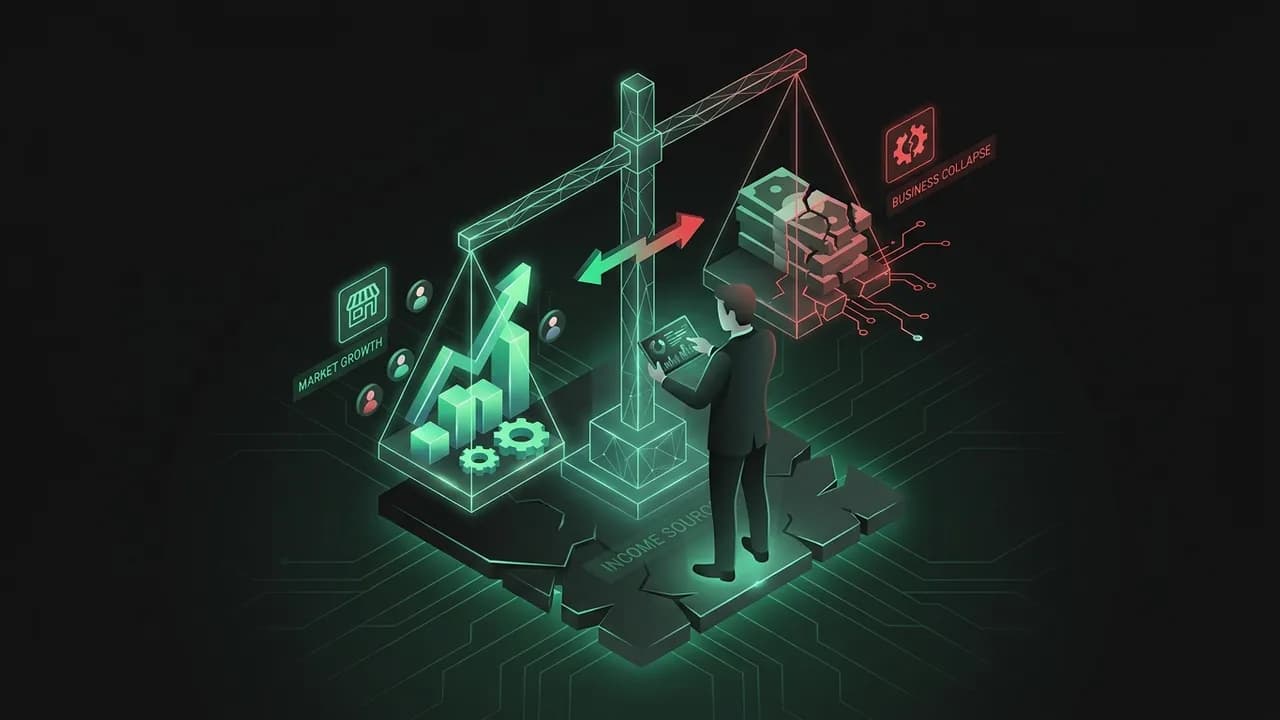
Loss leaders are one of the most strategically dangerous and misunderstood revenue tactics in business. The basic idea sounds simple: sell one product, service, or offer at little profit—or even at a loss—to attract customers, stimulate demand, or create downstream monetization opportunities elsewhere.
This can work brilliantly. It can accelerate adoption, reduce entry friction, seed a network, create switching behavior, and establish the company as the default choice in a category. It can also fail spectacularly by attracting price-sensitive customers with weak loyalty, burning capital, and teaching the market that your core value proposition is cheapness rather than strength.
In 2025-2026, loss-leader logic appears across ecommerce, grocery, fintech, cloud credits, AI tools, marketplaces, hardware-plus-software ecosystems, and startup growth experiments. Some companies subsidize one side of a marketplace. Others sell hardware at thin margins to monetize software later. Others use deeply discounted entry offers to acquire higher-LTV customers downstream.
That is why the real question is not "can we sell at a loss?" The better question is: what exactly are we buying with that loss, and is the downstream payoff strong enough, predictable enough, and defensible enough to justify the burn?
Selling at a loss is not a pricing trick. It is a capital allocation decision. If the company does not know what future behavior will repay the subsidy, the strategy is gambling, not growth.
Core Framework: What Loss Leaders Are Supposed to Achieve
A loss leader usually exists to achieve one of five strategic outcomes.
1. Customer Acquisition
The low-priced offer pulls customers into the funnel at lower friction.
2. Basket Expansion
The low-margin item increases total cart value through complementary purchases.
3. Habit or Ecosystem Entry
The initial subsidized product creates behavior that leads to future monetization.
4. Network Seeding
Subsidy helps build liquidity, supply, or demand in a marketplace or platform.
5. Market Share and Switching
An aggressive offer encourages customers to try a new provider or change behavior.
The key principle is this: the loss leader is rarely the business itself. It is the bridge into a more profitable relationship. If there is no credible bridge, there is no real strategy—just margin destruction.
When Loss Leaders Work Best
Loss leaders tend to work best when:
Common contexts include:
Loss leaders become dangerous when they attract low-LTV bargain hunters, when downstream monetization is weak, or when competition turns the subsidy into an endless race to the bottom.
Execution: How to Use a Loss Leader Without Losing Strategic Control
Step 1: Define the Payback Mechanism
What future behavior is supposed to recover the loss?
Step 2: Identify the Right Customer Segment
Not all customers acquired through a low-price offer are equally valuable.
Step 3: Limit the Subsidy Scope
Decide whether the loss leader applies to:
Step 4: Measure Downstream Conversion Aggressively
If the loss does not create higher-margin follow-on behavior, stop quickly.
Step 5: Protect Brand Meaning
A loss leader should not permanently redefine what customers think the company is worth.
The strongest loss-leader strategies are tightly scoped, economically modeled, and tied to a specific learning or market-expansion goal.
Real-World Examples: When Selling at a Loss Makes Strategic Sense
Example 1: Grocery staples
Retailers often price staple products aggressively to drive store traffic and larger baskets.
Example 2: Hardware with software or consumables
Printers, consoles, or devices may be sold at low margin because later revenue comes from consumables, content, or subscriptions.
Example 3: Marketplace subsidies
Platforms may subsidize riders, drivers, buyers, or sellers to seed liquidity.
Example 4: Fintech incentives
Cashback, referral credits, and sign-up rewards may work when lifetime account value is high enough.
Example 5: SaaS free credits or onboarding offers
Some software products subsidize early use to reduce adoption friction and prove value before monetization.
Common Pitfalls & How to Avoid Them
Pitfall 1: No clear payback path
Without downstream monetization, the loss is just loss.
Pitfall 2: Attracting the wrong customers
Some segments only chase discounts and never stay.
Pitfall 3: Training the market to expect cheapness
A loss leader can damage brand pricing power.
Pitfall 4: Competitor subsidy wars
A tactic can turn into a capital-burning arms race.
Pitfall 5: Weak measurement
Teams often celebrate uptake without tracking payback.
Pitfall 6: Subsidizing forever
A temporary bridge can become a permanent dependency.
What to Measure in a Loss-Leader Strategy
Core Metrics
Diagnostic Questions
A good loss leader is not judged by how much attention it gets. It is judged by whether it creates the future economics it was supposed to buy.
Actionable Conclusion: Only Subsidize What You Can Eventually Monetize Well
Loss leaders can be powerful when they are used to open a more profitable relationship, seed a valuable network, or create a habit that later monetizes cleanly. They are dangerous when the company mistakes activity for strategy.
Your Next 5 Steps
define the exact downstream behavior that should repay the initial loss
narrow the offer to the highest-potential customer segments
set explicit payback targets and stop conditions
measure cohort behavior beyond the first discounted interaction
avoid subsidy strategies that competitors can copy indefinitely
SEO / Optimization Notes
This guide should naturally target keywords like loss leader pricing, selling at a loss, market share strategy, customer acquisition pricing, and subsidy strategy. The meta description should emphasize when selling at a loss can help win a market and when it becomes dangerous. Internally, this guide should connect to micro-transactions, marketplace take rates, subscription strategies, and pricing psychology guides in Module 5.
The best loss leader is not just cheap. It is strategically expensive in a way the business can justify and eventually recover.
Economics: A Loss Leader Is Really Prepaid CAC With Extra Risk
One useful way to think about a loss leader is as a form of prepaid customer acquisition cost. Instead of spending only on ads, outbound sales, or referrals, the company spends by discounting the product itself. That can be rational—but only if the payback is as clear as any other CAC model.
This means founders should compare loss leaders against other acquisition strategies. Ask:
Loss-leader economics break when the company treats subsidized volume as progress without comparing it to alternative ways of buying growth. A loss leader is not magical because it sits inside pricing. It is still an acquisition investment, and it should be judged with the same rigor.
Customer Psychology: The Offer Should Trigger Trial, Not Permanent Price Expectation
A strong loss leader changes customer behavior in a useful way: it gets them to try, switch, join, or start. A weak one teaches them to anchor on a price the business cannot sustain.
That distinction matters because customer psychology is shaped quickly. If the customer interprets the offer as a temporary bridge into a larger value story, the strategy can work. If the customer interprets it as the true fair price, every later attempt to monetize normally feels like a price hike.
This is why framing matters. The company should be clear—implicitly or explicitly—about what the subsidized offer is meant to do. The best loss leaders feel like an invitation into something valuable. The worst feel like bait that makes the future business model harder to defend.
Advanced Examples: Different Ways Subsidy Shows Up in Modern Business Models
Example 6: Free credits in AI and cloud tools
Usage credits reduce adoption friction and help users experience value before paying.
Example 7: Marketplace launch incentives
New marketplaces often subsidize supply or demand until liquidity becomes self-reinforcing.
Example 8: Fintech account incentives
Cash bonuses can work when customer lifetime value from deposits, interchange, or lending is high enough.
Example 9: Hardware entry strategy
A device sold near cost can be sensible if software, services, or consumables create the real profit pool later.
Operating Model: How to Run a Subsidy Strategy Without Losing the Plot
A disciplined loss-leader strategy needs explicit review rules.
Questions to Review Regularly
Internal Discipline
This operating model matters because subsidized growth can feel exciting, which makes it especially dangerous when the underlying economics are weak.
Hybrid Models: Subsidize the Entry, Monetize the Relationship
Many of the strongest loss-leader strategies are not pure discount strategies. They are hybrid monetization systems in which the business subsidizes the first step but monetizes the broader relationship later through a different revenue layer.
Examples include:
This hybrid logic matters because it clarifies where profit is actually supposed to come from. A loss leader is far safer when the company can point to a specific, structurally stronger monetization layer that follows after trial or switching behavior.
Controls and Exit Conditions: A Temporary Subsidy Needs a Planned End State
A loss-leader strategy should begin with exit conditions, not discover them painfully later. The business should know in advance what evidence would justify continuing, narrowing, or ending the subsidy.
Useful controls include:
This matters because temporary subsidies have a way of becoming culturally permanent. Teams get attached to top-line growth and hesitate to remove the lever even when the underlying economics are weak. Explicit exit rules protect the business from its own optimism.
Final Playbook: How to Stress-Test a Loss-Leader Strategy Before Launch
Before launching a loss leader, answer these questions:
what exact downstream behavior will repay the subsidy?
how quickly should that payback happen?
which customer segment is most likely to convert into profitable behavior?
what happens if competitors match or exceed the offer?
what evidence will tell us to stop?
These questions matter because the most dangerous thing about loss leaders is how easy they are to justify emotionally. The strongest teams treat them as disciplined experiments in value capture, not as blanket growth ideology.
Final Decision Principle: Subsidy Is Smart Only When the Future Margin Is Real
The cleanest rule for loss leaders is this: subsidy is smart only when the future margin is real. If downstream monetization is strong, measurable, and defensible, a temporary loss can be strategic. If future margin depends mostly on hope, the tactic becomes expensive theater.
That is the difference between buying a market intelligently and simply buying volume you cannot keep.
Key Takeaways
A loss leader deliberately loses money upfront to win customers you monetize later through attach sales or lock-in.
Only run it when you have a clear, profitable back-end and lifetime value that exceeds the loss plus acquisition cost.
Model the payback period: how many follow-on purchases or retained months make each customer profitable.
Avoid loss leaders that customers can cherry-pick and abandon, and do not train buyers to expect permanent low prices.
Treat it as a funded, time-bound acquisition play, and watch for predatory-pricing scrutiny in sensitive markets.
Frequently Asked Questions
What is a loss leader strategy?
How does a loss leader make money over time?
What are real examples of loss leaders?
When should a startup use a loss leader?
What are common loss leader mistakes?
Is selling at a loss legal and sustainable?
Your Turn: The Action Step
Loss-Leader Economics Planner
Decide whether a deliberate loss-leader makes sense by quantifying the per-customer loss, the attach/upsell that recovers it, and a hard stop-loss before you bleed out.
Define the loss-leader and its true cost
Name the product, its sale price, and your fully-loaded cost.
Compute the loss per customer
Cost minus price. This is what you must recover.
Map the recovery path
What attached/repeat purchase earns it back? Margin x frequency.
| Recovery product | Margin | Times/yr | Annual recovery |
|---|---|---|---|
Calculate the payback window
How many months until recovery covers the loss?
Set a stop-loss budget
Total rupees you'll subsidise before you must see the recovery working — and the metric that proves it.
Before you close this
0/5 doneYour answers are saved in this browser only. Use “Download as PDF” to keep a copy.
The Business Strategy Behind Selling at Loss
Ready to apply this?
Stop guessing. Use the Litmus platform to validate your specific segment with real data.
Win Your Market