One-Time Sales vs. Recurring Revenue (ARR/MRR)
The difference between a 'Job' and a 'Business' is recurrence. This 3,000-word guide masters the 'Revenue Quality' Assessment to help you transition from the 'Sawtooth' of transactional sales to the compounding power of ARR/MRR.
Why One-Time Sales vs Recurring Revenue Is Really a Business Model Choice, Not Just a Pricing Choice
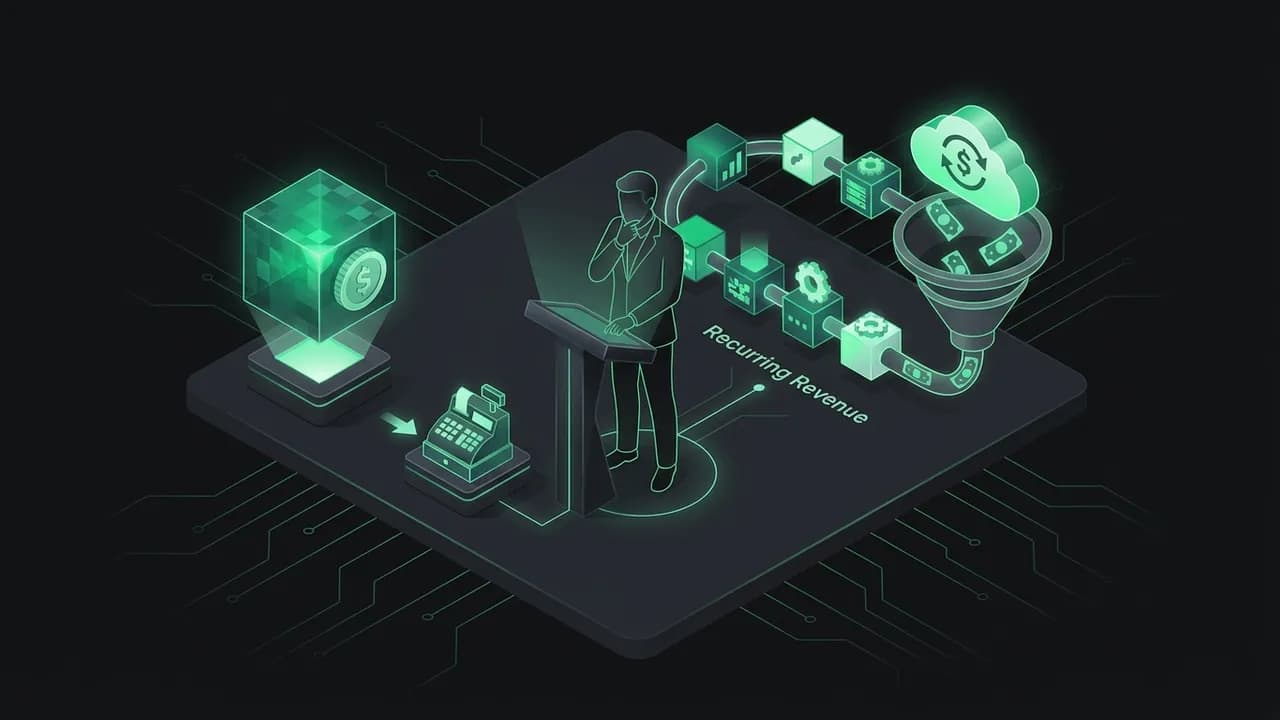
Founders often compare one-time sales and recurring revenue as if they are simply two pricing formats. In reality, they produce very different businesses.
One-time sales generate cash in bursts. Recurring revenue generates cash in layers over time. One-time models can be easier to understand, easier to launch, and often easier for customers to say yes to when the problem is discrete. Recurring models can create stronger forecasting, better lifetime value, and more durable enterprise value—but only when the ongoing value is real enough to justify repeated payment.
This distinction matters because ARR and MRR have become so culturally dominant in startup thinking that many founders assume recurring revenue is automatically superior. It is not. A weak recurring model with high churn can be worse than a strong one-time model with excellent margins, healthy reacquisition, and low service complexity.
In 2025-2026, this decision shapes software, education, AI tools, creator businesses, agencies, ecommerce, marketplaces, and information products. Many businesses now operate hybrid models because pure one-time and pure recurring approaches each have tradeoffs.
The real question is not "which sounds better to investors?" The better question is: does the customer receive value once, occasionally, or continuously—and which revenue structure best matches that value pattern while creating healthy economics for the business?
Core Framework: What One-Time and Recurring Models Optimize For
One-Time Sales
A customer pays once for a product, service, or access period.
Optimizes for:
Challenges:
Recurring Revenue
A customer pays repeatedly over time through subscriptions, memberships, retainers, or recurring contracts.
Optimizes for:
Challenges:
The Strategic Difference
One-time revenue optimizes for immediate transaction efficiency.
Recurring revenue optimizes for accumulated customer value over time.
Neither is universally better. The better model is the one that fits how often value is delivered and how customers prefer to buy.
When One-Time Sales Win and When Recurring Revenue Wins
One-Time Sales Tend to Win When:
Recurring Revenue Tends to Win When:
Hybrid Cases
Many businesses combine both:
The right model depends on whether value is delivered once, repeatedly, or in distinct layers over time.
Execution: How to Choose Between Cash Now and Cash Compounding Later
Step 1: Map the Value Pattern
How often does the customer receive meaningful value?
Step 2: Model the Economics
Compare:
Step 3: Study Customer Preference
Would the customer rather pay once, pay as they go, or pay continuously for ongoing value?
Step 4: Avoid Forcing Recurring Revenue Onto One-Time Value
Subscriptions fail when they are used to financialize what is actually a finite job.
Step 5: Consider Layered Monetization
Some businesses create healthier economics by splitting value into one-time and recurring components.
This decision is not about ideology. It is about aligning pricing with value delivery and business durability.
Real-World Examples: One-Time vs Recurring in Practice
Example 1: Adobe
Adobe moved from one-time software licenses to recurring subscriptions because ongoing updates, cloud services, and workflow continuity created recurring value.
Example 2: Online courses
Many course businesses still work best as one-time purchases because the transformation is finite.
Example 3: SaaS productivity tools
Recurring pricing works when the product is used repeatedly and becomes embedded in work.
Example 4: Ecommerce products
One-time purchases often dominate unless replenishment, memberships, or companion products create a recurring layer.
Example 5: Service businesses
Some agencies work project-to-project while others move into retainers or managed services because value becomes ongoing.
Common Pitfalls & How to Avoid Them
Pitfall 1: Choosing recurring revenue for optics
MRR looks attractive, but churn can make it hollow.
Pitfall 2: Underestimating one-time reacquisition cost
One-time models need repeat demand or efficient new acquisition.
Pitfall 3: Confusing access with value
Just because access continues does not mean value continues.
Pitfall 4: Ignoring cash-flow timing
Recurring models may improve LTV but worsen short-term cash constraints.
Pitfall 5: No hybrid thinking
Some businesses force a binary choice when layered pricing would fit better.
Pitfall 6: Letting metrics drive the model instead of customer behavior
ARR and MRR are useful outputs, not the strategy itself.
What to Measure in One-Time vs Recurring Models
Core Metrics
Diagnostic Questions
The strongest model is the one that produces the healthiest customer economics over time—not the one with the most fashionable metric label.
Actionable Conclusion: Match Revenue Timing to Value Timing
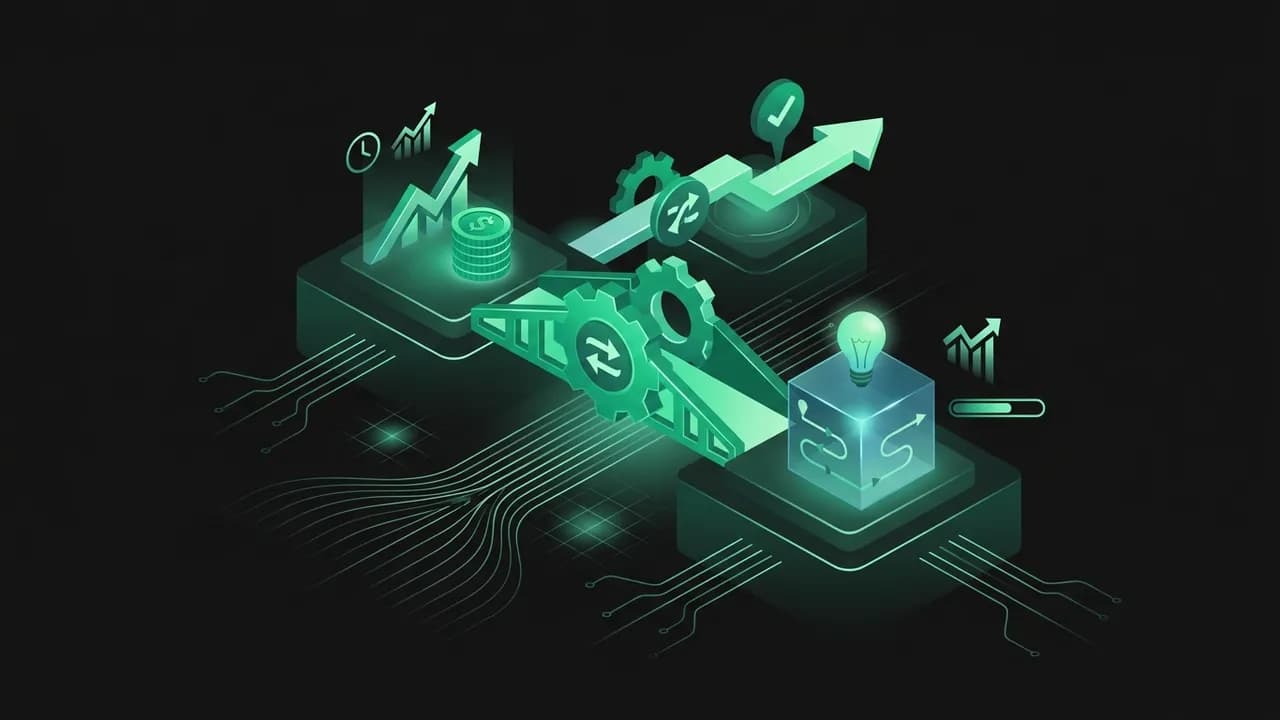
One-time sales and recurring revenue are both powerful when matched to the way value is delivered. Problems arise when founders optimize for the shape of the revenue chart instead of the shape of customer value.
Your Next 5 Steps
map whether customer value is discrete, repeatable, or continuous
compare cash-flow and margin tradeoffs between one-time and recurring models
test whether customers actually prefer ongoing billing or simpler one-time purchase
explore hybrid pricing where value has both setup and ongoing layers
measure model health through retention, repurchase, and payback—not vanity metrics alone
SEO / Optimization Notes
This guide should naturally target keywords like one time sales vs recurring revenue, ARR, MRR, subscription vs one time, and revenue model. The meta description should emphasize how to choose between one-time and recurring monetization. Internally, this guide should connect to subscription fatigue, freemium vs trial, consulting to software, and pricing strategy guides in Module 5.
The best revenue model is not the one that looks best in a pitch deck. It is the one that mirrors how the customer actually receives value.
Economics: Cash Timing Changes Everything
The deepest operational difference between one-time and recurring revenue is cash timing. One-time sales bring larger cash events earlier. Recurring revenue spreads value collection over time. That changes growth constraints, payback periods, financing needs, and risk tolerance.
A one-time model can look attractive when acquisition is expensive because the business may recover CAC faster. A recurring model can eventually produce stronger lifetime value, but only if retention is solid enough for the business to survive the slower payback curve.
This is why founders should compare:
A recurring model with weak retention can be more fragile than a one-time model with disciplined reacquisition. Conversely, a one-time model with no repeat demand can feel like starting over every month. The economics only make sense when the revenue structure matches both customer behavior and company cash reality.
Customer Psychology: Buyers Judge Ongoing Charges Differently Than One-Time Costs
Customers evaluate one-time and recurring pricing through different mental models. A one-time payment is often judged on immediate utility and perceived fairness in the moment. A recurring payment is judged repeatedly over time.
That means subscriptions or retainers create an extra burden of justification. Customers ask themselves whether the value is still there, whether they are using the product enough, and whether they should cancel or downgrade. One-time products do not face the same recurring re-evaluation.
On the other hand, recurring pricing can reduce buying friction when the ongoing charge feels smaller, more manageable, or less risky than a large upfront commitment. This is why some buyers prefer monthly access while others strongly prefer "pay once and own it" simplicity.
Founders should not only ask what the company prefers. They should ask how the customer wants to buy in relation to how the value actually shows up.
Advanced Examples: Where Hybrid Revenue Models Often Win
Example 6: One-time setup plus recurring access
A business may charge upfront for implementation and then recurring for support or software access.
Example 7: Courses plus memberships
A course can monetize the finite transformation while a membership monetizes ongoing accountability or community.
Example 8: Agencies with retainers
Some agencies move from project fees to recurring retainers when the work becomes operationally continuous.
Example 9: Hardware plus consumables or software
Initial hardware purchase plus ongoing consumables, support, or software layers can create healthy hybrid economics.
Operating Model: How to Review Whether the Revenue Timing Still Fits
A revenue model should be reviewed as the product and customer behavior evolve.
Questions to Review Regularly
Team Alignment
This operating discipline keeps the company from copying market norms without checking whether those norms fit its own value pattern.
Hybrid Models: Many Strong Businesses Mix One-Time and Recurring Revenue Intentionally
A forced binary between one-time and recurring revenue often misses the best answer. Many healthy businesses separate value into layers and price each layer according to how it is delivered.
Examples include:
Hybrid models work because they respect different types of value. The customer pays once for discrete transformation and repeatedly for ongoing access, support, updates, or infrastructure. This often creates better customer fit than forcing everything into a single billing logic.
The challenge is clarity. Customers should understand exactly what part is one-time, what part is recurring, and why each charge exists. When that is clear, hybrid models can create healthier cash flow and stronger retention without compromising trust.
Decision Heuristics: Quick Tests for Choosing the Better Model
If you are uncertain which model fits better, these quick tests help:
These heuristics are not perfect, but they force founders back toward real customer behavior instead of abstract preference for a fashionable revenue model.
Final Playbook: How to Choose a Revenue Timing Model With Less Guesswork
Before committing to one-time, recurring, or hybrid revenue, answer these questions:
when does the customer actually experience value?
what billing pattern would feel most natural and fair to that customer?
what does the company need in terms of payback, margin, and cash timing?
do we have evidence of repeat purchase or retention strong enough to support the model?
should the product be split into discrete and ongoing value layers?
These questions matter because the wrong revenue timing model can distort both product design and business operations. The right one lets the company grow in sync with how value is delivered.
Final Decision Principle: Revenue Timing Should Follow Value Timing
The cleanest principle in this decision is simple: revenue timing should follow value timing. If value shows up once, charge once. If value compounds through continued access or workflow use, recurring models become more defensible. If both are true, hybrid models often win.
That principle keeps monetization aligned with reality instead of with narrative pressure around what a startup is "supposed" to look like.
Key Takeaways
MRR is your operational pulse; ARR is roughly MRR times 12 and the number boards and investors track.
Calculate both from recurring subscription value only, excluding one-time fees and unpredictable usage.
Recurring revenue compounds while one-time sales reset to a sawtooth, which is why it commands higher valuations.
Never inflate MRR with non-recurring items, and always read it alongside churn and net revenue retention.
Predictable revenue is not automatically healthy revenue; retention quality determines whether growth is real.
Frequently Asked Questions
What is the difference between ARR and MRR?
How do you calculate MRR and ARR?
What is the difference between one-time sales and recurring revenue?
What are examples of recurring vs transactional revenue?
What are common ARR and MRR mistakes?
What is a good growth rate for recurring revenue?
Your Turn: The Action Step
MRR / ARR Build & Bridge Worksheet
Compute your current MRR and ARR from scratch, then build a month-over-month MRR bridge (new + expansion - churn) so you can see what's actually driving growth.
Build MRR from plan counts
One row per plan: price x active subscribers.
| Plan | Price | Subscribers | Plan MRR |
|---|---|---|---|
Total MRR and ARR
Sum the plan MRRs, then multiply by 12.
Fill the MRR bridge
Break this month's change into New, Expansion, Contraction, Churn.
| Movement | ₹ amount | +/- |
|---|---|---|
Compute churn rate
Churned MRR / starting MRR. Under 2%/mo is the goal for SMB SaaS.
Diagnose the biggest lever
Which movement (new, expansion, churn) most needs fixing next month, and how?
Before you close this
0/5 doneYour answers are saved in this browser only. Use “Download as PDF” to keep a copy.
MRR / ARR & Growth Calculator
MRR
₹8,00,000
monthly recurring
ARR
₹96,00,000
MRR × 12
MRR in 12 months
₹14,36,685
net 5%/mo
Growing slowly. Churn (3%) is eating most of your 8% growth — fixing retention is your fastest lever.
Runs entirely in your browser — nothing is sent anywhere.
The Big Problem With Monthly Subscriptions
Ready to apply this?
Stop guessing. Use the Litmus platform to validate your specific segment with real data.
Scale Your Income