Upselling & Cross-selling: The Science of 'More'
Acquiring a new customer is 5x more expensive than selling to an existing one. This 3,000-word guide masters the 'Value Expansion' Framework to help you increase your ARPU through psychological triggers and seamless integration.
Why More Revenue Per Customer Depends on Relevance, Not Pressure
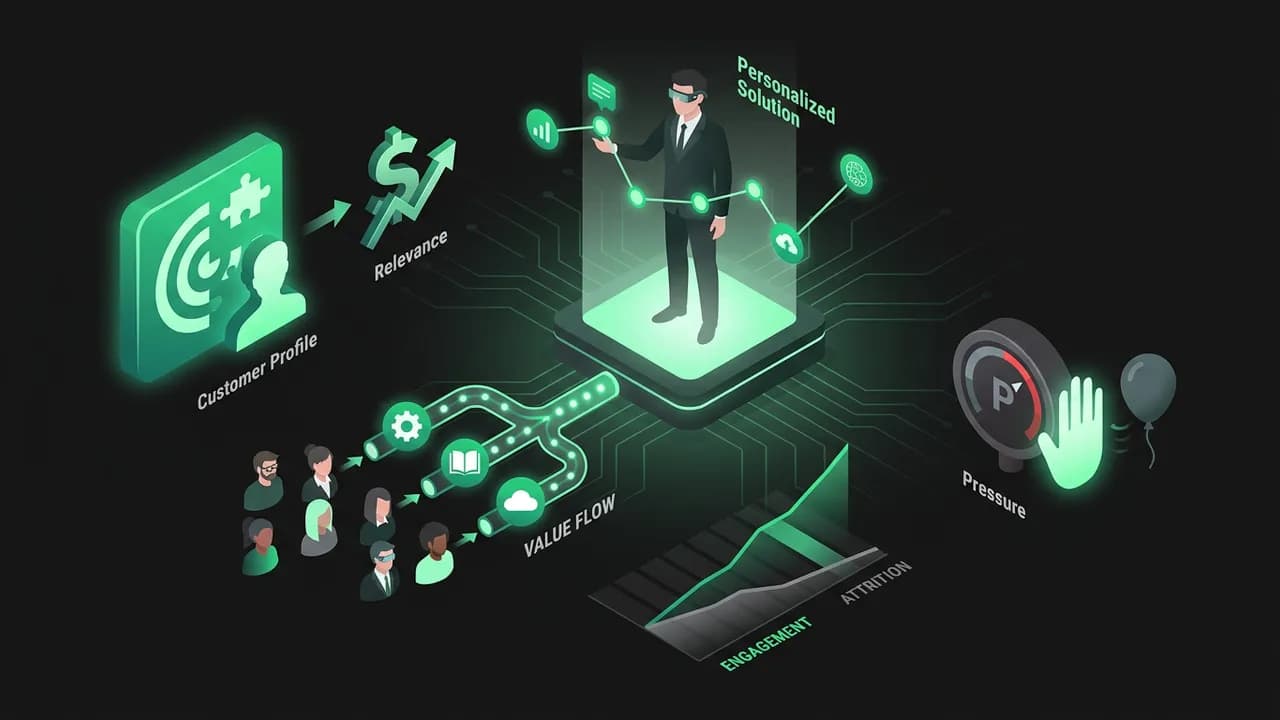
Upselling and cross-selling are often treated as simple sales tactics: show customers a higher-priced option, suggest an add-on, and collect more revenue. In practice, the difference between a smart upsell and an annoying one is strategic relevance.
When done poorly, upselling feels like pressure. Cross-selling feels like clutter. Customers feel manipulated, distracted, or pushed toward spending more than they need. When done well, both tactics feel helpful. The customer sees a better-fit option, a smarter configuration, or a useful adjacent purchase that improves the original decision.
That distinction matters because upsell and cross-sell systems influence much more than revenue. They affect trust, average order value, expansion revenue, retention, and product perception. A good system increases customer value while improving business economics. A bad one creates friction at the exact moment the customer is trying to make progress.
In 2025-2026, these tactics are everywhere: ecommerce carts, SaaS plan upgrades, fintech bundles, creator products, education ladders, app subscriptions, marketplaces, and service businesses. But many teams still execute them badly because they optimize for immediate extraction instead of customer fit.
The real question is not "how do we get users to buy more?" The better question is: how do we surface the next most useful purchase, upgrade, or add-on at the moment it creates the most value for the customer and the business?
Core Framework: The Difference Between Upsell and Cross-Sell
Upsell
An upsell encourages the customer to choose a higher-value or higher-priced version of the same core purchase.
Examples:
Cross-Sell
A cross-sell encourages the customer to add a complementary product or service.
Examples:
The Strategic Difference
Upsell increases the value of the main choice.
Cross-sell expands the purchase around the main choice.
Both work best when they improve customer outcomes, not just basket size. If the offer is not clearly relevant, the revenue gain is usually short-lived and the experience cost is long-lived.
When Upselling and Cross-Selling Work Best
These tactics work best when three conditions are present.
1. Customer Intent Is Clear
The business understands what the customer is trying to achieve.
2. The Additional Offer Genuinely Improves the Outcome
The upsell or cross-sell makes success easier, faster, safer, or more complete.
3. Timing Is Right
The offer appears when the customer is ready to understand its value—not too early and not too late.
Common strong contexts include:
The stronger the contextual fit, the less the offer feels like selling and the more it feels like guidance.
Execution: How to Design Offers That Feel Helpful
Step 1: Map the Primary Customer Goal
What is the customer trying to accomplish right now?
Step 2: Define the Next Most Useful Offer
Choose the upgrade or add-on that most directly improves that outcome.
Step 3: Place the Offer at the Right Moment
Step 4: Explain Why It Matters
The message should describe the additional value, not just the higher price.
Step 5: Track Long-Term Outcomes
Measure not only immediate acceptance, but whether the customer actually benefits and stays longer.
The strongest upsell and cross-sell systems behave like product design. They reduce mismatch and improve outcomes while increasing revenue.
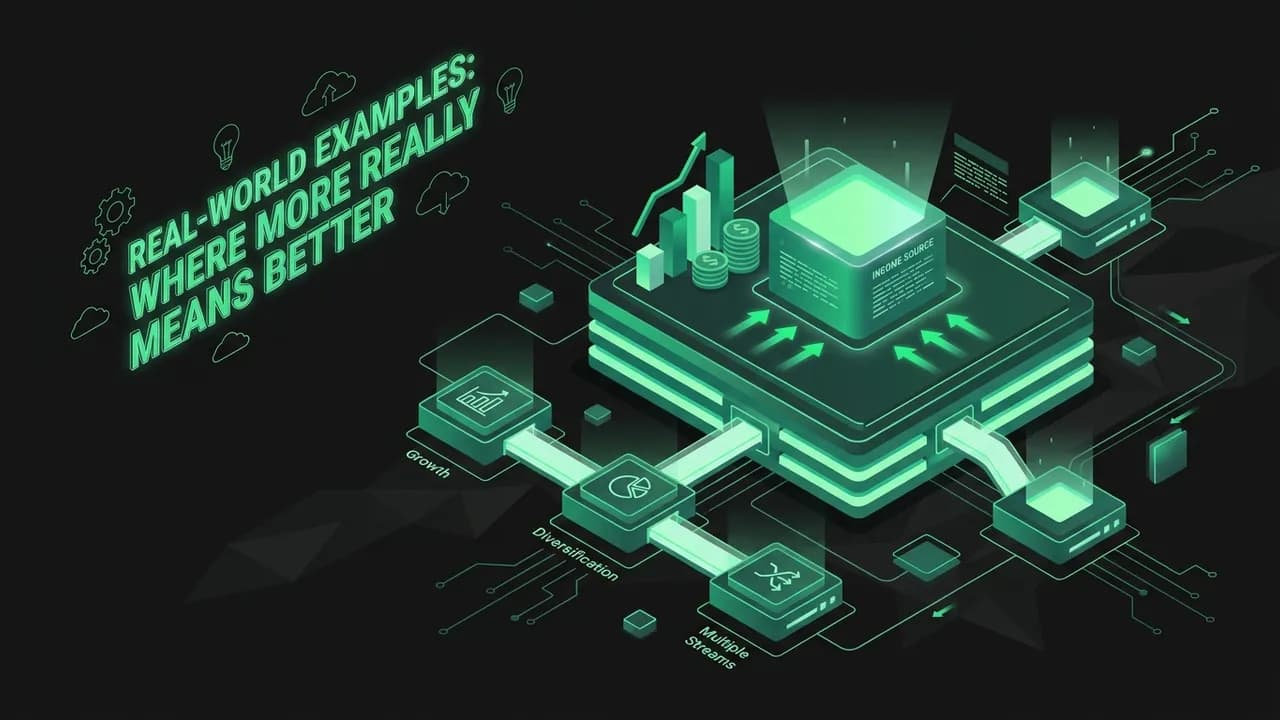
Real-World Examples: Where More Really Means Better
Example 1: SaaS plan upgrades
Upgrades work well when customers hit clear usage or feature limits and understand what the premium tier unlocks.
Example 2: Ecommerce accessories
Cross-selling accessories at checkout works when they clearly complete the main purchase.
Example 3: McDonald's / fast food combos
Upsize and combo logic works because the value proposition is easy to understand and decided quickly.
Example 4: Fintech premium tiers
Premium account upgrades work when customers can connect the added tools, rewards, or speed benefits to real financial use.
Example 5: Education ladders
A course can cross-sell templates, community, coaching, or advanced modules when the next step is a natural continuation.
Common Pitfalls & How to Avoid Them
Pitfall 1: Showing offers that do not match intent
Irrelevant offers feel spammy.
Pitfall 2: Prompting too early
Customers cannot value an upgrade they do not yet understand.
Pitfall 3: Too many options
Offer overload weakens conversion.
Pitfall 4: Measuring only immediate acceptance
Short-term revenue can hide regret, churn, or refund risk.
Pitfall 5: Using dark patterns
Manipulative defaults damage trust.
Pitfall 6: No economic discipline
Some add-ons create revenue but also support burden.
What to Measure in Upsell and Cross-Sell Performance
Core Metrics
Diagnostic Questions
The best upsell and cross-sell programs create more value for both sides, not just more items in the cart.
Actionable Conclusion: Sell the Next Best Step, Not Just More Stuff
Upselling and cross-selling work best when they feel like smart recommendations, not aggressive revenue grabs. The goal is not to maximize pressure. It is to maximize relevance.
Your Next 5 Steps
map the main customer goal at each stage of the journey
identify the one most helpful upgrade or add-on for that moment
simplify the offer so the value is obvious immediately
measure retention, satisfaction, and expansion together
delete offers that increase friction more than value
SEO / Optimization Notes
This guide should naturally target keywords like upselling, cross selling, average order value, expansion revenue, and sales psychology. The meta description should emphasize how to increase revenue per customer without damaging trust. Internally, this guide should connect to discount psychology, tiered pricing, subscription models, and ARR/MRR guides in Module 5.
The best expansion offer does not ask the customer to spend more for no reason. It helps them buy better.
Revenue Economics: Why Expansion Revenue Is Often Cheaper Than New Acquisition
One reason upselling and cross-selling matter so much is that expansion revenue is often cheaper to earn than net-new revenue. The customer is already acquired. Trust is already partially built. Payment context already exists. And the company usually knows more about the customer's needs than it did during first conversion.
That makes expansion economically attractive—but only if the additional offer is relevant. A bad upsell wastes goodwill. A good upsell improves both customer value and revenue efficiency.
This is why many strong businesses treat expansion revenue as a core growth engine. In SaaS, it appears as seat expansion, premium feature adoption, and plan upgrades. In ecommerce, it appears as attach rate, bundles, and reorder-enhancing add-ons. In education, it appears as laddered offers and deeper support layers.
The key is that expansion should increase customer success, not just invoice size. When that alignment exists, expansion revenue often carries better unit economics than pure acquisition growth.
Customer Psychology: Why the Right Offer Feels Like Guidance, Not Selling
Customers do not mind being offered something better when it genuinely helps them make a better decision. What they resist is feeling trapped, distracted, or upsold into irrelevance.
That is why customer psychology matters so much in expansion design. Good offers usually do one of four things:
For example, a customer buying a complex tool may appreciate setup help. A growing SaaS team may appreciate a plan that removes operational limits. A shopper buying a camera may appreciate a memory card or protective case. In each case, the offer feels sensible because it completes or improves the original decision.
The moment the offer stops feeling helpful and starts feeling extractive, response quality drops and trust weakens.
Advanced Examples: Where Upsell and Cross-Sell Become Strategic
Example 6: Streaming and subscription upgrades
Higher tiers often work when they remove ads, expand simultaneous usage, or improve quality.
Example 7: SaaS onboarding services
Cross-selling implementation or support can work when it materially accelerates time-to-value.
Example 8: Beauty and wellness bundles
Cross-selling routines and compatible products works when the items reinforce each other.
Example 9: Marketplaces and fintech
Protection, insurance, financing, or premium verification layers can act as cross-sells when trust and risk reduction matter.
Operating Model: How to Review Expansion Offers Without Polluting the Journey
A mature expansion system needs governance. Without it, teams keep adding offers until the customer journey becomes cluttered.
Review Questions
Team Discipline
This matters because upsell and cross-sell systems can quietly decay. What once felt helpful can become noisy if too many stakeholders add revenue prompts without protecting the user journey.
Timing and Context: Why the Same Offer Can Convert or Fail Based on When It Appears
Timing is often the hidden variable in expansion revenue. An offer that is perfect in principle can still fail if it appears before the customer understands the core purchase, or long after the moment when the added value was most obvious.
Good timing usually depends on one of three triggers:
This is why product-qualified prompts often outperform generic promotional placement. The more clearly the customer can connect the offer to their current need, the more likely the offer feels helpful.
A poorly timed cross-sell can make the product feel noisy. A well-timed one can feel like the product is intelligently guiding the user toward a better outcome.
Offer Design: Make the Additional Value Obvious Fast
An upsell or cross-sell needs to answer one question very quickly: why is this worth adding right now?
The best offer design usually makes one benefit primary:
Complicated offer explanations reduce acceptance because they increase cognitive load at a decision point. That is why some of the highest-performing expansion offers are simple and concrete. "Add setup support and go live faster" is easier to process than a long feature paragraph. "Upgrade for more team seats and admin control" is clearer than a dense enterprise pricing matrix.
The more obvious the value, the less the offer feels like a sales interruption.
Hybrid Models: Expansion Can Include Product, Service, and Membership Layers
Not every upsell or cross-sell has to be another product SKU. In many businesses, the most effective expansion layers combine different value types:
These hybrid layers often work because they address a different dimension of customer value. The core product solves the main job. The add-on removes friction, increases confidence, or accelerates success.
That is why expansion strategy should not be limited to catalog thinking. Sometimes the best cross-sell is not another thing. It is another kind of help.
Final Playbook: How to Build an Expansion System That Lasts
Before scaling upsells and cross-sells, answer these questions:
what is the customer trying to achieve at this exact moment?
what is the next most useful offer that improves that result?
when should it appear so the value is immediately understandable?
does the offer increase lifetime value without increasing regret or churn?
which prompts should be removed because they create noise rather than value?
These questions matter because expansion revenue should behave like customer-success design, not like a pile of monetization widgets.
Final Decision Principle: The Best Offer Is the Next Best Step
The strongest upsell or cross-sell is not simply the most expensive thing you can persuade a customer to buy. It is the next best step for that customer's journey. When teams internalize that principle, expansion revenue becomes cleaner, more trusted, and more durable.
That is how "more" becomes better, not merely bigger.
Key Takeaways
Upselling raises the value of one purchase; cross-selling adds complementary products; both grow ARPU without acquisition cost.
Trigger offers at moments of demonstrated value or constraint (limits hit, key actions completed), not on a calendar.
Recommend only genuinely relevant items and frame expansion around the customer's outcome, not your revenue.
Expansion revenue drives net revenue retention, which compounds growth far more cheaply than new acquisition.
Avoid irrelevant or premature offers; upgrades into unused plans cause churn that outweighs the short-term gain.
Frequently Asked Questions
What is the difference between upselling and cross-selling?
How do you upsell and cross-sell effectively?
What are examples of upselling and cross-selling?
Why is selling to existing customers so valuable?
What are common upselling and cross-selling mistakes?
When is the best time to upsell a customer?
Your Turn: The Action Step
Upsell / Cross-Sell Play Builder
Build 3-4 specific upsell/cross-sell plays — the trigger, the offer, the moment, and the expected lift — that grow revenue per customer without feeling pushy.
Map the product ladder
List what a customer can upgrade to (upsell) and what pairs with it (cross-sell).
| Current product | Upsell to | Cross-sell add-on |
|---|---|---|
Define the behavioural trigger
What action proves the customer is ready? (Hit a limit, repeat use, milestone.)
Write each play
One row per play: trigger, offer, the moment it fires, and the channel.
| Trigger | Offer | Moment / channel |
|---|---|---|
Set targets per play
Expected take rate and the ARPU lift each play should produce.
| Play | Expected take rate % | ARPU lift |
|---|---|---|
Add a 'don't be pushy' rule
Frequency cap and a relevance rule so customers don't feel nickel-and-dimed.
Before you close this
0/5 doneYour answers are saved in this browser only. Use “Download as PDF” to keep a copy.
Why Every Marketplace Takes a Cut
Ready to apply this?
Stop guessing. Use the Litmus platform to validate your specific segment with real data.
Expand Your Revenue