Usage-Based Pricing: Scaling with Your Customers
Seat-based pricing is dying; the future is built on usage. This 3,000-word guide masters the 'Value Metric Alignment' to help you build a fair, scalable, and high-retention pricing model that grows as your customers succeed.

Why Usage-Based Pricing Looks Fairer but Can Become Harder to Operate
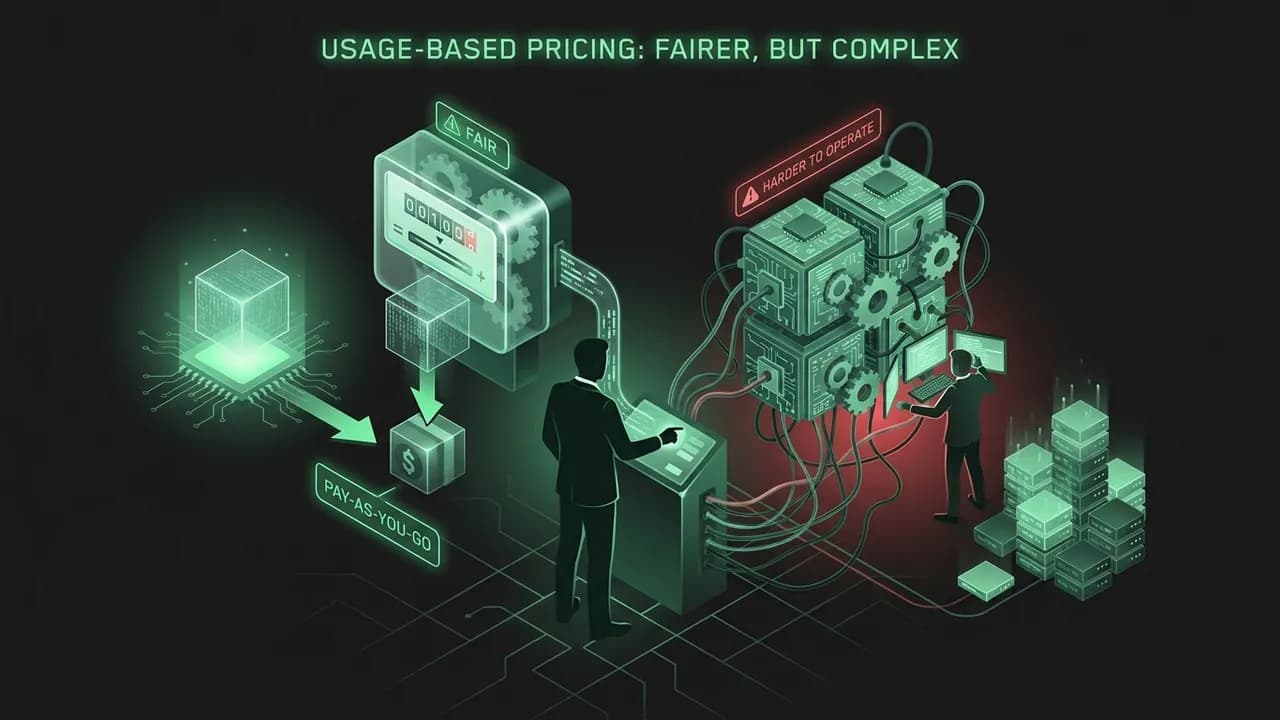
Usage-based pricing has become one of the most attractive monetization models in modern software and digital infrastructure because it appears highly aligned: customers pay more when they use more, and less when they use less. That sounds fair, scalable, and customer-friendly.
In many cases, it is. Usage-based pricing can reduce friction for new customers, align spending with realized value, and help a business grow alongside customer success. It can be especially powerful for infrastructure, AI, API, data, payments, communications, and workflow products where usage closely tracks cost or value.
But the model is not automatically easier just because it sounds fairer. In 2025-2026, many startups discover that usage pricing creates new challenges: revenue unpredictability, billing complexity, customer anxiety around spend, margin risk at scale, and sales friction when buyers want certainty.
That is why the real question is not "should we charge by usage?" The better question is: does usage reliably reflect customer value and business cost in a way that is understandable, scalable, and trusted by both sides?
When the answer is yes, usage-based pricing can become a powerful growth engine. When the answer is no, the model can create confusion, spend anxiety, and misaligned incentives that hurt both adoption and retention.
Core Framework: What Usage-Based Pricing Actually Aligns
Usage-based pricing usually tries to align four things.
1. Customer Value
The more the customer uses the product, the more value they receive.
2. Provider Cost
The more the customer uses the product, the more cost the business incurs.
3. Adoption Friction
Low initial usage often means lower initial spend, which can improve entry conversion.
4. Expansion Revenue
As customers grow, revenue expands naturally without forcing plan upgrades.
This model works best when the usage metric is meaningful and legible. Examples include:
A usage metric should not be chosen just because it is measurable. It should reflect something the customer understands and perceives as connected to value.
When Usage-Based Pricing Works Best
Usage-based pricing tends to work best when:
Common strong contexts include:
It works less well when customers need predictable budgeting, when usage is hard to forecast, or when the chosen metric feels detached from the outcome the customer actually cares about.
Execution: How to Design Usage Pricing That Customers Can Trust
Step 1: Choose the Right Meter
Pick a unit that customers can understand and connect to value.
Step 2: Make Pricing Predictable Enough
Even variable pricing needs guardrails, estimates, or visibility.
Step 3: Consider Entry Thresholds
Free usage, credits, or minimum included volume can reduce adoption friction.
Step 4: Protect Against Bill Shock
Customers need alerts, dashboards, or caps where appropriate.
Step 5: Review Margin at Different Usage Levels
Some usage models underprice high-volume customers if costs scale faster than revenue.
The strongest usage-based pricing systems are transparent, understandable, and operationally disciplined. They help customers scale confidently instead of worrying that success will generate an incomprehensible invoice.
Real-World Examples: Where Usage Pricing Scales Cleanly
Example 1: Cloud infrastructure
Storage, compute, and bandwidth pricing often scale with usage because provider cost also scales.
Example 2: Payments platforms
Charging per transaction works because value and volume are tightly linked.
Example 3: Communication APIs
SMS, voice, and email platforms often price by message or event volume.
Example 4: AI and data products
Credits, tokens, or processed volumes often fit products where usage varies dramatically by customer.
Example 5: Hybrid SaaS tools
Some products combine platform access with usage expansion, such as base fee plus per-seat, per-action, or overage charges.
Common Pitfalls & How to Avoid Them
Pitfall 1: Choosing a meter customers do not understand
If the unit is abstract, pricing feels arbitrary.
Pitfall 2: Creating bill shock
Variable pricing without visibility hurts trust.
Pitfall 3: Underpricing high-volume usage
Revenue can lag cost at scale.
Pitfall 4: Overcomplicating billing
Complex invoices create friction for finance teams and customers.
Pitfall 5: Assuming all customers want variable spend
Some buyers need predictability more than flexibility.
Pitfall 6: Aligning price to activity but not outcome
Customers care about results, not raw units alone.
What to Measure in Usage-Based Pricing
Core Metrics
Diagnostic Questions
The healthiest usage-based model is the one that makes growth feel mutually beneficial for both the customer and the business.
Actionable Conclusion: Charge by Usage Only When Usage Means Something

Usage-based pricing can be a powerful model when the meter reflects real value, real cost, and understandable customer behavior. It becomes dangerous when the metric is opaque, the invoice is unpredictable, or the cost of success feels punitive.
Your Next 5 Steps
choose a usage metric customers can actually understand
model both revenue and margin across low and high usage bands
add alerts, dashboards, and visibility to reduce bill shock
test whether some segments need hybrid or committed pricing instead
keep pricing tied to outcomes, not just activity counts
SEO / Optimization Notes
This guide should naturally target keywords like usage based pricing, pay as you go pricing, scaling with customers, metered billing, and pricing model. The meta description should emphasize when usage-based pricing aligns customer growth with revenue growth. Internally, this guide should connect to subscription fatigue, dynamic pricing, one-time vs recurring revenue, and ARR/MRR guides in Module 5.
The best usage-based pricing model does not merely meter activity. It makes customers feel that paying more means they are getting more real value.
Economics: Usage Pricing Works Best When Revenue and Cost Curves Stay Aligned
The most important economic question in usage-based pricing is whether revenue scales in a healthy relationship with cost. If usage increases customer value faster than it increases your costs, the model can be very attractive. If costs rise sharply while pricing lags, the business may discover too late that success is compressing margins.
This is why usage-based pricing needs detailed band-by-band analysis:
Some businesses undercharge heavy users because the original pricing logic was optimized for easy adoption rather than long-term economics. Others overcharge early users and create adoption friction that prevents the product from becoming embedded.
The healthiest usage model balances these stages. It gives customers room to start, creates natural expansion as value grows, and still protects margin when usage scales dramatically. That is a pricing design problem, not merely a billing problem.
Customer Psychology: Fairness and Predictability Need to Coexist
Customers often like usage-based pricing in theory because it feels fair: pay for what you use. But many buyers also want predictability. This creates a tension at the heart of the model.
If spending is too uncertain, finance teams, procurement teams, and even individual users can become anxious. They may worry that growing adoption will create an uncontrolled invoice. That anxiety can slow rollout even when the pricing logic is economically fair.
The best usage models solve this tension by combining fairness with predictability. They provide:
A fair model is not enough if it still feels impossible to plan around. Usage pricing succeeds when customers can both trust the logic and forecast the spend well enough to stay confident.
Advanced Examples: How Modern Companies Blend Metering and Predictability
Example 6: Base fee plus overage
Some products include a predictable base plan and then charge for usage above a threshold.
Example 7: Committed usage contracts
Enterprise buyers often prefer committing to a usage floor in exchange for better rates and budget certainty.
Example 8: Credit systems
Some AI or workflow products use credits because they simplify multiple underlying cost drivers into one visible customer unit.
Example 9: True pay-as-you-go infrastructure
Developer and infrastructure products often succeed with direct metering because usage and value are tightly linked.
Operating Model: How to Review a Metered Pricing System Over Time
Usage pricing should be reviewed continuously because customer behavior changes as the product matures.
Questions to Review Regularly
Team Alignment
A good operating model keeps the company from treating metered pricing as finished once the pricing page ships. Pricing, meter choice, and visibility tools all need iteration.
Hybrid Models: Predictability and Usage Flexibility Often Need to Coexist
Many businesses eventually discover that pure usage-based pricing is not enough on its own. Some customers want low entry friction and variable spend. Others want budget certainty, procurement simplicity, or predictable invoices. Hybrid pricing helps reconcile those needs.
Common hybrid patterns include:
These models work because they let the company keep usage alignment while reducing buyer anxiety. The goal is not to dilute the pricing logic. It is to make the logic easier to live with at different stages of customer maturity.
Meter Design: The Metric Must Be Explainable, Forecastable, and Worth Paying For
Choosing a usage meter is one of the most important design decisions in the model. A bad meter can make a good product feel overpriced or confusing.
A strong meter usually has three properties:
If the meter fails one of these tests, trust weakens. For example, a technically accurate meter may still be a bad pricing unit if customers cannot predict it or connect it to business value.
That is why pricing teams should revisit the meter itself, not just the amount charged per unit. Sometimes the biggest monetization improvement comes from changing what gets measured, not only from changing the price.
Final Playbook: How to Build a Usage Model Customers Will Grow Into
Before scaling usage-based pricing, answer these questions:
does the meter clearly reflect value and cost?
can customers forecast spend with reasonable confidence?
where do we need alerts, commitments, or included bands to reduce anxiety?
how do margins change as customers grow?
which segments need pure usage, hybrid pricing, or committed contracts?
These questions matter because usage pricing is not only a monetization model. It is also a trust system. Customers need to believe that growing with your product will feel economically sensible, not increasingly risky.
Final Decision Principle: Meter What Customers Understand and Value
The cleanest rule in usage-based pricing is this: meter what customers understand and value. If the unit is clear, fair, and connected to outcomes, the model can scale beautifully. If the unit is abstract, anxiety-inducing, or detached from customer success, the model becomes a billing problem disguised as alignment.
That principle is what keeps usage-based pricing from becoming complexity for its own sake.
Key Takeaways
Usage-based (consumption-based) pricing charges in proportion to actual use, lowering entry barriers and growing revenue as customers succeed.
Pick a value metric that scales with customer value, is predictable, and is hard to game.
Use billing tools like Stripe Billing, Metronome, or Lago to meter and invoice accurately instead of building it yourself.
Prevent bill shock with spending caps, alerts, and optional commitments; surprise invoices drive churn.
Consider a hybrid base subscription plus usage overages for predictability with expansion upside.
Frequently Asked Questions
What is usage-based pricing?
How do you set up usage-based pricing?
What is a good value metric for usage-based pricing?
What are examples of usage-based pricing?
What are common usage-based pricing mistakes?
Is usage-based pricing better than seat-based pricing?
Your Turn: The Action Step
Usage-Based Pricing Meter Designer
Design a usage-based pricing meter — the right billing unit, the per-unit rate, and a base-fee floor — so revenue grows with the customer without surprise-billing them.
Choose the metering unit
Pick the unit that best tracks the value you deliver. It must be easy to measure and explain.
Set a base fee + included usage
A monthly floor gives you predictable revenue and the customer a baseline.
Build the rate tiers
Volume-discount tiers so heavy users get a better unit price (and stay).
| Usage band | Rate per unit |
|---|---|
Model three customer sizes
Compute the monthly bill for a small, medium, and large customer.
| Customer | Monthly usage | Computed bill |
|---|---|---|
Add bill-shock guardrails
What alerts, caps, or commit-discounts prevent a surprise invoice that triggers churn?
Before you close this
0/5 doneYour answers are saved in this browser only. Use “Download as PDF” to keep a copy.
Growth Can Kill Your Startup: CAC LTV Ratio
Ready to apply this?
Stop guessing. Use the Litmus platform to validate your specific segment with real data.
Scale Your Revenue