Community Led Growth: Building a Discord/Slack That Thrives
A Slack group is not a community; it's a chat box. This 3,000-word guide breaks down the 'Campfire Model' and the specific rituals required to turn your users into a self-sustaining social network.
Strategy Framework: The Campfire Model
Most founders launch a Slack or Discord, invite 1,000 people, and then wonder why it's a ghost town. In 2026, we use the Campfire Model to engineer engagement.
The Three Elements of a Campfire
The Light (Value): This represents the exclusive content, data, or access you provide. It is why people come to the campfire. This could be a weekly internal memo, early access to features, or private AMAs.
The Heat (Connection): This is the conversation that happens between members, not just between you and the members. If you are the only one talking, you have a mailing list. When members start helping each other, they generate 'Heat.'
The Wood (Founders/Moderators): You must constantly feed the fire with new prompts, challenges, and introductions until the community reaches 'Critical Mass' and starts feeding itself.
The Rule of 2026: Privacy is the new luxury. Smaller, high-intent communities (Slack/Discord) are outperforming massive, noisy public groups (Facebook Groups). Aim for 'Density' of expertise, not 'Volume' of members.
The Campfire Layers
Design three rings:
Signal Fire (broadcast channel) for announcements
Campfire (small group rituals) for depth
Trailblazers (private council) for power users
Members graduate through layers as they contribute.
Strategy: The Lurker-to-Leader Commitment Curve
Every member in your community is at a different stage of 'Belonging.' Your job is to move them up the Commitment Curve.
Tactic: Identify your 'Leaders' early and treat them like part of the team. If they feel like they own a piece of the community's future, they will protect it from toxicity and churn.
#### Ritual Design
Define weekly, monthly, and quarterly rituals: demo Fridays, customer therapy Tuesdays, quarterly virtual summits. Rituals create predictability and FOMO.
Execution: Hand-Seeding the Founding 50
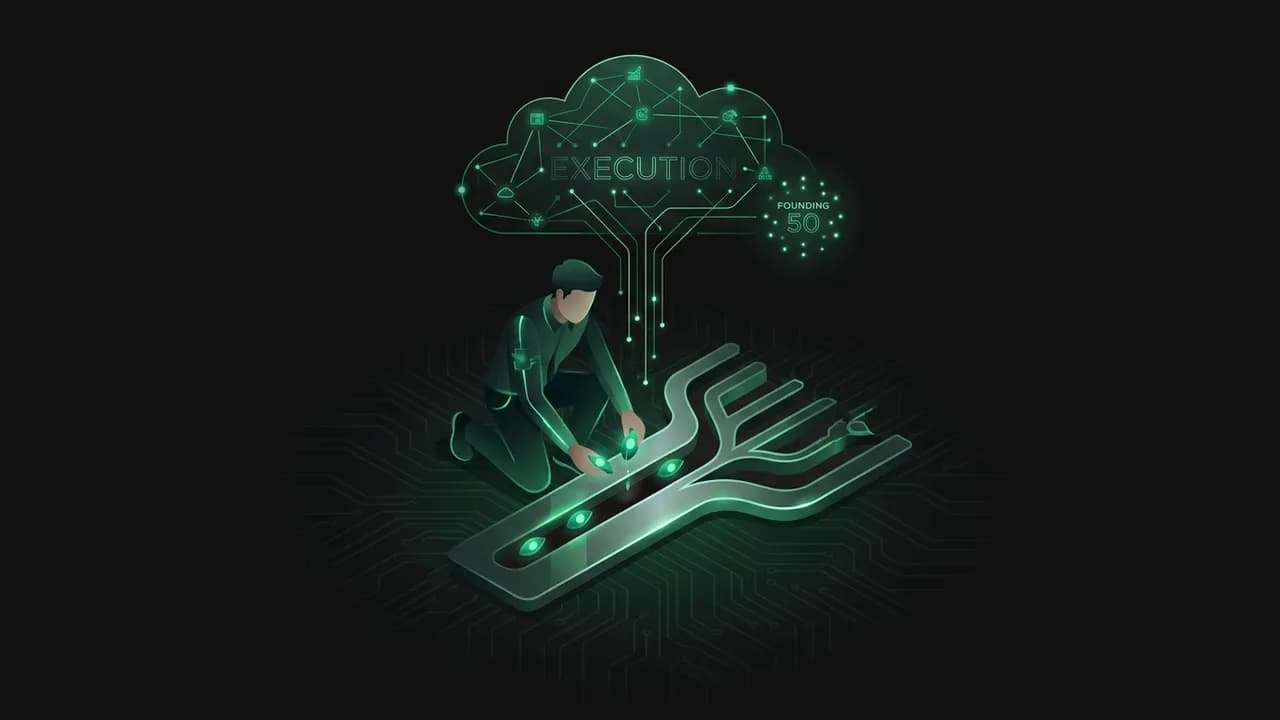
You cannot automate the start of a community. You must Hand-Seed it.
Phase 1: The Founding 50 Protocol
Do not launch to everyone. Select your 50 most active users. Record a personal video for each, inviting them to be 'Founding Members.' Tell them they have a say in how the community is built. This builds 'Sunk Cost' (the more they help build it, the less likely they are to leave).
Phase 2: Establishing Rituals (The Heartbeat)
Rituals create a sense of time and rhythm. Without them, people forget the community exists.
Phase 3: The 'No-Answer' Rule
When a member posts a question, wait 4 hours before answering it yourself. Tag other members who might know the answer. "@John, I remember you had a similar problem last week, how did you solve it?" This forces the 'Connection' element of the Campfire Model.
Community Ops Stack
Use tools like Commsor or Common Room to score engagement, surface champions, and automate welcome flows. Community is a product—instrument it like one.
Monetization Ladder
Start free. Add paid layers only after >50% monthly active rate. Offer: premium mastermind pods, certified expert directories, sponsor slots vetted by the community, or data products summarizing anonymized trends.
Case Study and Pitfalls: Community Mastery
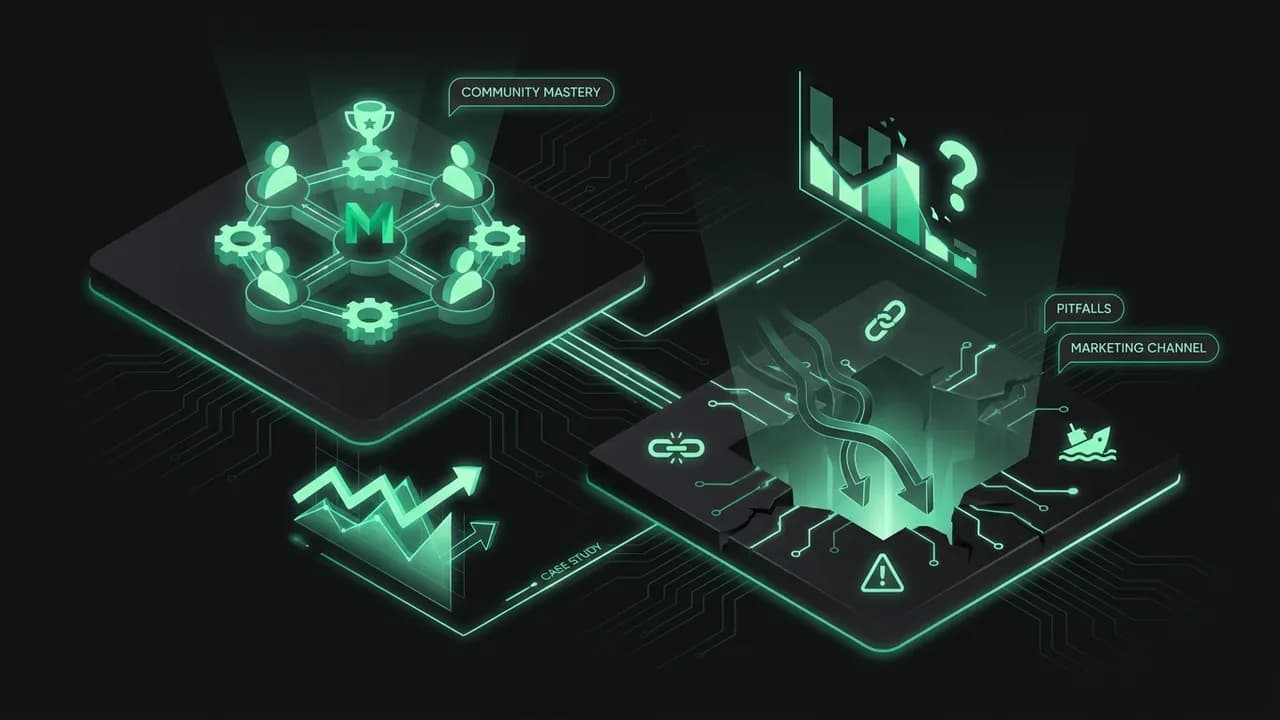
Case Study: How 'Framer' (Design Tool) Won with Discord
Framer didn't just use Discord for support. They created 'Feedback Channels' where designers could share their work. The founding team and top designers would give brutal, helpful feedback. This turned Framer from just another software tool into a 'High-Value Network.' Designers stayed in the Discord to learn, not just to troubleshoot. Framer now has one of the most loyal user bases in the world because they prioritized the 'Heat' (Connection) over the 'Light' (Content).
The 'Community Death' Pitfalls
The 'Sales-Pitch' Poison: Allowing members to spam their own products without permission. This kills trust instantly. Rule: Have a specific #shameless-plug channel and ban self-promotion everywhere else.
Ignoring the Onboarding Flow: If a new member joins and isn't greeted or pointed to the 'Start Here' channel, they will leave in 48 hours. Tactic: Use a bot to send a personalized DM with 3 simple steps to get started.
Metrics Obsession (Quantity vs Quality): Measuring success by the number of members. Measure by 'DAU/MAU' (Daily Active Users over Monthly Active Users). A community of 100 active experts is worth more than 10,000 silent strangers.
The 'Community Ritual' Challenge: Define one weekly ritual for your community. Plan the next 4 weeks of content for that ritual. Manually DM 10 people today to invite them into the conversation.
KPI Dashboard
Share the dashboard monthly with leadership to prove ROI.
Real-World Examples: Communities that Compound
Example 1: Webflow Global Leaders
Webflow built a private Slack for agency partners with direct access to product managers, beta features, and co-marketing funds. Leaders host local meetups that Webflow amplifies later.
Example 2: Miro Guilds
Miro organizes power users into guilds (education, product, agencies). Each guild receives budgets to run workshops, and their output feeds Miro's template library.
Example 3: Notion Ambassadors
Notion certifies ambassadors, gives them custom landing pages, and features their templates in the official gallery. Ambassadors host 1,000+ events per year without Notion's team.
Example 4: Linear Operator Club
Linear maintains a 500-person invite-only community for product leaders. Access requires referral, and discussions are off the record.
Feedback Loops
Run quarterly sentiment surveys and share results transparently. Close the loop by shipping at least one community-requested feature per quarter and credit the members who inspired it.
Common Pitfalls: Community Crashes
Pitfall 1: Treating Community as Support
If every message is a bug report, members vanish.
Pitfall 2: No Ownership
Communities die when everything requires the founder.
Pitfall 3: Vanity Member Counts
Ten thousand lurkers provide less value than 300 active contributors.
Pitfall 4: Ignoring Onboarding
Dropping new members into a noisy Slack with no guidance is overwhelming.
Pitfall 5: Monetizing Too Early
Charging before proving value breeds resentment.
Engagement Playbook + Moderator SOP
Moderator Weekly Checklist
Engagement Scripts
Consistency from moderators keeps the flywheel alive even when founders are busy.
90-Day Launch Plan
Phase 0 (Prep): define ICP, choose platform, recruit 10 founding members.
Phase 1 (Weeks 1-4): daily prompts, live kickoff, highlight early wins.
Phase 2 (Weeks 5-8): introduce rituals, empower ambassadors, ship first member-made resource.
Phase 3 (Weeks 9-12): publish public recap, open referral slots, survey members for roadmap.
Treat the community like a product launch with milestones and owners.
Ethical Sponsorship Framework
Vet sponsors with a member advisory board.
Cap sponsor slots to 10% of programming.
Require value-first activations (workshops, AMAs) instead of banner ads.
Share revenue splits with moderators or a community fund.
Case Study Metrics
Example: Startup ops community with 2,000 members. After instituting weekly rituals, DAU/MAU rose from 18% to 47%, referrals doubled, churn among members dropped 30%. Share hard numbers to justify community headcount.
Moderator Care Package
Provide stipends, priority support access, swag, and quarterly retreats. Burned-out mods are the #1 reason communities stall.
Community Economics
Sample unit economics: $15k/year community lead, $500/mo tooling. If community-sourced upsells produce $100k ARR and churn reduction saves $60k, ROI is >7x. Present this to execs to protect budget.
Scaling Playbook
When membership >3k, introduce cohorts by role or geography, archive stale channels quarterly, and launch annual summit (virtual or physical) to deepen loyalty.
Security & Moderation
Define code of conduct, moderation escalation tree, and incident response. Safe spaces attract higher-caliber members and protect brand reputation.
Onboarding Automation
Trigger welcome DM, starter kit email, and intro thread prompt automatically. Personalization tokens (role, region) make automation feel human.
Member Pathways
Design clear progression: Contributor → Champion → Advisor. Each tier unlocks perks (spotlight posts, beta access, revenue share).
Annual Event Blueprint
Plan flagship summit with member speakers, sponsor booths, and product roadmap reveals. Events cement loyalty and create PR moments.
Data Compliance
If your community spans regions, publish clear privacy policies, allow data export, and restrict PII sharing. Compliance builds trust, especially with enterprise members.
Member Spotlight Engine
Each week, spotlight a member story across social, newsletter, and in-app banners. Recognition drives contributions and shows lurkers the kind of value they can create.
Product Feedback Bridge
Route top community threads directly into product backlog triage. Tag the members who raised them when the feature ships. This closes the loop and keeps the community feeling heard.
Churn Rescue Sequence
When members go inactive for 21 days, trigger an email plus DM sequence offering curated threads, free office hours, or accountability partners to bring them back.
Revenue Attribution Map
Tag every deal influenced by community touchpoints inside CRM. Present quarterly numbers showing how community shortens sales cycles and boosts expansion.
Tooling Stack Comparison
Evaluate Discord, Slack, Circle, Geneva, and custom forums quarterly. Document pros/cons so you can scale without ripping out the community foundation.
Community P&L Example
Revenue sources: $120k upsell influence, $40k sponsorships, $25k premium tiers. Costs: $80k salaries, $12k tools, $10k events. Net: $93k. Sharing a P&L reframes community from "nice-to-have" to profit engine.
Ops Calendar
Monthly cadence: Week 1 onboarding blitz, Week 2 expert AMA, Week 3 mastermind pods, Week 4 retro + roadmap AMA. Predictable cadence keeps engagement stable even when product launch cycles slow down.
Localization Playbook
As membership globalizes, spin up regional chapters with volunteer leads, translated resources, and time-zone friendly events. Provide guidelines to keep brand voice consistent.
Member Persona Cards
Document top five member personas (e.g., solo founder, ops lead). Define their goals, fears, and preferred content formats so programming serves each group intentionally.
Knowledge Base Automation
Auto-tag high-signal threads and convert them into help-center articles or templates. Community wisdom then powers product education and SEO.
Conflict Resolution SOP
Define mediation steps, escalation owners, and communication templates for disputes. Healthy conflict policies maintain psychological safety.
Swag + Surprise Budget
Quarterly surprise drops (stickers, notebooks, handwritten notes) reignite affection and remind members that the brand invests back into the community.
Volunteer Program
Offer micro-grants or stipends for members who host meetups, moderate channels, or translate resources. Structured volunteering scales reach without ballooning payroll.
Mentorship Circles
Pair senior members with newcomers for 6-week mentorship circles. Provide discussion guides so relationships form faster and retention climbs.
Accessibility Checklist
Offer captions for live sessions, provide audio summaries for long posts, and schedule events across time zones. Inclusive design widens reach and demonstrates care.
Advocacy Metrics Dashboard
Track net new champions/month, % of product launches amplified by community, and contribution-to-revenue ratio. Publish the dashboard internally so leadership ties community to pipeline, not "vibes."
AI Moderation Assist
Deploy AI summarizers to flag unanswered questions, sentiment shifts, and emerging themes. Moderators then focus on high-leverage human engagement instead of inbox triage.
Key Takeaways
Start narrow with a clear purpose and a handful of genuinely engaged members, not a big empty server.
Show up daily in the early months — communities die without consistent founder presence.
Measure active participation and member-to-member help, not raw signup counts.
Create rituals (weekly threads, events) so members have a recurring reason to return.
Treat it as a two-way conversation, not a broadcast channel for announcements.
Frequently Asked Questions
What is community-led growth?
How do you build a Discord or Slack community that thrives?
What are community-led growth examples?
How do you measure community health?
What are common community building mistakes?
Your Turn: The Action Step
Community Launch & Founding-50 Plan
Launch a Discord/Slack that doesn't feel like a ghost town — define the campfire purpose, hand-seed your founding 50 members, set the engagement rituals, and pick the health metric that signals it's alive.
Write the campfire purpose
One sentence: why does someone open this community on a Tuesday? Be specific.
Build the founding-50 list
Name real people you'll personally invite. A seeded room of 50 beats an open room of 500.
| Name/handle | Source | Invited? (Y/N) |
|---|---|---|
Set the channel structure
Start with 3-5 channels max. More channels = more silence. Name each and its purpose.
| Channel | Purpose |
|---|---|
Design the engagement rituals
The recurring beats that keep the fire lit — a daily prompt and a weekly event.
Map the lurker-to-leader curve
How a silent member moves to reacting, posting, then hosting.
| Stage | Nudge that moves them up |
|---|---|
Pick the week-4 health metric
One number that tells you it's alive, not a ghost town.
Before you close this
0/5 doneYour answers are saved in this browser only. Use “Download as PDF” to keep a copy.
Cold Email Spam Mein Kyun Jaati Hai
Ready to apply this?
Stop guessing. Use the Litmus platform to validate your specific segment with real data.
Build Your Community