Direct Sales: When to Pick Up the Phone
Hiding behind an 'Automated Funnel' when you should be on a Zoom call is a common founder mistake. This 3,000-word guide benchmarks the exact ACV (Annual Contract Value) that requires a human touch.

Strategy Framework: The Sales Complexity Slider
Most founders are afraid of sales. They want to believe that if they build a 'Self-Serve' product, they never have to talk to a customer. In 2026, the market is too crowded for that. You must understand the Sales Complexity Slider.
The $5,000 Threshold
The Rule: If your product requires a change in company policy or integrates with sensitive data, you are in the 'High Complexity' zone. You must pick up the phone.
The Signal to Go Direct
Move from PLG-only to direct sales when deal size exceeds $5k ARR, multiple stakeholders influence the purchase, or compliance reviews slow self-serve conversions.
Strategy: Moving from Pitching to Transformation
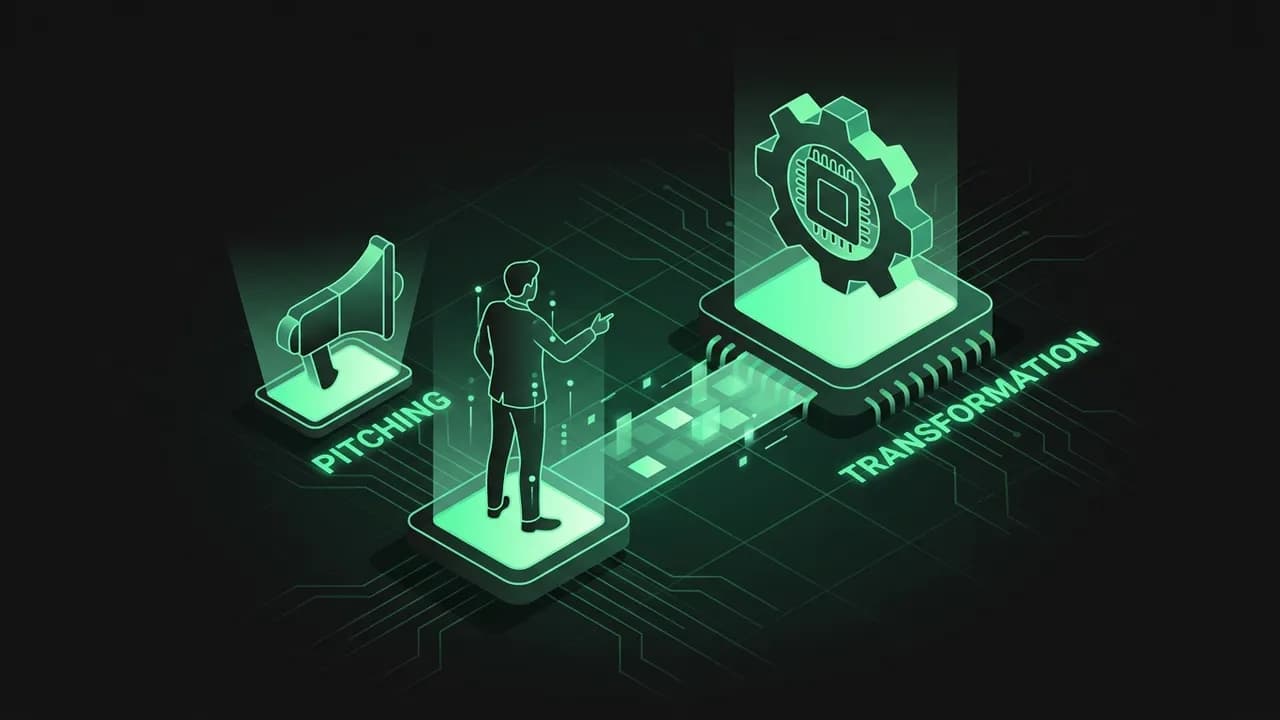
In 2026, nobody wants to be 'Sold' to. They want to be 'Consulted.'
The GAP Analysis Method
Stop talking about your features. Use the GAP Analysis to find the 'Transformation' they are looking for.
The Current State: Where are they now? "We are losing 20% of leads because our CRM is manual."
The Future State: Where do they want to be? "We want to automate lead follow-up and increase conversion by 10%."
The GAP: The distance between the two. Your product is the Bridge across that gap.
Tactic: During the discovery call, ask: "If you don't solve this problem in the next 6 months, what is the cost to your business?" Let them calculate the ROI for you. If they say "It will cost us $100k," your $10k software just became a 90% discount.
#### Founder-Led Scripts
Use a simple agenda: context, observed problem, ROI story, collaborative roadmap. Record every call and build a library of objection clips for training.
Mutual Action Plans
Co-build a doc outlining stakeholder list, milestones, decision date, and success criteria. Shared accountability shortens cycles and reduces ghosting.
Execution: The Perfect Discovery Call Script
A discovery call isn't a demo. It's an interview where you decide if they are a fit for you.
0-5 mins: Rapport & Agenda. "I've researched your company and saw [Observation]. Today, my goal is to see if we can help you with [Goal]. Is that fair?"
5-20 mins: Diagnosis. Use the BANT framework (Topic 121) but focus on 'Pain.' Ask open-ended questions. Listen 80% of the time. "Tell me more about how that affects your daily workflow?"
20-25 mins: The Bridge. Show them 3 specific features that solve the specific pain points they just mentioned. Ignore everything else. Don't show the whole product; show the Solution.
25-30 mins: The 'Yes or No' Close. Never end a call with "I'll send you an email." End with a concrete next step. "Based on what you've said, we are a perfect fit. Would you like to start a 14-day assisted pilot, or should we talk again in 6 months when the problem is bigger?"
Deal Desk Basics
Even pre-Series A, define guardrails: discount limits, contract terms, and approval flows. Structure prevents desperate discounts that wreck margins.
Case Study and Pitfalls: Scaling Sales
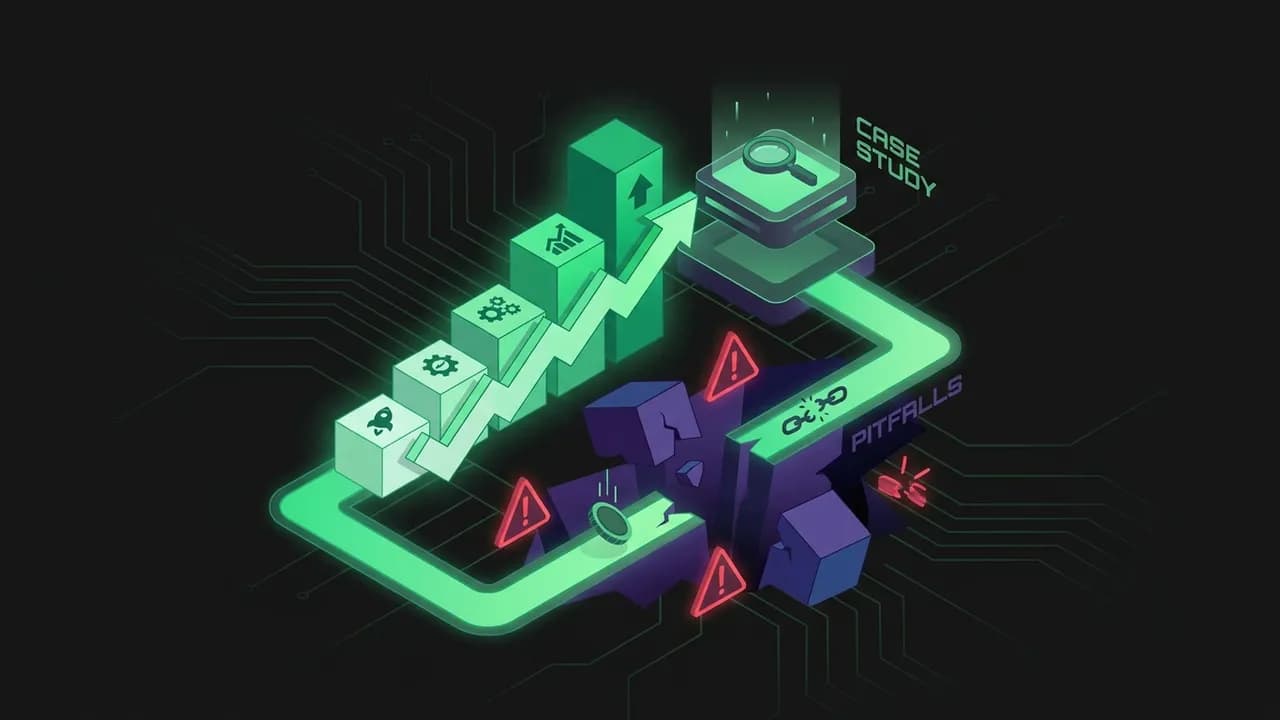
Case Study: How 'Salesforce' Displaced the Giants
In the early days, Marc Benioff didn't just run ads. He and his team went into companies and personally convinced VPs that 'Software is Dead' and the Cloud was the future. They used direct sales to build 'Early Adopter' case studies. They focused on one industry at a time, winning one major player and then using that trust to win the rest of the niche. They proved that even a 'Cloud' tool needs human relationships to win the enterprise.
The 'Sales Death' Pitfalls
The 'Feature Dump' Mistake: Talking about your 50 features when the customer only cares about 1. Every extra feature you mention is more complexity for the buyer. Kill the extras.
No 'Assisted' Onboarding: Closing a deal and then leaving the customer to figure out the software. High-ticket sales require high-touch onboarding. If they don't get value in the first 7 days, they will churn, and your CAC will be wasted.
Scaling Too Early: Hiring 5 salespeople before the founder has closed the first 10 deals. You cannot delegate sales until you have a repeatable script. The founder is the 'Chief Sales Officer' until you hit $1M ARR.
The 'Sales Sprint' Challenge: Identify 5 prospects who have 'Bleeding Neck' problems. Call them today. Do not pitch; just ask: "I saw you are struggling with [Problem], how are you currently handling that?" Track how many discovery calls you can book.
Forecast Hygiene
Use CRM stages with exit criteria. Weekly pipeline reviews must answer: What changed? What did we learn? What slipped and why? Keep accuracy >80% to earn finance trust.
Real-World Examples: Direct Sales to the Rescue
Example 1: Atlassian's Enterprise Pivot
Despite PLG roots, Atlassian added a sales team when enterprise buyers demanded security reviews and procurement help.
Example 2: Webflow Strategic Accounts
Founders joined CIO calls with solutions engineers to handle risk concerns during Fortune 100 deals.
Example 3: Retool Roadshows
Retool's CEO traveled to customer HQs with a live product build tailored to their stack.
Example 4: Hex Value Engineers
Data notebook company Hex hired "value engineers" who connect to a prospect's data warehouse during the pilot.
Pricing Architecture
Create guardrail tiers, volume discounts, and multi-year incentives. Publish a decision tree so reps know when they can flex without approvals.
Common Pitfalls: Direct Sales Missteps
Pitfall 1: Hiring Sellers Before Messaging
If founders cannot close, reps cannot either.
Pitfall 2: Ignoring Enablement
New reps without playbooks burn leads.
Pitfall 3: Happy-Ears Forecasting
Counting every "sounds good" as a commit wrecks planning.
Pitfall 4: Discount Addiction
Rushing to discount teaches buyers to wait.
Pitfall 5: Founder Burnout
Handling every late-stage call alone is unsustainable.
Enablement Assets + Training Loop
Core Asset Stack
Training Loop
Tight enablement keeps a small team lethal while you scale headcount responsibly.
Industry-Specific Playbooks
Hyper-specific collateral proves you understand their world better than generic competitors.
Post-Sale Handoff
Hand every closed deal to Customer Success with a victory brief: goals, stakeholders, risks, promised outcomes, and timeline. Schedule a joint kickoff within 48 hours to keep momentum high.
Analytics Stack
Use Gong/Chorus for call intelligence, Scratchpad for pipeline notes, and a shared win-loss board visible to product. Data-driven sales orgs iterate faster.
Case Study Metrics
Startup A added two enterprise reps and value engineer. Within 6 months: ACV +80%, sales cycle down from 120 to 70 days, logo retention 95%. Document metrics to prove headcount ROI.
Prospecting Labs
Run biweekly labs where SDRs/Founders review recorded calls, rewrite cold outreach, and test new ABM packages targeted at 50 dream accounts.
Governance & Alignment
Hold monthly revenue councils with sales, product, marketing, finance to review pipeline health, enablement gaps, and pricing experiments. Alignment prevents finger-pointing when quarters get bumpy.
Executive Sponsor Program
Pair each strategic deal with an executive sponsor who joins quarterly business reviews, removes blockers, and signals commitment to the customer.
SDR-to-AE Handoff
Use recorded Looms to brief AEs on discovery context. Prospects feel continuity instead of repeating themselves.
Customer Advisory Council
Invite top customers to quarterly sessions. They inform roadmap, provide referrals, and become references for new deals.
Compensation Guardrails
Align SDR/AE comp with profitability: accelerators only trigger when deals meet margin thresholds. This keeps reps from discounting away value.
Multi-Thread Playbook
Mandate a minimum of three stakeholders per opportunity: economic buyer, technical validator, daily user champion. Map each one’s priorities and tailor messaging accordingly.
Pilot Success Framework
For pilots, define success metrics, instrumentation, executive update schedule, and expansion triggers before kickoff. Pilots without definitions become infinite POCs with no revenue.
Reference Flywheel
After go-live, film 2-minute testimonial clips and capture quote approvals. Build a searchable reference library so reps can match prospects with similar customer stories fast.
Territory Design
Use TAM analysis to carve territories by industry or tier instead of pure geography. Balanced territories keep morale high and ensure coverage on your most valuable accounts.
ABM Pods
Create mini pods (SDR + AE + marketer) focused on top 50 accounts. Pods run custom microsites, direct mail, and executive events to break into whales faster.
Data Hygiene Drumbeat
Make pipeline hygiene a daily habit: next steps logged, MEDDICC fields filled, close dates realistic. Clean data is the cheapest revenue operation you can run.
Leadership Dashboards
Give leadership a real-time dashboard with pipeline coverage, win rates by segment, discounting trends, and product gaps cited in deals. Visibility earns patience when building the motion.
Enablement Sprint
Every quarter run a 2-week enablement sprint: refresh battlecards, capture new customer stories, retrain demos, and ensure AE + PM alignment on roadmap narratives.
International Expansion Notes
Before hiring overseas reps, localize contracts, integrate tax/compliance counsel, and adapt messaging to regional regulations. Pilot with one partner reseller before opening a full office.
Quote-to-Cash Checklist
Align CPQ, billing, and legal tools so quotes, MSAs, and invoices flow automatically. Many early sales orgs die from paperwork friction rather than lack of demand.
Voice of Customer Loop
After every closed-won/lost, capture "why now/why not" and funnel insights to product/marketing weekly. Sales becomes the sharpest customer research engine.
Executive Scorecard
Share a single slide weekly: pipeline coverage, forecast confidence, top risks, and asks from product or marketing. Clear communication earns resources when scaling headcount.
Customer Stories Database
Tag every testimonial by industry, persona, and problem solved. Make it searchable so reps pull the perfect proof mid-call.
Deal Desk Office Hours
Run twice-weekly office hours where legal, finance, and product join live to approve edge-case contracts on the spot. Faster answers mean faster closes.
Forecast Retro
After each quarter, compare actuals vs forecast, document misses, and update playbooks. Institutionalizing forecasting lessons prevents repeated mistakes.
Founders as Super-Closers
Even after hiring AEs, keep founders in the loop for late-stage enterprise deals. A founder call to align vision often accelerates procurement and keeps whales feeling valued.
Comp Team Retro
Quarterly retro with finance to ensure comp plans reward profitable behavior, not just bookings. Adjust accelerators when gross margin or churn flags appear.
Enterprise Security Pack
Prepare a standard security questionnaire pack (SOC 2, pen test, architecture diagrams) so reps never wait on documents mid-procurement. Frictionless security reviews mean faster signatures.
Cultural Integration
When hiring seasoned sales reps into product-led teams, run onboarding on product philosophy, experimentation cadence, and async habits. Cultural alignment prevents org whiplash.
Partner Channel Integration
Document how direct reps coordinate with channel/partner teams. Shared rules on lead routing and commission splits prevent channel conflict and preserve customer experience.
Executive QBR Formula
Hold quarterly business reviews with customers showing ROI dashboards, roadmap previews, and joint planning. QBRs reduce churn and create natural upsell hooks.
Ethical Sales Guardrails
Ban pressure tactics like false scarcity or hiding fees. Publish an internal ethics charter so every rep knows long-term trust outranks short-term quota.
Customer Health Dashboard
Give reps real-time visibility into product usage, support tickets, and NPS so they can proactively intervene before renewal risk escalates.
SLA with Marketing
Sign a shared SLA covering MQL definition, handoff time, feedback loops, and ICP drift review. When Marketing + Sales operate off the same contract, pipeline quality stabilizes.
Founder Listening Tour
Every quarter, founders should shadow five enterprise calls to catch messaging drift and surface new objections. The recordings become product backlog gold.
Key Takeaways
Founders should personally sell early customers — it's the fastest way to learn why people buy.
Use direct sales for complex or high-ticket products; reserve self-serve for low-price, high-volume ones.
Lead with questions about the customer's problem before you ever pitch your solution.
Log every conversation and objection so you can turn patterns into a repeatable sales playbook.
Don't hire salespeople until you've personally proven a motion they can actually copy.
Frequently Asked Questions
What is direct sales?
When should a startup do direct sales instead of self-serve?
How do you do founder-led sales?
What are direct sales examples?
What are common direct sales mistakes?
Your Turn: The Action Step
Discovery Call Script & Deal Qualifier
Decide if your deal is complex enough to warrant high-touch sales, then build a repeatable discovery-call script and a qualification scorecard you can use on every prospect this week.
Score the complexity slider
Rate deal value, stakeholders, customisation, trust needed. High = pick up the phone; low = self-serve.
| Factor | Low (1) → High (5) |
|---|---|
Write situation questions
Open by understanding how they do it today — before you say a word about your product.
Write problem & impact questions
Surface the pain, then quantify what it costs them in ₹/time. The number sells, not you.
| Problem question | Impact/cost question |
|---|---|
Script the transition to next step
How you move from diagnosis to a committed next action (demo, pilot, proposal).
Build the qualification scorecard
The bar a deal must clear to get more of your time (budget, authority, need, timeline).
| Criterion | Pass? (Y/N) | Notes |
|---|---|---|
Before you close this
0/5 doneYour answers are saved in this browser only. Use “Download as PDF” to keep a copy.
You Don’t Have a Sales Problem, You Have a CRM Problem
Ready to apply this?
Stop guessing. Use the Litmus platform to validate your specific segment with real data.
Close Your First Deal