Newsletter Growth: From 0 to 10k Subscribers
Social media is a 'Rented Land.' An email list is the only asset you truly own. This 3,000-word guide breaks down the architecture of a 10k-subscriber newsletter and the 'Lead Magnet' strategy that makes growth automatic.
Why Email Lists Still Beat Algorithms in 2026
Every platform says, "build your audience here." But in 2026, founders have seen the downside of rented attention: algorithm changes, throttled reach, rising ad costs, and account risk. A newsletter matters because it is one of the few owned distribution channels you actually control.
Recent email benchmark data still supports the channel. Well-run startup newsletters often generate 20-40% open rates, and high-intent niche newsletters outperform broader social audiences on conversions because the reader has opted in to hear from you repeatedly. Unlike a one-time paid click, the same subscriber can convert months later through repeated exposure, education, and trust.
The bigger opportunity is strategic, not tactical. Your newsletter is not just an announcement feed—it is a compounding asset that fuels launches, partnerships, product education, customer retention, and founder brand. The common mistake is chasing vanity subscriber counts instead of building a list that actually buys, replies, and forwards.
The goal is not merely 10,000 subscribers. The goal is 10,000 relevant subscribers who become users, customers, ambassadors, or future hires.
Strategy Framework: The Value Loop Newsletter Model
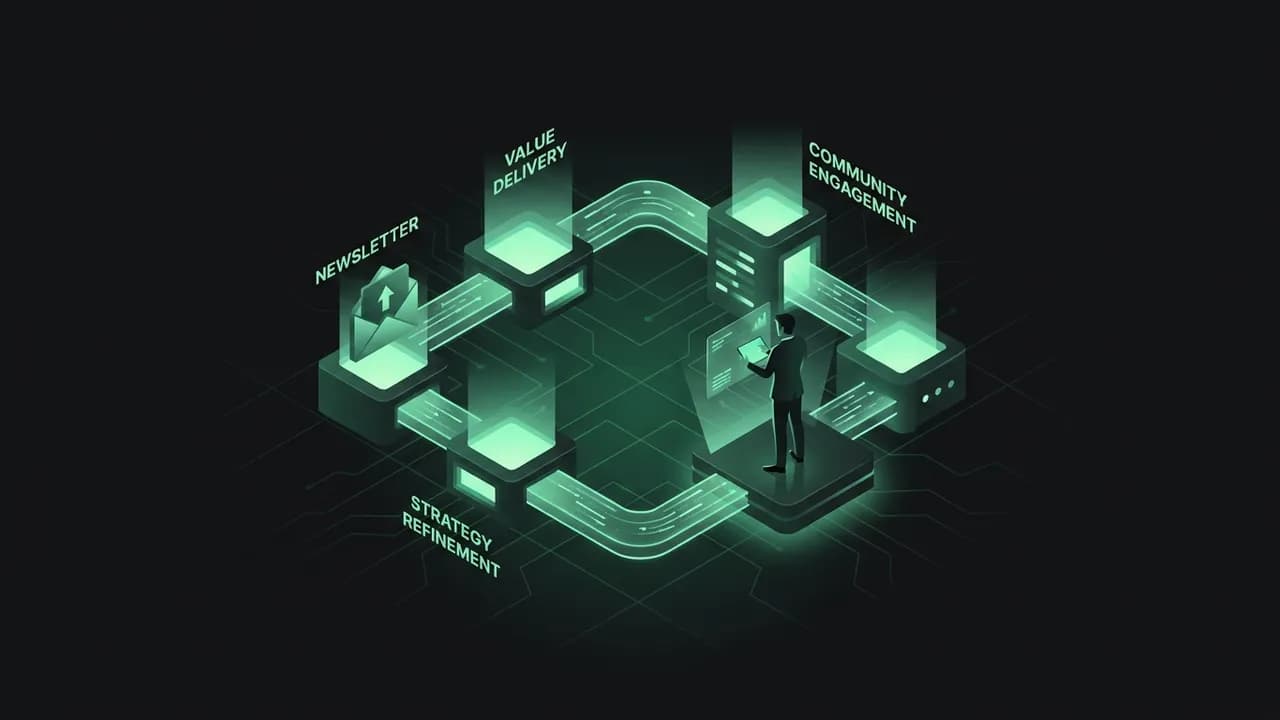
A startup newsletter grows fastest when it runs on a three-part loop:
Acquire
Bring in subscribers through lead magnets, content distribution, partnerships, product touchpoints, and social media.
Deliver Value
Send content worth opening: insights, data, tactical frameworks, curated tools, founder lessons, or customer stories.
Compound
Turn readers into amplifiers through forwards, referrals, social sharing, and internal linking to deeper assets.
The Four Newsletter Archetypes
#### 1. Founder Insight Letter
Best for founder-led brands and B2B trust-building.
#### 2. Curated Industry Briefing
Best for markets where people want filtered signal.
#### 3. Tactical Playbook Newsletter
Best for products with educational onboarding.
#### 4. Community / Ecosystem Letter
Best for marketplaces, creator products, and partner-led growth.
The highest-performing startup newsletters usually blend 2-3 of these while keeping one core identity.
Growth Engine: How to Reach the First 10,000 Subscribers
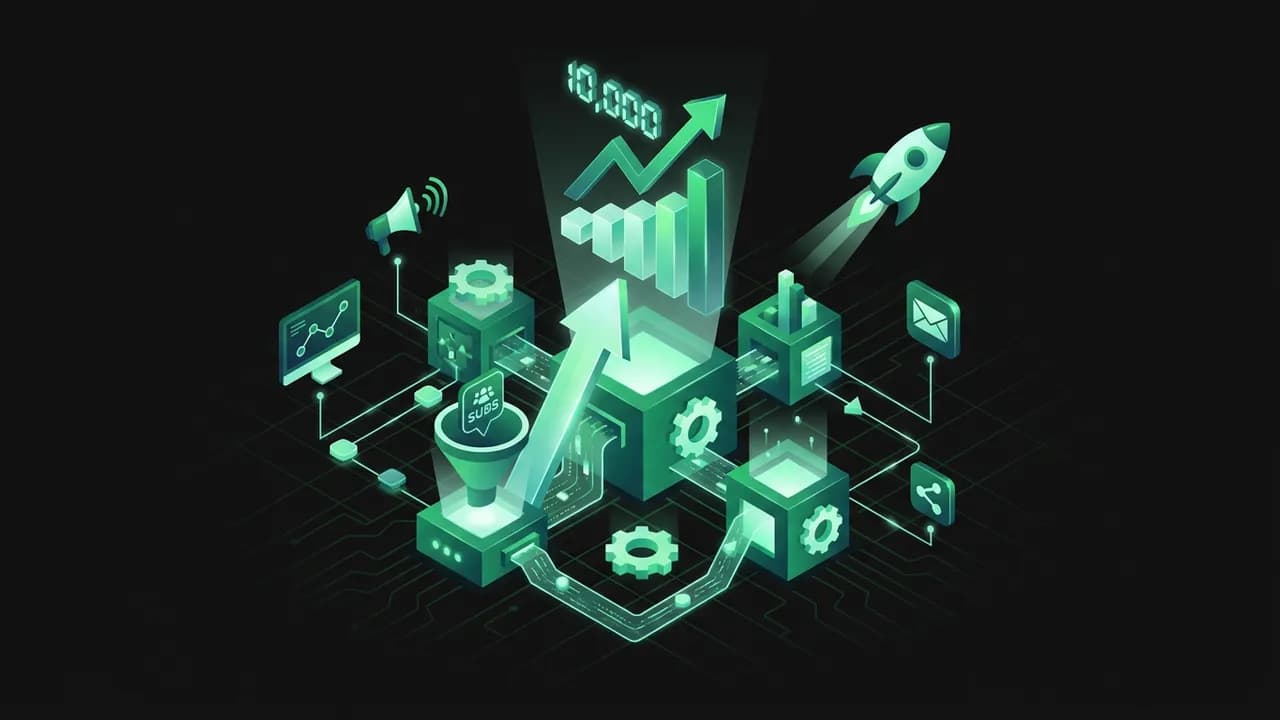
Newsletter growth becomes easier once you stop depending on a single source.
1. Lead Magnet Acquisition
Offer one highly relevant asset:
If the lead magnet solves an immediate pain, conversion rates jump.
2. Product-Led List Growth
Use your product as a subscription surface:
3. Cross-Promotions
Newsletter swaps with adjacent operators are still one of the most efficient growth tactics.
4. Social-to-Newsletter Funnel
Publish strong ideas on LinkedIn, X, TikTok, YouTube, or Reddit, but move readers into email.
5. Referral Loops
A referral system turns the audience into the growth engine.
6. SEO + Newsletter Pairing
Publish evergreen articles that naturally invite newsletter signups. Search traffic becomes list growth, while newsletter content becomes future article ideas.
A healthy 10,000-subscriber path usually combines 3-5 of these methods, not one.
How to Write a Newsletter People Actually Open
The quality of the newsletter determines whether growth compounds or decays.
Subject Line Principles
Issue Structure
A strong issue usually has:
Editorial Rules
Cadence
Weekly is the default sweet spot for most startups.
Daily newsletters can work if curation is the product. Monthly newsletters often disappear from memory.
The Ratio Rule
A simple rule for startup newsletters:
That ratio keeps trust intact while still driving business outcomes.
Real-World Examples: Newsletters That Became Growth Engines
Example 1: Morning Brew
Morning Brew turned a straightforward business newsletter into a massive media brand by optimizing for referral loops, voice, and habit.
Example 2: Lenny's Newsletter
Built around tactical value for product and growth professionals.
Example 3: The Hustle
Used witty voice, strong hooks, and referral growth to build large-scale distribution.
Example 4: Founder-led SaaS letters
Many SaaS founders in 2024-2026 built strong pipeline through weekly lessons, case studies, and teardown emails.
Example 5: Niche operator newsletters
HR, RevOps, ecom, and creator-economy newsletters often grow through community relevance and partnership swaps rather than ad spend.
Common Pitfalls & How to Avoid Them
Pitfall 1: Chasing list size instead of relevance
A bloated list with low intent hurts open rates and monetization.
Pitfall 2: Inconsistent cadence
Readers forget you quickly.
Pitfall 3: Over-selling
If every issue is a disguised pitch, trust collapses.
Pitfall 4: Weak onboarding
New subscribers often receive no orientation and never build habit.
Pitfall 5: No segmentation
Different readers want different value.
Pitfall 6: Ignoring replies and forwards
Replies are one of the strongest quality signals.
Newsletter Operations: Metrics, Tooling, and Segmentation
Run your newsletter like a product.
Core Metrics
Tooling Stack
Segmentation Ideas
Segmentation lets you write better CTAs, better onboarding sequences, and more relevant newsletters without creating chaos.
Actionable Conclusion: Build a List That Compounds
The newsletter channel wins because it compounds trust. Unlike ads, one good issue can be read, forwarded, revisited, and turned into future content.
Your Next 5 Steps
Choose one newsletter identity: founder insight, curation, tactical playbook, or ecosystem/community.
Build one strong lead magnet tied to your ICP's immediate pain.
Set a weekly publishing cadence and commit for 12 weeks.
Add a welcome sequence that showcases your best ideas and introduces one clear CTA.
Track open, click, reply, and conversion metrics—not just subscriber count.
SEO / Optimization Notes
Make sure this guide naturally includes keywords like newsletter growth, email newsletter strategy, startup email marketing, and newsletter referrals. Keep the meta description focused on growing from 0 to 10,000 engaged subscribers, not just sending more emails. Link internally to launch strategy, partnership marketing, content marketing, and retargeting guides so the article sits inside a coherent growth cluster.
A small list of the right people can outperform a huge audience of the wrong ones. Build the habit, protect the trust, and let the list compound.
The Welcome Sequence: Where List Quality Is Won or Lost
Most founders spend all their energy on signup forms and almost none on what happens after the opt-in. That is backwards. The first 3-5 emails after signup determine whether the subscriber becomes a habit-driven reader or just another cold address in your database.
A strong welcome sequence should do four things:
Simple 5-Email Welcome Sequence
Welcome + Promise
Re-state what they will get and when.
Best-of Issue
Send your most valuable archive piece.
Founder / Brand Story
Explain why this newsletter exists and who it is for.
Social Proof + Utility
Share a result, case study, or reader win.
Primary CTA
Invite them to your product, community, webinar, or toolkit.
This sequence improves opens, clicks, and downstream conversion because the subscriber is taught how to engage, rather than left to guess.
Referral Loops, Swaps, and Compounding Distribution
Once the content quality is reliable, growth can start compounding.
Referral Programs
Readers refer best when the reward fits the identity of the audience:
Newsletter Swaps
Swaps still work in 2026 when they are tightly targeted. A 15,000-person niche letter can outperform a 300,000-person broad newsletter if audience overlap is strong.
Asset Recycling
Each issue can become:
This matters because newsletter growth is rarely about email alone. It is about turning one good idea into multiple discovery surfaces that all route back to owned distribution.
Advanced Examples: Why Some Newsletters Monetize Better Than Others
Example 6: SaaS operator newsletters
Many operator-led newsletters monetize well because they attract high-intent B2B readers who later buy software, advisory help, or events.
Example 7: Creator economy newsletters
These often grow through swaps, ecosystem mentions, and community referrals instead of direct ads.
Example 8: Product newsletters with embedded education
Some companies make the newsletter part of onboarding itself. Users receive tactical tips that make the product easier to adopt.
Editorial System: How to Stay Consistent for 6 Months
The real moat of a newsletter is consistency. A simple editorial system prevents burnout.
Use one running backlog with:
Then build each issue from a lightweight template:
Consistency is not about writing more. It is about reducing the friction to publish quality on schedule.
Benchmarks and Diagnostics for 2026
Healthy newsletter programs use benchmarks as directional signals, not ego boosters.
Useful Benchmarks
Diagnostic Questions
These questions matter because list growth without list quality produces misleading wins. A smaller but healthier list is almost always more valuable.
Closing Playbook: Turn Subscribers into Customers Without Burning Trust
The right way to monetize a startup newsletter is to create continuity between the email value and the paid offer.
If your newsletter teaches operators how to improve onboarding, then your CTA should naturally point to a product, template, webinar, or consulting offer that deepens that result. Forced sales angles underperform because they feel disconnected from the editorial promise.
Practical CTA Options
The strongest newsletters do not "switch tone" when monetizing. They continue the same helpful voice and simply invite the next step.
Key Takeaways
Grow in stages: network to 100, one channel to 1k, referrals and swaps to 5k, paid and partnerships to 10k.
Master a single acquisition channel before adding a second — focus beats spreading thin.
Track clicks and replies, not just opens, since privacy features inflate open rates.
Never buy lists; they wreck deliverability and hide a non-engaged audience behind a big number.
Put a one-line value promise on your signup page so visitors instantly know why to subscribe.
Frequently Asked Questions
What is newsletter marketing?
How do you grow a newsletter from 0 to 10k subscribers?
What is a good newsletter open rate?
What newsletter platform should I use?
What are common newsletter growth mistakes?
How do you get your first 100 newsletter subscribers?
Your Turn: The Action Step
Newsletter Growth Engine & Welcome Sequence
Define your newsletter's value loop, build the subscriber-acquisition engine (lead magnet + capture points + swaps), and write the welcome sequence that turns sign-ups into openers — with a path to your first 10k.
Write the one promise
What every single issue reliably delivers, in one sentence. Specific topic + cadence + payoff.
Build the acquisition engine
Lead magnet + the channels and capture points that feed signups.
| Channel/capture point | Est. signups/mo |
|---|---|
Line up swaps & referral loop
Cross-recommendations with similar-size newsletters + a 'refer a friend' reward.
| Partner newsletter / referral tier | Their size / reward | Status |
|---|---|---|
Write the welcome sequence
The first 3 emails that turn a signup into a habitual opener.
| Day | Goal | One-line content | |
|---|---|---|---|
Map the 0→10k path
Allocate where the 10,000 will come from. Make the channels add up.
| Channel | Target subscribers |
|---|---|
Set the health metrics
Protect engagement, not vanity count. Open rate, reply rate, unsubscribe rate.
| Metric | Target |
|---|---|
Before you close this
0/5 doneYour answers are saved in this browser only. Use “Download as PDF” to keep a copy.
Cold Email Spam Mein Kyun Jaati Hai
Ready to apply this?
Stop guessing. Use the Litmus platform to validate your specific segment with real data.
Grow Your List