The First 1000 Users: Manual Hacking vs. Scalable Channels
Scaling too fast is the leading cause of startup failure. This 3,000-word deep-dive explains why your first 1,000 users must be recruited through manual, unscalable 'hacking' before you ever touch a scalable channel.
The 'Do Things That Don't Scale' Manifesto
In the early days of a startup, ROI isn't measured in dollars; it's measured in "Insight Density." Scalable channels (like SEO or massive Ad spends) are dangerous early on because they hide product flaws behind a wall of anonymous data. If 1,000 people visit your site and 990 leave, a scalable channel tells you that you have a 1% conversion rate. A manual channel allows you to ask the 990 why they left.
The Feedback Loop Paradox
The faster you grow, the slower you learn. When you recruit users manually, you are forced to sit in the room (or on the Zoom) with them. You see the look on their face when they hit a confusing button. You hear the hesitation in their voice when they see the pricing. This "Qualitative Data" is the fuel that allows you to pivot Topic 1 (Customer Segment) until you find the mythical Product-Market Fit. Don't automate a broken process; manually fix the process until it's worth automating.
Why Manual Hacking is a Competitive Moat
Big companies cannot do things that don't scale. Google can't send a handwritten note to every new user. Because you are small, you can provide a level of "Concierge Service" that makes your product feel 10x more valuable than a superior technical solution. People don't buy products early on; they buy the founders' vision and the feeling of being an 'insider'. This loyalty is your first line of defense against incumbents.
The Insider Effect\nGive early users backstage access—feature them in release notes, invite them to roadmap streams, send swag. Humans fight for status; make “founding member” a badge they brag about.
Hand-to-Hand Combat Tactics
Manual hacking is about finding where your users hang out in high concentration and siphoning them one-by-one into your ecosystem. It's unglamorous, exhausting, and highly effective.
#### The 'Forum Infiltration' Strategy
Identify the top 10 subreddits, Discord servers, or Slack communities where your target audience resides.
#### The 'Platform Siphoning' Hack
Identify a large, legacy platform where your users already live. Craigslist was the platform for Airbnb. eBay was the platform for PayPal.
#### The 'Warm DM' Outreach Strategy
In 2026, cold DMs on LinkedIn and Twitter/X have become incredibly noisy. The 'Warm DM' strategy cuts through:
Engage publicly first: Comment on 3-5 of their posts over 2 weeks. Add genuine value in your comments.
The connection request: Reference a specific conversation. "Loved your thread on hiring remote engineers — had a follow-up question."
The soft ask: After they accept, don't pitch. Ask for feedback on your product. "We're building X for people like you. Would you have 10 minutes to tell me if this solves a real problem?"
#### The 'Conference Hallway' Tactic
The most valuable conversations at conferences don't happen in sessions — they happen in hallways, coffee lines, and after-parties.
#### The Micro-SaaS Bundle\nPartner with 3 complementary startups targeting the same persona. Bundle features for first 100 customers and co-host onboarding calls. Shared trust accelerates adoption.
The Concierge Onboarding Framework
Phase 1: The 'Founder-Led' Demo
For your first 100 users, you should be the one doing every demo. This isn't just about selling; it's about research.
The Observation: Record the session (with permission). Watch where they move their mouse. If they struggle to find the 'Settings' menu, don't tell them where it is; note it down as a UX failure to be fixed. The silent struggle of a user is the loudest data point you have.
The Iteration: Fix the bugs they found before the next demo. When a user sees their feedback implemented in 24 hours, they become a customer for life.
Phase 2: Building the 'Lighthouse' Community
Your first 100 users shouldn't just be customers; they should be an army of advocates.
Phase 3: The 'Weekly Ship' Ritual
Your first 100 users should feel like co-builders, not customers.
Phase 4: Manual Churn Interviews\nCall every user who leaves. Ask three questions: What were you trying to do? Where did we fail you? What did you choose instead? Publish anonymized summaries for the team weekly.
Case Study & The Scaling Trap
Case Study: How 'Tinder' Won with Manual Hacking
Tinder didn't just launch on the App Store and hope for the best. They went to college campuses, threw parties, and required the Tinder app for entry. They focused on 'Density'—ensuring that if a user opened the app, there were people nearby to match with. They did the unscalable work of physical event management to seed the network effect. They manually solved the 'Chicken and Egg' problem of marketplaces.
The 'Scaling too Early' Warning
Founders often try to switch to 'Scalable Channels' (like Facebook Ads) too early because manual work is hard. They think: "If I can get 10 users manually, I can get 1,000 with ads." This is usually false. Ads scale what is already working. If your manual conversion rate is low, ads will only scale your failure.
The Rule of 100: Do not spend a single dollar on scalable channels until you have 100 users who found you through manual hacking and are actively using the product (not just signed up). If you can't convince 100 people manually, an algorithm won't do it for you.
When to Flip the Switch\nYou’re ready for scalable channels when: (1) 40%+ of users say they’d be “very disappointed” if you disappeared, (2) manual conversion rate >20%, (3) onboarding is self-serve for 80% of new signups. Until then, stay manual.
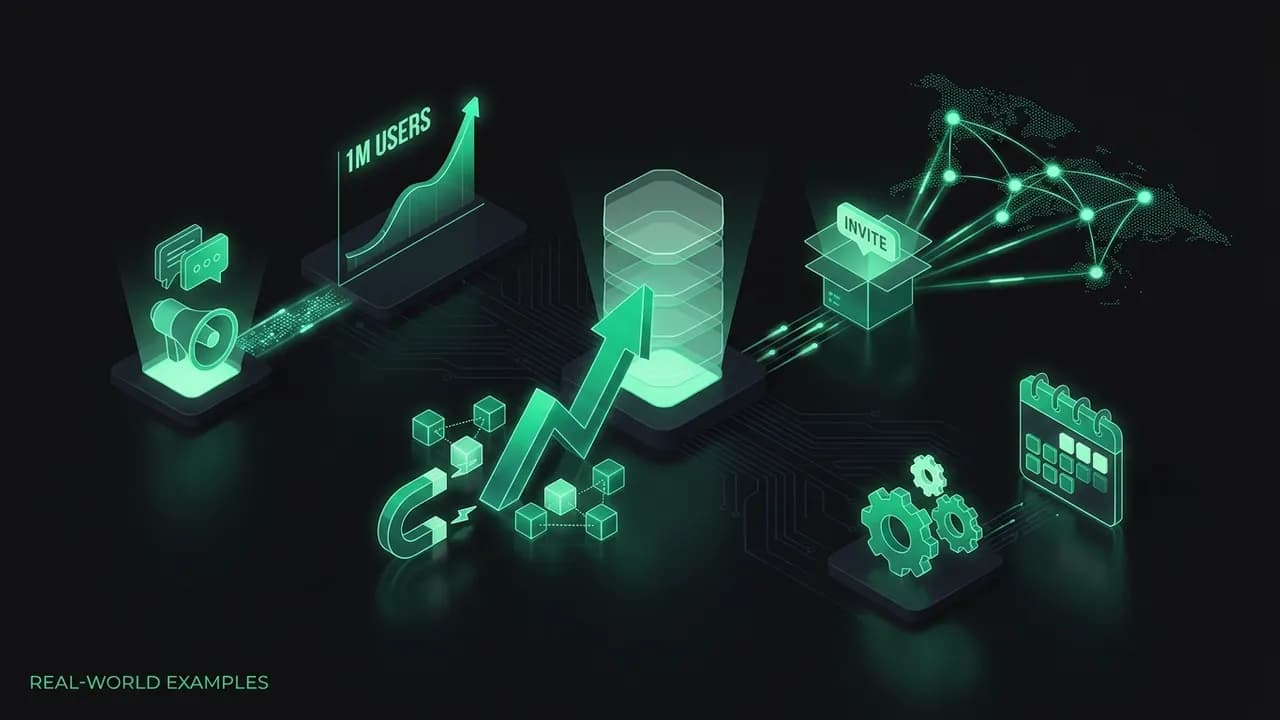
Real-World Examples: How Iconic Startups Got Their First Users
Example 1: Stripe — The Installation Service
Stripe's founders, Patrick and John Collison, didn't wait for developers to find Stripe. They went to Y Combinator events and literally said, "Can I install Stripe for you right now?" They would sit down at the developer's laptop and integrate the API on the spot. This "Collison Install" became legendary. They manually onboarded their first 100 customers one laptop at a time.
Example 2: Airbnb — Professional Photography
Airbnb's early listings looked terrible — dark, blurry photos taken on flip phones. The founders rented a camera and personally visited hosts in New York to take professional photos of their apartments. Listings with professional photos got 2-3x more bookings. This unscalable act of service created the quality standard that defined the platform.
Example 3: Product Hunt — The Curated Invite List
Ryan Hoover didn't launch Product Hunt publicly. He started with a simple email list of 20 influential tech investors and founders. For months, he manually curated daily product recommendations. Only after the list grew organically through word-of-mouth to 170 subscribers did he build the website.
Example 4: DoorDash — The Palo Alto Flyer
DoorDash's founders created a simple landing page called "PaloAltoDelivery.com" and went door-to-door in Palo Alto handing out flyers. When orders came in, they personally drove to restaurants, picked up the food, and delivered it. They did this for months before building any technology.
Common Pitfalls: The First 1000 User Traps
Pitfall 1: Confusing Sign-ups with Users
Having 500 people create accounts means nothing if 480 never log in again. Your first 1000 "users" must be people who actively use the product weekly.
Pitfall 2: Building Features Instead of Talking to Users
When growth stalls at 50 users, the instinct is to "add more features." The real problem is almost always messaging, positioning, or targeting — not the product.
Pitfall 3: Outsourcing Growth Too Early
Hiring a "growth marketer" or an agency before you have 100 manually acquired users is a waste. They don't know your customer as well as you do, and they'll default to scalable channels that you aren't ready for.
Pitfall 4: The "Launch and Pray" Strategy
Posting on Product Hunt, tweeting "we launched!", and waiting for users to appear. A launch is one day; growth is 1,000 days.
Pitfall 5: Scaling What Doesn't Work
"If 10 cold emails got 1 response, then 10,000 cold emails will get 1,000 responses." Manual tactics don't scale linearly. You can't blast your way to product-market fit.
Manual Motion Metrics
Track: conversations/week, invites sent, onboarding calls completed, feedback issues logged, manual-to-paid conversion rate. If numbers drop, founders are hiding behind dashboards instead of talking to customers.
Founder Scorecard
Grade yourself weekly on hours spent with users, product shipped from feedback, community touchpoints, support tickets answered by founders. If any score dips, you're scaling too early.
Founder Therapy Checklist
Weekly retro: What did we learn from users? What painful truth are we ignoring? Who did we help personally? This keeps intuition sharp before scaling.
Field Notes Repository
Log every manual conversation inside a searchable doc: verbatim quotes, pricing pushback, unexpected use cases. Before you run experiments, skim the field notes so you build from reality, not assumptions.
Key Takeaways
Win your first 1,000 users with manual, high-touch effort — not ads or automation.
Embrace 'do things that don't scale': personal outreach and hand-held onboarding teach you who your users really are.
Don't switch to scalable channels until manual tactics produce retained, engaged users.
Study how Airbnb, Stripe, Zerodha, and CRED got their first cohort — all founder-led and manual.
Obsess over retention before growth; scaling a leaky product just burns cash faster.
Frequently Asked Questions
How do you get your first 1000 users?
What does 'do things that don't scale' mean?
When should you switch from manual hacking to scalable channels?
How did real startups get their first users?
What are common first-user mistakes?
Your Turn: The Action Step
First 1000 Users Manual Motion Tracker
Leave with a concrete list of unscalable, hand-to-hand tactics to get your next 100 users — named places, named people, a daily outreach target, and the metric that tells you when to switch to scalable channels.
List the watering holes
Name the EXACT subreddits, Telegram/WhatsApp groups, events, communities where your user already is.
| Place (named) | Online/Offline | Est. # of your users there |
|---|---|---|
Write 3 hand-to-hand tactics
Specific unscalable moves — 'DM everyone who posted X', 'manually scrape and email', 'stand outside Y'.
Design concierge onboarding
What will YOU personally do for each new user that won't scale but creates love?
Set a daily outreach target
A number you can hit every working day. Outreach is a habit, not a campaign.
Track the manual funnel
Log a week so you can see the conversion at each step.
| Week | Outreaches | Replies | Signups | Conv % |
|---|---|---|---|---|
Define the graduation trigger
The signal that says 'this works manually, now build it to scale'.
Before you close this
0/5 doneYour answers are saved in this browser only. Use “Download as PDF” to keep a copy.
Sales Funnel vs Direct Sales: What Actually Works?
Ready to apply this?
Stop guessing. Use the Litmus platform to validate your specific segment with real data.
Track Your Early Growth