API Integrations: Becoming a Platform vs. a Feature
Discover how to transform your product from a standalone tool into a mission-critical platform by mastering the art of strategic API integrations and ecosystem building.

The Problem: The 'Digital Island' Paradox

The Cost of Isolation
Imagine you've built a world-class project management tool. It's fast, beautiful, and intuitive. However, every time a user wants to track time, they have to manually copy data into another app. Every time they close a lead in their CRM, they have to manually create a project in your tool.
Your users are telling you: 'I love your UI, but I'm switching to your competitor because they just work with my existing tech stack.'
The Reality: In the modern software economy, Isolation is Death. No product exists in a vacuum. Your users already have a defined stack of tools they use to run their lives and businesses. If your product doesn't 'talk' to that stack, you aren't providing value; you're creating friction.
An API integration is not just a technical feature; it is a Strategic Moat. Integrations make your product 'Sticky.' Once a user has connected your tool to their billing, communication, and CRM systems, the 'Cost of Switching' (Topic 60) becomes prohibitively high.
Users Buy Workflow Fit, Not Standalone Brilliance
Founders often overestimate the importance of product elegance in isolation and underestimate the importance of workflow fit. A product can be beautiful, fast, and functionally strong, but still lose if it requires users to manually bridge too many gaps around it. Modern buyers expect tools to cooperate.
Integration Friction Feels Like Product Weakness
Users usually do not separate your core product from the surrounding integration pain. If they must constantly export CSVs, reconcile conflicting records, or duplicate data entry, they experience the entire system as broken. In practice, missing integrations often feel like missing product quality.
Stacks Become Habits
Once a team has established a stack, each tool in that stack affects the purchasing power of the others. The more deeply your product is connected to adjacent systems, the more likely it becomes part of an operational habit loop rather than a replaceable application.
Integrations Can Drive Both Retention And Acquisition
Some integrations increase retention because they reduce friction for existing customers. Others create acquisition because they expose the product inside another ecosystem's marketplace or workflow. Great integration strategy serves both goals instead of treating every integration as the same type of project.
The Real Risk Is Becoming A Feature
If your product solves a useful problem but has weak ecosystem connectivity, it becomes easier for a larger platform to absorb your use case and make your standalone value feel narrow. Integration strategy can help you become more platform-like and harder to displace.
What Connected Products Gain
A strong integration strategy can create:
The Shift: To scale, you must move from being a 'Standalone Tool' to being a 'Mission-Critical Platform.'
Key Concepts: The Infrastructure of Connection
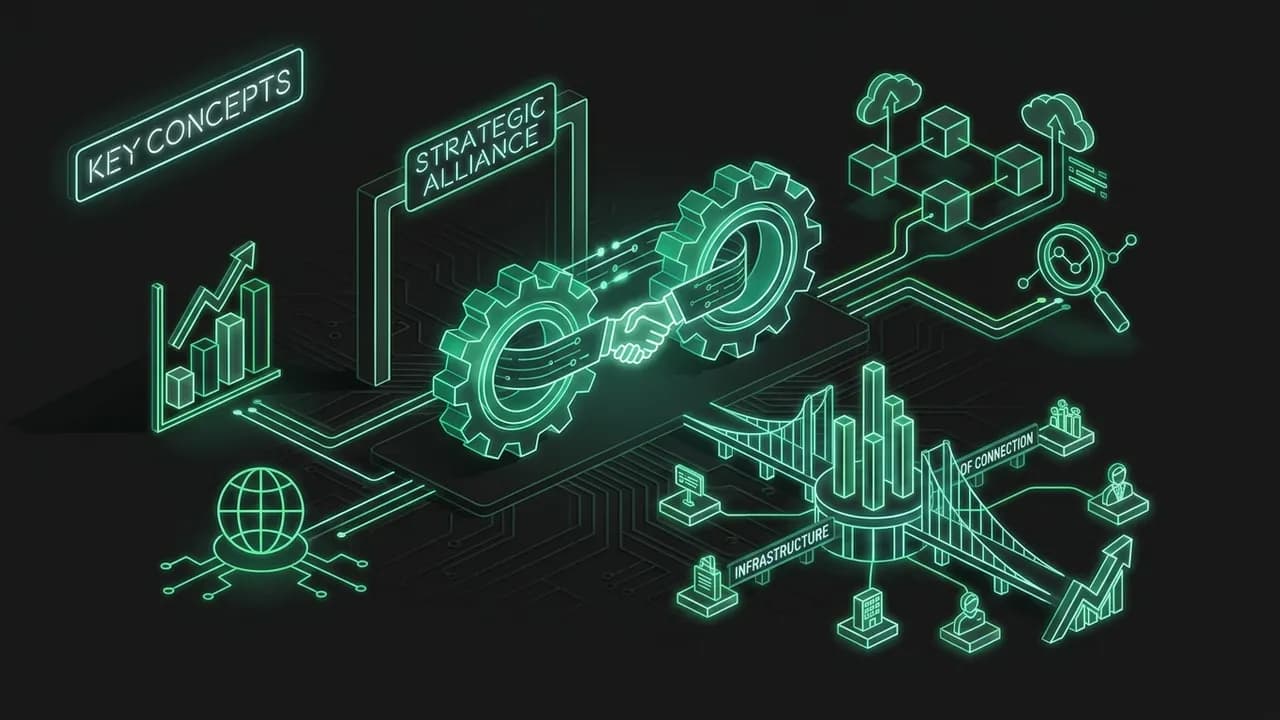
Building an ecosystem requires more than just 'opening an API.' It requires a deliberate strategy to attract both users and developers.
1. The 'Public API' Foundation
A documented set of endpoints that allow external developers or partners to build on top of your data.
2. Webhooks: Real-Time Intelligence
Webhooks allow your system to push data to other tools the moment an event happens (e.g., 'Payment Received'). This enables the 'Zero-Latency' workflows that modern users expect.
3. The App Store Strategy
Getting listed on the official marketplaces of giants like Salesforce, Shopify, Slack, or Microsoft.
4. IPaaS (Integration Platform as a Service)
Using tools like Zapier (Topic 91), Make, or Tray.io. These allow users to build their own custom integrations without you or your engineering team writing a single line of code. It effectively gives you 'Infinite Long-Tail' connectivity.
5. DevX: Developer Experience
The quality of your documentation, SDKs, and sandbox environments. If a developer can't build their first 'Hello World' integration in 15 minutes, they will leave. Bad DevX is the silent killer of platform growth.
Why APIs Need Product Thinking
An API is not just an engineering deliverable. It is a product for developers, partners, and increasingly even sophisticated customers. That means versioning, documentation quality, onboarding flow, support expectations, and success metrics all matter.
Webhooks Reduce Human Latency
Many of the most delightful workflows in software come from systems reacting instantly to events. Webhooks turn integration from periodic synchronization into live operational behavior. That matters because users increasingly expect tools to update in real time rather than overnight.
App Stores Are Distribution Channels
Marketplace listings are not only implementation conveniences. They are discovery surfaces. A strong app directory presence can put your product in front of buyers at the exact moment they are trying to extend their stack. That is unusually high-intent demand.
IPaaS Covers The Long Tail
Most teams cannot natively build every requested integration. IPaaS solutions help cover edge cases, niche workflows, and custom automations without creating endless engineering burden. This allows the company to reserve native builds for high-impact integrations.
DevX Determines Ecosystem Growth
Developer experience shapes whether external builders trust your platform enough to invest time in it. Clear docs, reliable auth, meaningful examples, sandbox access, sane rate limits, and stable endpoints signal seriousness. Poor DevX silently shrinks ecosystem potential.
Security And Permissions Matter Early
Integration growth can create risk if authentication, permission scopes, audit trails, and token management are weak. Founders should treat secure connection architecture as part of trust, not as a compliance afterthought.
The Framework: The 'Integration Ecosystem' Map
Not all integrations are created equal. This framework helps you prioritize your engineering resources based on the type of value delivered.
Tier 1: The 'Daily Driver' (High Frequency)
Tools your users open every single day (e.g., Slack, Email, Calendar, Browser).
Tier 2: The 'Source of Truth' (High Authority)
Tools where the 'Vital Records' live (e.g., Salesforce/CRM, QuickBooks/Accounting, Stripe/Payments).
Tier 3: The 'Expansion' (Market Entry)
Tools that allow you to enter a new vertical (e.g., a Real Estate CRM or a specialized Healthcare app).
Tier 4: The 'Automator' (Low Friction)
Zapier/Make integrations.
Why Prioritization Matters
Integration requests are endless. If the team treats every request equally, it will drown in low-impact work. The ecosystem map exists to ensure that engineering effort follows retention value, authority value, or distribution value rather than pure loudness from a few customers.
Daily Drivers Create Habit Reinforcement
Integrating with tools users already live inside increases frequency of contact with your product's data and actions. This is less about feature completeness and more about habit architecture. If your product shows up where work is already happening, it becomes harder to ignore.
Sources Of Truth Create Dependence
When your application connects with financial records, CRM data, ticketing systems, or compliance-related systems, it becomes embedded in the official memory of the business. That creates stronger switching costs than convenience integrations alone.
Expansion Integrations Open Doors
Some integrations are worth building not because current customers are demanding them, but because they unlock an entirely new market segment. These should be evaluated more like business development bets than pure customer requests.
Automators Preserve Focus
Automation platforms help you say yes strategically without overcommitting engineering resources. They provide flexibility for niche needs while keeping native development reserved for the integrations that materially change retention, authority, or acquisition.
A Simple Prioritization Lens
For each requested integration, ask:
Execution: Building the Connected Moat
Step 1: The 'Native' vs. 'Third-Party' Decision
Don't build everything yourself. Use the 80/20 Rule:
Identify the Top 5 tools your power users use.
Build Premium Native Integrations for those 5 (e.g., a deep Slack integration with custom buttons).
Point everyone else to your Zapier/Make app.
Step 2: The 'Bi-Directional' Sync
Ensure data flows both ways. If a user updates a task in your app, it should update in their CRM instantly. If they update the CRM, your app should reflect that change.
Step 3: The 'Marketplace First' Launch
When you build an integration for a giant like Slack, don't just put it on your 'Settings' page. Get into their official App Directory.
Step 4: Integration-Led Onboarding
Prompt users to connect their most important tool during the first 5 minutes of setup (Topic 47).
Why Native Depth Matters
A native integration should feel like a coherent extension of the product, not a thin connector. That means thoughtful permissions, clear setup, reliable sync, useful actions, and UX that reduces friction in a meaningful way. Thin integrations often create more disappointment than value.
Bi-Directional Sync Builds Trust
One-way flows can be useful, but two-way synchronization often creates the real sense of operational continuity. When users trust that data stays aligned across systems, your tool becomes safer to rely on for important workflows.
Marketplace Launches Need Merchandising
Publishing an integration is not enough. The listing page, keywords, screenshots, problem framing, reviews, onboarding instructions, and partner ecosystem fit all influence performance. Good integrations deserve go-to-market support, not just engineering release notes.
Onboarding Should Reveal Immediate Value
The best moment to encourage a key integration is when the user is trying to understand the product's relevance to their real work. If setup pulls live data or automates a familiar step early, the value feels concrete rather than abstract.
An Integration Operating Checklist
Healthy integration execution often includes:
The Goal Is To Become Hard To Unplug
A connected moat exists when removing your product would force painful workflow changes across multiple systems. That kind of stickiness comes from useful, reliable, high-frequency integration points rather than sheer quantity of connectors.
Case Study: The 'App Directory' Explosion
The Success: The E-commerce Support Tool
A small customer support tool built a native integration for Shopify. By optimizing their listing in the Shopify App Store, they went from 50 customers to 5,000 in 12 months. They didn't spend a dollar on ads; the 'Platform Gravity' of the Shopify ecosystem did the work for them.
Why This Worked
The company did not treat the integration as a side feature. It treated the Shopify ecosystem as a distribution strategy. By solving a real workflow pain inside a trusted platform and merchandising the listing well, it captured intent from users already searching for solutions.
The Pitfalls: Common Integration Errors
The 'Broken API' Failure: Changing your API structure without providing a 6-month 'Deprecation Window.' It breaks your partners' tools and destroys developer trust.
The 'One-Way' Information Trap: Building an integration that only exports data but doesn't allow for imports. It creates 'Stale Data' and frustrates power users.
The 'Security Afterthought': Not requiring OAuth or having poor permission scoping. One security leak through a third-party integration can ruin your brand (Topic 28).
No Usage Stewardship: Launching integrations without monitoring activation, sync health, or ongoing adoption. Fix: treat integrations as products with owners and metrics.
Poor Developer Communication: Shipping breaking changes or weak docs and assuming builders will just adapt. Fix: invest in versioning discipline and partner updates.
What Healthy Integration Strategy Looks Like
Healthy integration strategy is selective, ecosystem-aware, and reliability-focused. The company chooses integration bets that matter, executes them deeply, measures their real impact on retention or acquisition, and maintains them as core parts of the product experience.
Questions Founders Should Ask
The Final Principle
Integrations are not only connectors. They are leverage. The right ecosystem strategy makes your product easier to adopt, harder to leave, and more visible in the places where users already work. That is how a tool begins to feel like a platform.
Key Takeaways
Decide deliberately whether you want to be a platform (others build on you) or a feature (you build on others) — it shapes your whole moat.
Map the tools users open right before and after yours; the highest-leverage integration usually sits at that adjacency.
Build native depth with two-way read/write sync and OAuth security, not shallow export-only connectors.
Use a large ecosystem's app store as a distribution channel — a well-merchandised listing can beat paid ads.
Never ship a breaking API change without a deprecation window; developer trust is your platform's currency.
Frequently Asked Questions
What is an API integration?
What is the difference between being a platform and being a feature?
What are examples of API-led platform growth?
How do you build an API integration strategy?
How does an app store or app directory drive distribution?
What are common API integration mistakes?
Your Turn: The Action Step
Integration Strategy Map
Decide whether you're a platform or a feature, then prioritise the 3 integrations that create the stickiest moat for the least build effort.
List where your customer already lives
Name every tool your customer opens daily that touches your workflow.
Declare platform or feature
Be honest about today vs the goal. One word each.
Score every candidate on the 2x2
Plot each integration: customer-pull (1-5) vs build-cost (1-5). High-pull / low-cost wins.
| Integration | Customer pull (1-5) | Build cost (1-5) | Quadrant |
|---|---|---|---|
Pick the top 3 to build now
Choose the three with highest pull and lowest cost. Name the moat each creates.
| Integration | Why now | Switching-cost it adds |
|---|---|---|
Estimate build effort
Rough engineer-weeks for the top 3 combined. Formula: sum of each integration's estimate.
Write your public 'not now' list
Name the integrations you're explicitly deferring so the team stops getting distracted.
Before you close this
0/5 doneYour answers are saved in this browser only. Use “Download as PDF” to keep a copy.
Startup Founders, Agency Hire Karne Se Pehle Ye Dekho
Ready to apply this?
Stop guessing. Use the Litmus platform to validate your specific segment with real data.
Become a Platform