Competitor Analysis: Keep Your Friends Close, Enemies Closer
Learn how to transform competitive intelligence into a strategic advantage by finding the 'Blue Ocean' gaps your rivals have missed.
The Problem: The 'Tunnel Vision' Trap
The Folly of Ignorance
“We're so focused on our own product that we didn't notice our biggest competitor launched a similar feature last week—and they're offering it for half the price. We're losing customers who tell us: 'I love your UI, but X has the integration I need.'”
Most startups fall into one of two traps: they either obsess over every move their competitors make, losing their own vision in the process, or they ignore them entirely and get blindsided by market shifts. Competitor analysis is not about copying; it is about differentiation (Topic 23).
If you don't know what your competitors are doing, you can't tell your customers why you are better. Your 'enemies' are actually your best teachers—they have already spent millions testing the market, failing at certain features, and succeeding at others.
Why Ignoring Competitors Is Expensive
A startup that avoids competitor analysis often ends up making strategy decisions in a vacuum. It may build features customers do not value, position the product in undifferentiated language, or price itself against the wrong alternatives. The cost is not only surprise. It is wasted effort.
Why Obsession Is Also Dangerous
The opposite mistake is to react to every feature launch, funding announcement, or pricing change in the market. That creates roadmap thrash and strategic insecurity. Great competitor analysis should increase clarity, not panic. Its purpose is to sharpen your own thesis, not replace it.
Competitors Reveal Customer Priorities
Your rivals are constantly generating real-world market data. Their pricing pages, reviews, launch notes, onboarding flows, hiring patterns, messaging, partnerships, and customer complaints all reveal what buyers care about and where current solutions fall short.
The Best Insight Often Comes From Frustration
Customers who compare products explain markets with unusual honesty. They will tell you which features are table stakes, which trade-offs are acceptable, and what annoys them enough to switch. That means competitive intelligence is often a customer research discipline disguised as market watching.
Differentiation Needs Evidence
Every startup claims to be faster, smarter, cheaper, or simpler. Those claims only matter when they are built against a real market baseline. Competitor analysis gives you the reference points needed to explain why your difference is meaningful rather than generic.
What Competitive Intel Should Produce
A strong competitor practice should help the team create:
The Reality: To scale, you must move from 'Fear of Competition' to 'Leveraging Competitive Intel' to carve out your own 'Blue Ocean' where the competition is irrelevant.
Key Concepts: The Anatomy of Intelligence
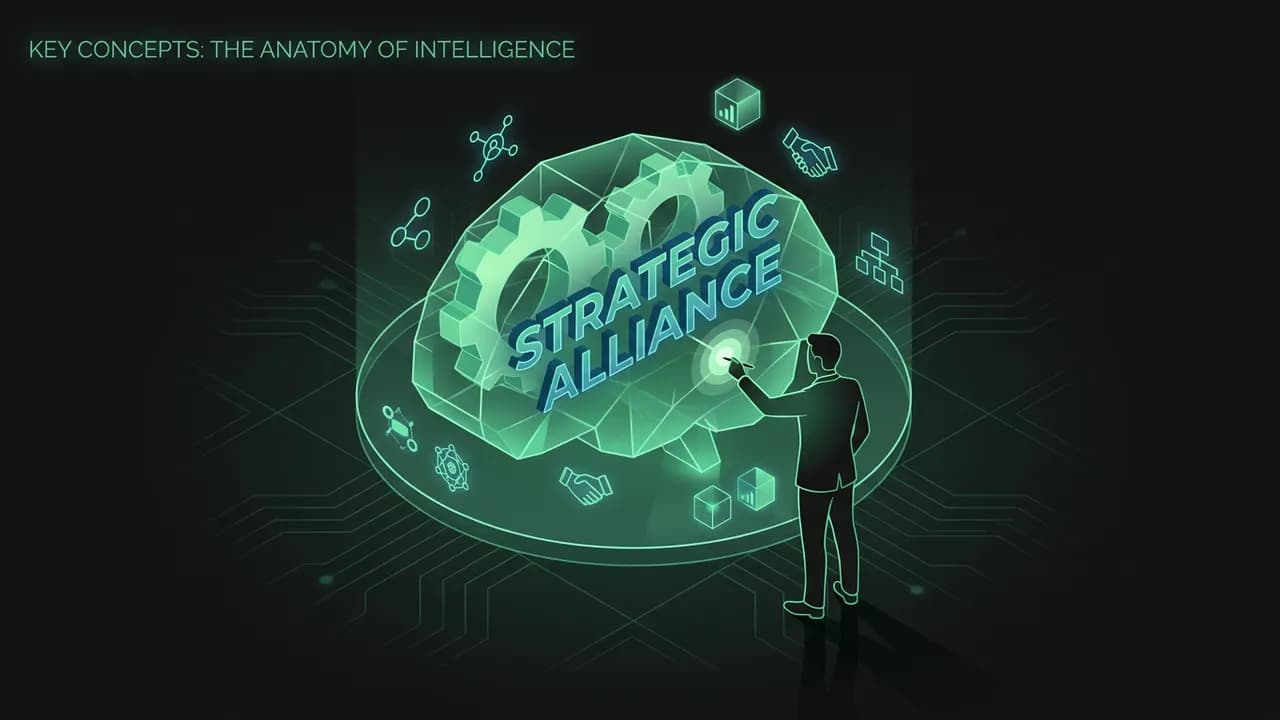
Effective competitive intelligence (CI) is structured, recurring, and actionable.
1. Direct vs. Indirect Competitors
2. Competitive Battlecards
These are one-page internal guides for your sales team (Module 8). They should not just list features; they should provide 'Landmines'—specific questions your sales rep can ask a prospect to highlight a competitor's weakness without being negative.
3. Feature Benchmarking
Don't just look at 'Yes/No' checkboxes. Look at performance. Is their onboarding faster? Is their API latency lower? In the 2025 economy, 'Good Enough' is the enemy of 'Great.'
4. Pricing Intelligence
Track more than just their public 'Pricing Page.' Use 'Street Price' intelligence—what are they actually offering in enterprise bundles or multi-year contracts? (Topic 102)
5. Ghost Shopping
Sign up for your competitor's product using a personal email. Experience their 'Waitlist,' their onboarding flow (Topic 47), and their customer support response time. You will find more product ideas in 30 minutes of ghost shopping than in 30 hours of brainstorming.
Why Direct And Indirect Both Matter
Direct competitors threaten your deals today, but indirect competitors often signal the deeper behavior change shaping the market tomorrow. Teams that only watch direct rivals can miss more important shifts in user habits, distribution models, or expectation resets.
Battlecards Should Be Decision Tools
A useful battlecard helps sales and success teams make better conversations, not just memorize trivia. It should show where you win, where you lose, what kinds of customers fit each product, and which questions expose meaningful differences in workflow, support, or pricing.
Benchmarking Should Reflect Real Usage
Customers rarely compare products only by feature count. They compare time-to-value, reliability, usability, onboarding friction, integrations, and long-term operating effort. Competitive intelligence should evaluate the lived experience, not just marketing claims.
Pricing Intel Goes Beyond Sticker Price
Public pricing is only part of the story. Discounts, implementation fees, required add-ons, seat minimums, contract terms, and renewal practices shape real customer economics. Founders should understand both list price and effective price.
Ghost Shopping Builds Empathy
Running through a competitor's journey helps your team feel what prospects feel. Where do they create trust? Where do they confuse? What do they emphasize early? How quickly do they ask for commitment? Those details often reveal both opportunity and threat.
CI Must Be Repeatable
Competitive intelligence works best when it becomes a recurring system with owners, artifacts, and routines. Otherwise knowledge stays trapped in a few heads and disappears when priorities shift.
The Framework: The 'Blue Ocean' Strategy Canvas

This framework helps you visualize where you stand compared to the 'Red Ocean' of incumbents and find your path to unique value.
Axis 1: Industry Standards
Identify the 5-7 factors that everyone in your niche competes on (e.g., Price, Speed, Number of Integrations, Data Security).
Axis 2: The Value Curve
Plot your top 3 competitors on these factors. You will notice their lines often overlap—this is the 'Red Ocean.'
The Four Actions Framework
To find your 'Blue Ocean,' you must take four actions regarding your value curve:
Eliminate: Which factors that the industry takes for granted should be removed entirely? (e.g., Apple eliminating the physical keyboard on phones).
Reduce: Which factors should be reduced well below the industry standard because they aren't actually valued by your specific niche?
Raise: Which factors should be raised well above the industry standard to create a new benchmark?
Create: What factors should be created that the industry has never offered? (e.g., Airbnb creating 'Trust' between strangers through reviews).
Why The Canvas Works
The strategy canvas is useful because it turns vague feelings into visual contrast. Founders often believe they are differentiated, but when they plot the actual value curve, they discover that their product is still clustering around the same promises as everyone else.
Industry Factors Need Careful Selection
The chosen factors should reflect what customers actually evaluate, not only what vendors talk about. Good factors might include onboarding difficulty, service responsiveness, reporting depth, implementation complexity, collaboration features, compliance strength, or price predictability.
The Red Ocean Is Often Obvious Once Mapped
When you chart multiple competitors, you often see sameness: everyone offering more integrations, more dashboards, more enterprise features, more seats, more complexity. That picture helps the startup decide whether it wants to compete on the same terrain or change the game.
Eliminate And Reduce Require Courage
Most teams find it easier to add than subtract. But subtraction can be the most powerful strategic move. Removing features, complexity, implementation burden, or enterprise-oriented clutter can dramatically improve fit for a neglected customer segment.
Raise And Create Need Customer Insight
You should only raise or create factors that matter deeply to the target customer. Otherwise you are adding cost without differentiation. The best blue-ocean moves come from understanding what customers hate, ignore, or still cannot get from the category.
A Simple Application Method
Use the canvas in workshops by asking:
Execution: Hardwiring the Intelligence
Step 1: The 'Negative Review' Mine
Once a month, go to G2, Capterra, or Reddit and read the 1-star and 2-star reviews of your top 3 competitors.
Step 2: The 'Loss Interview' Ritual
When a high-value lead chooses a competitor over you, don't just close the ticket. Ask for a 5-minute honest chat.
Step 3: The 'Battlecard' Update
Assign one person (or use an AI tool) to track competitor news weekly. Distribute a 'Competitor Flash Report' to your sales and product teams every Monday morning.
Step 4: The 'Differentiation' Script
Train your sales team to never badmouth a competitor. Instead, use 'Contrast.'
Why Review Mining Works
Review sites are one of the rare places where customers describe both expectations and disappointments in their own words. That language is gold for positioning, product prioritization, objection handling, and onboarding improvement.
Loss Interviews Reveal Hidden Gaps
A lost deal often teaches more than a won deal because buyers have compared you directly against alternatives. Their explanation reveals which differences mattered enough to change their decision. That is strategic insight, not just postmortem data.
Weekly Intel Builds Organizational Memory
Competitive awareness should not live only in the founder's head. A regular flash report or meeting rhythm helps product, sales, and leadership teams make decisions from shared facts instead of fragments and rumors.
Contrast Beats Trash-Talking
Prospects trust teams that speak clearly about differences without insecurity. When you acknowledge where a competitor fits well and explain where your product is better suited, your positioning feels more credible and more customer-centric.
A Healthy CI Operating System
A practical intelligence system often includes:
The Goal Is Faster Better Judgment
The purpose of hardwiring intelligence is not to create a research ritual for its own sake. It is to help the team decide faster what to build, how to position, what to say in sales, and where to focus differentiation.
Case Study: The 'Review-Mining' Growth Hack
The Success: The Email Marketing Tool
A newcomer in the crowded email marketing space noticed that the industry leader was receiving thousands of complaints about 'Price Bloat' for small lists.
The Result: The newcomer launched with a 'Free Forever up to 1,000 users' model and explicitly targeted the leader's disgruntled users on Twitter. They grew to $1M ARR in 9 months without a single dollar spent on paid ads.
Why This Worked
The company did not try to out-feature the category leader. Instead, it identified a widely felt frustration, built a simpler commercial promise around it, and positioned itself directly against the pain customers were already articulating. That is the power of evidence-based differentiation.
The Pitfalls: Competitive Traps to Avoid
The 'Feature Parity' Race: If your only goal is to have every feature your competitor has, you are just building a cheaper, late version of them. You become a commodity.
Obsessive Reaction: Changing your roadmap every time a competitor tweets a new idea. Stick to your vision (Module 1) while remaining aware of theirs.
Ignoring Indirect Competitors: Blockbuster ignored Netflix because they weren't 'other video stores.' They were an indirect competitor that solved the 'Convenience' problem better.
Surface-Level Research: Reading only pricing pages and launch posts while ignoring reviews, support complaints, onboarding friction, and sales objections. Fix: study the full customer experience.
No Internal Translation: Gathering insights but never turning them into messaging, roadmap changes, or sales enablement. Fix: assign owners and decision pathways for CI outputs.
What Healthy Competitive Strategy Looks Like
Healthy competitor analysis is disciplined, calm, and useful. The company knows who it is really competing against, watches the market without becoming reactive, and translates outside insight into better positioning and sharper product focus.
Questions Founders Should Ask
The Final Principle
Competitor analysis should not make you more derivative. It should make you more distinct. The best teams study the market deeply enough to stop copying it and start designing a position that competitors cannot easily drag back into the same fight.
Key Takeaways
Use competitor analysis to find uncontested space, not to copy rivals into a feature war.
Mine competitors' one- and two-star reviews — they're pre-validated gaps and ready-made marketing language.
Map the industry on a Blue Ocean strategy canvas to spot where every competitor clusters and where no one plays.
Ship sales battlecards so reps can handle 'why you vs them' objections in real time.
Treat competitive intelligence as a continuous habit, and watch indirect and emerging players, not just direct rivals.
Frequently Asked Questions
What is competitor analysis?
How do you do a competitor analysis?
What is the Blue Ocean Strategy Canvas?
How do you mine negative reviews for competitive insight?
What is a competitive battlecard?
What are examples of competitor analysis driving strategy?
What are common competitor analysis mistakes?
Your Turn: The Action Step
Competitive Positioning Canvas
Map how you and your top 3 competitors score on the factors customers care about, then find the open lane no one is serving.
List the real buying factors
Name the 5-6 things customers actually decide on. Ask 3 customers if unsure.
Score the field
Rate you and your top 3 rivals 1-5 on each factor. Be brutally honest about yourself.
| Buying factor | Us | Rival A | Rival B | Rival C |
|---|---|---|---|---|
Mine the reviews
Read competitor reviews/app-store comments. Note the top 3 complaints they all share.
Find the open lane
Where does every rival score low AND customers care? That's your opening.
Write the one-line wedge
State the single thing you'll be unbeatable at. 'We own ___ for ___.'
Before you close this
0/5 doneYour answers are saved in this browser only. Use “Download as PDF” to keep a copy.
Startup Founders, Agency Hire Karne Se Pehle Ye Dekho
Ready to apply this?
Stop guessing. Use the Litmus platform to validate your specific segment with real data.
Out-Think Your Competition