Ecosystem Plays: Building the Gravity of a Platform
Learn how to transition from a single-player tool to an multi-player platform where network effects drive exponential, low-cost growth.
The Problem: The 'One-Sided' Growth Plateau

The Island Trap
“We have a great product, and our users love it. But lately, growth has slowed down. We're spending more on ads just to stay in the same place. We realized that our product is an 'Island'—it's useful, but it doesn't get more valuable as more people use it.”
Most startups fail because they stay Single-Player tools. If your growth is 1:1 with your ad spend, you are a commodity. The ultimate competitive moat is the Network Effect—where every new participant adds value to all existing participants.
An ecosystem play turns your customers into 'Developers' and your competitors into 'Integrators.' To scale, you must move from 'Capturing Value' to 'Creating a Value Flywheel' through a decentralized platform.
Why Single-Product Success Often Plateaus
A strong product can still hit a ceiling if all value creation depends on the company alone. In that world, every feature, use case, and distribution motion must be funded, prioritized, and built internally. Growth becomes increasingly expensive because the company is carrying the entire burden of innovation itself.
Ecosystems Multiply Builders
The strategic promise of an ecosystem is not only customer stickiness. It is parallel innovation. When partners, developers, integrators, consultants, and adjacent tools build around your product, the pace of market coverage expands beyond what your internal team could ship alone.
Platform Gravity Comes From Dependence
A true platform is not merely a product with integrations. It is a center of gravity that multiple other businesses rely on to reach customers, complete workflows, or generate revenue. Once enough third parties depend on your infrastructure, leaving becomes painful for them and increasingly unlikely for your users.
The Real Shift Is Identity
The company stops asking, 'What features should we build next?' and starts asking, 'What value creation should others be able to build through us?' That identity shift changes architecture, incentives, documentation, partner strategy, and monetization design.
Not Every Product Should Become A Platform
Some founders chase ecosystems too early because platforms sound bigger and more defensible. But ecosystem strategy only works when the core product is already useful enough to attract attention and stable enough to support outside builders. Without that base, the ecosystem becomes theater.
What Ecosystem Strength Can Produce
A strong ecosystem can create:
The Reality: A successful ecosystem creates so much value for its partners that leaving your platform would be 'Business Suicide' for them. You must move from 'Island' to 'Gravity Center.' The moat is no longer just your software. It is the network of businesses, workflows, and habits built around it.
Key Concepts: The Pillars of a Platform
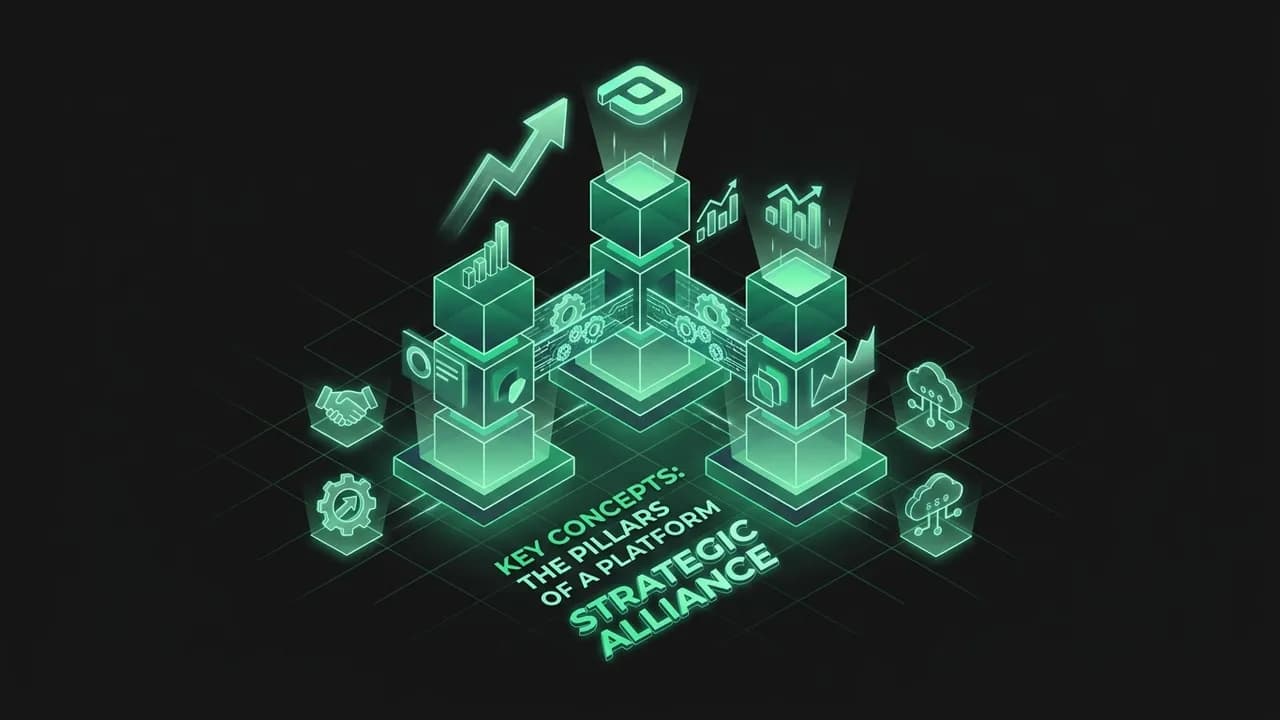
Transitioning to a platform requires a fundamental shift in technical and business architecture.
1. Network Effects (NFX)
2. The API-First Mindset
You cannot build an ecosystem on a closed system. You must design your software so that every internal feature is also accessible to external partners via stable, documented APIs (Topic 107).
3. The Marketplace 'Matchmaker'
In an ecosystem, your role shifts from 'Selling a Product' to 'Orchestrating a Marketplace.' Your primary job is to reduce the friction between supply (apps/vendors) and demand (your customers).
4. Liquidity & 'Magic Moments'
Liquidity is the 'magic moment' when a user finds exactly what they need in your marketplace with zero effort. If a user searches your app store and doesn't find a solution, your platform gravity weakens.
5. Platform Tax vs. Platform Subsidy
In the early days, you must subsidize partners—give them free tools, early access, and even cash to build on your platform. Only once your gravity is undeniable do you introduce a tax (e.g., a 15-30% transaction fee).
Why These Pillars Work Together
An ecosystem fails when one pillar is missing. Great APIs without users do not attract developers. A marketplace without liquidity feels empty. A pricing model that taxes too early kills partner motivation. Platform strategy works when technical access, demand generation, and economic incentives reinforce one another.
Indirect Effects Usually Matter Most
For many software ecosystems, indirect network effects are the real engine. More users attract more partners. More partners increase product utility. Greater utility attracts more users. That loop is often more defensible than direct user-to-user connection alone.
API-First Is A Discipline, Not A Slogan
Many companies say they are API-first while still treating external developers as second-class citizens. Real API-first behavior means version stability, good documentation, testing environments, predictable authentication, clear rate limits, support channels, and respect for developer time.
Matchmaking Is A Product Problem
A marketplace is not successful just because listings exist. Users need discovery, ranking, trust signals, onboarding help, and clear value. If the platform cannot reliably connect the right demand with the right supply, the ecosystem remains shallow.
Subsidies Buy Early Momentum
In the beginning, the platform often has to over-invest in partners. That can mean building flagship integrations internally, co-marketing early partners, waiving fees, or providing technical hands-on help. Subsidy is not waste if it creates the conditions for a durable flywheel later.
The End Goal Is Mutual Dependence
A healthy ecosystem benefits the platform, the partner, and the user simultaneously. If only one side wins, the system eventually destabilizes. The best platforms make all participants feel that the network is materially improving their economics.
The Framework: The 'Ecosystem Flywheel'
Use this 5-step model to spark your platform's self-sustaining growth.
Step 1: The Core Utility: Build a tool that provides massive value as a 'Single-Player' version. People should use it even if it has zero integrations yet.
Step 2: The Integration Hook: Open up your APIs to allow other established tools to 'Talk' to yours. This reduces friction for existing workflows.
Step 3: The Developer Portal: Provide SDKs, Sandboxes, and Docs so independent developers can build on top of your engine.
Step 4: The Distribution Promise: Show partners that building for your platform gives them direct access to your high-intent customer base. This is your 'Lead Generation' carrot.
Step 5: The Value Loop: As more partners build apps, your core utility becomes indispensable. This attracts more users, which in turn attracts more developers. The flywheel spins itself.
Why The Flywheel Matters
Platform strategy is difficult because the system feels empty at first. Users want integrations before developers arrive. Developers want users before they build. The flywheel exists to help founders break that chicken-and-egg problem in a deliberate sequence rather than hoping network effects appear spontaneously.
Core Utility Must Stand Alone
If the base product is weak, no amount of ecosystem strategy will save it. The core utility should already solve a painful problem clearly enough that customers care even before a broad partner network forms. The ecosystem amplifies value; it rarely creates value from nothing.
Integration Hooks Reduce Friction Fast
Early integrations matter because they help the product fit into existing workflows. That practical compatibility often matters more than abstract ecosystem vision. Users need to feel immediate convenience before they care about larger platform narratives.
Developer Experience Is A Growth Lever
A strong developer portal is not documentation vanity. It is the interface through which external builders decide whether your platform is worth their time. Good tooling, sample apps, support, sandbox access, and reliability convert curiosity into real partner output.
Distribution Is The Platform's Main Bargain
Partners build when they believe your platform offers reachable demand. That means the platform must communicate audience quality, use-case relevance, discovery mechanisms, and partner economics clearly. Developers are not only looking for access. They are looking for distribution leverage.
Value Loops Need Measurement
Founders should track whether the ecosystem is actually deepening the moat. Useful signals include partner activation, app usage, attach rates, partner-driven revenue, customer retention lift, and time-to-first-value for ecosystem-enabled workflows.
Execution: From Tool to Stage
Step 1: Community-Led R&D
Stop trying to brainstorm every feature. Watch what your 'Power Users' are hacking together using Zapier or custom scripts.
Step 2: The 'Seeded' Marketplace Launch
Do not launch an empty App Store. It looks like a graveyard. 'Seed' it by building the first 5-10 high-quality integrations yourself or paying partners to build them.
Step 3: The 'Standardization' Play
Create the 'Language' of your industry. If everyone follows your data schema or authentication protocol, you win the ecosystem war.
Step 4: Success-Based Monetization
Don't charge developers a 'Gatekeeper Fee' to be in your store. Charge a 'Transaction Fee' only when they actually make money from your users.
Why Community-Led Signals Matter
Your power users often reveal the ecosystem before you design it formally. The hacks, workarounds, scripts, and integration requests they create show where external value wants to emerge. Good founders treat those signals as product and platform intelligence.
Seeding Prevents Empty-Store Syndrome
Nothing kills developer enthusiasm faster than an ecosystem launch that looks abandoned. Seeding is not fake growth. It is scaffolding. By ensuring a handful of excellent integrations exist at launch, the platform shows users and partners what good participation looks like.
Standards Create Hidden Power
If your schema, auth model, or workflow conventions become common across the category, you gain leverage that goes beyond the product itself. Standards reduce switching, simplify partner adoption, and make your platform the default coordination layer for the market.
Monetization Must Preserve Incentives
Many ecosystems fail because the platform extracts value before it creates enough of it. The best monetization models feel fair because the partner wins first. If the partner succeeds, the platform succeeds. That alignment makes the network more resilient.
An Operating Checklist For Ecosystem Teams
Strong ecosystem execution usually includes:
The Goal Is To Make External Building Obvious
A great platform makes the decision to build feel low-friction and rational. Developers should quickly understand what they can build, why it matters, how they will get distribution, and what success looks like once they launch.
Case Study: The App Store of $1B Businesses
The Success: The E-commerce Enabler
A small e-commerce platform realized they couldn't build every shipping, tax, and marketing plugin themselves. They opened their ecosystem and focused entirely on 'Developer Experience.'
The Result: Today, thousands of independent companies generate millions in revenue just by building for that platform. The platform is now so sticky that switching to a competitor would require a merchant to find 30+ new vendors. The ecosystem is the moat.
Why This Worked
The company understood that its long-term advantage would not come from shipping every feature alone. It built a strong core, invited outside builders in, and made partner success economically attractive. The ecosystem compounded because all three sides benefited: platform, partner, and merchant.
The Pitfalls: Platform Failures
Platform Envy: Launching an app store before your 'Core Utility' is strong enough to attract users. If there are no users, there will be no developers.
API Drifting: Changing your APIs frequently and breaking your partners' apps. This destroys developer trust and kills the ecosystem.
The 'Middleman' Squeeze: Trying to take too high a cut too early. If partners can't be profitable on your platform, they will leave (Topic 109).
Weak Discovery: Building integrations that users cannot easily find or understand. Fix: invest in merchandising, search, onboarding, and proof points.
No Partner Stewardship: Assuming developers will self-organize forever. Fix: provide roadmap clarity, support, and partner communication rhythms.
What Healthy Platform Strategy Looks Like
Healthy platform strategy is patient, selective, and partner-aware. The company builds a genuinely useful core product, opens high-value surfaces first, and makes it easier for good partners to win than for mediocre ones to clutter the ecosystem.
Questions Founders Should Ask
The Final Principle
The goal of ecosystem strategy is not to look like a platform. It is to become a place where others can reliably create value at scale. When that happens, your growth is no longer just what your team can sell and ship. It becomes what an entire network can build around you.
Key Takeaways
Aim to become a 'stage' others build on, not just a 'tool' that competes feature-by-feature.
Network effects — where each new participant makes the product more valuable — are among the most durable moats.
Solve the cold-start problem by seeding one side of the market in a narrow niche before scaling the flywheel.
Leave enough value for partners to capture, or no one will build on your platform.
Earn a loved single-player product first; open the ecosystem only once you have demand partners want access to.
Frequently Asked Questions
What is a platform ecosystem strategy?
What are network effects?
How do you build a platform flywheel?
What is the difference between being a tool and being a platform?
What are examples of ecosystem and network-effect platforms?
What are common ecosystem strategy mistakes?
Your Turn: The Action Step
Ecosystem Flywheel Designer
Design the self-reinforcing flywheel that turns your product into a platform others build on, and identify the one side you must seed first.
Name the two sides
Who supplies value and who consumes it on your platform?
Write the loop
Each arrow: 'More X leads to more Y.' Make the circle close.
| Step | More of ___ | leads to more of ___ |
|---|---|---|
Pick the cold-start side
Which side is harder to attract and must be seeded manually first? How?
Define the incentive for builders
Why would a third party build on you? Revenue share, distribution, or data?
Set the flywheel metric
The one number that proves the loop is spinning faster.
Test for real gravity
Would users switch TO you just for the ecosystem? Answer honestly.
Before you close this
0/5 doneYour answers are saved in this browser only. Use “Download as PDF” to keep a copy.
How To Build Your Startup Advisory Board
Ready to apply this?
Stop guessing. Use the Litmus platform to validate your specific segment with real data.
Become a Category King