Pricing is a Feature: How to Signal Value Through Cost
Founders are terrified of charging high prices. Learn why pricing too low destroys trust, and how a premium price tag is actually your strongest marketing feature.
The Problem: The 'Race to the Bottom' and the Fear of Rejection
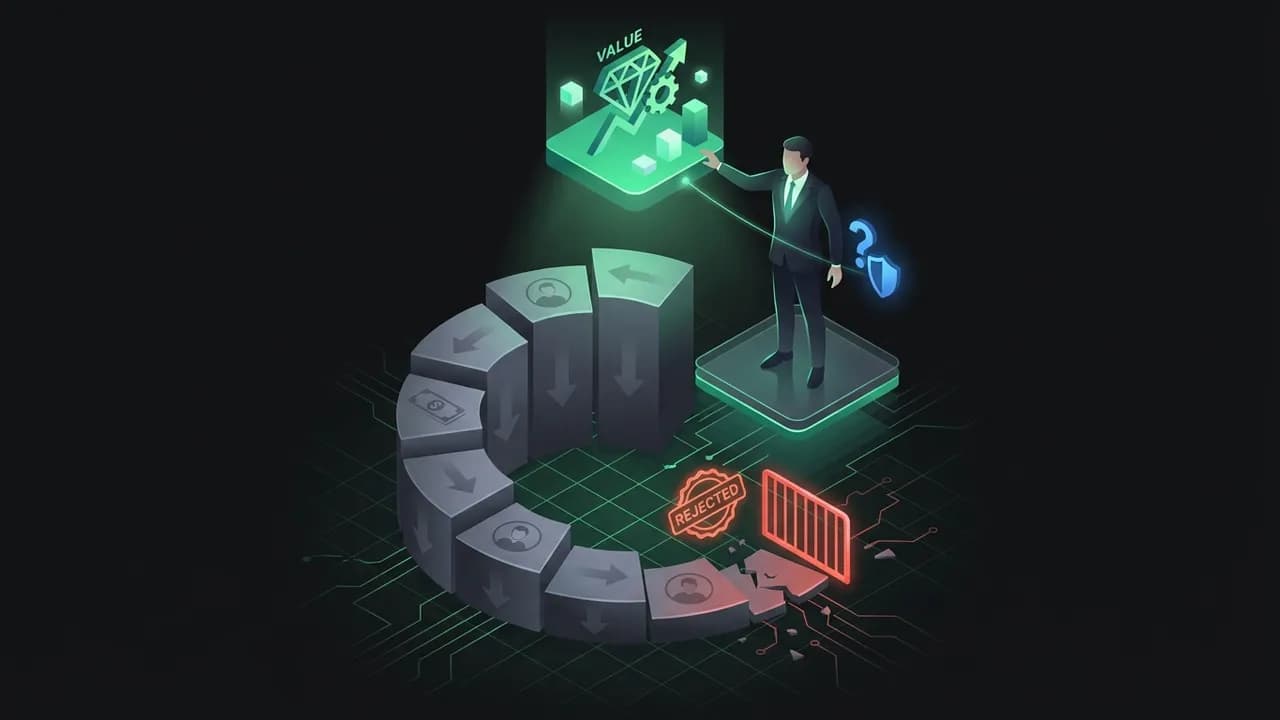
The single most common, entirely self-destructive mistake early-stage founders make is completely underpricing their product out of pure, unadulterated fear.
When a first-time founder finally builds their MVP and prepares for a highly anticipated launch, they usually look nervously at their massive, heavily funded competitors who are charging $99 a month. The founder's imposter syndrome immediately kicks in. They think, "My software is totally new. It has a few annoying bugs. Nobody actually knows my brand. The only possible way I can convince a skeptical stranger to actually try this is if I make it incredibly cheap."
So, the terrified founder boldly slaps a highly attractive $9/month price tag on their B2B software, proudly assuming this massive discount will cause a viral flood of eager new users.
The Devastating Reality of Cheap Pricing in 2026:
The absolute opposite happens. Instead of a massive flood of highly grateful users, the founder encounters intense, highly suspicious resistance.
When a stressed, highly rational VP of Sales sees a complex CRM tool priced at exactly $9 a month, they absolutely do not think, "Wow, what an incredible, massive bargain!"
Instead, their highly paranoid corporate brain immediately thinks:
By deeply underpricing the product out of pure fear, the founder successfully attracted highly demanding, incredibly cheap tourists who complain about everything, while completely terrifying and actively repelling the highly lucrative, serious buyers who actually possess the budget.
Key Concepts: The Psychology of Price as a Trust Signal
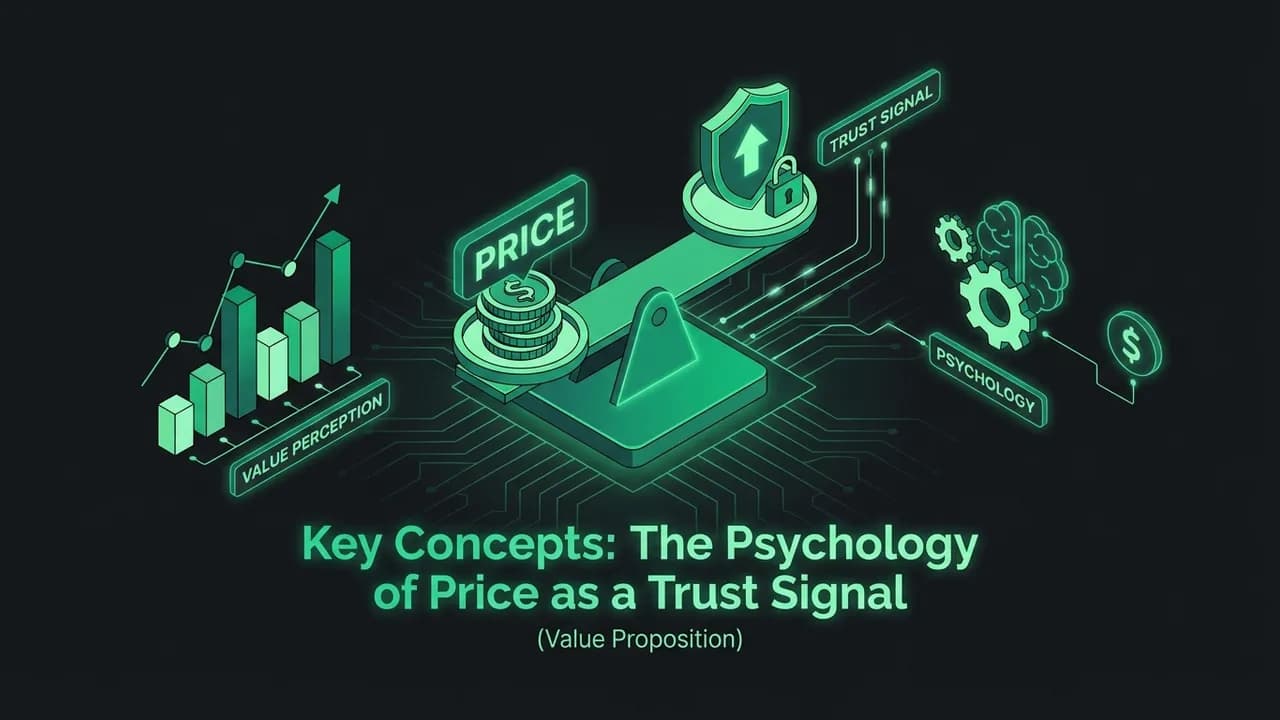
To effectively monetize a startup, you must completely abandon the highly flawed economic idea that price is merely a mathematical reflection of your internal server costs.
In the highly subjective, deeply emotional human brain, Price is a Feature. Price is the absolute strongest, most immediate marketing signal of quality, trust, and ultimate status you possess.
The Chivas Regal Effect (Value by Association)
In human psychology, there is a massive cognitive bias where consumers actively equate a higher monetary cost with inherently higher physical quality, even when they possess absolutely no actual data to prove it. If you confidently place a completely generic $10 bottle of wine entirely next to a $100 bottle of wine, the average consumer will firmly, unshakeably believe the $100 bottle tastes significantly better, simply purely because it costs exactly $100. The price tag literally alters their physical perception of the taste.
Pricing Creates Your Customer Base
Your exact price tag entirely dictates exactly who walks confidently through your front door and exactly who stays completely outside.
The Strategy: The 'Value-Based Pricing' Framework
How do you confidently decide what your premium price should actually be? You absolutely must stop entirely looking inward at your own minor engineering costs, and start looking entirely outward at your customer's massive financial pain. This is the core foundation of Value-Based Pricing.
The Flawed 'Cost-Plus' Model:
Amateurs use Cost-Plus pricing. They calculate: "It costs me exactly $2 a month in AWS server fees to host this user. I want a nice 50% profit margin, so I will charge them exactly $3 a month." This is totally irrelevant to the buyer and highly destructive to the startup.
The Brilliant 'Value-Based' Model:
Professionals entirely ignore their own internal costs. They focus purely on the absolute, undeniable financial ROI they are directly generating for the specific customer.
The 10x ROI Rule of Thumb:
In modern B2B SaaS, a highly effective rule of thumb is to calculate the absolute total financial value you generate for the customer (either in highly trackable new revenue gained or specific payroll hours saved), and simply confidently charge exactly 10% of that total value.
When you successfully anchor your entire pricing strategy directly against their massive pain, a $100/mo price tag suddenly looks incredibly, highly reasonable.
Execution Part 1: Raising Prices to Filter the Noise
If you are currently terrified that you are massively underpricing your software, here is the exact, step-by-step playbook to confidently correct it without completely destroying your company.
Step 1: The 'Grandfather' Confidence Play
The safest, most incredibly effective way to aggressively raise your prices is to completely protect your highly loyal, incredibly early existing users.
Send an email to your entire current user base today: "Thank you so incredibly much for being an early supporter. Next week, due to massive new features, we are officially doubling the price of our software for all new users. However, because you took an early risk on us, you are permanently grandfathered into your current cheap rate forever."
Step 2: The Decoy Tier Strategy
Human beings have absolutely no inherent, internal concept of what software should actually cost; they only know what it costs relative to something else. You must completely control that relativity on your pricing page.
If you desperately want people to buy your highly profitable $99/month "Pro" tier, you must effectively place a massive, incredibly expensive $299/month "Enterprise" tier right next to it.
Most standard users will never, ever buy the incredibly expensive $299 tier. But simply seeing that massive number aggressively visually anchors their brain. Suddenly, compared to $299, the $99 tier looks incredibly safe, highly reasonable, and totally affordable. The high price completely validates the middle price.
Execution Part 2: Selling the Premium Guarantee
Step 3: Justifying the Premium with 'Concierge' Service
If you actively decide to aggressively double your prices, you absolutely must tangibly increase the perceived value of the offering so the customer feels completely safe buying it. You do this incredibly effectively through unscalable service, not just more code.
Step 4: The 'Boutique' Positioning
When you charge a very high premium, you must confidently alter your brand's entire visual language to completely match the high price tag.
Cheap tools look incredibly cluttered, totally brightly colored, and aggressively flash massive "DISCOUNT!" banners constantly.
Highly premium tools look incredibly minimal, highly austere, totally totally confident, and extensively use completely totally empty white space and elegant typography. If you want to successfully charge like an incredibly exclusive boutique firm, your entire landing page must actively look and entirely feel like an incredibly exclusive boutique firm.
Conclusion: Price with Absolute Arrogance, Deliver with Complete Humility
Pricing your startup's product is never an objective mathematical equation; it is a highly intense, deeply emotional test of the founder's absolute internal confidence.
When you entirely underprice your incredibly valuable work, you inadvertently signal to the entire massive market that you actively fundamentally doubt your own product's true ability to completely solve their problem. You actively attract the worst, most demanding customers, and you violently starve your young company of the highly vital oxygen (cash flow) it desperately needs to survive.
Have the incredible courage to successfully charge a highly uncomfortable premium. Completely embrace the absolutely terrifying initial rejection. Aggressively use your high price as a powerful, brilliant filter to successfully find the serious, highly committed pragmatists. Price your software with absolute arrogance, and then flawlessly deliver the actual service with complete, unrelenting humility.
Key Takeaways
Price from the value you create, not your costs — capture a fair slice of the money or time you save the customer.
Underpricing is usually riskier than overpricing: low prices signal low quality and attract high-maintenance buyers.
Use tiers so segments self-select; test a price increase before assuming customers will leave.
For India, lead with ROI and accessible ₹ plans; consider dual ₹/$ pricing to serve local and global buyers.
Frequently Asked Questions
What is a startup pricing strategy?
How do you price a product as a startup?
Why does a low price hurt a startup?
What are common startup pricing mistakes?
How should pricing differ in India vs global markets?
What is value-based pricing?
Your Turn: The Action Step
Value-Based Pricing & Tier Calculator
Set a price anchored to the value you create — not your costs — and design 3 tiers that nudge buyers to the middle.
Quantify the value you create
In rupees per year: time saved, revenue gained, penalties/losses avoided. Add them up.
| Value lever | ₹/year |
|---|---|
Set your value-capture %
Pick the slice you'll charge — usually 10-25%. Formula: Price = Value × capture%.
Compare to your current price
Write your current price and the gap. A big gap means you're underpricing.
Design 3 tiers
Build Good / Better / Best. Make 'Better' the one you actually want to sell.
| Tier | Price | What's included | Who it's for |
|---|---|---|---|
Engineer the anchor
State why 'Best' exists mainly to make 'Better' look reasonable (the decoy effect).
Before you close this
0/4 doneYour answers are saved in this browser only. Use “Download as PDF” to keep a copy.
The 10-Second Pitch That Gets Investors Interested
Ready to apply this?
Stop guessing. Use the Litmus platform to validate your specific segment with real data.
Optimize Your Pricing Tiers In Litmus