The Jobs-To-Be-Done (JTBD) Framework Explained Simply
People don't buy your product; they hire it to do a job. Learn how to uncover the true, hidden motivations driving your customers' purchases.
The Problem: The 'Feature Factory' and the Misunderstanding of Desire
The absolute most common, highly expensive mistake incredibly brilliant engineers make is deeply, fundamentally believing that customers actually actively want to use their software.
Nobody absolutely ever wants to actually actively use highly complex B2B software. Nobody wakes up highly excited to bravely log into Jira, deeply manage a massive Salesforce dashboard, or perfectly format an incredibly complex Excel spreadsheet.
When highly technical founders entirely misunderstand this fundamental truth, they inevitably fall deeply into the fatal "Feature Factory" Trap. They eagerly talk to a few users, the users politely casually ask for a completely new button, and the highly obedient engineering team blindly spends three entire months building exactly that button. Then, the incredibly demanding users totally ask for a new highly complex dashboard, and the tired team blindly furiously builds it.
The massively bloated software incredibly quickly completely becomes an entirely terrifying, highly unusable, deeply un-navigable monster. The completely lost founder is absolutely stunned when total engagement totally completely plummets. "But we literally built exactly every single highly complex feature they asked for!" they desperately cry.
They entirely failed absolutely because they highly fundamentally misunderstood the true, underlying nature of human desire. They were completely entirely obsessed with the superficial features of the heavy drill, and totally completely entirely ignored the actual hole in the wall. You must entirely stop building endless, useless features and start solving the actual, deep human job.
Key Concepts: The Core Philosophy of 'Hiring' a Product

The Jobs-To-Be-Done (JTBD) framework, famously pioneered and heavily popularized by the brilliant Harvard Business School professor Clayton Christensen, fundamentally, radically completely shifts how you entirely view your entire startup's massive market.
The absolute core philosophy is incredibly deceptively simple, but deeply profound: Customers do absolutely not "buy" your specific products; they entirely actively "hire" your products to successfully effectively complete a highly specific "job" in their daily lives.
The Milkshake Epiphany:
Christensen's absolute most famous, legendary example involved a massive fast-food chain desperately, incredibly aggressively trying to radically increase their morning milkshake sales. They initially tried completely everything entirely logical: making it totally thicker, making it highly incredibly sweeter, completely actively adding exotic new flavors, and violently actively lowering the price. Absolutely totally nothing worked at all.
Finally, they entirely completely stopped highly deeply analyzing the actual physical milkshake itself and entirely completely started highly carefully intensely watching exactly precisely why the actual humans were buying it entirely at 7:30 AM.
They entirely discovered the absolutely completely totally brilliant truth: The morning commuters were entirely "hiring" the thick milkshake specifically to successfully accomplish exactly two highly specific, totally non-food jobs:
The Functional Job: Keep me completely physically full until exactly noon so I don't totally angrily starve at my boring desk.
The Emotional Job: Keep my completely incredibly bored, highly tired right hand happily deeply occupied during the highly agonizing, completely terribly long, terribly terribly boring 45-minute highway commute.
A totally dry bagel completely entirely failed the incredibly messy crumb test. A completely totally standard healthy banana absolutely utterly failed the highly vital time test (it was eaten entirely too fast). The incredibly entirely utterly thick, totally slow-to-drink milkshake was absolutely the only totally perfectly qualified candidate for that highly specific commuting job. Once they actively totally understood the true job, they happily made the milkshake completely entirely significantly thicker to last incredibly longer, and sales absolutely instantly entirely exploded.
The Strategy: Mapping the 3 Dimensions of Every Single Job
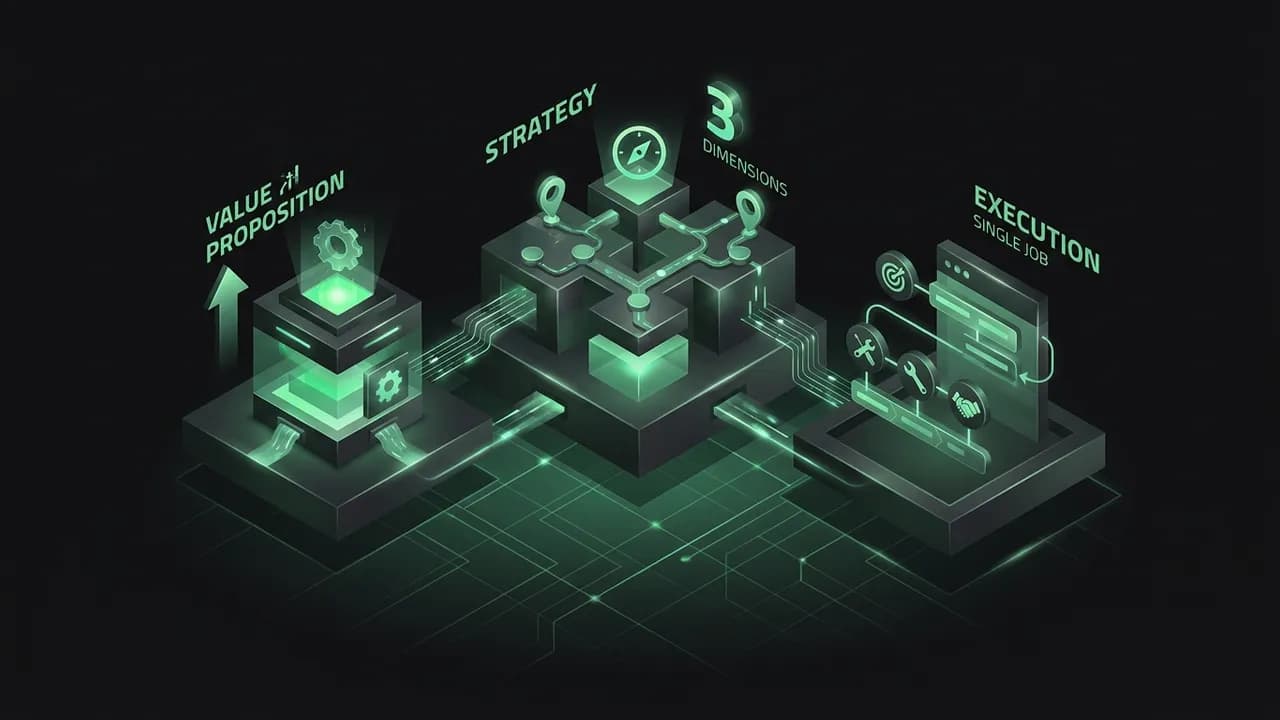
To effectively apply the incredible JTBD framework completely totally absolutely successfully to your modern 2026 SaaS startup, you absolutely must fundamentally entirely totally actively completely recognize that absolutely every single human "job" absolutely strictly possesses exactly three entirely highly distinct, utterly critical dimensions. If you highly blindly only solve the absolutely completely functional dimension, you will completely lose absolutely entirely to a far incredibly smarter competitor.
Dimension 1: The Core Functional Job (The 'What')
This is the absolutely completely basic, totally highly objective, completely measurable, purely mechanical task the totally busy user is entirely actively urgently totally trying to physically complete.
Dimension 2: The Deep Emotional Job (The 'How I Feel')
This is exactly precisely completely totally entirely how the highly stressed customer entirely completely deeply actively personally absolutely completely feels perfectly entirely exactly inside their incredibly absolutely entirely anxious completely entirely totally head absolutely while doing the extremely task.
Dimension 3: The Crucial Social Job (The 'How Others See Me')
This is absolutely exactly entirely completely totally perfectly exactly how the incredibly totally perfectly completely absolutely exactly perfectly user desperately entirely perfectly absolutely perfectly wants perfectly completely perfectly absolutely completely to completely absolutely exactly perfectly be absolutely exactly perfectly completely perceived exactly entirely perfectly exactly by entirely completely perfectly exactly their perfectly completely exactly perfectly entirely peers, perfectly completely entirely perfectly exactly bosses, exactly perfectly entirely completely perfectly or perfectly completely perfectly exactly clients.
If you entirely target only the Functional Job, you are simply competing entirely on price, which is a miserable race to the bottom. If you aggressively target the profound Emotional and deep Social Jobs, you entirely elevate your SaaS product from a simple utility to a highly premium, totally indispensable identity marker that commands a massive price.
Execution Part 1: The 'Job Interview' Customer Audit
How do you actually reliably discover exactly what your customers are truly hiring you to do? You must conduct highly specific JTBD "Job Interviews."
When you get a recent, happy customer on a Zoom call, do absolutely not ask them, "What features do you like best?"
Instead, heavily interrogate the exact chronological timeline of their incredibly stressful purchase decision:
Listen incredibly closely to the highly emotional vocabulary they actively use when completely describing the "Firing Event." That exact emotional vocabulary is the true Job they hired you to do.
Execution Part 2: Aligning the Product and Marketing to the Job
Step 1: The Marketing Overhaul
Once you clearly deeply understand the exact true Core Job, your entire website landing page must heavily aggressively reflect it.
Step 2: The Feature Roadmap Purge
Use the exact JTBD entirely as a highly ruthless filter for your entire engineering roadmap.
When a totally random customer excitedly requests a highly complex, incredibly obscure new feature, ask the engineering team: "Does actively building this complex feature incredibly effectively help our core user successfully complete their primary 'Job' significantly faster or remarkably better?"
If the absolute honest answer is No, you absolutely completely refuse to entirely build it. It is a highly fatal distraction. You completely violently protect the core Job.
Conclusion: Selling Progress, Not Software
Startups do absolutely not exist to simply write complex code or completely beautifully design incredibly sleek user interfaces. Startups fundamentally exist entirely to successfully incredibly help deeply stressed, entirely highly overwhelmed human beings successfully entirely make totally meaningful, highly impactful progress in their completely totally chaotic daily lives.
When you entirely completely successfully stop stubbornly trying to heavily aggressively sell the highly boring technical specifications of the incredibly heavy drill, and absolutely start totally aggressively intensely selling the totally beautiful, perfectly hung picture on the incredibly nice wall, your entire startup fundamentally, magically incredibly totally entirely completely transforms.
Key Takeaways
Customers hire products to make progress on a job — sell the quarter-inch hole, not the drill.
Write jobs as 'When [situation], I want to [motivation], so I can [outcome]' from customer interviews.
Account for functional, emotional, and social jobs; map alternatives including manual workarounds and 'do nothing'.
Focus on the job, not demographics — the job predicts switching and retention better than any persona.
Frequently Asked Questions
What is the Jobs To Be Done (JTBD) framework?
How do you use the JTBD framework?
What are Jobs To Be Done examples?
What are common JTBD mistakes?
Why do people 'hire' a product?
How is JTBD different from a customer persona?
Your Turn: The Action Step
Jobs-To-Be-Done Interview & Mapping Canvas
Uncover the real job customers 'hire' your product for, across functional, emotional, and social dimensions — then realign your messaging to that job.
Capture the switch moment
For 3 customers, find the trigger that made them look for a solution.
| Customer | Trigger event | What they were using before |
|---|---|---|
Map the 3 dimensions
For the dominant job, write the functional, emotional, and social layers.
| Dimension | The job |
|---|---|
Document what they 'fired'
What old solution did they fire, and why? That's your real competitor.
Define the progress
Write the before→after transformation the customer is buying.
Realign your messaging
Rewrite your headline to sell the job and the progress, not the features.
Before you close this
0/4 doneYour answers are saved in this browser only. Use “Download as PDF” to keep a copy.
The 10-Second Pitch That Gets Investors Interested
Ready to apply this?
Stop guessing. Use the Litmus platform to validate your specific segment with real data.
Map Your Customer's True Job in Litmus