The 'So What?' Test: Refining Your Elevator Pitch
If you can't explain why your startup matters in 10 seconds, you don't have a business. Learn how to survive the brutal 'So What?' test.

The Problem: The 'Jargon Salad' and the 10-Second Death Clock
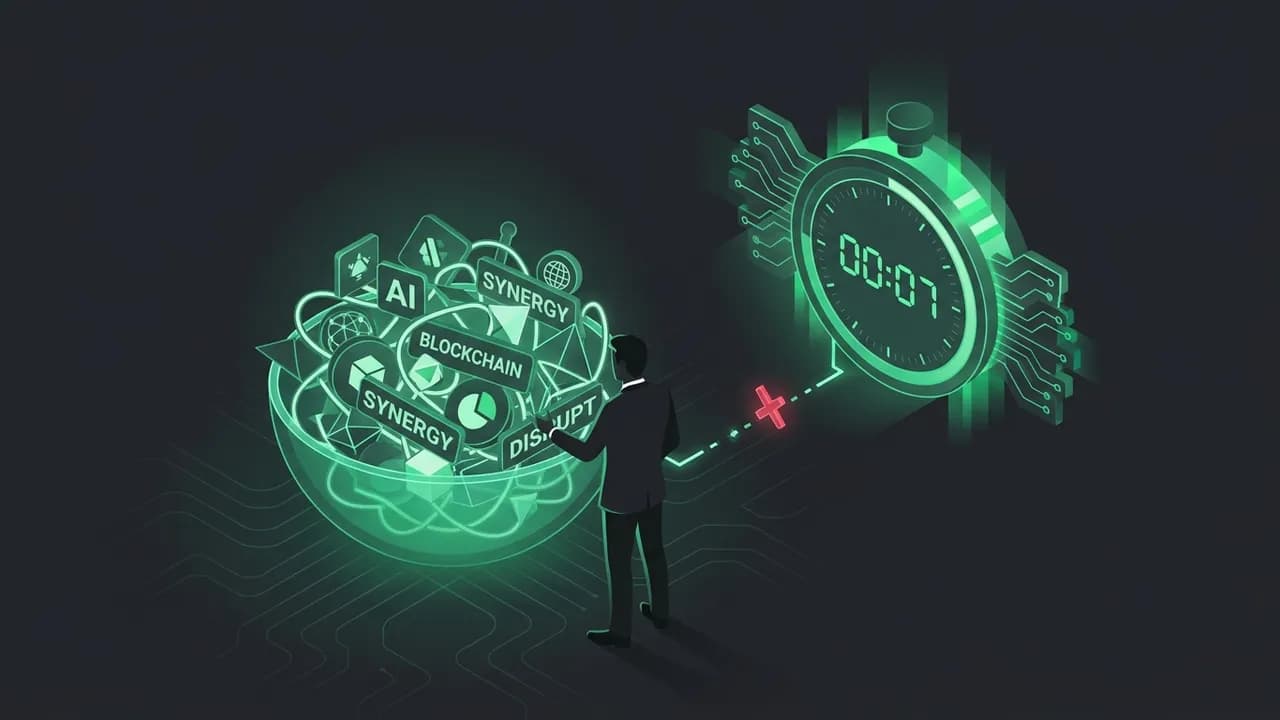
You step into an elevator with a highly prominent, incredibly wealthy venture capitalist. The doors close. They look at you and ask, "So, what does your startup actually do?"
If you are like 95% of first-time founders, you will immediately panic, take a deep breath, and unleash an incomprehensible, terrifying tsunami of buzzwords:
"We are building a highly synergistic, AI-native, blockchain-backed Web3 platform that leverages highly decentralized machine learning to completely optimize the B2B logistics supply chain paradigm."
The VC nods politely, their eyes completely glaze over, the elevator doors open at the next floor, and they walk out, entirely forgetting you existed the absolute second they step into the lobby. You just failed the most critical test in business.
The 10-Second Death Clock in 2026:
In the modern, highly saturated digital economy of 2026, human attention is practically non-existent. You absolutely do not have 5 minutes to slowly "educate the market" on why your complex technology is brilliant. Whether you are pitching an impatient investor at a loud networking event, or a highly stressed customer is rapidly scrolling past your LinkedIn ad while sitting in traffic, you have exactly 10 seconds to answer their internal, deeply cynical question: "Why should I care?"
If your pitch relies entirely on industry jargon, complex technical architecture, or vague promises of "optimization," you are actively pushing people away. Complexity is not a sign of intelligence; it is a glaring sign that you absolutely do not understand the core fundamental value of your own product.
Key Concepts: The Brutal Mechanics of the 'So What?' Test
The "So What?" test is a highly aggressive, completely unforgiving mental framework designed to strip away your founder ego and force you to speak entirely in terms of actual, undeniable human value.
The core concept is incredibly simple: Every single time you make a claim about your startup, you must imagine a highly skeptical, deeply impatient person aggressively asking you, "So what?" You must continually answer that annoying question until you hit absolute, undeniable bedrock.
The Anatomy of a Failed Pitch:
A failed pitch always focuses entirely on the Mechanism (How it works) rather than the Outcome (Why it matters).
The Three Deadly Sins of the Elevator Pitch:
1. The Sin of Vague Grandiosity: Claiming you are "changing the world," "disrupting the industry," or "revolutionizing the paradigm." These are completely empty filler words that signal amateurism.
2. The Sin of Over-Explaining: Trying to defensively list all 15 of your amazing features in a single breath because you are utterly terrified they won't think the product is "big" enough.
3. The Sin of Missing the Villain: A great pitch requires conflict. If you don't clearly state exactly what terrible, highly expensive problem (The Villain) you are violently destroying, the hero (Your Product) has absolutely no reason to exist.
The Strategy: The 'XYZ' Pitch Framework
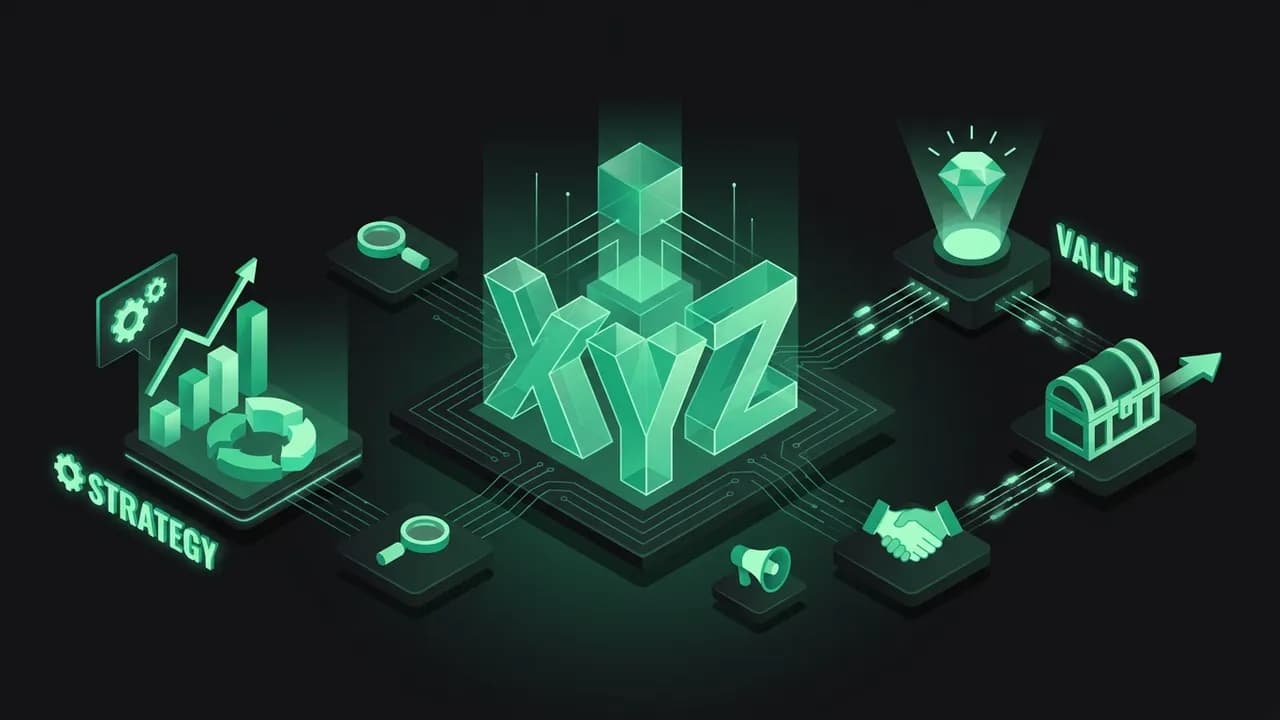
To consistently survive the "So What?" test, you must absolutely abandon your completely improvised, rambling buzzword salad and adopt a highly rigid, battle-tested structure.
The most effective, universally understood framework in Silicon Valley is the XYZ Pitch Formula, popularized by various elite accelerators. It forces total clarity.
The Formula:
"We help [X] successfully do [Y] entirely by doing [Z]."
Let's break down the absolute required mechanics of each variable:
[X] = The Highly Specific Audience (The Who)
Do absolutely not say "businesses" or "people." You must be incredibly precise.
Bad: "We help companies..."
Good: "We help remote-first boutique marketing agencies..."
[Y] = The Massive, Undeniable Benefit (The 'So What?')
This is the most critical part. It must be a highly emotional or deeply financial outcome. Do not list a technical feature here.
Bad: "...summarize their massive data." (Feature)
Good: "...completely eliminate 15 hours of manual, mind-numbing client reporting every single week." (Massive Benefit)
[Z] = The Unique Mechanism (The Secret Weapon)
This is exactly how you actually achieve the result. Keep it incredibly simple and avoid deep jargon.
Bad: "...by leveraging our highly proprietary synergistic ML algorithm." (Jargon)
Good: "...by actively plugging directly into their existing Google Analytics account and fully automating the PDF design." (Clear, simple mechanism)
The Final, Highly Polished Pitch:
"We help remote-first boutique marketing agencies completely eliminate 15 hours of manual client reporting every week by actively plugging into their Google Analytics and fully automating the PDF design."
If you say this exact sentence in an elevator, the listener instantly, perfectly understands exactly who you sell to, exactly why they desperately buy it, and exactly how it works. They have zero follow-up questions about the concept; they only have questions about the execution.
Execution Part 1: The 'Bar Test' and the 'Grandma Test'
Writing a great pitch on a Google Doc is entirely different from successfully delivering it under pressure in the real world. You must violently stress-test your new pitch.
The 'Bar Test' (The Environment of Distraction)
The absolute worst place to practice your pitch is alone in a quiet, peaceful room. You must practice it in a highly chaotic environment. Go to a loud, incredibly crowded bar or a noisy coffee shop. Turn to the highly distracted person next to you and deliver your pitch in exactly 10 seconds over the loud music.
If they have to frown, lean in, and loudly ask, "Wait, what does that actually mean?", your pitch is entirely too complex. A great pitch cuts through massive noise perfectly.
The 'Grandma Test' (The Jargon Filter)
Call an older relative or a completely non-technical friend who knows absolutely nothing about B2B SaaS, the cloud, or artificial intelligence.
Deliver your new XYZ pitch to them slowly.
If they reply, "Oh, so you help advertising people save time on paperwork?", you have succeeded massively. They successfully understood the core human value. If they reply, "What exactly is an API integration paradigm?", you have completely failed and must strip out more jargon.
Execution Part 2: The 'Reverse Engineering' Drill
If you are currently hopelessly stuck and your pitch still sounds incredibly boring, use the "Reverse Engineering Drill" with your entire co-founding team today.
Step 1: Write your absolute worst, most complex, highly technical feature on a whiteboard. (e.g., "Real-time bi-directional database syncing").
Step 2: Force a co-founder to aggressively yell "So what?" at you.
Step 3: Answer them truthfully. ("So that the data updates instantly on both devices.")
Step 4: Force them to aggressively yell "So what?" again.
Step 5: Answer again, pushing deeper. ("So that the massive sales team and the busy warehouse team see the exact same accurate inventory numbers.")
Step 6: Force them to yell "So what?" one absolute final time.
Step 7: The final, undeniable bedrock answer. ("So that the sales rep absolutely never accidentally sells a highly expensive product that is already out of stock, preventing a massive, highly embarrassing refund and protecting their commission.")
You have just successfully reverse-engineered a boring feature into a highly emotional, deeply financial pitch perfectly tailored for a salesperson.
Conclusion: Clarity is the Ultimate Competitive Advantage
In 2026, the startup landscape is incredibly, deafeningly loud. Thousands of highly funded companies are screaming complex buzzwords into the void every single day, completely desperate for attention.
In this highly chaotic environment, extreme clarity is not just a nice-to-have communication skill; it is your absolute ultimate competitive advantage. When an investor or a highly stressed customer hears a pitch that is incredibly simple, entirely devoid of jargon, and intensely focused on solving actual human pain, they do not think the product is "simple." They think the founder is an absolute genius.
Strip away your ego. Delete the buzzwords. Embrace the absolute brutal simplicity of the "So What?" test, and you will never lose an audience in an elevator ever again.
Key Takeaways
Use the XYZ formula: help [audience] achieve [outcome] by [mechanism] — one of each, no more.
Apply the 'So What?' test to every line; if it doesn't earn its place with a tangible benefit, cut it.
Pass the Grandma Test: if a non-expert can't repeat your pitch back, it's still too jargon-heavy.
Front-load the single strongest outcome — listeners decide whether to keep listening in the first sentence.
Frequently Asked Questions
What is an elevator pitch?
How do you write a 30-second elevator pitch?
What is a good elevator pitch example?
What are common elevator pitch mistakes?
How long should an elevator pitch be?
What is the 'So What?' test for a pitch?
Your Turn: The Action Step
XYZ Elevator Pitch Builder
Walk out with a 10-second pitch a stranger can repeat back to you correctly — no jargon, no confusion.
Lock the X (audience)
Name a specific person, not 'businesses'. Add a qualifier that excludes 90% of the world.
Lock the Y (outcome)
State the transformation in their language. What do they get, not what you do.
Lock the Z (mechanism)
One phrase only. If you need a comma, it's too long.
Assemble and de-jargon
Write the full sentence, then strike every buzzword (AI, platform, synergy, seamless, leverage).
Run the Bar Test
Say it once to a non-technical friend. Write down exactly how they repeated it back.
Run the Grandma Test
Show it to someone outside your industry. Did they understand on the first read?
Before you close this
0/4 doneYour answers are saved in this browser only. Use “Download as PDF” to keep a copy.
This UI Mistake Slows Every Startup
Ready to apply this?
Stop guessing. Use the Litmus platform to validate your specific segment with real data.
Refine Your Incredible Pitch in Litmus