Using Social Proof to Validate Your Value Prop
Customers don't trust you; they trust each other. Learn how to strategically manufacture and deploy social proof to destroy buyer skepticism.
The Problem: The 'Zero Trust' Default State of the Modern Buyer
"Our AI-driven analytics platform is the absolute fastest, most accurate, and incredibly reliable tool on the entire market today!"
When you, the proud startup founder, passionately write this exact sentence on your shiny new landing page, you genuinely believe it. You know exactly how incredibly hard your engineering team worked. You know the code is highly brilliant.
But when a highly stressed, entirely cynical prospective customer actually reads that sentence, their brain immediately, subconsciously translates it to: "This highly desperate person is heavily financially incentivized to blatantly lie to me so they can aggressively steal my limited corporate budget."
The Brutal Reality of Zero Trust in 2026:
We currently live in a highly saturated, totally unregulated digital economy overflowing entirely with deepfakes, massive AI-generated spam, completely fake Amazon reviews, and totally aggressive cold email campaigns. The absolute default psychological state of every single modern B2B and B2C buyer is Zero Trust. They fundamentally assume you are actively trying to scam them.
No matter how incredibly eloquent, totally logical, or beautifully designed your personal value proposition pitch is, the skeptical customer will absolutely never, ever truly believe a single word you say about your own product.
To successfully sell software today, you must completely stop forcefully talking about yourself, and start aggressively forcing other people to talk entirely about you. You absolutely must weaponize the fundamental psychological principle of Social Proof.
Key Concepts: The Incredible Psychological Power of Social Proof
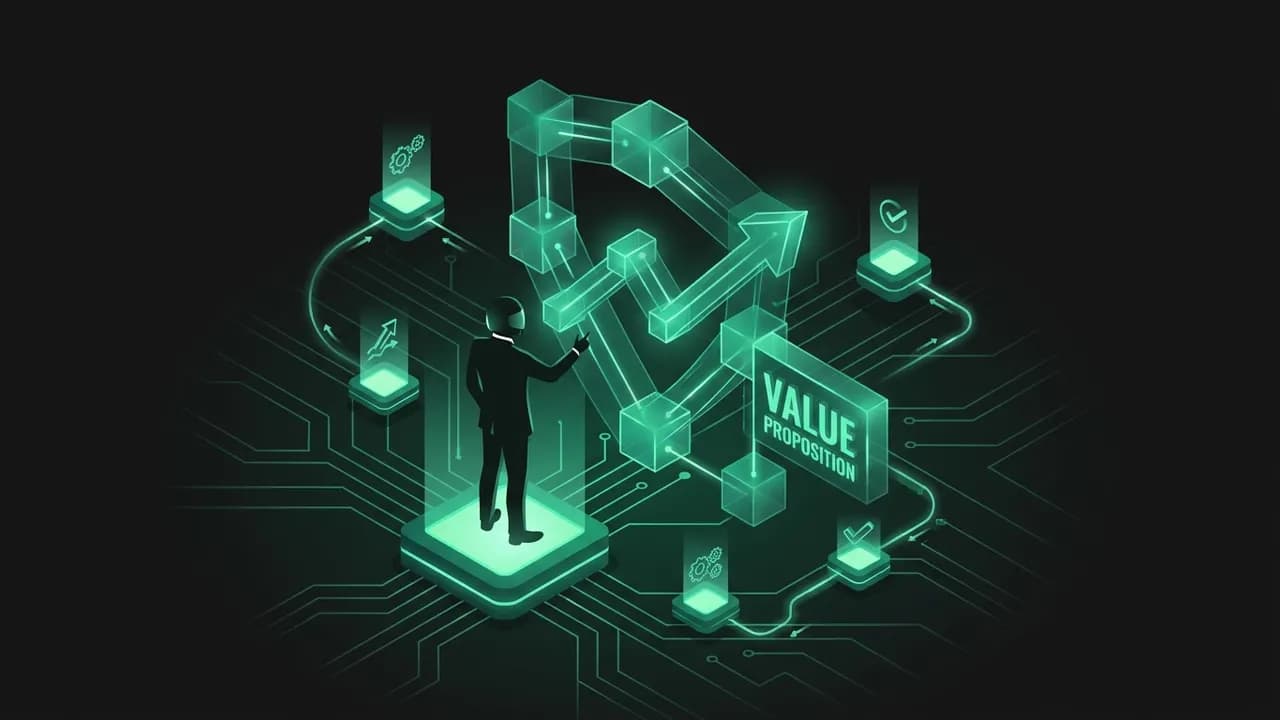
Social Proof is not merely a marketing buzzword; it is a deeply ingrained, highly primitive biological survival mechanism. When humans are faced entirely with a highly complex, totally uncertain decision (like buying expensive software from a completely unknown startup), their tired, overloaded brains actively seek out "herd behavior" to stay safe. If "everyone else" is doing it, it must be completely safe.
Not all social proof is created equal. To effectively destroy massive buyer skepticism, you must deeply understand the Hierarchy of Trust.
Tier 1: Massive Quantitative Proof (The 'Bandwagon' Effect)
This is the absolute raw scale of the herd.
Tier 2: The 'Halo Effect' Authority Transfer
This is specifically borrowing immense credibility from totally established, highly respected massive brands.
Tier 3: The Highly Specific, Relatable Testimonial (The Peer Effect)
This is the absolute most powerful converting weapon. It is a highly detailed, deeply emotional quote from someone who looks exactly, precisely like the prospect.
The Strategy: The 'Reverse-Engineered Testimonial' Framework
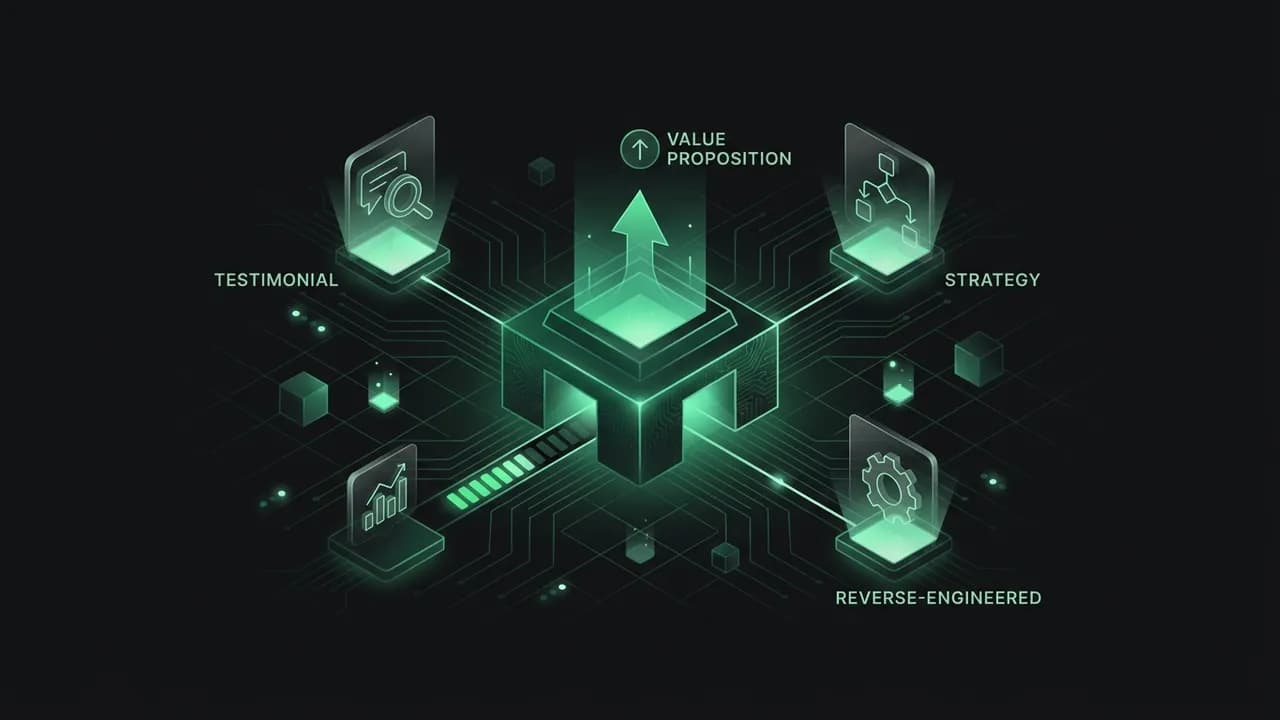
The absolute biggest mistake early-stage founders make is simply politely asking a customer, "Hey, could you please write a quick review for us?"
The highly busy customer usually says yes, but because they are busy and not professional copywriters, they write something incredibly weak and entirely useless, like: "Great software, the team is really nice!"
This type of totally generic review absolutely kills your conversion rate. To win, you must strictly use the Reverse-Engineered Testimonial Framework.
You absolutely must proactively guide the customer to specifically hit exactly three critical psychological beats in their short quote:
The Agonizing 'Before' State: They must explicitly name the terrible, highly expensive problem.
The Incredible 'Aha' Moment: Exactly how your specific product completely changed the game.
The Highly Measurable 'After' State: The exact, undeniable financial or emotional ROI they achieved.
How to Extract the Perfect Quote:
Do absolutely not ever ask them to casually write it themselves. Get your happiest customer on a quick 10-minute Zoom call. Ask them these three highly specific questions:
Write down their exact, emotional answers. Heavily edit it down into a highly punchy, 3-sentence masterpiece. Email it back to them and politely say: "Thank you so much! Is it completely okay if I use this slightly edited quote on our homepage?" 99% of the time, they will happily say yes.
Execution Part 1: Manufacturing Massive Early Trust
How do you actually get Social Proof when you are a completely brand new startup with absolutely zero existing customers? You have to strategically, highly ethically manufacture it.
Step 1: The 'Advisory Board' Authority Hack
If you currently have exactly zero paying corporate logos to proudly display on your site, you absolutely must borrow extreme personal authority.
Step 2: The 'Case Study' Beta Program
Do absolutely not offer your very first 5 beta users a simple "free trial." Offer them a highly exclusive "Case Study Partnership."
Execution Part 2: Deploying the Proof for Maximum Conversion
Step 3: The 'Objection-Busting' Placement Strategy
Absolutely never bury your incredibly valuable testimonials entirely on a completely isolated "What Our Customers Say" sub-page that nobody actually visits. You must strategically place the exact right social proof directly next to the exact right psychological objection.
Step 4: The 'Show, Don't Tell' Video Proof
In 2026, text reviews are highly frequently entirely fake. Video is absolutely undeniable.
Use a highly simple tool like Testimonial.to to automatically heavily encourage your absolute best, most active users to quickly record a very fast, entirely unscripted 30-second selfie video warmly praising the tool. An incredibly shaky, highly unpolished webcam video of a totally real, highly enthusiastic founder genuinely praising your specific tool is literally 100x more highly effective than a completely slick, overly produced $10,000 corporate ad.
Conclusion: Outsourcing Your Entire Sales Pitch
Your startup's incredible value proposition is absolutely never what you loudly, proudly claim it is; it is exactly, entirely what your deeply satisfied customers actively tell their close friends it is.
If you completely rely entirely on your own beautifully written, highly clever corporate copy to convince a massive, deeply cynical market, you will completely fail. The absolute fastest, most capital-efficient way to rapidly scale a highly profitable company is to completely entirely outsource the incredibly heavy lifting of sales entirely to your actual users.
Stop entirely desperately begging people to blindly trust your empty promises. Build a genuinely incredible, truly valuable product, actively extract the undeniable proof of that incredible value, and aggressively weaponize that exact proof to completely destroy every single objection standing in your highly lucrative path.
Key Takeaways
Pair every value claim with matching proof — a testimonial or case study showing that exact outcome.
Place social proof next to claims and CTAs where doubt peaks, not in an isolated section.
Specific, named testimonials with real numbers beat a wall of anonymous five-star reviews.
No proof yet? Give early users free access in exchange for honest, detailed, attributable testimonials.
Frequently Asked Questions
What is social proof in marketing?
How do you use social proof to validate your value prop?
What are types of social proof with examples?
What are common social proof mistakes?
How do you get social proof when you're just starting out?
Why does social proof increase conversions?
Your Turn: The Action Step
Testimonial Extraction & Objection-Buster Map
Run a 6-question script that extracts specific, objection-killing testimonials, then map each quote to the doubt it neutralizes on your page.
List your top objections
Write the 4 doubts that most often kill your deals.
Run the extraction script
Ask each customer these questions; capture verbatim quotes, especially numbers.
| Question | Customer's exact words |
|---|---|
Mine the quotable line
From each interview, pull the single sharpest, most specific sentence.
Map quotes to objections
Match each quote to the exact objection it disarms.
| Objection | Quote that kills it | Page placement |
|---|---|---|
Get permission + attribution
Confirm name, role, company, and photo rights so the proof is credible.
Before you close this
0/4 doneYour answers are saved in this browser only. Use “Download as PDF” to keep a copy.
This UI Mistake Slows Every Startup
Ready to apply this?
Stop guessing. Use the Litmus platform to validate your specific segment with real data.
Generate Real Social Proof in Litmus